













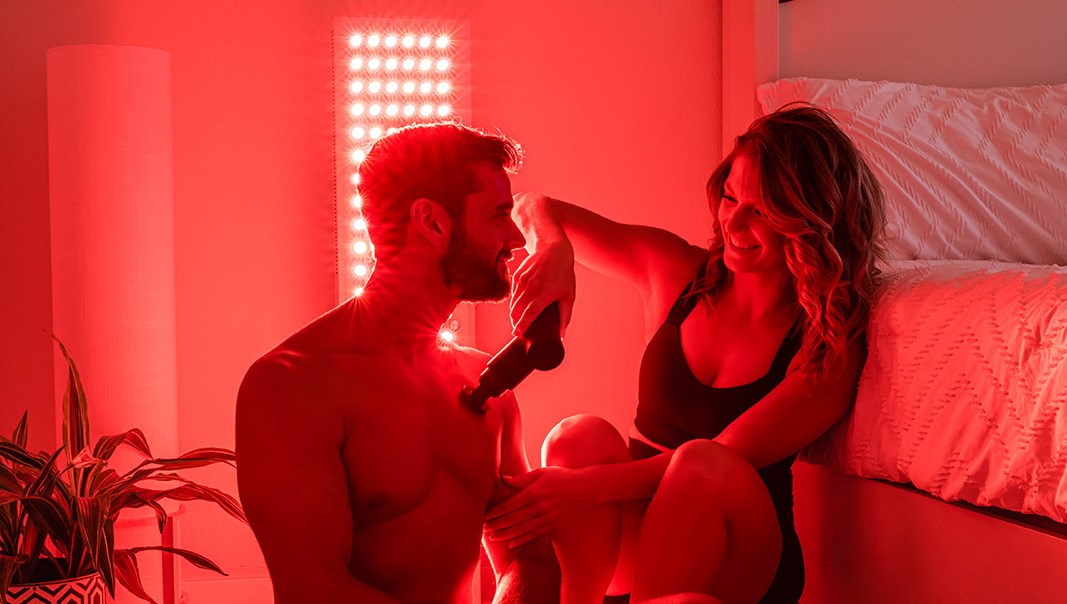
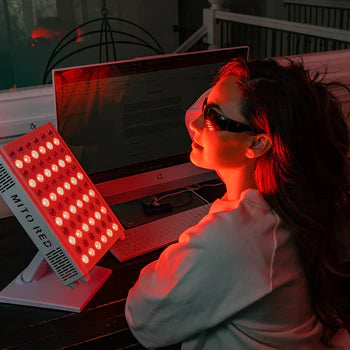


How Red Light Therapy Works
Red light therapy works by delivering light energy that is absorbed by components within cells, particularly within the mitochondria.
Mitochondria are responsible for producing cellular energy (ATP), and certain wavelengths of red and near-infrared light are believed to support this process.
Learn more:
Why Modern Humans Are “Light Starved”
For most of human history, people spent far more time outdoors under full-spectrum sunlight. Today, most people spend the majority of their time indoors under artificial lighting, with far less exposure to natural red and near-infrared wavelengths.

At Mito Red Light, we believe this shift may have fundamentally changed our relationship with light.
Read more: Are We Starved of Near-Infrared Light?
Red Light vs Near-Infrared Light
Red light and near-infrared light are often used together, but they are not the same.
- Red light (630–660nm): more commonly associated with surface-level tissue
- Near-infrared light (810–880nm): penetrates deeper into the body
Learn more:
Red Light Therapy for Inflammation & Pain
Red light therapy is commonly explored as part of routines focused on inflammation, recovery, and joint comfort.
- Everything You Need to Know About Red Light Therapy and Inflammation
- Does Red Light Therapy Help With Inflammation?
- Is Red Light Therapy Effective for Joint Pain?
- Arthritis: 5 Ways Red Light Therapy Might Help
Red Light Therapy for Skin & Anti-Aging
One of the most common uses of red light therapy is for skin appearance, including wrinkles, visible aging, texture, and overall radiance.
- Everything You Need to Know About Red Light Therapy and Skin
- How Does Red Light Therapy Improve Skin Health?
- Skin Aging and Red Light Therapy
- Red Light Therapy for Hyperpigmentation

-
Red Light Therapy for Muscle Recovery & Performance
Athletes and active individuals often use red light therapy as part of a recovery and performance routine.
- Everything You Need to Know About Red Light Therapy and Muscle Recovery
- How Do Athletes Use Red Light Therapy for Recovery?
- Red Light Therapy Before or After a Workout?
- Speed Up Post-Workout Muscle Recovery With Red Light Therapy
Red Light Therapy for Hair Growth
Red light therapy is also used in hair-focused routines and scalp care.
- Everything You Need to Know About Red Light Therapy and Hair Growth
- Red Light Therapy for Hair Growth: 2025 Breakthroughs & Best Practices
- Effectiveness of Red Light Therapy for Hair Growth
Red Light Therapy for Brain Health & Cognitive Function
Emerging research continues to explore how light may interact with neurological systems and cognitive performance.
- Everything You Need to Know About Red Light Therapy and Brain Health
- Neurological Effects of Red Light Therapy
- Might Red Light Therapy Help Fight Brain Fog?

-
Red Light Therapy for Weight Loss & Metabolism
Some people explore red light therapy as part of broader routines focused on body composition and metabolic health.
- Everything You Need to Know About Red Light Therapy and Weight Loss
- Red Light Therapy and Weight Loss: What Does the Research Show?
- Can Red Light Therapy Aid in Getting Rid of Cellulite?
How to Use Red Light Therapy
Consistency matters. Most people focus on distance, session duration, and frequency when building a red light therapy routine.
- How To Get the Most Out of Your Red Light Therapy
- How Often Should You Do Red Light Therapy?
- How Long Does Red Light Therapy Take to Work?
Choosing the Right Red Light Therapy Device
There are several kinds of red light therapy devices, including full-body panels, face masks, handheld devices, and more targeted wraps or belts.
- The Definitive Red Light Therapy Buyer’s Guide
- Red Light Therapy Masks vs. Panels
- What To Look for in a Red Light Therapy Panel
Safety and Considerations
Red light therapy is widely used, but understanding best practices, device quality, and contraindications matters.
- Contraindications for Red Light Therapy
- Red Light Therapy and the Eyes: Risks and Benefits
- Can You Overdo Red Light Therapy?
Frequently Asked Questions
Does red light therapy actually work?
Red light therapy delivers specific wavelengths of light that interact with biological tissues. Many people use it in routines focused on skin, recovery, and general wellness.
How long does it take to see results?
Results vary depending on consistency, device type, treatment area, and routine. Some people notice changes within weeks, while others take longer.
Is red light therapy safe?
Red light therapy is generally considered safe when used as directed, though device quality and proper use matter.
What wavelength is best?
Many high-quality devices use a combination of red and near-infrared wavelengths rather than relying on just one.
How often should you use red light therapy?
That depends on the device and your goals, but consistency is usually more important than intensity.
Can you use red light therapy every day?
Many people do, though the ideal frequency depends on the type of device and how it is being used.