


















Panel Series
What Is Photobiomodulation Therapy?
Photobiomodulation therapy (PBM or PBMT) is the use of specific wavelengths of non-thermal, non-ionizing light — primarily in the red (630–680nm) and near-infrared (810–850nm) ranges — to stimulate cellular function, modulate biological processes, and support tissue recovery. It is the scientifically preferred term for what consumers most commonly call "red light therapy." The two phrases describe the same fundamental technology; the difference is one of context: PBM is the term used in peer-reviewed research, clinical trials, and regulatory filings, while "red light therapy" is the consumer shorthand.
Understanding why the field settled on "photobiomodulation" — and why that precision matters — tells you something essential about how seriously the science takes wavelength, dose, and mechanism.
What "Photobiomodulation" Actually Means
The word is constructed from three Greek and Latin roots:
- Photo — light
- Bio — life or biological
- Modulation — the act of adjusting, regulating, or modifying
Taken together, photobiomodulation literally means the use of light to modulate biological processes. The definition is deliberately mechanistic. It does not describe a device category or a wellness trend. It describes a photochemical interaction between specific wavelengths and specific cellular structures — most critically, the enzyme cytochrome c oxidase (CCO, the terminal enzyme of the mitochondrial electron transport chain and the primary photoacceptor for red and near-infrared wavelengths).
This precision is the point. "Red light therapy" is accurate enough for a consumer to understand the general idea. PBM is the language a clinician or researcher uses when they need to specify what is happening, at what wavelength, at what dose, in which tissue.
A Short History: From Accidental Discovery to Scientific Standard
Late 1960s — The Mester Experiments
The story begins in Budapest. In the late 1960s, Hungarian physician Endre Mester at Semmelweis University began investigating whether laser light might cause harm to biological tissue. Using low-power laser exposures in animal models, his group observed something unexpected: rather than inducing damage, the laser irradiation appeared to accelerate wound healing and stimulate hair regrowth. Mester called this phenomenon laser biostimulation — the observation that low-energy laser light could stimulate biological processes rather than damage them.
Mester's finding launched a field. Through the late 1970s and 1980s, researchers in Eastern Europe began exploring what they called low-level laser therapy (LLLT) — a term that would dominate the scientific literature for the next three decades.
1980s–1990s — The LLLT Era
As the technology spread westward, LLLT became established clinical shorthand. The "low-level" referred to the non-thermal, non-ablative nature of the light — power densities low enough to stimulate rather than destroy tissue. Research expanded into wound healing, pain management, and musculoskeletal conditions. The technology was laser-exclusive during this period, and the name reflected that.
This era also produced the foundational mechanism research. Tiina Karu, a biophysicist working at the Laboratory of Laser Biology and Medicine, Institute of Laser and Information Technologies, Russian Academy of Sciences, Troitsk, Moscow Region, Russian Federation, identified cytochrome c oxidase as the primary photoacceptor for red and near-infrared light — the molecular target that explains why certain wavelengths produce biological effects while others do not [Karu 2010, PMID 20681024]. Karu's work remains the mechanistic bedrock of the field.
Late 1990s–2000s — The LED Transition
A critical technological shift occurred when light-emitting diodes (LEDs) became powerful enough to deliver therapeutically relevant irradiance levels. LEDs are not lasers. Using a laser-derived term — LLLT — for LED-based devices introduced a technical inaccuracy that compounded as LED devices proliferated. Researchers, clinicians, and device manufacturers were using the same term for meaningfully different light sources.
Simultaneously, the basic science was advancing. Research teams exploring near-infrared LED light demonstrated that it could affect cellular function and tissue response, broadening the application landscape and further highlighting that the "laser" in LLLT was increasingly misleading. Notable work during this period came from Harry T. Whelan and Janis T. Eells at the Medical College of Wisconsin, who investigated NASA-supported applications of LED-based near-infrared therapy for wound healing. Juanita J. Anders, at the Department of Neuroscience, Uniformed Services University of the Health Sciences, Bethesda, Maryland, was separately advancing the mechanistic and applied PBM literature — and would later co-author the 2015 nomenclature editorial that formally endorsed the terminology shift [Anders et al. 2015, PMID 25844681].
2015 — The Nomenclature Editorial
In 2015, the formal case for the terminology transition was published in Photomedicine and Laser Surgery — the flagship journal in the field. Juanita J. Anders, Raymond J. Lanzafame, and Praveen R. Arany authored a brief but consequential editorial: "Low-level light/laser therapy versus photobiomodulation therapy" [PMID 25844681]. The editorial argued that photobiomodulation — or more fully, photobiomodulation therapy (PBMT) — should replace LLLT as the preferred scientific term. This publication reflected a consensus that had been building in the field and is widely cited as the definitive articulation of the nomenclature shift.
The rationale was straightforward: PBM describes what the therapy does (modulates biological processes using light) rather than what device produces it (laser) or at what power level (low-level). It applies accurately to both laser and LED-based devices, accommodates a broader wavelength range, and reflects the mature mechanistic understanding the field had developed over five decades.
The journal Photomedicine and Laser Surgery adopted PBM and PBMT as preferred terminology following this publication. Clinical trial registries, including ClinicalTrials.gov, have increasingly used PBM as a standard indexing term. The shift in the indexed literature over the subsequent decade has been substantial.
2016–Present — Consolidation of PBM as the Scientific Standard
By the mid-2010s, PBM had become standard in high-impact review literature. Lucas Freitas de Freitas and Michael Hamblin's 2016 review in the IEEE Journal of Selected Topics in Quantum Electronics, titled "Proposed Mechanisms of Photobiomodulation or Low-Level Light Therapy," used both terms while advancing PBM as the forward-looking standard — reflecting the field's direction of travel [de Freitas & Hamblin 2016, PMID 28070154]. A 2025 review by Frankowski et al. in GeroScience, titled "Light buckets and laser beams: mechanisms and applications of photobiomodulation (PBM) therapy," uses PBM exclusively — the earlier terminology appears only in historical context [Frankowski et al. 2025, PMID 39826026].
Why Terminology Precision Matters Clinically
For a consumer, the naming debate may seem abstract. For researchers, clinicians, and device regulators, it has real consequences.
"Wavelength isn't a marketing variable — it's the fundamental determinant of which photoacceptors you're activating and at what depth. Cytochrome c oxidase has peak absorption around 660nm and 830nm. When researchers report results under 'PBM' using those wavelengths, you know exactly what mechanism is in play. When someone uses 'red light therapy' loosely to cover anything from 590nm to 1000nm, the clinical specificity collapses. That's why the nomenclature shift to PBM wasn't cosmetic — it forced the field to be precise about what was actually being studied." For a related topic, see Best Wavelengths for Red Light Therapy.
— Dr. Alexis Cowan, PhD, Molecular Biology (Princeton University), Scientific Advisor, Mito Red Light
Three concrete reasons terminology precision matters:
1. Clinical trial reproducibility. When a trial reports outcomes under "PBM at 660nm, 50 mW/cm², 10 J/cm²," another researcher can replicate it. When a trial reports "red light therapy" without wavelength or dose specification, the finding is difficult to reproduce or apply. The PBM framework enforces reporting standards.
2. Research indexing. PubMed and clinical trial registries use standardized MeSH (Medical Subject Heading) terms. The canonical MeSH heading is "Low-Level Light Therapy," and "photobiomodulation" is recognized as an entry term and synonym within that heading — meaning trials and papers filed under either term are findable and aggregable in systematic reviews. "Red light therapy" has no equivalent MeSH term, making informally labeled studies harder to systematically retrieve.
3. Regulatory classification. Regulatory bodies including the FDA assess devices partly based on how they are described in the scientific literature. A device category with a coherent, defined body of research — filed consistently under PBM — presents a clearer profile than one described by inconsistent consumer terminology.
PBM vs. Red Light Therapy: The Short Version
PBM is the umbrella scientific term. Red light therapy is the consumer shorthand for one subcategory — specifically, the use of red and near-infrared wavelengths delivered at therapeutic irradiance for home or clinical application.
All red light therapy is PBM. Not all PBM is red light therapy: PBM research spans wavelengths from blue (around 400nm) to near-infrared (to approximately 1100nm) and includes applications as varied as wound care, neurological research, and dental treatment. When you see "red light therapy" in consumer contexts, it almost always refers to the 630–850nm range, which is where the densest body of human clinical research sits — including the CCO activation pathway that Tiina Karu's foundational work identified as the primary mitochondrial mechanism.
For a detailed breakdown of the terminology comparison — including how the terms are used in clinical trial registries, regulatory filings, and consumer marketing — see the full PBM vs red light therapy terminology comparison.
How PBM Works at the Cellular Level — A One-Paragraph Overview
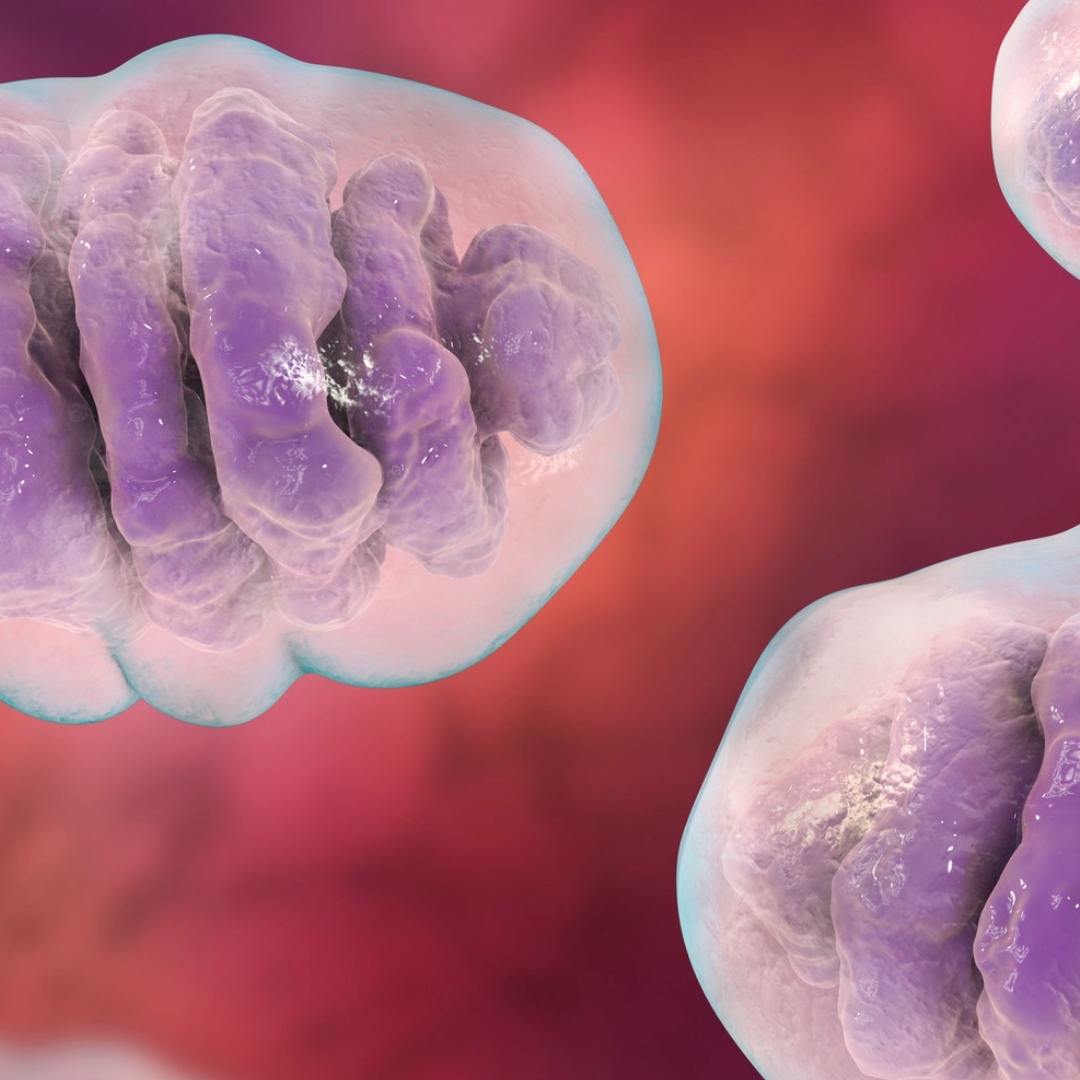
When red or near-infrared light at therapeutic wavelengths reaches tissue, photons are absorbed by cytochrome c oxidase (CCO) in the mitochondrial inner membrane. This absorption is proposed to trigger a cascade: CCO activity increases, mitochondrial membrane potential is enhanced, and ATP (adenosine triphosphate, the cell's primary energy currency) production rises. Reactive oxygen species (ROS, unstable molecules that act as secondary messengers in cellular stress signaling) are modulated, nitric oxide (NO) is released from its inhibitory binding to CCO, and downstream secondary messenger cascades may influence gene expression, cell proliferation, and inflammatory regulation [Hamblin 2018, PMID 29164625]. A 2022 in-vivo human study published in Metabolites by Pruitt et al. directly measured increases in oxidized cytochrome c oxidase and tissue oxygenation in living human forearm tissue following exposure at 800nm, 850nm, 1064nm, and 810nm LED wavelengths, providing direct biochemical evidence of the mechanism in living human subjects [Pruitt et al. 2022, PMID 35208178].
For the complete mechanistic picture — including wavelength-specific penetration depth, dose-response relationships, and the nitric oxide pathway — see the full explanation of how photobiomodulation works at the cellular level.
The Research Base Behind PBM
The clinical evidence base for photobiomodulation has grown substantially since the 2015 nomenclature editorial. A 2025 review in GeroScience by Frankowski et al. — drawn from a National Institute on Aging workshop convened to evaluate PBM — characterized the field as having produced meaningful mechanistic and clinical evidence across multiple application domains, from cardiovascular and retinal health to Parkinson's disease and cognitive function. The review uses PBM exclusively, with LLLT appearing only as a historical reference, reflecting how completely the terminology has transitioned in high-quality research literature [Frankowski et al. 2025, PMID 39826026].
Mito Red Light's clinical research evidence hub organizes peer-reviewed studies by health category, including dedicated pages for clinical evidence on PBM and mitochondrial function and cardiovascular outcomes. For a comprehensive, searchable library of peer-reviewed PBM studies, Mito Red Light's Evidence Explorer at mitoredlight.com/pages/evidence-explorer indexes the breadth of the research base.
For a full introduction to what the research shows about red light therapy applications, benefits, and safety — as distinct from the terminology history covered here — see what red light therapy is and what the research shows.
Frequently Asked Questions
Is photobiomodulation the same as red light therapy?
Largely, yes — with a scope distinction. PBM is the scientific umbrella term covering all therapeutic light applications; red light therapy is the consumer term for the 630–850nm subset most commonly used at home and in clinics. When researchers publish studies on wound healing, pain, or cellular energy using red and near-infrared wavelengths, they are doing PBM research. When you use a panel at home, you are applying red light therapy — which is PBM.
Why did scientists stop calling it LLLT?
Low-level laser therapy (LLLT) was accurate when the only devices used were lasers. Once powerful LEDs became viable therapeutic tools in the late 1990s and 2000s, the term "laser" became technically incorrect for LED-based devices. In 2015, Anders, Lanzafame, and Arany published an editorial in Photomedicine and Laser Surgery formally arguing for "photobiomodulation therapy" as the preferred term — one that applies equally to laser and LED delivery and describes mechanism rather than hardware [PMID 25844681].
Who discovered photobiomodulation?
The foundational discovery is attributed to Endre Mester at Semmelweis University in Budapest, whose experiments in the late 1960s with low-power laser light in animal models led him to observe accelerated wound healing and hair regrowth. Mester called this "laser biostimulation." The mechanistic explanation — that cytochrome c oxidase in the mitochondria is the primary photoacceptor — was established by Tiina Karu through biophysics research beginning in the 1970s and continuing across decades.
Does the name "photobiomodulation" appear in published clinical trials?
Yes. Since the 2015 nomenclature editorial in Photomedicine and Laser Surgery, PBM and PBMT have become standard in clinical trial registrations and in the indexed literature. "Photobiomodulation" is recognized in PubMed as an entry term within the "Low-Level Light Therapy" MeSH heading. LLLT still appears — particularly in older studies and some clinical contexts — but current peer-reviewed reviews and trial registrations predominantly use PBM.
What wavelengths does PBM use?
PBM research spans a broad range, from visible blue light to near-infrared, but the most extensively studied and clinically relevant wavelengths are in the red (630–680nm) and near-infrared (810–850nm) ranges. These correspond to the primary absorption peaks of cytochrome c oxidase, the mitochondrial enzyme identified as the main photoacceptor. Research on these wavelengths constitutes the majority of human clinical trials in the PBM literature.
This information is for educational purposes and is not medical advice. Consult your healthcare provider before starting any new wellness practice, especially if you have a medical condition or take medications.
This article was reviewed for scientific accuracy by Dr. Alexis Cowan, PhD in Molecular Biology (Princeton University), who specializes in mitochondrial function and photobiomodulation research.
References
- Frankowski DW, Ferrucci L, Arany PR, Bowers D, Eells JT, Gonzalez-Lima F, Lohr NL, Quirk BJ, Whelan HT, Lakatta EG. 2025. "Light buckets and laser beams: mechanisms and applications of photobiomodulation (PBM) therapy." GeroScience 47(3):2777–2789. PMID: 39826026. https://doi.org/10.1007/s11357-025-01505-z. Finding cited: 2025 NIA workshop review using PBM as exclusive preferred term, characterizing the field's mechanistic and clinical evidence base across aging-related applications.
- Pruitt T, Carter C, Wang X, Wu A, Liu H. 2022. "Photobiomodulation at Different Wavelengths Boosts Mitochondrial Redox Metabolism and Hemoglobin Oxygenation: Lasers vs. Light-Emitting Diodes In Vivo." Metabolites 12(2). PMID: 35208178. https://doi.org/10.3390/metabo12020103. Finding cited: Direct in-vivo human measurement of increases in oxidized cytochrome c oxidase and tissue oxygenation following exposure at 800nm, 850nm, 1064nm, and 810nm LED wavelengths in living human forearm tissue.
- Anders JJ, Lanzafame RJ, Arany PR. 2015. "Low-level light/laser therapy versus photobiomodulation therapy." Photomedicine and Laser Surgery 33(4):183–184. PMID: 25844681. https://doi.org/10.1089/pho.2015.9848. Finding cited: Formal editorial argument for adoption of "photobiomodulation therapy" as the preferred term over LLLT, reflecting technology-neutral language applicable to both laser and LED devices.
- de Freitas LF, Hamblin MR. 2016. "Proposed Mechanisms of Photobiomodulation or Low-Level Light Therapy." IEEE Journal of Selected Topics in Quantum Electronics 22(3). PMID: 28070154. https://doi.org/10.1109/JSTQE.2016.2561201. Finding cited: Comprehensive mechanism review identifying CCO as primary photoacceptor; uses both PBM and LLLT while advancing PBM as the forward-looking standard.
- Karu TI. 2010. "Multiple roles of cytochrome c oxidase in mammalian cells under action of red and IR-A radiation." IUBMB Life 62(8):607–610. PMID: 20681024. https://doi.org/10.1002/iub.359. Finding cited: Karu's review establishing cytochrome c oxidase as the primary photoacceptor and photosignal transducer for red-to-NIR wavelengths; foundational mechanistic basis of PBM.
- Hamblin MR. 2018. "Mechanisms and Mitochondrial Redox Signaling in Photobiomodulation." Photochemistry and Photobiology 94(2):199–212. PMID: 29164625. https://doi.org/10.1111/php.12864. Finding cited: Review confirming PBM mechanism via mitochondrial redox signaling and CCO activation, including the proposed nitric oxide dissociation pathway; post-consensus nomenclature usage.
Mito Red Light products are general wellness devices. They are not medical devices and have not been evaluated, cleared, or approved by the FDA or any regulatory body for the diagnosis, treatment, cure, or prevention of any disease or medical condition. Any references to peer-reviewed research or clinical studies on this page describe findings from independent scientific literature and do not imply that Mito Red Light devices have been studied, tested, or proven effective for any specific condition. Always consult a qualified healthcare provider before beginning any new wellness routine, particularly if you have a medical condition or are taking medication.