













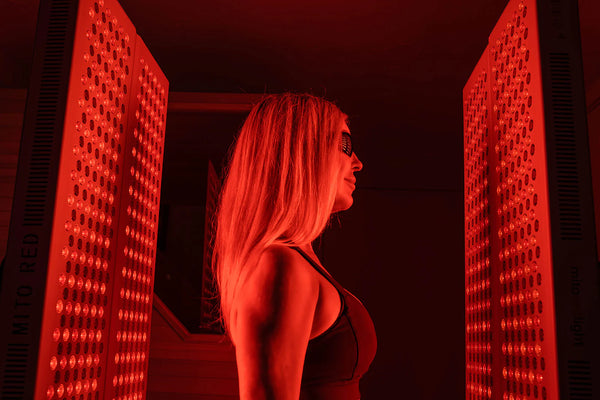
Panel Series
A red light therapy panel is the best form factor for users who want large-area coverage, high total output, and flexible positioning for skin, muscle recovery, joint comfort, and full-body wellness routines. Unlike LED face masks, mats, pods, or targeted wearables, panels let you treat the face, torso, back, legs, and joints with one device — but only if the panel has verified wavelengths, adequate irradiance, even coverage, and strong build quality.
For the underlying science behind the specs we're about to compare, see how red light therapy works at the cellular level.
Last updated: April 2026
Note: This guide is specifically for choosing a red light therapy panel. If you are still deciding between a panel, LED face mask, mat, pod, intranasal device, or brain-focused helmet, start with our complete red light therapy device buyer’s guide.
The Four Non-Negotiable Criteria
When evaluating a red light therapy panel, four criteria matter most: verified wavelengths, adequate irradiance at your real treatment distance, independent third-party testing, and LED chip quality. Everything else — panel size, mounting options, price, app controls, or aesthetics — comes after these fundamentals.
A panel that does not emit the right wavelengths at the right output cannot produce reliable photobiomodulation results, no matter how impressive the marketing sounds.
1. Verified Wavelengths
Wavelength is the single most important specification in any red light therapy panel. The effects of photobiomodulation are wavelength-specific because different wavelengths interact with tissue at different depths and with different biological targets.
The most commonly studied and clinically relevant wavelengths for red light therapy panels are:
- 630 nm — surface skin applications, tone, redness, and superficial skin support
- 660 nm — collagen support, dermal fibroblast activity, and general skin rejuvenation
- 810 nm — deeper tissue and neurological research applications
- 830 nm — deeper dermal and connective tissue support
- 850 nm — muscle recovery, joint comfort, and deeper tissue applications
Near-infrared wavelengths such as 810, 830, and 850 nm are invisible to the naked eye. You cannot verify what a panel emits by looking at it. The only reliable confirmation is independent spectrometer testing.
For a deeper breakdown of each wavelength and what it does, see our red light therapy wavelength guide.
2. Adequate Irradiance at Treatment Distance
Irradiance is the amount of light power delivered to the skin, measured in milliwatts per square centimeter (mW/cm²). It helps determine how quickly a useful dose of light is delivered during a session.
The key phrase is at treatment distance. A panel may show a high irradiance number at 3 or 6 inches, but if you actually use it at 12 or 18 inches, the dose reaching your skin will be lower.
| Irradiance at treatment distance | What it usually means |
|---|---|
| Under 20 mW/cm² | Low output; may require longer sessions and may underdose at normal use distances |
| 20–50 mW/cm² | Useful range for many skin and general wellness routines |
| 50–100 mW/cm² | Strong consumer panel range for shorter, efficient sessions |
| 100+ mW/cm² | High-output range; session time and distance matter more to avoid overdoing dose |
More power is not always better. Red light therapy follows a biphasic dose-response pattern, meaning too little may not do enough, while too much may reduce the desired effect. The goal is the right dose, not the highest possible number.
3. Independent Third-Party Testing
Third-party testing confirms whether a red light therapy panel actually emits the wavelengths and output the brand claims. This is different from manufacturer self-testing, LED supplier spec sheets, or electrical safety certifications.
Look for independent testing that confirms:
- The actual wavelength peaks emitted by the device
- Irradiance at practical treatment distances
- Output consistency across the panel face
- Whether the model tested matches the model being sold
Mito Red Light publishes independent test data so customers can verify device output instead of relying only on marketing claims.
4. LED Chip Quality and Output Consistency
LED chip quality affects wavelength stability, output consistency, and long-term durability. Lower-quality LEDs can shift in output as they heat up or age, which may reduce performance over time.
Chip quality is difficult for shoppers to evaluate directly, so use practical proxies:
- Published independent test data
- Clear wavelength and irradiance specifications
- Strong warranty coverage
- Brand history and product support
- Evidence that the brand updates and improves product generations over time
A red light therapy panel should be treated as a multi-year wellness device, not a disposable gadget. Build quality matters.
When a Panel Is Better Than a Mask, Mat, or Wearable
A red light therapy panel is usually the best choice when you want large-area coverage, higher total output, and flexible use across multiple body areas. A face mask is better for hands-free facial skincare, a mat or pod is better for passive full-body sessions, and a targeted wearable may be better for a single joint or localized area.
If you are still comparing device types, start with our complete red light therapy device buyer’s guide. If you already know you want a panel, this guide will help you compare wavelengths, irradiance, size, safety features, and long-term value.
Choosing the Right Panel Size
The right panel size depends on your goals, available space, and how much of your body you want to treat in one session. A smaller panel can work well for targeted areas, while a larger panel saves time by covering more surface area at once.
| Use case | Best panel size | Best for |
|---|---|---|
| Face, neck, small joints, travel | Tabletop / mini panel | Targeted sessions, small spaces, beginners |
| Upper body, lower body, recovery routines | Mid-size panel | Most users who want a balance of coverage and cost |
| Back, torso, legs, larger treatment areas | Large panel | Full-body wellness, athletes, frequent users |
| Near full-body coverage in one setup | Stacked panel system | High-use households, performance routines, maximum coverage |
For face-focused applications, the MitoGLOW LED face mask may provide more consistent facial coverage than a panel because it is designed around the contours of the face. Panels are better suited for body, recovery, and joint applications where larger treatment areas are needed.
Which Wavelengths Match Your Goal?
The best red light therapy panel is not always the panel with the most wavelengths. The best panel is the one with the right wavelengths for your goal, verified by real testing.
| Goal | Most relevant wavelengths | Device guidance |
|---|---|---|
| Skin tone, texture, and collagen support | 630 nm, 660 nm, 830 nm | Panel or LED face mask depending on treatment area |
| Muscle recovery | 660 nm, 810 nm, 850 nm | Mid-size or large red + NIR panel |
| Joint comfort and deeper tissue support | 810 nm, 830 nm, 850 nm | Panel, wrap, or targeted device depending on location |
| Brain-focused research applications | 810 nm | Purpose-built head-focused device such as MitoMIND |
| Broad wellness and multi-goal use | 630 nm, 660 nm, 810 nm, 830 nm, 850 nm | Multi-wavelength panel with published output data |
For a deeper explanation of the research behind red, near-infrared, and blue wavelengths, visit the Mito Red Light wavelength hub.
Panel Setup: Distance, Angle, and Mounting
Panel performance depends on how you use it. The same panel can deliver very different doses depending on distance, angle, session time, and whether the treatment area is centered in the strongest part of the beam.
Treatment Distance
Most users should follow the manufacturer’s recommended distance, often somewhere between 6 and 18 inches depending on the device. Closer distances deliver higher irradiance over a smaller area. Farther distances cover more area but reduce intensity.
Angle and Coverage
For the most consistent dose, position the panel so the target area is directly facing the LED array. If the panel is angled sharply away from the body, the light reaching the skin can become less uniform.
Mounting Options
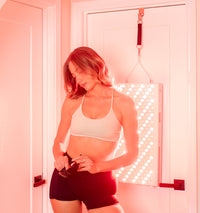
A good panel system should fit your routine. Door mounts, floor stands, horizontal stands, and modular stacking options all make a difference in whether you use the device consistently.
If a panel is powerful but inconvenient, it may not become part of your routine. The best panel is the one that meets the technical criteria and fits your actual daily life.
Panel Safety Features to Check
Safety is not just about whether the device turns on. A well-designed red light therapy panel should account for heat management, electrical safety, eye comfort, and practical user controls.
- Eye protection guidance: Panels should include clear instructions for eye safety and recommended eyewear.
- Low flicker design: Flicker can matter for comfort, especially for sensitive users.
- EMF transparency: Brands should publish or provide EMF data at realistic use distances.
- Thermal management: Cooling design matters for LED lifespan and user comfort.
- Timers and controls: Built-in timers reduce the chance of overuse.
- Warranty support: A strong warranty signals confidence in the hardware.
If you have a medical condition, take photosensitizing medications, are pregnant, have light sensitivity, or have concerns about eye exposure, review our red light therapy contraindications guide and consult a qualified healthcare professional before starting.
Red Flags to Avoid
Not every red light therapy panel is built to the same standard. Watch for these red flags before buying:
- No published irradiance data: If the brand does not state mW/cm² at a specific distance, the number may not be strong enough to advertise.
- No independent test data: Wavelength claims should be verified, not just stated.
- LED count used as the main selling point: More LEDs do not guarantee better output, better wavelengths, or better coverage.
- Vague “full spectrum” claims: Photobiomodulation is wavelength-specific. Look for actual nanometer values.
- Very low prices for large panels: Quality LEDs, housing, cooling, testing, and support cost money.
- Weak warranty: A short warranty can signal low confidence in long-term durability.
- No clear return policy: You should have time to evaluate whether the device fits your routine.
Why Mito Red Light Panels Stand Out
Mito Red Light panels are designed for users who want transparent specifications, independently verified output, and multiple panel sizes for different routines and spaces.
Key differentiators include:
- Published independent test data so customers can verify wavelength and output claims
- Multiple panel sizes for targeted, half-body, and larger-area routines
- Research-aligned wavelengths across red and near-infrared bands
- Mounting and stand options that make consistent use easier
- Established brand support from a company focused specifically on red light therapy
Mito Red Light panels
Verified output. Multiple sizes. Built for consistent at-home use.
Compare panel sizes, wavelengths, and use cases to find the right fit for your goals.
Which Panel Should You Choose?
Use this simple framework:
- Choose a small panel if you want targeted sessions for the face, neck, hands, knees, or travel-friendly use.
- Choose a mid-size panel if you want the best balance of coverage, cost, and flexibility.
- Choose a large panel if you want to treat the back, torso, legs, or multiple areas efficiently.
- Choose a stacked system if you want near full-body coverage and plan to use red light therapy frequently.
If your main goal is facial skincare, consider whether a dedicated LED mask such as MitoGLOW is a better fit. If your goal is full-body recovery, joint comfort, or broad wellness, a panel is usually the stronger choice.
Frequently Asked Questions
What wavelengths should a red light therapy panel have?
A quality red light therapy panel should include research-aligned red and near-infrared wavelengths. Commonly used wavelengths include 630 nm, 660 nm, 810 nm, 830 nm, and 850 nm. At minimum, most users should look for verified red and near-infrared output, such as 660 nm and 850 nm.
How much irradiance does a red light therapy panel need?
A useful consumer panel should publish irradiance at a realistic treatment distance. Many users look for at least 20–50 mW/cm² at the intended use distance, while stronger panels may deliver 50–100 mW/cm² or more. The right number depends on treatment distance, session time, and the goal.
What is the difference between a red light therapy panel and a mask?
A panel is better for larger treatment areas such as the torso, back, legs, joints, and muscle groups. A mask is better for hands-free facial skincare because it is shaped around the face and maintains consistent distance from the skin. If your goal is face-only skincare, a mask may be more practical; if your goal is full-body or multi-area use, a panel is usually better.
How far should I stand from a red light therapy panel?
Follow the manufacturer’s recommended treatment distance, which is commonly between 6 and 18 inches depending on panel output. Closer distances deliver more intensity over a smaller area, while farther distances cover more area with lower intensity.
What is third-party testing for red light therapy panels?
Third-party testing means an independent lab measures the device’s actual wavelength output and irradiance. This helps verify whether the device emits the wavelengths and power levels claimed by the brand. It is different from general electrical safety certifications.
How long should a red light therapy panel session be?
Most panel sessions last 10–20 minutes per treatment area, depending on irradiance, distance, and the goal. More time is not always better because red light therapy follows a dose-response pattern. Follow the device instructions and avoid exceeding recommended session times.
Is a bigger red light therapy panel always better?
Not always. A bigger panel covers more area and can save time, but it may be unnecessary if you only want targeted treatment. The best size depends on your goals, space, budget, and how consistently you plan to use the device.
Should I buy a red light therapy panel or a full-body pod?
A panel is better if you want flexible positioning, targeted treatment, and the option to treat different areas at different distances. A pod or mat-style system may be better if you want a passive full-body session while lying down. Many users choose panels for flexibility and pods for convenience.
Bottom Line
A red light therapy panel is one of the most versatile at-home photobiomodulation devices because it can support large-area, targeted, and full-body routines. But the panel has to pass the basics: verified wavelengths, adequate irradiance, independent testing, and strong build quality.
If you are comparing panels, start with the data. Look for published wavelength and irradiance testing, choose the size that fits your use case, and make sure the device is practical enough that you will actually use it consistently.
To compare panel options, visit the Mito Red Light panel collection. To compare panels against masks, pods, mats, MitoBOOST, and MitoMIND, use the complete red light therapy device buyer’s guide.
Mito Red Light products are general wellness devices. They are not medical devices and have not been evaluated, cleared, or approved by the FDA or any regulatory body for the diagnosis, treatment, cure, or prevention of any disease or medical condition. Any references to peer-reviewed research or clinical studies on this page describe findings from independent scientific literature and do not imply that Mito Red Light devices have been studied, tested, or proven effective for any specific condition. Always consult a qualified healthcare provider before beginning any new wellness routine, particularly if you have a medical condition or are taking medication.
Related articles
More from the buying guides & comparisons knowledge cluster