














Panel Series
Red light therapy supports skin rejuvenation by stimulating mitochondrial ATP production in dermal cells, promoting collagen synthesis, reducing inflammation, and accelerating tissue repair. The 630–660nm wavelengths in Mito Red Light panels represent the most-studied band for skin photobiomodulation, with 943 peer-reviewed studies at 660nm alone in our research database of 10,000+ studies.
Reviewed by Dr. Melania Montes, PhD, UC Berkeley- Expert in Cell Biology
Summary: Learn how red and near-infrared light fit into a simple skin routine, the differences between masks and panels, and how to choose the right device based on power, coverage, and time available.
Want an overview of red light therapy? Read our article
Red Light Therapy: Benefits, Science, and How It Works
What Red Light Therapy Does for Skin (and Why It Works)
Red light therapy (RLT) uses specific wavelengths of light — typically 630–670 nm (red) and 810–850 nm (near-infrared) — to penetrate the skin and stimulate cellular energy production through a process called photobiomodulation. When light is absorbed by mitochondria in skin cells, it increases ATP production, which supports the skin's natural repair and regeneration processes.
The most well-studied skin benefits of red light therapy include:
- Collagen production: Red light (660 nm) stimulates fibroblast activity, the cells responsible for producing collagen and elastin. Clinical studies show measurable increases in collagen density after consistent use.
- Wrinkle and fine line reduction: By increasing collagen and improving cellular turnover, RLT can visibly reduce the appearance of fine lines, especially around the eyes, forehead, and mouth.
- Acne reduction: Red and near-infrared light reduce inflammatory markers in skin tissue and have been shown to reduce acne lesions. Some research also suggests anti-bacterial effects against Cutibacterium acnes.
- Skin tone and texture: Regular use supports more even pigmentation, reduced redness, and smoother overall texture.
- Wound healing and scar improvement: Near-infrared wavelengths accelerate tissue repair, which can reduce the appearance of scars and post-inflammatory hyperpigmentation.
How to Choose the Right Red Light Therapy Device for Skin
| Feature | LED Mask (e.g., MitoGLOW) | Panel (e.g., MitoADAPT 4.0) |
|---|---|---|
| Best for | Face-focused daily habits | Face + neck + chest + body |
| Wavelengths | 630 nm, 660 nm | 630 nm, 660 nm, 830 nm, 850 nm |
| Irradiance | Moderate (sufficient for face) | High (20–100+ mW/cm²) |
| Session time | 10–15 min | 10–20 min |
| Coverage area | Face only | Large multi-zone |
| Portability | High | Low–moderate |
| Best use case | Consistent daily skincare habit | Faster full-coverage results |
The bottom line on device selection: Choose a mask if convenience and face-only focus is your priority. Choose a panel if you want higher irradiance, larger coverage (neck, chest, décolletage), or faster overall routines.
Red Light Therapy for Skin: The Science Behind the Results
Multiple peer-reviewed studies support red light therapy's effects on skin:
- A 2014 study in Photomedicine and Laser Surgery found that subjects using 660 nm red light experienced significant improvements in skin complexion and collagen density compared to controls.
- A 2023 review in International Journal of Molecular Sciences confirmed photobiomodulation's role in stimulating fibroblast proliferation, collagen synthesis, and skin barrier function.
- Research published in Dermatologic Surgery demonstrated a statistically significant reduction in acne lesion counts following red and blue light therapy protocols.
- A study in Lasers in Medical Science showed near-infrared wavelengths (830 nm) penetrate to the dermis and subdermis, where collagen and elastic fibers are most concentrated.
Mito Red Light devices use wavelengths specifically calibrated within these therapeutic windows: 630 nm, 660 nm, 830 nm, and 850 nm — covering both surface-level skin benefits and deeper tissue support.
How to Use Red Light Therapy for Skin: Protocol Guide
Recommended session frequency: 4–6 sessions per week for the first 8–12 weeks, then 2–3 sessions per week for maintenance.
Session duration: 10–20 minutes per treatment area, at the distance specified for your device (typically 6–12 inches for panels).
Before your session:
- Cleanse skin thoroughly — remove all makeup, SPF, and occlusive products
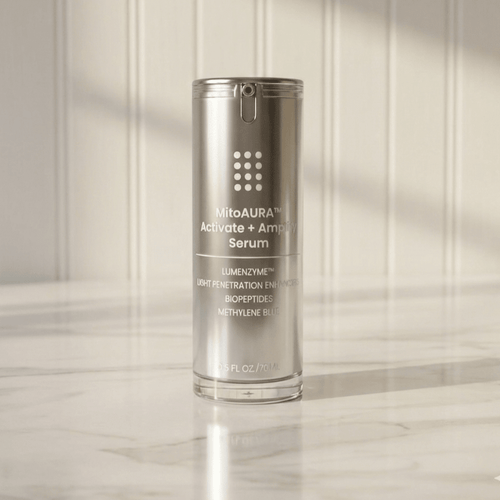
- Apply a light, non-occlusive serum if desired (MitoAURA is formulated to complement red and NIR light)
- No photosensitizing retinoids or acids immediately before sessions
After your session:
- Morning sessions: Apply a broad-spectrum SPF 30+ sunscreen
- Evening sessions: Follow with a gentle moisturizer
- Allow skin to settle 15–30 minutes before applying actives like retinol or AHAs
When to expect results: Most users notice improvements in skin texture and tone within 4–6 weeks. Collagen-related changes (firmer skin, reduced fine lines) typically become measurable at 8–12 weeks with consistent use.
Frequently Asked Questions: Red Light Therapy for Skin
Does red light therapy actually work for skin? Yes. Multiple peer-reviewed clinical studies have demonstrated that red light therapy at 630–660 nm significantly increases collagen production, reduces fine lines, and improves overall skin texture. It is one of the most clinically studied non-invasive skin treatments available.
What wavelength is best for skin and collagen production? 660 nm (red light) is the most studied wavelength for collagen and skin surface benefits. Near-infrared at 830–850 nm penetrates deeper into the dermis for structural skin support. Devices that combine both wavelengths, like the MitoADAPT 4.0 and MitoGLOW, provide the broadest range of skin benefits.
How long does it take for red light therapy to work on skin? Most people see measurable improvements in skin texture and tone within 4–6 weeks of consistent use (4–6 sessions per week). Collagen-related improvements, such as firmer skin and reduced wrinkles, typically require 8–12 weeks of regular sessions.
Can red light therapy help with acne? Yes. Red light therapy has been shown to reduce inflammation and acne lesion counts. It works by reducing inflammatory cytokines in skin tissue and may have mild antibacterial effects. It is most effective for inflammatory acne and is often combined with blue light therapy for more severe cases.
Is red light therapy safe for daily use on skin? Red light therapy is considered safe for daily use at the intensities and durations used in consumer devices. Studies have not shown adverse effects from consistent use. The main precaution is avoiding sessions on skin treated with photosensitizing medications.
What's the difference between a red light mask and a panel for skin? A mask provides targeted, hands-free coverage specifically for the face. A panel offers higher irradiance, more wavelength options, and the ability to treat the face, neck, chest, and body in one session. Masks are better for convenience; panels are better for results speed and broader coverage.
How often should I use red light therapy for collagen production? For collagen-focused goals, 4–6 sessions per week during the first 8–12 weeks is recommended. Once you achieve your goal, 2–3 maintenance sessions per week are typically sufficient to sustain results.
Can I use red light therapy if I have sensitive skin? Yes. Red light therapy is generally well tolerated by sensitive skin types because it is non-thermal at standard consumer intensities. Start with shorter sessions (5–10 minutes) and gradually increase as your skin adapts.
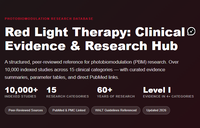
For more scientific studies check out our Red Light Therapy: Clinical Evidence & Research Hub
Sources
- Wunsch A, Matuschka K. A controlled trial to determine the efficacy of red and near-infrared light treatment in patient satisfaction, reduction of fine lines, wrinkles, skin roughness, and intradermal collagen density increase. Photomedicine and Laser Surgery. 2014;32(2):93-100.
- Hernández ML, et al. Unlocking the Power of Light on the Skin: A Comprehensive Review on Photobiomodulation. Int J Mol Sci. 2024;25(8):4483.
- Gold MH, et al. Clinical efficacy of self-applied blue light therapy for mild-to-moderate facial acne. Journal of Clinical and Aesthetic Dermatology. 2009.
- Avci P, et al. Low-level laser (light) therapy (LLLT) in skin: stimulating, healing, restoring. Seminars in Cutaneous Medicine and Surgery. 2013;32(1):41-52.
- Barolet D, et al. Infrared and skin: Friend or foe. Journal of Photochemistry and Photobiology B. 2016;155:78-85.
Mito Red Light products are general wellness devices. They are not medical devices and have not been evaluated, cleared, or approved by the FDA or any regulatory body for the diagnosis, treatment, cure, or prevention of any disease or medical condition. Any references to peer-reviewed research or clinical studies on this page describe findings from independent scientific literature and do not imply that Mito Red Light devices have been studied, tested, or proven effective for any specific condition. Always consult a qualified healthcare provider before beginning any new wellness routine, particularly if you have a medical condition or are taking medication.
This article discusses published scientific research and general educational information about photobiomodulation and red light therapy. It does not constitute medical advice and does not make specific claims about Mito Red Light devices. The research cited reflects independent peer-reviewed studies and does not imply that any Mito Red Light product has been evaluated, approved, or cleared by the FDA or any other regulatory body for the diagnosis, treatment, cure, or prevention of any disease or medical condition. Individual results vary. Consult a qualified healthcare professional before beginning any light therapy protocol, particularly if you have a pre-existing medical condition, are pregnant, or are taking photosensitising medications.
Mito Red Light products are general wellness devices. They are not medical devices and have not been evaluated, cleared, or approved by the FDA or any regulatory body for the diagnosis, treatment, cure, or prevention of any disease or medical condition. Any references to peer-reviewed research or clinical studies on this page describe findings from independent scientific literature and do not imply that Mito Red Light devices have been studied, tested, or proven effective for any specific condition. Always consult a qualified healthcare provider before beginning any new wellness routine, particularly if you have a medical condition or are taking medication.
Related articles
More from the skin health & anti-aging knowledge cluster