




Wavelength Science

Red Light Therapy Wavelengths: The Complete Evidence Guide

Not all red light therapy devices are the same — and not all wavelengths do the same thing. This guide covers every clinically studied wavelength from 590nm to 940nm, what the research shows for each one, which conditions they are most studied for, and how to choose based on evidence rather than marketing.

Direct answer

What wavelengths are used in red light therapy? Clinically studied red light therapy wavelengths range from approximately 590nm to 1100nm. The most studied wavelengths in photobiomodulation research are the 808–810nm near-infrared band (1,205 studies), the 630–633nm red band (989 studies), 660nm (943 studies), and 830nm (624 studies) — based on analysis of over 10,000 peer-reviewed studies in the Mito Red Light research database. Different wavelengths penetrate tissue to different depths and are optimised for different applications.

All study counts in this article are drawn from the Mito Red Light Evidence Explorer — a database of 10,000+ peer-reviewed photobiomodulation studies categorised by wavelength, condition, study type, and year. This is the largest publicly accessible PBM research database maintained by any red light therapy company.


Why wavelength is the most important specification in red light therapy

Direct answer

Does wavelength matter in red light therapy? Yes — wavelength determines which photoreceptors absorb the light, how deep it penetrates tissue, and therefore which biological effects are produced. A device operating at 850nm delivers fundamentally different effects to one at 660nm, even at identical power levels. Wavelength is not a marketing variable — it is the primary determinant of mechanism and clinical outcome.

The primary mechanism of red light therapy — photon absorption by cytochrome c oxidase in the mitochondrial electron transport chain — is wavelength-dependent. Cytochrome c oxidase has specific absorption peaks in the red (approximately 620–680nm) and near-infrared (approximately 760–940nm) ranges. Light outside these ranges is not efficiently absorbed and produces little to no photobiomodulation effect.

Beyond the primary mitochondrial mechanism, different wavelengths interact differently with other tissue chromophores — haemoglobin, melanin, water, and lipids — which determines penetration depth and tissue specificity. A 633nm photon might travel 1–2mm into tissue. An 810nm photon from the same device can reach 3–5cm, penetrating through skin into muscle, joint capsule, or bone.

The industry problem

Most red light therapy marketing defaults to "660nm and 850nm" as shorthand for a complete device. The peer-reviewed literature tells a different story: 808–810nm and 630–633nm are the most studied wavelength bands globally, and 850nm — despite its marketing dominance — has significantly fewer studies than 830nm or 810nm. Understanding the actual evidence base prevents buyers from confusing marketing with science.


The optical window: why therapeutic wavelengths cluster between 600–1000nm

Direct answer

What is the optical window in red light therapy? The optical window (also called the therapeutic window) is the wavelength range — approximately 600–1000nm — where light achieves maximum penetration depth in biological tissue. Below 600nm, haemoglobin and melanin absorb too much light. Above 1000nm, water absorption limits penetration. Within this window, photons can travel centimetres into tissue and reach mitochondria at depth.

The optical window is not arbitrary — it emerges from the absorption spectra of the major tissue chromophores. Haemoglobin (both oxygenated and deoxygenated) absorbs strongly below 600nm, which is why visible light in the blue and green range does not penetrate tissue effectively. Water absorbs strongly above approximately 950–1000nm, which is why far-infrared devices (used in saunas) produce heat rather than photochemical effects.

Within the 600–1000nm window, penetration depth increases broadly with wavelength — red light at 630–660nm reaches primarily the skin and superficial layers, while near-infrared at 808–850nm can penetrate several centimetres, reaching muscles, joints, and even neural tissue.


590nm
Amber / Orange-red
VisibleAmber glow
Penetration~1mm (superficial)
Primary targetsSkin surface, retina, mood
Used inMitoPRO X, MitoADAPT

590nm amber light: what it does and what the research shows

Studies in Mito database mentioning 590nm
57 studies

590nm sits at the amber-orange boundary of the visible spectrum — distinct from the red wavelengths that dominate photobiomodulation research. It has a smaller evidence base than the red and NIR wavelengths but covers several interesting applications, particularly for retinal health, skin surface applications, and preliminary mood-related research.

At 590nm, penetration is limited to the most superficial skin layers — making it more relevant for epidermal conditions than deep-tissue work. The 18 retinal studies in our database using near-590nm wavelengths reflect its use in ophthalmology research, where amber and yellow wavelengths interact selectively with retinal chromophores.

Mito devices using 590nm

590nm is included in the MitoPRO X (590, 630, 660, 810, 830, 850nm) and MitoADAPT (590, 630, 660, 670, 810, 830, 850, 940nm) to expand surface-layer coverage and complement the deeper-penetrating NIR wavelengths.


630–633nm
Red light · #2 most studied band
VisibleBright red
Penetration1–2mm
Primary targetsSkin, cells, circulation, dermatology
Used inMitoPRO+, MitoPRO X, MitoADAPT

630–633nm: the most studied red wavelength band in the literature

Studies in Mito database mentioning 630 or 633nm (combined)
989 studies — #2 most studied wavelength band globally

The 630–633nm band represents the most extensively studied red light wavelength range in photobiomodulation research, with 989 combined studies in our database. 633nm in particular has been the workhorse of early laser and LED photobiomodulation research — the helium-neon (HeNe) laser, which dominated PBM research for decades, emits at precisely 632.8nm, which is why so much early literature concentrates around this wavelength.

This wavelength range sits squarely within the red absorption peak of cytochrome c oxidase and has the broadest clinical evidence base of any visible wavelength in photobiomodulation. Its penetration is primarily superficial — reaching the epidermis, dermis, hair follicles, and superficial capillaries — making it the dominant wavelength for dermatological, cosmetic, and circulation research.

Top conditions studied with 630–633nm (from our database)

ConditionStudiesNotes
Dermatology633nm: 55Acne, wound healing, photorejuvenation
Wound healing633nm: 53One of the most replicated PBM findings
Oral health660nm leads, 633nm: 30+Mucositis, healing, pain
Circulation633nm: 23Microcirculation, blood flow enhancement
Cells (in vitro)633nm: 42Mitochondrial activation, ATP production
Immunity633nm: 16Immune cell activation, anti-inflammatory
Reproductive system633nm: 21Fertility research, IVF applications
Brain / neurology633nm: 27Transcranial, neuroprotection

Source: Mito Red Light Evidence Explorer — 10,000+ study database. Browse all studies →

The HeNe legacy

Much of the foundational photobiomodulation evidence was generated using helium-neon lasers emitting at 632.8nm. This is why the 630–633nm band has disproportionately high study counts relative to other red wavelengths — it reflects decades of laser research that predates modern LED devices. Modern LED devices using 630nm deliver the same photochemical benefit at a fraction of the cost.

Mito devices using 630nm

630nm is included in the MitoPRO+ (630, 660, 830, 850nm), MitoPRO X (590, 630, 660, 810, 830, 850nm), and MitoADAPT (590, 630, 660, 670, 810, 830, 850, 940nm).


660nm
Red light · #3 most studied globally
VisibleDeep red
Penetration2–3mm
Primary targetsSkin, wounds, cells, oral, hair
Used inMitoPRO+, MitoPRO X, MitoADAPT

660nm: the most studied single wavelength in photobiomodulation

Studies in Mito database mentioning 660nm
943 studies — #3 most studied wavelength globally (and #1 single wavelength)

660nm is the most studied individual wavelength in photobiomodulation research, with 943 studies in our database — the largest count for any single nm value. It sits at the deeper end of the red spectrum, penetrating slightly further than 630–633nm while remaining within the primary cytochrome c oxidase absorption band. It is the dominant wavelength in LED-era PBM research, having largely replaced 633nm as the standard red wavelength for modern devices.

660nm dominates the oral health literature (325 studies in our oral category), wound healing (80 studies), stem cell and regeneration research (29 studies), surgery (26 studies), and respiratory research (33 studies). It is also the most studied wavelength for in vitro cellular research, reflecting its use as a standard reference wavelength in laboratory photobiomodulation protocols.

Top conditions studied with 660nm (from our database)

ConditionStudiesKey findings
Oral health325Mucositis prevention/treatment — included in clinical guidelines since 2020
Wound healing80Accelerated closure, collagen deposition, reduced infection
Cells (in vitro)45ATP production, mitochondrial membrane potential, ROS modulation
Dermatology35Photorejuvenation, acne, inflammatory skin conditions
Respiratory33Airway inflammation, COVID-19 recovery (Pereira et al., 2022)
Brain35Neuroprotection, mood, cognitive function
Oncology29Adjunct to cancer therapy, mucositis prevention
Stem cells29Differentiation, proliferation, regeneration
Hair9Follicular stimulation, androgenic alopecia

Source: Mito Red Light Evidence Explorer — 10,000+ study database. Browse all studies →

Mito Red Light devices use 630nm and 660nm in every panel — the two most studied red wavelengths in the literature. See which device matches your application.

Compare panels →

670nm
Deep red
VisibleDeep red
Penetration2–4mm
Primary targetsEyes, brain, skin, development
Used inMitoADAPT only

670nm: the eye and brain wavelength

Studies in Mito database mentioning 670nm
295 studies

670nm is a highly specific wavelength with a disproportionately strong evidence base in retinal and neurological research. The eyes category in our database shows 670nm as the #1 wavelength with 64 studies — far ahead of any other wavelength for ocular applications. Pioneering work by Glen Jeffery at University College London has demonstrated that 670nm exposure can improve retinal function in ageing eyes and improve photoreceptor mitochondrial activity.

670nm also appears prominently in brain research (39 studies) alongside 810nm, consistent with its use in transcranial photobiomodulation protocols. It penetrates slightly deeper than 660nm while remaining comfortably within the red absorption peak of cytochrome c oxidase.

Top conditions studied with 670nm

ConditionStudiesNotes
Eyes / retinal health64#1 wavelength for retinal PBM — Jeffery lab, UCL; FDA approval for dry AMD 2024
Brain / neurology39Transcranial PBM, neuroprotection, Parkinson's models
Wound healing34Tissue repair and regeneration
Development6Embryonic development, cellular differentiation

Jeffery G et al. "670nm light improves mitochondrial function and protects against age-related retinal degeneration." Neurobiol Aging. 2017. Source: Mito Red Light Evidence Explorer.

Mito devices using 670nm

670nm is exclusive to the MitoADAPT — the only Mito panel that includes this wavelength alongside the full 8-wavelength spectrum (590, 630, 660, 670, 810, 830, 850, 940nm). The MitoADAPT is the most comprehensively targeted device in the lineup for retinal and neurological applications.


808–810nm
Near-infrared · #1 most studied band globally
VisibleInvisible (faint IR glow)
Penetration3–5cm
Primary targetsBrain, bone, joints, muscle, oral
Used inMitoPRO X, MitoADAPT

808–810nm: the most studied NIR wavelength band in the world

Studies in Mito database mentioning 808nm or 810nm (combined)
1,205 studies — #1 most studied wavelength band across all 10,000+ studies

The 808–810nm band is the single most studied wavelength range in photobiomodulation research, with 1,205 combined studies in our database. 808nm dominates because of its use in high-power diode laser research — the gallium aluminium arsenide (GaAlAs) diode laser, which became the clinical standard for deep-tissue PBM, emits at 808nm. Mito devices use 810nm, which falls within the same absorption band and has 533 studies of its own.

At this wavelength, NIR light penetrates 3–5cm into tissue — deep enough to reach joint capsules, muscle belly, subchondral bone, and in transcranial applications, neural tissue. The oral health category alone contains 215 studies using 808nm and 200 using 810nm — reflecting the dominant use of diode lasers in dental photobiomodulation.

Top conditions studied with 808–810nm (from our database)

ConditionStudies (808+810nm)Key context
Oral health415Dominant wavelength for dental PBM — healing, pain, mucositis
Brain / neurology150#1 wavelength for transcranial PBM; Parkinson's, TBI, depression research
Bone71Fracture healing, osteoporosis, dental osseointegration
Joints62Arthritis, cartilage regeneration, synovial inflammation
Muscle68Performance, recovery, DOMS reduction
Pain58Chronic pain, neuropathic pain, post-surgical pain
Nervous system69Peripheral neuropathy, spinal cord, nerve regeneration
Hearing17Cochlear, tinnitus, auditory nerve research

Source: Mito Red Light Evidence Explorer — 10,000+ study database. Browse all studies →

808nm vs 810nm: are they the same?

Functionally, yes. 808nm is the emission wavelength of the standard GaAlAs diode laser used in decades of clinical PBM research. 810nm is the LED equivalent used in modern home devices including Mito Red Light. Both wavelengths sit within the same NIR absorption peak of cytochrome c oxidase and produce equivalent photobiomodulation effects at matched irradiance. The 808nm literature applies directly to 810nm devices.


830nm
Near-infrared · #4 most studied globally
VisibleInvisible
Penetration3–5cm
Primary targetsBone, pain, joints, muscle, nervous system
Used inMitoPRO+, MitoPRO X, MitoADAPT

830nm: the most studied NIR wavelength in the musculoskeletal literature

Studies in Mito database mentioning 830nm
624 studies — #4 most studied wavelength globally

830nm is the dominant wavelength in musculoskeletal photobiomodulation research, leading the bone (74 studies), pain (61 studies), and joints (30 studies) categories in our database. It represents a slightly longer NIR wavelength than 808–810nm, with comparable penetration depth and a similar cytochrome c oxidase absorption profile.

830nm has a strong presence in the 2025 specialist consensus review published in the Journal of the American Academy of Dermatology, which confirmed PBM efficacy for several conditions. It is the dominant wavelength in dermatological NIR applications (43 studies), where its penetration reaches the dermis and subcutaneous layer — useful for photorejuvenation, collagen stimulation, and wound healing at depth.

Top conditions studied with 830nm

ConditionStudiesNotes
Bone74#1 wavelength for bone PBM globally
Pain61Chronic pain, nociception, post-surgical
Oral health129Healing, pain, bone regeneration
Dermatology43Photorejuvenation, wound healing, acne
Joints30Arthritis, inflammation, cartilage
Nervous system35Peripheral neuropathy, nerve regeneration
Muscle36Recovery, performance, fatigue
Thyroid8#1 wavelength in thyroid PBM research

Source: Mito Red Light Evidence Explorer — 10,000+ study database. Browse all studies →


850nm
Near-infrared
VisibleInvisible
Penetration4–6cm
Primary targetsMuscle, deep tissue, sleep
Used inMitoPRO+, MitoPRO X, MitoADAPT

850nm: heavily marketed, but what does the research actually show?

Studies in Mito database mentioning 850nm
294 studies

850nm is one of the most marketed wavelengths in the consumer red light therapy industry — frequently paired with 660nm as a standard two-wavelength combination. However, with 294 studies in our database, it ranks 7th by study count — behind 808–810nm (1,205), 630–633nm (989), 660nm (943), 830nm (624), 904nm (422), and 670nm (295).

This does not mean 850nm is ineffective — it means the marketing has outpaced the direct evidence base relative to other NIR wavelengths. 850nm leads our muscle category with 68 studies, making it the most evidence-backed wavelength for muscle-specific applications. It also has 6 studies in the sleep medicine category — more than any other wavelength in that relatively new research area.

The honest picture on 850nm

850nm is a legitimate and effective photobiomodulation wavelength. The gap between its marketing prominence and its study count reflects the fact that the consumer industry largely adopted it based on interpolation from adjacent wavelengths (808, 830nm) rather than its own direct evidence. It is included in Mito devices because it adds coverage within the NIR window — but 810nm and 830nm carry a substantially stronger independent evidence base.


940nm
Deep near-infrared
VisibleInvisible
Penetration5–7cm (deepest in range)
Primary targetsDeep muscle, joints, bone, fat tissue
Used inMitoADAPT only

940nm: the deepest-penetrating wavelength in the Mito lineup

Studies in Mito database mentioning 940nm
173 studies

940nm sits at the upper edge of the optical window, approaching the point where water absorption begins to limit penetration depth. It offers the deepest tissue penetration of any wavelength in the Mito lineup — estimated at 5–7cm — making it potentially useful for large-muscle groups, deep joint structures, and adipose tissue applications.

940nm has 173 studies in our database, appearing in muscle, joint, and metabolic health research. It is positioned in the MitoADAPT as the "depth extension" wavelength — complementing the 810nm and 830nm that dominate the NIR evidence base, while pushing penetration to its practical maximum within the optical window.

Mito devices using 940nm

940nm is exclusive to the MitoADAPT — the only panel in the Mito lineup that includes this wavelength. The MitoADAPT's 8-wavelength system (590, 630, 660, 670, 810, 830, 850, 940nm) is designed to provide maximum spectral coverage from superficial skin layers through to the deepest accessible tissue planes.

The MitoADAPT is the only home device using all 8 wavelengths — 590nm through 940nm. Built for full-spectrum photobiomodulation from skin surface to deep tissue.

View MitoADAPT →

Complete wavelength comparison: all Mito wavelengths side by side

All study counts from the Mito Red Light Evidence Explorer database (10,000+ studies).

Wavelength Type Studies Penetration Top applications In Mito devices
590nm Amber 57 ~1mm Retina, skin surface, mood MitoPRO X, MitoADAPT
630–633nm Red 989 1–2mm Skin, wound healing, circulation, cells All 3 panels
660nm Red 943 2–3mm Oral, wound healing, cells, dermatology All 3 panels
670nm Deep red 295 2–4mm Eyes (#1), brain, wound healing MitoADAPT only
808–810nm NIR 1,205 3–5cm Brain (#1), bone, oral, joints, muscle MitoPRO X, MitoADAPT
830nm NIR 624 3–5cm Bone (#1), pain, dermatology, thyroid All 3 panels
850nm NIR 294 4–6cm Muscle (#1 wavelength), sleep, deep tissue All 3 panels
940nm Deep NIR 173 5–7cm Deepest tissue, metabolic, joints MitoADAPT only

Which wavelength for which condition? Evidence-based recommendations

The following recommendations are based on which wavelengths have the highest study counts for each condition in the Mito Red Light database of 10,000+ peer-reviewed studies — not on marketing or manufacturer claims.

Condition / Goal Most studied wavelengths Studies Recommended Mito device
Skin rejuvenation / anti-aging633nm, 830nm, 660nm472 in dermatologyMitoPRO+ or MitoGLOW
Wound healing660nm, 633nm, 670nm596 studiesAny Mito panel
Muscle recovery & performance850nm, 808nm, 660nm, 830nm432 studiesMitoPRO X, MitoADAPT
Joint pain & arthritis808nm, 830nm, 904nm259 studiesMitoPRO X, MitoADAPT
Bone health830nm, 808nm, 780nm380 studiesMitoPRO X, MitoADAPT
Brain & cognitive health810nm, 808nm, 670nm511 studiesMitoADAPT (includes 670nm)
Pain management830nm, 904nm, 808nm409 studiesMitoPRO X, MitoADAPT
Hair growth655nm, 660nm, 630nm102 studiesMitoGLOW, MitoPRO+
Eye & retinal health670nm, 650nm, 633nm312 studiesMitoADAPT (670nm)
Oral health / dental660nm, 808nm, 810nm1,932 studiesAny panel — targeted use
Thyroid830nm, 850nm, 904nm24 studiesMitoPRO+, MitoADAPT
Circulation633nm, 660nm, 808nm169 studiesAny Mito panel
Immunity633nm, 660nm, 830nm95 studiesAny Mito panel
Nervous system / neuropathy808nm, 830nm, 660nm293 studiesMitoPRO X, MitoADAPT
Sleep850nm, 830nm, 660nm23 studiesAny Mito panel — evening use

All data from the Mito Red Light Evidence Explorer. Study counts reflect references in our database mentioning each wavelength for each category — not the total global literature. Explore the full database →


How Mito Red Light uses wavelengths: which device for which goal

Device Wavelengths Total Best for
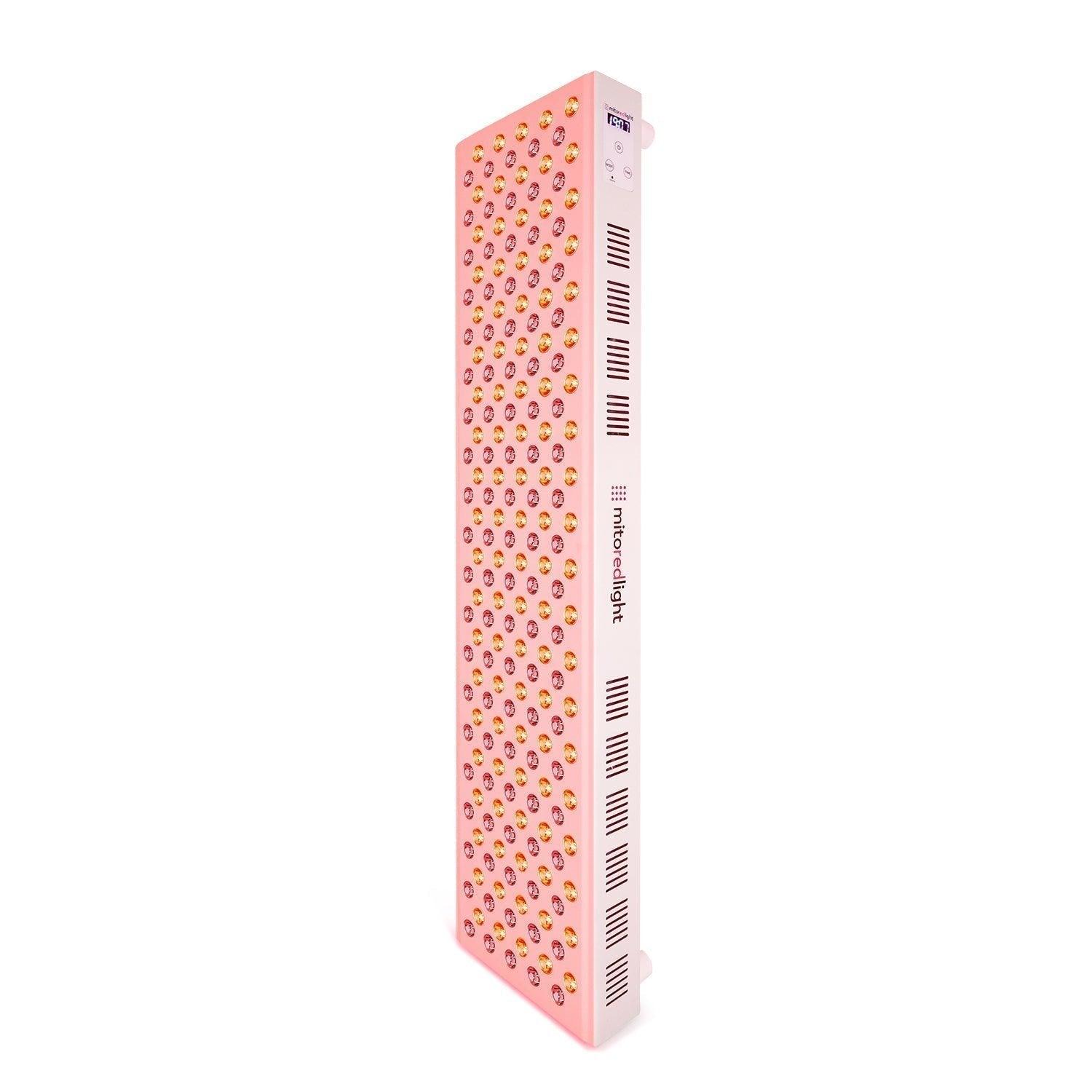
MitoPRO+ 630nm · 660nm · 830nm · 850nm 4 Skin, wound healing, muscle recovery, general wellness. Strongest red evidence (630+660) + core NIR (830+850)
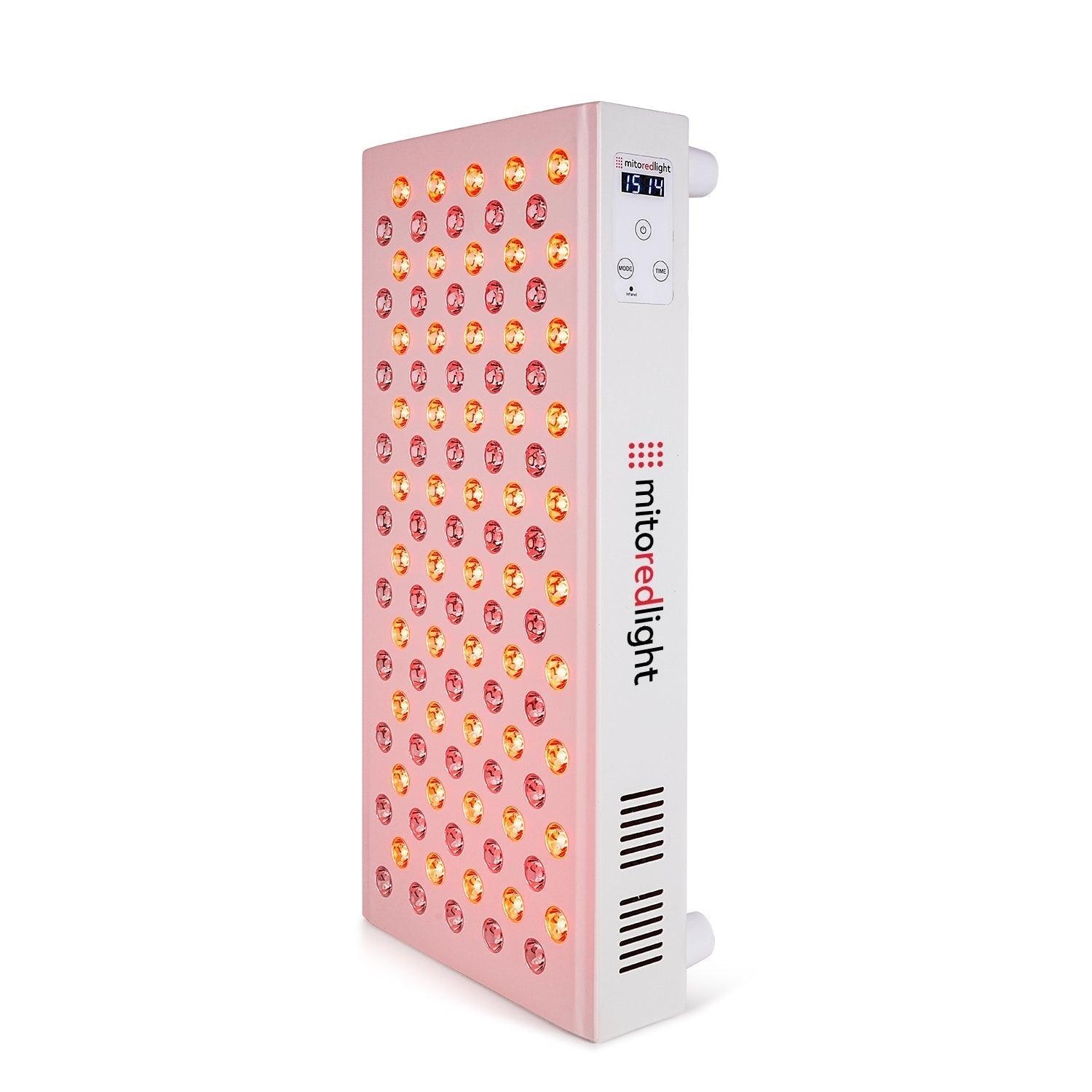
MitoPRO X 590nm · 630nm · 660nm · 810nm · 830nm · 850nm 6 Full red spectrum + #1 NIR band (810nm). Best for deep-tissue, brain, bone, joints, and comprehensive applications
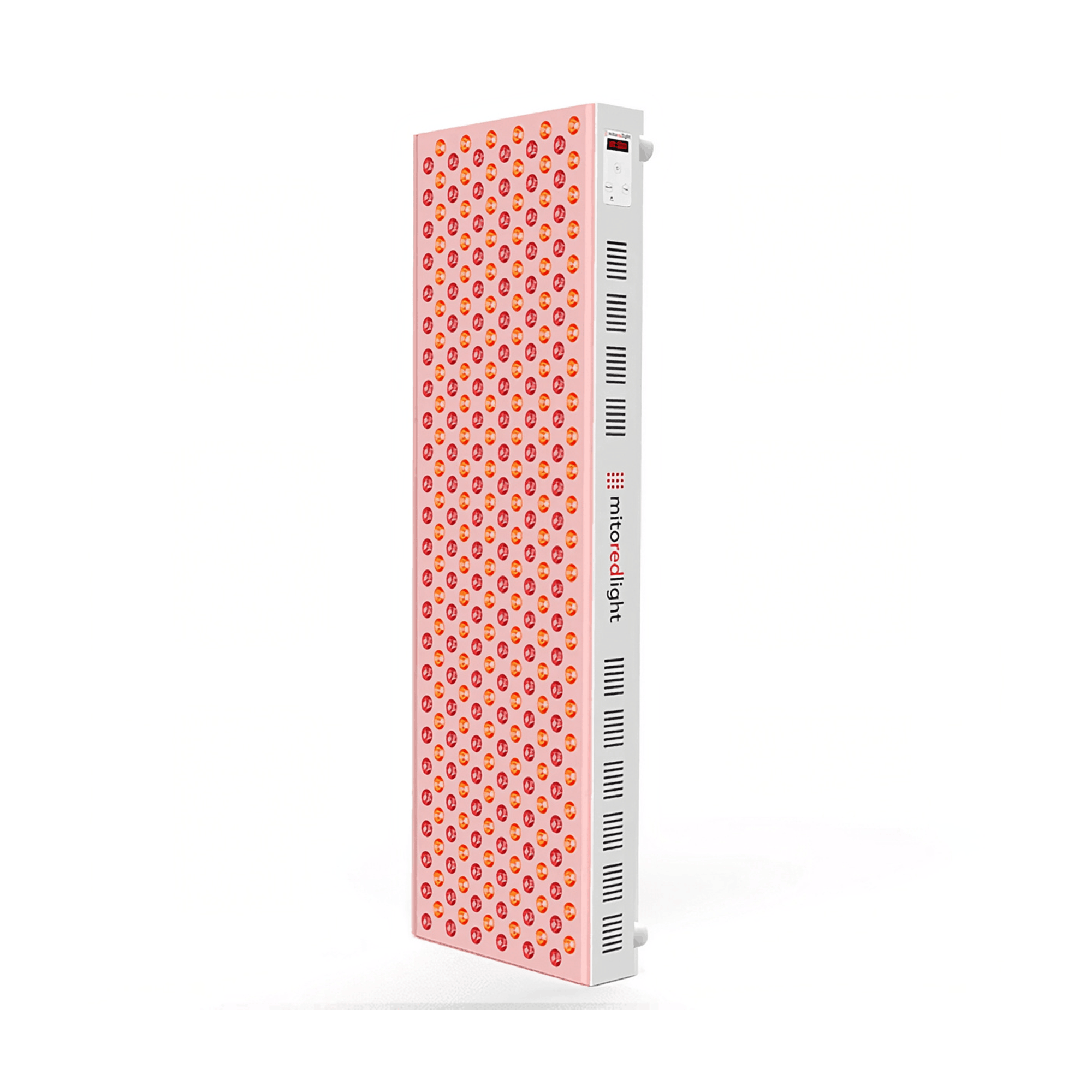
MitoADAPT 590nm · 630nm · 660nm · 670nm · 810nm · 830nm · 850nm · 940nm 8 Complete spectrum. Adds 670nm (eyes/brain) and 940nm (deepest penetration). Maximum coverage from skin surface to deep tissue
MitoGLOW Red + NIR (LED mask) Facial skin rejuvenation, collagen, acne. Targeted delivery for dermatological applications

Related resources

Find the right device for your wavelength needs

Every Mito Red Light panel uses wavelengths selected from the highest-evidence bands in the peer-reviewed literature — not from marketing convention.

Compare all panels Explore the research database →