


















Panel Series
The interaction between topically applied skincare compounds and red light therapy is an emerging area, with growing evidence that certain ingredients can meaningfully alter light-tissue interactions by affecting the redox state of skin cells or acting as photosensitizers. A structured topical protocol timed around light sessions may amplify outcomes by preparing the cellular environment before treatment and supporting recovery processes afterward. This article outlines a three-step framework grounded in the mechanistic evidence for ingredient-light synergy.
Executive summary
A three‑step topical routine (cleanser → pre‑LED serum “MitoAURA Prime” → post‑LED serum “MitoAURA Seal”) can be rationally engineered to increase the probability that red / near‑infrared (R/NIR) photobiomodulation (PBM) produces consistent, skin‑relevant biological effects, mainly by optimizing four controllable domains: tissue optics, stratum‑corneum environment, mitochondrial redox “readiness,” and post‑irradiation recovery biology. PBM is commonly described as non‑thermal irradiation in the ~600–1100 nm range that triggers mitochondria‑linked signaling (especially via cytochrome c oxidase) and downstream changes in ATP availability, reactive oxygen species (ROS) and nitric oxide (NO) dynamics, inflammatory gene expression, and extracellular matrix remodeling. [1]
In facial skin, clinical and mechanistic literature supports that combined red (~630–660 nm) plus near‑infrared (~810–850 nm) can improve measures related to photodamage and “rejuvenation” (texture, wrinkles, patient‑reported outcomes), and can modulate cytokines and matrix‑related markers—while outcomes remain parameter‑dependent and subject to biphasic dose response (too little ≈ no effect; too much ≈ diminished or opposite effects). [2]
Within that PBM framework, the three topical steps can be justified as follows:
· Cleanser (priming step): engineered primarily for optical and barrier hygiene: remove makeup/sunscreen/particulate films that absorb or scatter light, while minimizing surfactant‑induced barrier damage and pH disruption (which can transiently increase irritation and inflammation and alter penetration dynamics). Syndet‑type surfactants and barrier‑supportive cosmeceuticals (humectants, soothing agents) align with this purpose. [3]
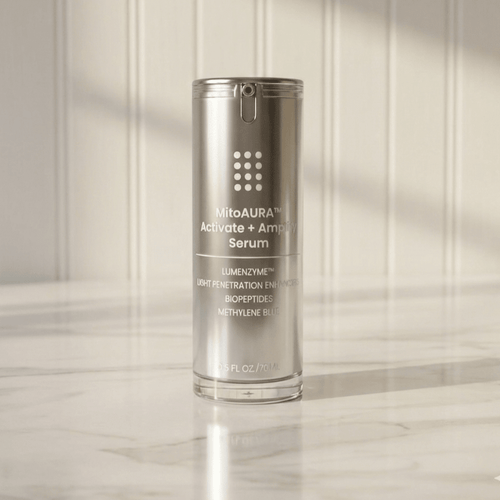
· MitoAURA Prime (pre‑LED serum): engineered for thin‑film optical coupling + hydration, with targeted ingredients that may support mitochondrial responsiveness (energy metabolism substrates/cofactors, anti‑glycation/antioxidant buffering, anti‑inflammatory tone) while avoiding strongly opaque, reflective, or pigment‑dense phases that could reduce delivered fluence at the skin surface. Optical‑clearing literature (glycerol/diol humectants) provides a mechanistic rationale—though skincare concentrations and timescales may be lower than those in imaging studies. [4]
· MitoAURA Seal (post‑LED serum): engineered for recovery and signal amplification: reinforce the barrier (lipids/ceramides), continue anti‑inflammatory support, manage oxidative stress without fully extinguishing PBM’s beneficial redox signaling, and provide “matrix‑support” actives (peptides, polyphenols, beta‑glucans) that can align with PBM‑induced remodeling biology (collagen, TIMPs, wound‑healing cascades). [5]
Critically, the device parameters (wavelengths, irradiance at skin, treatment time, dose in J/cm², frequency, distance, pulse structure, and heat management) are often more determinant than topical nuances. Where the exact device specifications and topical concentrations are not provided, this report identifies them explicitly as unspecified and treats protocol recommendations as parameter “worksheets” rather than definitive prescriptions. [6]
Materials, scope, and assumptions
The ingredient lists used here come from product documentation for a three‑product system developed by Dermcosmetiques LLC[7]:
· Creamy Foaming Cleanser (with Oat Protein) fileciteturn0file1
· MITO AURA‑PRE‑SERUM #DC220‑280 (interpreted as “MitoAURA Prime”) fileciteturn0file2
· POST‑LED MOISTURIZER (interpreted as “MitoAURA Seal”) fileciteturn0file0
Key assumptions and “unspecified” items (important because they constrain scientific certainty):
· Active concentrations are unspecified. INCI order suggests relative abundance above ~1%, but exact wt% and pH are not disclosed; therefore claims about concentration‑dependent effects are presented as conditional.
· Device specifications are unspecified (exact wavelength peaks, spectral bandwidth/FWHM, irradiance at skin at a defined distance, pulse structure, thermal rise, treatment time, beam geometry, and eye‑safety classification). PBM outcomes are highly parameter‑dependent. [8]
· No direct clinical trial evidence is assumed for the combination of this specific cleanser + these specific sera + LED PBM. Therefore, most synergy arguments are mechanistic bridges built from: (a) PBM mechanistic literature, (b) clinical PBM outcomes literature, and (c) ingredient‑level evidence for barrier/anti‑inflammatory/antioxidant/matrix effects.
· Skin type, pigmentation, and pathology vary. Optical penetration and PBM response differ by melanin content, epidermal thickness, vascularity, and inflammation status. [9]
Mechanistic basis of red and near‑infrared photobiomodulation in skin
PBM is commonly framed as photochemical / photophysical signaling rather than heat‑driven tissue remodeling. In many models, the predominant intracellular photoacceptor for red/NIR is cytochrome c oxidase (CCO; Complex IV), with wavelength‑dependent response patterns that align with CCO‑linked action spectra (reported maxima in visible‑to‑NIR ranges). [10]
Mitochondrial photobiomodulation and CCO as a photoacceptor
A widely cited mechanistic sequence is:
1. Photon absorption by CCO (and potentially other chromophores and light‑sensitive pathways), affecting electron transport chain dynamics. [11]
2. NO interactions: irradiation may displace inhibitory NO from CCO metal centers, relieving respiratory inhibition and changing downstream NO signaling. [12]
3. ATP changes: increased electron transport can increase proton motive force and ATP availability. [13]
4. ROS and redox signaling: PBM typically induces a mild, transient ROS shift in otherwise “normal” cells yet may reduce excessive ROS in stressed/inflamed tissues; the direction can depend on dose and tissue state. [14]
5. Downstream transcriptional and signaling changes (e.g., inflammatory mediator modulation, growth factor signaling, matrix remodeling pathways) that translate into tissue‑level outcomes. [15]
A key nuance for topical synergy is that PBM’s beneficial effects often involve redox “signaling,” not zero ROS. Experimental designs that pre‑incubate cells with scavengers (e.g., NAC, catalase) are used to test whether PBM effects require extra‑/intracellular ROS; such work supports that the redox context can materially change PBM outputs. [16]
NO, microcirculation, and inflammation control
NO biology matters for skin PBM because NO is linked to vasodilation, inflammatory regulation, and cellular stress responses. Reviews focusing on light‑CCO‑NO connections emphasize that irradiation can couple to NO production and signaling. [17]
Clinically oriented PBM literature (including dermatology CME reviews) emphasizes that PBM can modulate ATP, NO, ROS, intracellular calcium, and downstream pathways that influence cell proliferation, migration, and differentiation—all relevant to wound healing and photoaging. [18]
Collagen, extracellular matrix, and wound‑healing relevance
Human and ex vivo/in vitro skin studies support that red + NIR regimens can upregulate matrix‑related outputs (collagen/elastin signals, TIMPs) and/or produce clinical improvements in skin rejuvenation contexts. [19]
A representative in‑vitro human skin study using 640 nm + 830 nm LEDs reported effects on collagen/elastin expression and included ATP measurements, illustrating the mechanistic bridge between mitochondrial energetics and matrix biology. [20]
Parameter dependence and the biphasic dose response
PBM is not “more is better.” A foundational concept in PBM is the biphasic dose response: beneficial stimulation within a window of fluence/irradiance, with diminishing returns or inhibition outside it. A widely cited review notes typical fluences used across studies and discusses how irradiance and total dose interact. [8]
Implication for topical synergy: a topical system can help optimize delivered dose consistency (via optics and application protocol), but the device’s actual irradiance at the skin and the user’s time‑per‑area largely determine whether the treatment lands in a favorable zone.
Tissue optics and depth: why 630–680 nm and 810–850 nm are paired
Skin is optically complex: absorption and scattering depend on melanin, hemoglobin, water, and structural proteins. Classic and modern reviews of tissue optical properties describe how wavelength shifts change penetration behavior. [9]
The “first near‑infrared window” (often approximated around 650–950 nm) is frequently cited as advantageous for deeper photon transport relative to visible wavelengths. [21]
Practical translation:
· Red (630–680 nm): more epidermal/upper dermal relevance; higher melanin interaction than NIR; still clinically used for rejuvenation.
· NIR (810–850 nm): generally lower scattering and deeper reach (relative, not absolute), with relevance to deeper dermal targets. [22]
How the cleanser primes the tissue–optics–barrier interface
The cleanser formula (Creamy Foaming Cleanser with Oat Protein) is built around water + sodium cocoyl isethionate with multiple soothing/hydrating components (aloe extract, glycerin, hydrolyzed oat protein, sodium hyaluronate, centella extract, panthenol, allantoin, vitamin E derivative), plus structuring agents and preservatives; it also contains fragrance. fileciteturn0file1
A PBM‑aligned cleanser can be justified by three interlocking goals:
Optical preparation: removing exogenous absorbers and scatterers
Even modest surface films can reduce PBM delivery by:
· Absorbing photons (e.g., tinted products, iron oxides, self‑tanner residues).
· Reflecting/scattering photons (e.g., mineral sunscreen residues containing TiO₂/ZnO, heavy powders).
Because photobiomodulation response depends on delivered energy density at tissue, cleansing that reliably removes these films is a straightforward way to reduce “noise” in dose delivery. The optical literature on skin emphasizes the role of superficial chromophores and scattering in determining light attenuation. [9]
Barrier and pH moderation: avoid “pre‑irritating” skin before PBM
Cleansing can either support or compromise the acid mantle and barrier integrity. Reviews comparing soaps and syndets emphasize that cleanser choice affects skin barrier function and integrity, and that mild cleansing technologies aim to reduce protein/lipid damage. [23]
pH matters because even washing with water can transiently raise skin pH, and cleanser pH/formulation influences the magnitude and duration of this shift; pH disruptions can alter enzyme activity involved in barrier homeostasis. [24]
Sodium cocoyl isethionate sits within the broader class of “mild surfactant” systems used in syndets; safety assessments and irritation testing comparisons discuss its irritation profile relative to harsher surfactants and soaps. [25]
Hydration and anti‑irritant “buffering” during cleansing
Including humectants and soothing agents in a cleanser can mitigate cleanser‑associated tightness and irritation. Ingredients such as colloidal oatmeal derivatives and oat components have clinical evidence supporting itch reduction and barrier support in inflammatory skin contexts. [26]
Design‑relevant caution: fragrance is a common irritant/sensitizer for some users; from a PBM synergy perspective, any ingredient that increases baseline irritation introduces noise into PBM outcomes (since PBM itself can modulate inflammatory pathways). The cleanser’s fragrance therefore represents a risk factor for a subset of users even if tolerated by many. fileciteturn0file1
Cleanser–PBM interface: what a cleanser can and cannot do
A cleanser can:
· Remove surface films that impair optical delivery.
· Decrease the risk of competing photosensitizers left on skin (e.g., residual acids, benzoyl peroxide products).
· Preserve barrier comfort so PBM is not applied to already irritated skin.
A cleanser cannot:
· Meaningfully change endogenous chromophores like melanin on the timescale of minutes.
· “Open” mitochondria directly; PBM must still deliver adequate photons at a favorable dose.
How the pre‑LED and post‑LED serums are designed to complement photobiomodulation
This section analyzes the pre‑LED serum (MitoAURA Prime) and post‑LED moisturizer (MitoAURA Seal) as purpose‑built “boundary conditions” around the PBM session: Prime sets optical and biochemical readiness; Seal supports recovery and remodeling.
Ingredient architecture overview
MitoAURA Prime (MITO AURA‑PRE‑SERUM #DC220‑280) is a water‑based serum containing, among other ingredients: Pseudoalteromonas ferment extract, collagen amino acids, chondrus crispus extract, sodium hyaluronate, glycerin, Aphanizomenon flos‑aquae extract, trehalose, hydrolyzed vegetable protein, L‑carnosine, spirulina, niacinamide, dipotassium glycyrrhizate, panthenol, Kakadu plum extract, and multiple glycols (propanediol, pentylene glycol). fileciteturn0file2
MitoAURA Seal (POST‑LED MOISTURIZER) includes: caprylic/capric triglyceride, C15‑19 alkane, polyglyceryl emulsifiers, sodium hyaluronate, glycerin, niacinamide, cyclodextrin, palmitoyl tripeptide‑38, ectoin, resveratrol, beta‑glucan, trehalose, ceramide NS, phytosterols, hydrogenated lecithin, centella extract, allantoin, dipotassium glycyrrhizate, panthenol, tocopheryl acetate, plus thickeners/preservatives. fileciteturn0file0
Table of ingredients across the system
The table below compares INCI presence across the three products (✓ indicates inclusion).
|
Ingredient (INCI) |
Cleanser |
MitoAURA Prime (pre-LED serum) |
MitoAURA Seal (post-LED serum) |
|
1,2-Hexanediol |
✓ |
✓ |
✓ |
|
Allantoin |
✓ |
|
✓ |
|
Aloe Barbadensis Leaf Extract |
✓ |
|
|
|
Ammonium Acryloyldimethyltaurate/VP Copolymer |
|
✓ |
|
|
Aphanizomenon flos-aquae Extract |
|
✓ |
|
|
Beta-Glucan |
|
|
✓ |
|
C15-19 Alkane |
|
|
✓ |
|
Caprylic/Capric Triglyceride |
|
|
✓ |
|
Centella Asiatica Extract |
✓ |
|
✓ |
|
Ceramide NS |
|
|
✓ |
|
Chondrus Crispus Extract |
|
✓ |
✓ |
|
Collagen Amino Acids (Vegan Collagen) |
|
✓ |
|
|
Cyclodextrin |
|
|
✓ |
|
Dipotassium Glycyrrhizate |
|
✓ |
✓ |
|
Fragrance |
✓ |
|
|
|
Glyceryl Caprylate |
✓ |
✓ |
✓ |
|
Glycerin |
✓ |
✓ |
✓ |
|
Glycol Distearate |
✓ |
|
|
|
Guar Hydroxypropyl Trimonium Chloride |
✓ |
|
|
|
Hydrogenated Lecithin |
|
|
✓ |
|
Hydrolyzed Oat Protein |
✓ |
|
|
|
Hydrolyzed Vegetable Protein |
|
✓ |
|
|
L-Carnosine |
|
✓ |
|
|
Niacinamide (Vitamin B3) |
|
✓ |
✓ |
|
Palmitoyl Tripeptide-38 |
|
|
✓ |
|
Pentylene Glycol |
|
✓ |
|
|
Phenethyl Alcohol |
✓ |
✓ |
✓ |
|
Phytosterols |
|
|
✓ |
|
Polyglycerin-6 |
|
|
✓ |
|
Polyglyceryl-6 Laurate |
|
|
✓ |
|
Propanediol |
|
✓ |
|
|
Pseudoalteromonas Ferment Extract |
|
✓ |
|
|
Resveratrol |
|
|
✓ |
|
Sodium Acrylate/Sodium Acryloyldimethyl Taurate Copolymer |
|
|
✓ |
|
Sodium Cocoyl Isethionate |
✓ |
|
|
|
Sodium Hyaluronate |
✓ |
✓ |
✓ |
|
Sodium Phytate |
|
✓ |
✓ |
|
Spirulina Platensis |
|
✓ |
|
|
Stearic Acid |
✓ |
|
|
|
Terminalia ferdinandiana Fruit Extract (Kakadu Plum) |
|
✓ |
|
|
Tocopheryl Acetate (Vitamin E) |
✓ |
|
✓ |
|
Trehalose |
|
✓ |
✓ |
|
Trisodium Ethylenediamine Disuccinate |
✓ |
|
|
|
Water (Aqua) |
✓ |
✓ |
✓ |
|
Xanthan Gum |
|
✓ |
✓ |
|
Ectoin |
|
|
✓ |
|
Aloe Barbadensis Leaf Extract |
✓ |
|
|
Note: this table is ingredient‑presence only; it does not capture concentration, pH, molecular weight distributions, or material grade—each of which can materially change biological impact.
MitoAURA Prime as a pre‑PBM “optics + readiness” serum
A rigorous PBM‑synergy argument for a pre‑LED serum usually aims at photon delivery first, then cellular state.
Optical coupling and “clearing” rationale
Human skin attenuates light by absorption and scattering; the degree depends on wavelength and tissue composition. [27]
A thin, water‑based serum rich in humectants/diols can plausibly improve PBM delivery by:
· Increasing stratum‑corneum hydration, which changes refractive index gradients and scattering behavior (conceptually consistent with optical property models). [28]
· Acting as a mild optical clearing‑type interface: in medical imaging, hyperosmotic agents such as glycerol/propylene glycol can reduce scattering and improve photon transport; multiple in vivo/imaging studies quantify these effects. [4]
Important boundary condition: Optical clearing studies often use high concentrations and long contact times (tens of minutes). Translating that magnitude of effect to a consumer serum applied for a short wait time is therefore an inference, not a proven equivalence.
Mitochondrial “responsiveness” and photoreceptor availability
No topical ingredient can literally “add” cytochrome c oxidase in minutes, but a Prime serum can influence whether skin cells are in a stress‑inflamed, NO‑inhibited, or oxidative‑burdened state that might shift PBM response.
Key ingredients with mechanistic relevance:
· Niacinamide (nicotinamide): supports barrier and can influence cellular redox biochemistry via NAD/NADP pathways. Human and mechanistic studies show niacinamide can increase stratum‑corneum lipid synthesis and improve barrier metrics (TEWL, hydration) in dry/inflamed skin contexts. [29]
· L‑carnosine: anti‑glycation/antioxidant buffering is relevant to photoaging biology because glycation and oxidative stress contribute to matrix damage. Ex vivo human skin explant work demonstrates topical carnosine can reduce glycation end products. [30]
· Dipotassium glycyrrhizate: licorice‑derived anti‑inflammatory activity has experimental wound‑healing evidence, providing plausible synergy with PBM’s inflammation‑modulating effects. [31]
· Panthenol: supportive for barrier recovery and wound healing; evidence exists in post‑procedure contexts, which conceptually parallels “post‑stimulation recovery” even if PBM is non‑ablative. [32]
A critical optical caveat: algal extracts as potential competing chromophores
MitoAURA Prime contains Spirulina platensis and Aphanizomenon flos‑aquae extracts. Many cyanobacterial/algal derivatives contain pigment families (e.g., phycocyanin) with absorption peaks near ~620 nm—close to common red‑light PBM wavelengths. [33]
This creates a formulation‑dependent uncertainty:
· If these extracts are highly purified/decolorized, optical competition may be minimal.
· If they retain substantial pigment, they could absorb a portion of incident red photons, reducing dose to deeper targets (potentially undesirable for PBM delivery), while simultaneously creating their own photochemistry at the surface.
Because pigment content is not specified, this issue is flagged as an important empirical check (visual appearance + spectrophotometry) when validating Prime’s PBM synergy.
MitoAURA Seal as a post‑PBM “recovery + remodeling” moisturizer
The post‑LED formula is richer in barrier lipids and “matrix support” actives, consistent with a recovery‑oriented role. fileciteturn0file0
Mechanistically, post‑PBM skin may be in a state of:
· transient redox shift (mild ROS signaling), [34]
· cytokine modulation and matrix regulatory signaling, [35]
· altered barrier water dynamics due to heat/humidity from device contact, occlusion, or cleansing.
A Seal product can be justified by four themes:
Barrier sealing and reduced “after‑stress” inflammation
Seal contains ceramide NS, phytosterols, hydrogenated lecithin, plus emollients (caprylic/capric triglyceride, alkanes) and humectants (glycerin, hyaluronate). Ceramide‑containing moisturizers have human evidence for improving hydration and barrier function, and ceramide‑focused clinical research supports TEWL improvements when barrier lipids are replenished. [36]
This barrier support is PBM‑synergistic in a pragmatic sense: a healthier barrier reduces background irritation and can make repeated PBM sessions more tolerable and consistent.
Antioxidants and osmoprotectants without “zeroing out” PBM signaling
Seal includes resveratrol, tocopheryl acetate, ectoin, beta‑glucan, and soothing agents (allantoin, panthenol, licorice derivative). Evidence supports:
· Resveratrol can improve skin parameters in controlled trials and has broad mechanistic literature in wound healing and inflammation. [37]
· Ectoin topical formulations have clinical evidence in barrier‑impaired inflammatory skin conditions (systematic review level). [38]
· Beta‑glucans can modulate wound healing biology (macrophage infiltration, collagen deposition, re‑epithelialization) in mechanistic reviews and experimental wound models. [39]
A nuanced PBM point: because PBM can use ROS/NO as signaling intermediates, a post‑treatment antioxidant strategy is best framed as restoring redox balance rather than eliminating all reactive species. Literature discussing PBM and oxidative/nitrosative stress supports that PBM can shift ROS in different directions based on tissue state and dose. [14]
Peptides and “matrix‑readiness” after PBM
Seal includes palmitoyl tripeptide‑38, a matrikine‑type cosmetic peptide often positioned for matrix remodeling support. While independent clinical literature is limited compared with foundational PBM trials, peer‑reviewed cosmeceutical studies using matrix‑repair tripeptides show measurable improvements in facial aging parameters. [40]
PBM clinical studies in rejuvenation contexts also report matrix‑related changes (e.g., TIMPs and cytokine shifts). Combining PBM‑driven signaling with a peptide‑supported topical environment is scientifically plausible as an additive strategy, though direct evidence for synergy is not established. [41]
Cyclodextrin as a solubility/stability tool for polyphenols
Seal contains cyclodextrin, which can function as a complexing agent that improves solubility/stability/permeation of hydrophobic actives (e.g., resveratrol) in delivery research. [42]
This supports a rigorous formulation narrative: “Seal” not only includes resveratrol, but includes a class of excipient that can improve its formulation performance.
Mechanism–evidence table for PBM‑synergy claims
Evidence strength key used below:
A: human randomized controlled trial (RCT) / controlled clinical evidence
B: human in vivo instrumental or split‑face studies; strong observational clinical evidence
C: ex vivo / animal / in vitro mechanistic evidence
D: theoretical rationale or indirect evidence only
|
Formulation point |
Ingredient examples in this system |
PBM‑synergy mechanism claim |
Evidence strength |
Notes on uncertainty |
|
Optical “clean slate” |
Cleanser step removes makeup/sunscreen films |
Reduces surface absorption/scattering → improves delivered fluence consistency |
B–D |
Optical principle supported; direct PBM‑cleanser trials uncommon [43] |
|
Mild cleansing / barrier preservation |
Sodium cocoyl isethionate; humectants/soothers |
Less barrier disruption → less baseline inflammation before PBM |
B |
Mild cleansing and syndet literature supports barrier outcomes; PBM interaction inferred [44] |
|
pH moderation |
Cleanser formulation choice |
Maintains acid mantle and barrier enzyme function → reduces irritation “noise” in PBM response |
B–D |
Cleanser pH not provided; claim is conditional [24] |
|
Hydration / optical coupling (Prime) |
Glycerin, propanediol, pentylene glycol, HA, trehalose |
Hydration + index‑matching can reduce scattering and improve photon coupling |
C–D |
Optical clearing evidence strongest for glycerol/propylene glycol at higher wt% and longer times [45] |
|
NAD/redox support (Prime) |
Niacinamide |
Improves barrier + supports cellular redox capacity → potential PBM “readiness” |
A–C |
Barrier effects supported; direct “PBM readiness” is inferred [29] |
|
Anti‑glycation buffering (Prime) |
L‑carnosine |
Reduces glycation stress → supports matrix integrity in photoaging pathways |
C |
Ex vivo evidence; translation to PBM synergy is indirect [30] |
|
Anti‑inflammatory support (Prime/Seal) |
Dipotassium glycyrrhizate; panthenol; centella |
Lowers irritation/inflammation → may complement PBM immune modulation |
B–C |
Evidence exists for wound healing/anti‑inflammatory effects; PBM synergy inferred [46] |
|
Osmoprotection & barrier support (Seal) |
Ectoin; ceramide NS; phytosterols; lecithin |
Supports barrier recovery and resilience after PBM sessions |
A–B |
Clinical evidence exists for ectoin and ceramide moisturizers; PBM link inferred [47] |
|
Antioxidant‑guided recovery (Seal) |
Resveratrol; tocopheryl acetate; beta‑glucan |
Supports balanced redox and wound‑healing signaling after PBM |
A–C |
Resveratrol human trial exists; beta‑glucan wound healing evidence is largely mechanistic/clinical‑adjacent [48] |
|
Matrix remodeling support (Seal) |
Palmitoyl tripeptide‑38 |
Provides matrikine signaling aligned with PBM‑stimulated remodeling |
B–D |
Some peer‑reviewed tripeptide serum data exists; ingredient‑specific independence varies [40] |
|
Pigment optical competition risk (Prime) |
Spirulina/AFA extracts |
Could absorb red photons (~620 nm peak pigments) and reduce PBM delivery |
C–D |
Pigment content unspecified; requires spectrophotometric verification [33] |
Recommended protocol, parameter worksheet, and safety considerations
Mermaid flowchart of the four‑step protocol
flowchart TD
A[Cleanse: Creamy Foaming Cleanser] --> B[Apply pre-LED serum: MitoAURA Prime]
B --> C[Red/NIR LED session: 630–680 nm + 810–850 nm]
C --> D[Apply post-LED serum: MitoAURA Seal]
Recommended application steps with timing logic
Because concentrations, pH, and device irradiance are unspecified, the protocol below is framed as a scientifically consistent template rather than a single “correct” regimen.
|
Step |
Goal |
Practical guidance |
Why this should help PBM consistency |
Unspecified / validate |
|
Cleanse |
Remove optical blockers while preserving barrier |
Gentle cleanse; rinse thoroughly; pat dry |
Removes films that absorb/scatter; improves dose uniformity; reduces irritation confounders [49] |
Cleanser pH, contact time |
|
Pre‑LED serum (Prime) |
Create a thin, hydrated, optically consistent interface; support low‑irritation tone |
Apply a thin even layer; avoid thick glossy pooling |
Hydration and thin film may reduce scattering and surface reflection; primes comfort and reduces pre‑PBM inflammation “noise” [50] |
Pigment content; exact diol %; wait time |
|
Wait time |
Allow film leveling and initial penetration |
Short wait (minutes) for tack‑down and leveling |
Makes layer uniform; reduces “wet pooling” that could scatter or reflect |
Optical clearing magnitude at short times is unknown |
|
LED session |
Deliver PBM dose in a biphasic‑appropriate window |
Follow device instructions (distance, time) |
PBM outcomes are parameter‑dependent and biphasic [8] |
Irradiance at skin, spectrum, pulse |
|
Post‑LED serum (Seal) |
Support barrier, calm inflammation, guide remodeling |
Apply after LED; use as final step (or before sunscreen in daytime) |
Barrier lipids + anti‑inflammatory/antioxidant support can improve tolerability of repeated sessions and align with remodeling biology [51] |
Amount, pH, resveratrol stability |
Device parameter worksheet (fill‑in template)
PBM dose is often expressed as energy density (fluence):
Dose (J/cm²) = Irradiance (W/cm²) × Time (seconds)
or using mW:
Dose (J/cm²) = Irradiance (mW/cm²) × Time (s) ÷ 1000
The biphasic dose response literature provides context that many PBM applications use fluences in broad windows (often reported across studies) and that “effective” is not a single value. [52]
|
Parameter |
Target for this report |
Status |
How to validate |
|
Wavelengths |
Red 630–680 nm; NIR 810–850 nm |
Partially specified by user |
Confirm peak wavelength + bandwidth (FWHM) from device documentation |
|
Irradiance at skin |
Unspecified |
Unspecified |
Measure with a calibrated optical power meter at intended distance |
|
Session duration |
Unspecified |
Unspecified |
Use manufacturer protocol initially; adjust only with measured irradiance |
|
Dose (J/cm²) |
Unspecified; should land in a biphasic‑appropriate window |
Unspecified |
Compute from measured irradiance × time; interpret via PBM dosing literature |
|
Distance/contact |
Unspecified |
Unspecified |
Keep constant for repeatability |
|
Frequency |
Unspecified |
Unspecified |
Use consistent schedule; track outcomes and irritation |
Safety considerations
PBM is generally described as non‑thermal and is widely used across medical and aesthetic contexts, but safety still depends on correct use and appropriate patient selection. Broad evidence syntheses show PBM has clinical utility for certain outcomes with variable certainty; heterogeneity and incomplete parameter reporting are common limitations. [53]
Key safety points for a red/NIR facial PBM plus topical system:
· Avoid overheating and over‑dosing: even LED devices can warm the skin; biphasic response concepts imply that excessive dose can reduce benefit. [8]
· Eye safety: bright sources near the eyes warrant protective practices; non‑laser photobiological safety standards exist for lamps/LED systems (e.g., IEC 62471 family) and classify hazard exposure limits. [54]
· Photosensitizing drugs and conditions: PBM is not UV, but photosensitivity can still be relevant depending on medications and ocular conditions; follow device labeling and clinical guidance. (Device‑specific contraindications must be sourced from manufacturer documentation; not provided here.)
· Oncologic caution: systematic reviews specifically examining oncologic safety in aesthetic PBM contexts compile clinical and preclinical evidence and are commonly referenced in safety discussions; nonetheless, clinical prudence remains warranted in active malignancy contexts and oncology care should follow established PBM supportive‑care frameworks. [55]
· Irritant/sensitizer load: fragrance in the cleanser may increase irritation risk for some users; excessive irritation can confound PBM response and reduce adherence. fileciteturn0file1
Frequently Asked Questions About Red Light Therapy + Skincare
What is the best skincare routine to use with red light therapy?
The most effective routine is a 3-step system designed around the light session:
- Cleanse the skin to remove oils, sunscreen, and debris
- Apply a lightweight pre-treatment serum (like MitoAURA Prime)
- Perform your red light therapy session
- Apply a post-treatment serum or moisturizer (like MitoAURA Seal)
This approach helps optimize light penetration, cellular response, and recovery rather than treating skincare and light therapy as separate steps.
Should you use serum before red light therapy?
Yes - but only the right type of serum.
A proper pre-light serum should:
- Be lightweight and non-occlusive
- Hydrate the skin (to improve optical transmission)
- Avoid heavy pigments or reflective ingredients
In your system, the pre-serum is designed to support:
- Hydration and optical coupling
- Cellular readiness (mitochondrial support)
- Reduced baseline inflammation
This may help improve consistency of photobiomodulation outcomes
Why is it important to cleanse before red light therapy?
Cleansing removes substances that can block or scatter light, including:
- Sunscreen (especially mineral SPF)
- Makeup and pigments
- Oils and environmental debris
Because red and near-infrared light must reach the skin to be effective, a clean surface helps ensure more consistent energy delivery.
Does skincare affect how well red light therapy works?
Yes - skincare can either enhance or interfere with red light therapy.
Helpful skincare:
- Hydrating ingredients (glycerin, hyaluronic acid)
- Barrier-supporting ingredients
- Anti-inflammatory compounds
Potentially interfering skincare:
- Thick occlusive creams (before treatment)
- Pigmented or opaque products
- Residual sunscreen or makeup
The goal is to create an environment where light can penetrate efficiently and cells can respond optimally.
What does red light therapy actually do to the skin?
Red and near-infrared light (typically ~630–850 nm) interact with the skin at a cellular level through photobiomodulation (PBM).
This process may:
- Support mitochondrial function (energy production)
- Influence reactive oxygen species (ROS) signaling
- Modulate inflammation
- Support collagen-related pathways
These effects are dose-dependent, meaning results vary based on wavelength, intensity, and treatment time
Does red light therapy boost collagen production?
Red light therapy is associated with improvements in skin texture and wrinkle appearance, which are linked to collagen and extracellular matrix changes.
Research shows that red + near-infrared light can influence:
- Collagen-related signaling pathways
- Matrix remodeling markers
- Skin elasticity and appearance
However, outcomes depend heavily on device parameters and consistency of use.
Do antioxidants interfere with red light therapy?
Not necessarily - but timing matters.
Red light therapy works partly through controlled redox signaling, including small increases in reactive oxygen species.
- Using antioxidants after treatment may support recovery
- Using very strong antioxidants before treatment could theoretically blunt signaling (depending on formulation)
This is why systems often separate:
- Pre-treatment (lightweight, supportive)
- Post-treatment (recovery + antioxidant support)
What should you apply after red light therapy?
After treatment, apply a serum or moisturizer that supports:
- Skin barrier repair (ceramides, lipids)
- Hydration (hyaluronic acid, glycerin)
- Anti-inflammatory response
- Balanced antioxidant support
Post-treatment products like MitoAURA Seal are designed to complement the biological changes triggered by light exposure.
Endnotes
[^1]: Creamy Foaming Cleanser (with Oat Protein) ingredient list (product documentation). fileciteturn0file1
[^2]: MITO AURA‑PRE‑SERUM #DC220‑280 ingredient list (product documentation). fileciteturn0file2
[^3]: POST‑LED MOISTURIZER ingredient list (product documentation). fileciteturn0file0
[^4]: Dompe C, et al. “Photobiomodulation—Underlying Mechanism and Clinical Applications.” 2020. [56]
[^5]: Maghfour J, et al. “Photobiomodulation CME part I: Overview and mechanism.” 2024. [18]
[^6]: Karu TI, Pyatibrat LV, Kalendo GS. “Photobiological modulation of cell attachment via cytochrome c oxidase.” 2004 (action spectrum maxima reported across 600–860 nm). [57]
[^7]: Huang YY, et al. “Biphasic Dose Response in Low Level Light Therapy.” 2011. [52]
[^8]: Zein R, et al. “Review of light parameters and photobiomodulation efficacy.” 2018. [58]
[^9]: Quirk BJ, et al. “Light, Cytochrome C Oxidase, and Nitric Oxide” (review). 2020. [59]
[^10]: Anderson RR, Parrish JA. “The optics of human skin.” 1981. [60]
[^11]: Jacques SL. “Optical properties of biological tissues: a review.” 2013. [61]
[^12]: Lane LA, et al. “Emergence of Two Near‑Infrared Windows…” 2018 (NIR window I ~650–950 nm). [62]
[^13]: Lee SY, et al. Prospective randomized placebo‑controlled trial: 830 + 633 nm LED phototherapy for skin rejuvenation. 2007. [35]
[^14]: Wunsch A, Matuschka K. Controlled trial on red and NIR PBM with outcomes including wrinkles and collagen density (trial referenced via open access summary). [63]
[^15]: Li WH, et al. “Low‑level red plus near infrared lights combination induces expressions of collagen and elastin in human skin in vitro.” 2021. [20]
[^16]: Ponnusamy S, et al. PBM redox signaling study including antioxidant/scavenger preincubation designs (NAC/catalase) in keratinocytes. 2026. [16]
[^17]: Abrahamse H, et al. “Photobiomodulation and Oxidative/Nitrosative Stress.” 2021. [64]
[^18]: Mijaljica D, et al. “Skin Cleansing without or with Compromise: Soaps and Syndets.” 2022. [65]
[^19]: Cosmetic Ingredient Review / safety assessment materials for isethionate salts including sodium cocoyl isethionate irritation and barrier recovery testing discussion. [25]
[^20]: Hawkins S, et al. “Role of pH in skin cleansing.” 2021. [24]
[^21]: Diluvio L, et al. Clinical/confocal evaluation of oatmeal components (avenanthramides/colloidal oatmeal) in inflammatory skin contexts. 2019. [66]
[^22]: Optical clearing / improved photon transport with hyperosmotic agents (glycerol/propylene glycol) in vivo and related contexts: Matsui A, et al. 2009; Xu X, et al. 2007; Fieke A, et al. 2021. [4]
[^23]: Tanno O, et al. “Nicotinamide increases biosynthesis of ceramides… to improve the epidermal permeability barrier.” 2000. [67]
[^24]: Draelos ZD, et al. “Niacinamide‑containing facial moisturizer improves skin barrier and benefits subjects with rosacea.” 2005. [68]
[^25]: Narda M, et al. Ex vivo human skin explant evidence for topical carnosine reducing AGE formation. 2018. [69]
[^26]: Górski J, et al. “Dexpanthenol in Wound Healing after Medical and Cosmetic Interventions” (review and clinical relevance). 2020. [32]
[^27]: dos Santos Leite C, et al. Dipotassium glycyrrhizinate topical wound‑healing anti‑inflammatory evidence (in vivo model). 2023. [70]
[^28]: Kauth M, et al. Systematic review of topical ectoin formulations in inflammatory skin diseases characterized by impaired barrier. 2022. [71]
[^29]: Resveratrol clinical and mechanistic support: JAAD antioxidant cream clinical evaluation including resveratrol (2010) and RCT evidence for trans‑resveratrol effects on aging metrics (2025). [72]
[^30]: Beta‑glucan wound‑healing biology: review evidence and experimental wound dressing studies. [39]
[^31]: Lintner K, et al. Peer‑reviewed cosmeceutical study of a matrix‑repair tripeptide serum with instrumental facial aging outcomes. 2020. [40]
[^32]: Ceramide moisturization and barrier outcomes in clinical research contexts. [36]
[^33]: Cyclodextrin‑based delivery systems improving resveratrol solubility/stability/permeation in formulation research. [42]
[^34]: PBM safety syntheses: oncologic safety systematic review for aesthetic skin rejuvenation PBM and broader PBM oncology safety review. [55]
[^35]: Umbrella review of PBM randomized trials across outcomes (context for efficacy certainty and heterogeneity). [53]
[^36]: Photobiological safety standards for LED/lamps (IEC/EN 62471 series overview). [54]
[1] [11] [12] [13] [56] Photobiomodulation—Underlying Mechanism and Clinical ...
https://pmc.ncbi.nlm.nih.gov/articles/PMC7356229/?utm_source=chatgpt.com
[2] [6] [8] [52] Biphasic Dose Response in Low Level Light Therapy - PMC
https://pmc.ncbi.nlm.nih.gov/articles/PMC3315174/?utm_source=chatgpt.com
[3] [23] [44] [49] [65] https://pmc.ncbi.nlm.nih.gov/articles/PMC8954092/
https://pmc.ncbi.nlm.nih.gov/articles/PMC8954092/
[4] [45] [50] Optical Clearing of the Skin for Near-Infrared Fluorescence ...
https://pmc.ncbi.nlm.nih.gov/articles/PMC2755214/?utm_source=chatgpt.com
[5] [19] [35] [41] A prospective, randomized, placebo-controlled, double ...
https://www.sciencedirect.com/science/article/pii/S1011134407000632?utm_source=chatgpt.com
[7] [68] https://pubmed.ncbi.nlm.nih.gov/16209160/
https://pubmed.ncbi.nlm.nih.gov/16209160/
[9] [60] https://pubmed.ncbi.nlm.nih.gov/7252245/
https://pubmed.ncbi.nlm.nih.gov/7252245/
[10] [57] https://pubs.rsc.org/en/content/articlepdf/2004/pp/b306126d
https://pubs.rsc.org/en/content/articlepdf/2004/pp/b306126d
[14] [34] https://pmc.ncbi.nlm.nih.gov/articles/PMC11991943/
https://pmc.ncbi.nlm.nih.gov/articles/PMC11991943/
[15] [18] Photobiomodulation CME part I: Overview and mechanism ...
https://www.sciencedirect.com/science/article/abs/pii/S0190962224001865?utm_source=chatgpt.com
[16] https://pmc.ncbi.nlm.nih.gov/articles/PMC12785302/
https://pmc.ncbi.nlm.nih.gov/articles/PMC12785302/
[17] [59] Light, Cytochrome C Oxidase, and Nitric Oxide-Review of ...
https://pubmed.ncbi.nlm.nih.gov/32716711/?utm_source=chatgpt.com
[20] https://pubmed.ncbi.nlm.nih.gov/33594706/
https://pubmed.ncbi.nlm.nih.gov/33594706/
[21] [62] https://pmc.ncbi.nlm.nih.gov/articles/PMC6076872/
https://pmc.ncbi.nlm.nih.gov/articles/PMC6076872/
[22] [27] [28] [43] [61] https://omlc.org/news/dec14/Jacques_PMB2013/Jacques_PMB2013.pdf
https://omlc.org/news/dec14/Jacques_PMB2013/Jacques_PMB2013.pdf
[24] https://onlinelibrary.wiley.com/doi/10.1111/ics.12721
https://onlinelibrary.wiley.com/doi/10.1111/ics.12721
[25] https://www.cir-safety.org/sites/default/files/iseth062013tent.pdf
https://www.cir-safety.org/sites/default/files/iseth062013tent.pdf
[26] [66] https://pubmed.ncbi.nlm.nih.gov/30207438/
https://pubmed.ncbi.nlm.nih.gov/30207438/
[29] [67] https://pubmed.ncbi.nlm.nih.gov/10971324/
https://pubmed.ncbi.nlm.nih.gov/10971324/
[30] [69] https://pmc.ncbi.nlm.nih.gov/articles/PMC6262686/
https://pmc.ncbi.nlm.nih.gov/articles/PMC6262686/
[31] [46] [70] https://pmc.ncbi.nlm.nih.gov/articles/PMC9965141/
https://pmc.ncbi.nlm.nih.gov/articles/PMC9965141/
[32] https://pmc.ncbi.nlm.nih.gov/articles/PMC7407203/
https://pmc.ncbi.nlm.nih.gov/articles/PMC7407203/
[33] https://pmc.ncbi.nlm.nih.gov/articles/PMC10144176/
https://pmc.ncbi.nlm.nih.gov/articles/PMC10144176/
[36] [51] Skin hydration is significantly increased by a cream formulated ...
https://pmc.ncbi.nlm.nih.gov/articles/PMC6197824/?utm_source=chatgpt.com
[37] [48] https://pmc.ncbi.nlm.nih.gov/articles/PMC12757695/
https://pmc.ncbi.nlm.nih.gov/articles/PMC12757695/
[38] [47] Topical Ectoine Application in Children and Adults to Treat ...
https://pmc.ncbi.nlm.nih.gov/articles/PMC8850511/?utm_source=chatgpt.com
[39] https://pmc.ncbi.nlm.nih.gov/articles/PMC6017669/
https://pmc.ncbi.nlm.nih.gov/articles/PMC6017669/
[40] https://pmc.ncbi.nlm.nih.gov/articles/PMC7756752/
https://pmc.ncbi.nlm.nih.gov/articles/PMC7756752/
[42] https://pmc.ncbi.nlm.nih.gov/articles/PMC3066340/
https://pmc.ncbi.nlm.nih.gov/articles/PMC3066340/
[53] https://systematicreviewsjournal.biomedcentral.com/articles/10.1186/s13643-025-02902-3
https://systematicreviewsjournal.biomedcentral.com/articles/10.1186/s13643-025-02902-3
[54] https://standards.iteh.ai/catalog/standards/sist/be4c3fc3-eeec-48b6-affb-e941fb4fb9ca/sist-en-62471-2008
[55] https://pmc.ncbi.nlm.nih.gov/articles/PMC10309024/
https://pmc.ncbi.nlm.nih.gov/articles/PMC10309024/
[58] Review of light parameters and photobiomodulation ...
[63] A Controlled Trial to Determine the Efficacy of Red and ... - PMC
https://pmc.ncbi.nlm.nih.gov/articles/PMC3926176/?utm_source=chatgpt.com
[64] https://journals.sagepub.com/doi/10.1089/photob.2021.0084
https://journals.sagepub.com/doi/10.1089/photob.2021.0084
[71] Topical Ectoine Application in Children and Adults to Treat ...
https://pubmed.ncbi.nlm.nih.gov/35038127/?utm_source=chatgpt.com
[72] https://www.jaad.org/article/S0190-9622%2810%2901193-X/fulltext
https://www.jaad.org/article/S0190-9622%2810%2901193-X/fulltext
This article discusses published scientific research and general educational information about photobiomodulation and red light therapy. It does not constitute medical advice and does not make specific claims about Mito Red Light devices. The research cited reflects independent peer-reviewed studies and does not imply that any Mito Red Light product has been evaluated, approved, or cleared by the FDA or any other regulatory body for the diagnosis, treatment, cure, or prevention of any disease or medical condition. Individual results vary. Consult a qualified healthcare professional before beginning any light therapy protocol, particularly if you have a pre-existing medical condition, are pregnant, or are taking photosensitising medications.
Mito Red Light products are general wellness devices. They are not medical devices and have not been evaluated, cleared, or approved by the FDA or any regulatory body for the diagnosis, treatment, cure, or prevention of any disease or medical condition. Any references to peer-reviewed research or clinical studies on this page describe findings from independent scientific literature and do not imply that Mito Red Light devices have been studied, tested, or proven effective for any specific condition. Always consult a qualified healthcare provider before beginning any new wellness routine, particularly if you have a medical condition or are taking medication.
Related articles
More from the skincare protocols & ingredients knowledge cluster