




Panel Series
Stress and sleepless nights often share the same root cause: your body’s internal balance is off. Whether it’s late-night screen exposure, work overload, or inconsistent sleep habits, modern life doesn’t exactly set the stage for deep rest. That’s where red light therapy steps in.
Research indicates that these wavelengths can help regulate melatonin, reduce inflammation, calm the nervous system, and even enhance mood and alertness.
Read on with Mito Red Light to uncover seven evidence-based ways red light therapy can help you unwind, recharge, and finally get a better night’s sleep.
1. May Support Natural Melatonin Production for Better Sleep
Melatonin is the hormone that tells your body it’s time to sleep. It rises naturally in the evening as daylight fades, helping you wind down and drift off. However, most of us spend our nights surrounded by blue light (from phones, laptops, and overhead LEDs) that suppresses melatonin production and keeps the brain alert long after bedtime.
Red light therapy works differently. Instead of signaling “wake up” the way blue light does, it encourages your body’s natural transition to rest. Studies show that exposure to low-level red light in the evening can support melatonin release, allowing the body to follow its normal sleep-wake rhythm more smoothly. The result is a more natural shift into sleepiness without forcing your system to adjust.
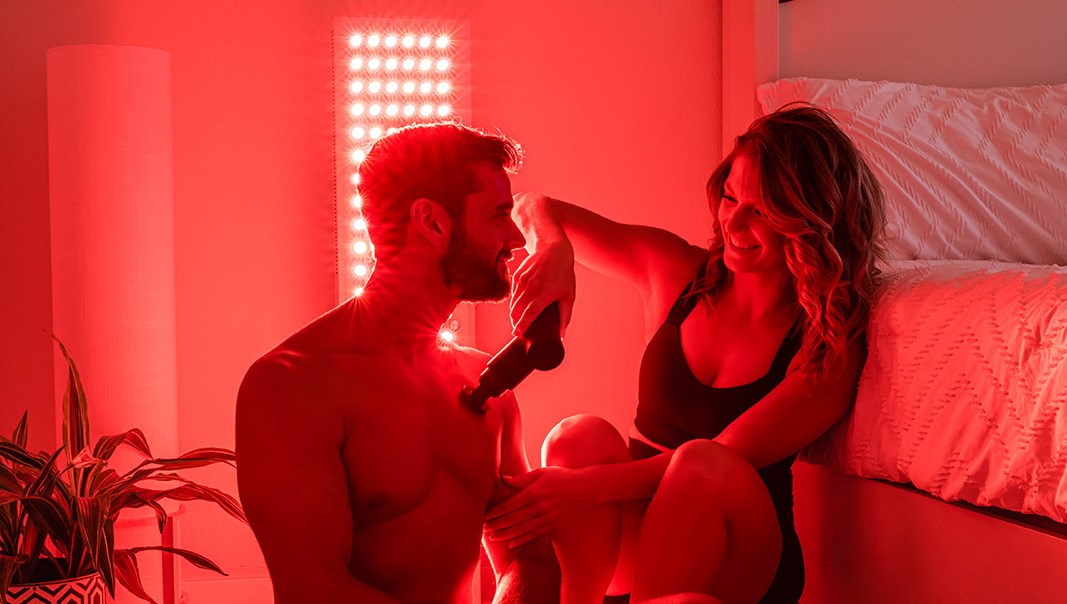
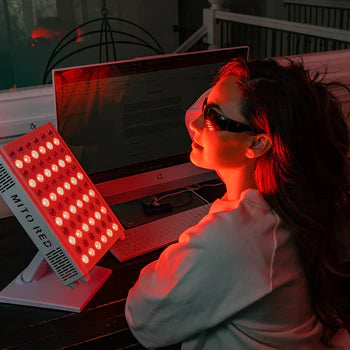
If your nightly routine includes scrolling or watching TV, even a short session with a red light therapy panel can help counteract blue light exposure. It’s one of the simplest, most natural ways to cue your body that it’s time to recharge.
2. May Enhance Overall Sleep Quality and Restorative Rest
Quality sleep means your brain clears toxins, your muscles repair, and your nervous system resets. When those processes don’t happen fully, you wake up groggy, stiff, and drained.
Consistent use of red light therapy has been linked to deeper, more restorative sleep. In one study, athletes who used red light therapy for 30 minutes each night over two weeks reported better sleep quality, improved endurance, and higher morning energy levels. The light’s gentle impact on melatonin, circulation, and inflammation may help the body maintain steady rhythms and uninterrupted rest.
People who add red light therapy to their evening routine often notice:
- Falling asleep faster without feeling “wired” before bed
- Fewer middle-of-the-night awakenings
- More energy and focus in the morning
- A general sense of calm and balance before sleep
By aligning your body’s natural signals and lowering nighttime stress responses, red light therapy may help transform rest from something you chase into something that happens naturally. It’s one of the most science-backed ways to make your nights (and your mornings) work better together.
3. May Ease Morning Sleep Inertia and Improve Alertness
Sleep inertia is that heavy, foggy feeling right after waking up when your brain is technically awake but your body hasn’t caught up yet. It can last anywhere from a few minutes to over an hour, making early meetings, workouts, or even coffee runs feel like climbing a hill.
Red light therapy can help shorten that sluggish period by supporting more efficient transitions between sleep and wake cycles.
Studies show that people exposed to red light in the evening experience smoother melatonin regulation, which helps them wake up more alert and energized. It’s especially beneficial for shift workers, frequent travelers, or anyone struggling with irregular sleep patterns, since it can help the body recalibrate even when sleep schedules are inconsistent.
Unlike bright white or blue light, which can jolt the brain awake too abruptly, red light works with your body’s natural rhythms. It may help regulate circadian balance so you feel rested when it’s time to wake, without the grogginess or mental fog that comes from disrupted sleep signals. Adding a short evening session to your routine can make mornings feel less like recovery and more like readiness.
4. May Combat Stress and Promote Relaxation
When stress builds up in the body, it often shows up as inflammation that manifests in the form of tight muscles, tension headaches, or that wired-but-tired feeling.
Much of this comes from oxidative stress, a condition caused by an imbalance between free radicals and antioxidants in your cells. Left unchecked, it can interfere with relaxation, energy levels, and sleep quality.
Red light therapy can help the body reset that balance by supporting how mitochondria, the energy producers inside your cells, function.
When exposed to targeted red and near-infrared wavelengths, mitochondria become more efficient at producing ATP, the fuel your cells need to repair and recover. This process reduces oxidative stress, lowers inflammation, and activates natural healing pathways that help the body shift from tension to calm.
The benefits go beyond better sleep. Users often report feeling physically looser, mentally clearer, and more relaxed overall. That’s because reduced inflammation improves circulation, eases muscle tightness, and supports the body’s natural recovery systems.
In short, red light therapy can help the body decompress on a cellular level, making it easier to relax deeply, sleep soundly, and wake restored.
5. May Support Mitochondrial Function and Cellular Energy
Mitochondria are your cells’ power generators. They make ATP, the molecule that runs most cellular work.
Red light therapy can target these generators and help them produce more ATP. Research shows RLT acts on mitochondria to increase ATP, the body’s main cellular energy source, and may also support brain health by improving cellular metabolism.
What that means for you:
- More steady daytime energy with less midafternoon crash
- Smoother workout recovery since tissues repair more efficiently
- Calmer nights because a well-fueled system settles into sleep more easily
- Lifted mood and mental clarity as brain cells run on cleaner energy
Use it consistently and you’ll feel the difference in overall vitality, not just during sessions. Pair evening use with low-light habits to reinforce the sleep benefits that come from healthier cellular function.
6. May Help Support Circadian Rhythm for Consistent Sleep Cycles
Your circadian rhythm is the internal 24-hour clock that guides sleep and wake timing. Modern habits and screens can scramble those signals. Red light therapy can help nudge them back into alignment. Evidence suggests RLT may help regulate circadian rhythm and support more natural sleep cycles.
Evening routine for circadian alignment:
- Dim overheads 60-90 minutes before bed.
- Run a red light session for about 15-30 minutes during that wind-down window.
- Keep the room warm-toned and screen exposure minimal while you treat.
- Finish the session at least 30 minutes before lights out.
- Repeat on a consistent schedule, especially after travel or shift changes.
What you may notice:
- Easier sleep onset
- Fewer overnight wakeups
- More predictable wake times without heavy grogginess
Treat the timing like a cue for your nervous system. Consistency is what teaches the body when to power down and when to wake ready.
7. May Support Mental Well-Being
Mental well-being is the balance between emotional stability, focus, and the body’s ability to handle stress without constant tension. When that balance is off (whether from poor sleep, chronic stress, or burnout), it affects everything from energy to decision-making.
Red light therapy may help restore that balance by targeting brain health on a cellular level. Research suggests that light applied to the scalp can improve cognitive performance, memory, and mood by stimulating mitochondrial activity in brain cells. When mitochondria function efficiently, the brain uses oxygen and energy more effectively, leading to sharper thinking and a calmer baseline.
Users often report:
- Noticeable reductions in stress and tension after evening sessions
- More stable moods and better emotional regulation
- Clearer focus and improved mental clarity during the day
- A general sense of calm that carries into sleep
By supporting cellular repair and balancing nervous system activity, red light therapy can work as a practical tool for people managing everyday stress.
The Bottom Line
Sleep and stress are connected, and both start at the cellular level. That’s where red light therapy does its best work, supporting natural melatonin production, balancing circadian rhythm, and giving your cells the energy they need to repair, recharge, and reset.
At Mito Red Light, every device is engineered for people who take their well-being seriously. Whether you’re looking to unwind after a long day, calm your mind before bed, or build a more restorative nightly routine, our clinically validated light systems are built to deliver measurable results.
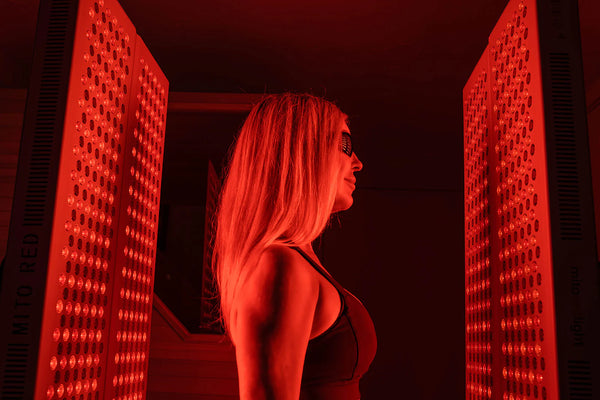
Our panel families use multi-wavelength engineering (including 630 nm, 660 nm, 830 nm, and 850 nm) and tight quality controls to support everyday wellness routines. With options from compact to near full-body coverage, you can choose a footprint that fits your space and goals.
Across the lineup, we focus on clarity: published peak wavelengths, third-party-verified output, and straightforward controls so you can follow your device’s recommended usage times and distances. We emphasize comfort and consistency (quiet operation, thoughtful mounts and stands, and simple set-up) because regular sessions are what help users stick with a routine.
If better rest, less tension, and supported energy are on your wellness list, start with daily light. Explore our full lineup of science-backed red light therapy devices.
📚 Explore the clinical evidence: Brain & Nervous System Clinical Evidence — peer-reviewed studies on this topic from our database of 10,000+ studies.
This article discusses published scientific research and general educational information about photobiomodulation and red light therapy. It does not constitute medical advice and does not make specific claims about Mito Red Light devices. The research cited reflects independent peer-reviewed studies and does not imply that any Mito Red Light product has been evaluated, approved, or cleared by the FDA or any other regulatory body for the diagnosis, treatment, cure, or prevention of any disease or medical condition. Individual results vary. Consult a qualified healthcare professional before beginning any light therapy protocol, particularly if you have a pre-existing medical condition, are pregnant, or are taking photosensitising medications.
Mito Red Light products are general wellness devices. They are not medical devices and have not been evaluated, cleared, or approved by the FDA or any regulatory body for the diagnosis, treatment, cure, or prevention of any disease or medical condition. Any references to peer-reviewed research or clinical studies on this page describe findings from independent scientific literature and do not imply that Mito Red Light devices have been studied, tested, or proven effective for any specific condition. Always consult a qualified healthcare provider before beginning any new wellness routine, particularly if you have a medical condition or are taking medication.
Related articles
More from the biohacking & wellness knowledge cluster