

















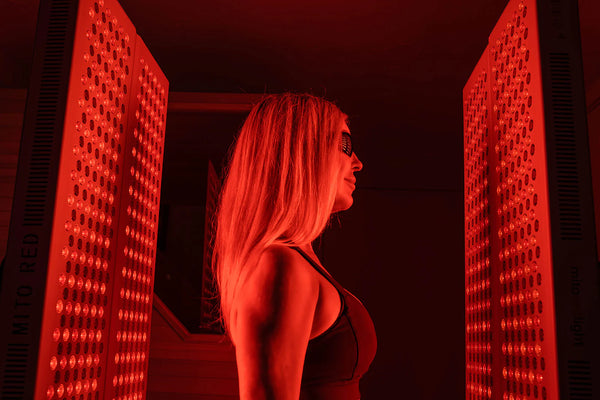
Panel Series
Red light therapy (photobiomodulation) uses specific wavelengths of red and near-infrared light to stimulate cellular energy production through mitochondrial pathways. Our database of 10,000+ peer-reviewed studies documents effects across skin health, muscle recovery, inflammation, brain function, hair growth, and more.
Summary: Red light therapy and infrared sauna are often grouped together, but their effects on the body are fundamentally different. Red light therapy is non-thermal and focused on cellular signaling, while infrared sauna elevates core temperature to create a controlled heat stress response. This guide explains how they differ and how to structure sessions based on your goals.
Looking for a deeper dive into how red light therapy works? Explore the full article
Red Light Therapy: Benefits, Science, and How It Works
What’s the Difference Between Red Light Therapy and Infrared Sauna?
Although both fall within the infrared portion of the electromagnetic spectrum, they rely on different wavelengths and produce different biological effects.
Red light therapy uses visible red and near-infrared light to support cellular function without intentionally raising core temperature, while infrared sauna primarily uses long-wave infrared energy to elevate body temperature and create a controlled heat stress response. This distinction helps clarify when and how each may be used.
Red Light Therapy Is Non-Thermal Photobiomodulation
Red light therapy uses specific wavelengths of red and near-infrared light, most commonly in the 600 to 700 nanometer and 800 to 1100 nanometer ranges, where much of the clinical photobiomodulation research has been concentrated [1]. These wavelengths are absorbed by cellular chromophores, including cytochrome c oxidase within the mitochondria, and have been studied for their role in supporting ATP production and influencing cellular signaling pathways.
Photobiomodulation is considered non-thermal by definition, meaning its primary biological effects are driven by light-tissue interactions rather than bulk heating of tissue. Mild surface warmth can occur as a natural byproduct of light absorption, but treatments are delivered within controlled parameters where heat is not relied upon as the therapeutic driver.
Infrared Sauna Uses Heat for Hyperthermic Conditioning
Infrared sauna works by elevating core body temperature through far-infrared emitters that transfer heat to the body. Most carbon-panel infrared saunas primarily emit long-wave far infrared energy, commonly described as falling roughly within the 3 to 25 micron range, with much of the output concentrated in the mid portion of that band. These longer wavelengths are largely absorbed by water in the superficial layers of the skin and converted into heat rather than driving cellular photochemical reactions.
As core temperature rises, heart rate increases and sweating occurs as part of the body’s thermoregulatory response [2]. This controlled heat exposure, often referred to as hyperthermic conditioning, creates a measurable thermal load that drives the adaptive effects.
Different Mechanisms, Different Physiological Effects
Despite this shared spectral region, red light therapy and infrared sauna affect the body through very different mechanisms.
Red light therapy works through photochemical signaling within tissue and does not depend on heat. Infrared sauna, by contrast, uses long-wave far infrared energy that is absorbed by water in superficial tissues and converted into heat, raising core body temperature and increasing heart rate and sweating. Because one acts primarily through photochemical signaling and the other through photothermal heating, they are not interchangeable.
Key Takeaways
-
Red light therapy uses visible red and near-infrared wavelengths (approximately 600–1100 nm) and works through cellular signaling
- Red light therapy is non-thermal by definition, meaning its effects are not driven by bulk tissue heating
-
Infrared sauna primarily uses long-wave far infrared energy that is absorbed by water in superficial tissues and converted into heat
- Red light therapy works primarily through photochemical signaling, while infrared sauna works through photothermal heating, leading to different physiological effects

What to Consider When Combining Red Light Therapy and Infrared Sauna
When these modalities are combined, the primary variable that changes is heat load. Red light therapy is typically delivered at room temperature, while infrared sauna sessions are conducted in heated environments designed to elevate body temperature. Understanding how ambient heat, timing, and overall stress interact helps clarify how to structure a combined session.
Temperature and Treatment Environment
Infrared sauna sessions are commonly conducted at air temperatures ranging from approximately 110°F to 150°F, depending on the system and user preference. At these levels, body temperature rises progressively and sweating occurs as part of the thermoregulatory response.
Red light therapy, by contrast, is generally delivered in thermoneutral settings. While mild surface warmth can occur during treatment, its biological effects are not dependent on sustained elevation of core temperature. When used inside a sauna, the surrounding heat alters the overall treatment environment.
Heat Exposure and Treatment Timing
In many infrared saunas, cabin air temperature rises gradually and may take 30 to 60 minutes to reach peak levels. Early in the heating cycle, skin temperature begins to rise while core temperature lags behind, creating a window where red light therapy may be delivered under lower systemic heat load. As heating continues and core temperature increases, cardiovascular demand and sweating become more pronounced.
Individual Tolerance and Recovery Demand
Infrared sauna introduces measurable cardiovascular and thermal stress. Hydration status, session length, and prior physical activity all influence tolerance.
Red light therapy alone is generally low systemic stress. When layered into a sauna session, cumulative load becomes the key consideration. Some individuals may prefer separating sessions, while others tolerate combined use well. Duration and overall recovery capacity should guide the structure of use.
Key Takeaways
-
Infrared sauna sessions are typically conducted at 110°F to 150°F and progressively raise skin and core temperature
- Red light therapy is generally delivered in thermoneutral settings and does not involve sustained elevation of core body temperature
-
The gradual rise in sauna temperature can create a timing window before full systemic heat stress develops
- Total physiological load and individual tolerance should guide how the two modalities are combined

Should You Use Red Light Therapy Before or After Sauna?
Because red light therapy and infrared sauna create different physiological demands, sequencing often comes down to efficiency and heat tolerance. Some people prefer separating sessions, while others aim to combine them to save time.
Red Light Therapy Before Sauna
Using red light therapy before sauna keeps the session closer to traditional photobiomodulation conditions, with minimal systemic heat load. Skin and vascular tone are nearer to baseline before heat-induced vasodilation increases superficial blood flow, which alters the local tissue environment.
This approach keeps the light session and the heat stimulus distinct, allowing each modality to be delivered under its intended physiological conditions.
Red Light Therapy After Sauna
Using red light therapy after sauna means skin temperature, circulation, and heart rate may already be elevated. The body is transitioning out of heat exposure, and cumulative thermal load is higher.
However, once core temperature and heart rate begin returning toward baseline, the post-sauna phase is often characterized by increased parasympathetic activity. In this context, some individuals may choose to use red light therapy during the recovery period, particularly in the evening, as part of a routine aimed at relaxation. While research on direct synergistic effects is limited, timing both modalities around the recovery window may influence how the session feels.
Using Red Light Panels Inside an Infrared Sauna
Because many home saunas operate on standard 15-amp household circuits, total power draw becomes an important consideration. Adding a high-powered red light panel increases overall electrical demand, and in some configurations shared capacity may reduce heater output or light intensity. Depending on how the system is wired and managed, this can influence the overall strength of one or both modalities during simultaneous use.
Body positioning is another limitation. In a seated or reclined sauna position, only the areas directly facing the panel receive full light exposure, while other surfaces may be partially shielded. Cabin size and fixed panel placement can limit repositioning, reducing total skin surface area exposed compared to using a panel outside the sauna.
Key Takeaways
-
Performing red light therapy before sauna maintains thermoneutral conditions and separates light exposure from heat stress
- Using red light therapy after sauna increases cumulative thermal load, though some may time it during the parasympathetic recovery phase that follows heat exposure.
-
Simultaneous use inside a sauna can save time but changes the overall thermal and physiological context
- Electrical load and body positioning may limit heater output, light intensity, or total skin surface exposure during combined sessions

How to Time Red Light Therapy and Infrared Sauna in Your Routine
The best way to combine red light therapy and infrared sauna depends on your schedule, energy levels, and recovery demands. Rather than focusing on optimization, it can be more practical to align each modality with the time of day and purpose it serves.
Morning Sessions for Mood and Energy
Morning sessions are often structured around alertness and circadian alignment. Light exposure in the early part of the day has been shown to influence mood and biological rhythms [3]. Infrared sauna in the morning can also create a stimulating cardiovascular response, while red light therapy may be incorporated as part of a consistent routine before the day begins.
Complementing Exercise With Heat and Light
Exercise already places demand on the cardiovascular and muscular systems. Infrared sauna is sometimes used after training, and regular sauna use has been associated with cardiovascular and recovery-related adaptations in observational and interventional studies [4]. Red light therapy may be used before or after workouts depending on personal preference and tolerance.
When combining exercise, sauna, and red light therapy in the same day, cumulative load becomes the key variable. Spacing sessions or adjusting duration may help manage fatigue.
When to Emphasize Heat vs Light
There may be periods where heat exposure is prioritized, and others where light exposure is the primary focus. Scheduling flexibility allows you to adjust based on recovery status, travel, workload, or sleep patterns.
Rather than assuming both must always be stacked, some routines may alternate days or separate sessions entirely. The most effective structure is one that can be maintained consistently.
Key Takeaways
-
Timing should reflect your schedule, recovery demands, and goals
- Morning sessions often emphasize alertness and routine consistency
-
Exercise, sauna, and red light therapy can be combined, but total physiological load should be considered
- Consistency and sustainability often matter more than stacking every modality in one session
Frequently Asked Questions
Is red light therapy the same as infrared sauna?
No, they work through different mechanisms. Red light therapy targets cellular signaling without heat, while infrared sauna raises core temperature to create a heat stress response.
Does red light therapy heat the body like a sauna?
Not in a meaningful way. You may feel slight surface warmth, but it does not elevate core temperature or drive effects through heat.
Can you use red light therapy inside an infrared sauna?
Yes, but the environment changes the experience. Heat, positioning, and power limitations can affect both light exposure and sauna performance.
Which should you do first, red light therapy or sauna?
Using red light therapy first keeps it closer to its intended non-thermal conditions. Sauna afterward adds the separate heat stimulus.
Is it better to separate red light therapy and sauna sessions?
In many cases, yes. Separating them allows each to be used under more controlled conditions and helps manage overall stress on the body.
Does combining them improve results?
There is limited direct research on synergy. Combining them mainly changes total physiological load rather than creating a clearly additive effect.
How long should you wait between sessions?
It depends on your tolerance and schedule. Allowing time for body temperature and heart rate to return closer to baseline can help manage fatigue.
Can you use both on the same day as exercise?
Yes, but total demand adds up quickly. Adjust duration or spacing to avoid excessive fatigue from stacking multiple stressors.
When is the best time of day to use each?
Morning sessions are often used for routine and alertness, while sauna is commonly used later in the day. Red light therapy can fit into either depending on preference.
Should you always combine red light therapy and sauna?
No, they do not need to be paired. Many routines alternate or separate them based on recovery, schedule, and personal goals.
References
1. Maghfour J, Ozog DM, Mineroff J, et al. Photobiomodulation CME part I: Overview and mechanism of action. Journal of the American Academy of Dermatology. (2023). Photobiomodulation uses red and near-infrared light absorbed by cytochrome c oxidase to modulate ATP and signaling. https://www.sciencedirect.com/science/article/pii/S0190962224001865
2. Laukkanen JA, Laukkanen T, Kunutsor SK. Cardiovascular and other health benefits of sauna bathing: a review of the evidence. Mayo Clin Proc. 2018;93(8):1111-1121. PMID: 30077204. doi:10.1016/j.mayocp.2018.04.008. https://pubmed.ncbi.nlm.nih.gov/30077204/
3. Tähkämö L, Partonen T, Pesonen AK. Systematic review of light exposure impact on human circadian rhythm. J Circadian Rhythms. 2018;16:5. PMID: 30217259. https://pubmed.ncbi.nlm.nih.gov/30311830/
4. Scoon GS, Hopkins WG, Mayhew S, Cotter JD. Effect of post-exercise sauna bathing on the endurance performance of competitive male runners. J Sci Med Sport. 2007;10(4):259–262. PMID: 16877041. https://pubmed.ncbi.nlm.nih.gov/16877041/
This article discusses published scientific research and general educational information about photobiomodulation and red light therapy. It does not constitute medical advice and does not make specific claims about Mito Red Light devices. The research cited reflects independent peer-reviewed studies and does not imply that any Mito Red Light product has been evaluated, approved, or cleared by the FDA or any other regulatory body for the diagnosis, treatment, cure, or prevention of any disease or medical condition. Individual results vary. Consult a qualified healthcare professional before beginning any light therapy protocol, particularly if you have a pre-existing medical condition, are pregnant, or are taking photosensitising medications.
Mito Red Light products are general wellness devices. They are not medical devices and have not been evaluated, cleared, or approved by the FDA or any regulatory body for the diagnosis, treatment, cure, or prevention of any disease or medical condition. Any references to peer-reviewed research or clinical studies on this page describe findings from independent scientific literature and do not imply that Mito Red Light devices have been studied, tested, or proven effective for any specific condition. Always consult a qualified healthcare provider before beginning any new wellness routine, particularly if you have a medical condition or are taking medication.
Related articles
More from the biohacking & wellness knowledge cluster