About the research on this page. The studies cited here investigate photobiomodulation (PBM) as a therapeutic modality and the specific wavelengths used in PBM research — not Mito Red Light devices. The wavelengths in our panels were chosen because the peer-reviewed PBM literature supports them. Evidence levels and study counts reflect the broader research base, not studies of our products. See the full methodology note at the bottom of this page.

Red Light Therapy for Mitochondrial Function & Cellular Energy: Clinical Evidence & Research

635 StudiesPhotobiomodulation (PBM) Source-linked

What the research shows

Our evidence rating: Strong in cell and animal research; low and mixed in humansUpdated Reviewed by Alexis Cowan, PhD

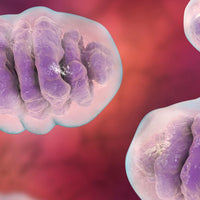
The main proposed mechanism of light therapy is that red and near-infrared light is absorbed by cytochrome c oxidase in mitochondria, raising cellular energy production. That mechanism is well supported in cell and animal studies, but direct human evidence is limited and mixed. In healthy adults, near-infrared lasers at 800, 850 and 1064 nm and an 810 nm LED increased oxidized cytochrome c oxidase and blood oxygenation in the forearm compared with sham (Pruitt 2022). In healthy adults, 15 minutes of 670 nm light reduced the rise in blood sugar after a glucose drink, consistent with higher energy demand (Powner 2024).

However, a 2026 randomized trial that took tissue biopsies found that a single session did not increase mitochondrial respiration in human skin or muscle (Aussieker 2026). Human research on abdominal light and the gut-brain axis is still small and early (Guimarães 2025).

Based on 635 indexed studies in this category, 15 of them in people. These studies test photobiomodulation in general, not Mito Red Light devices.

Key studies: Mitochondrial Function & Cellular Energy

The strongest human evidence: systematic reviews and meta-analyses first, then the newest randomized trials. Each card comes straight from our study database and links to the paper.

RCT

Photobiomodulation Does Not Increase Mitochondrial Respiration in Skeletal Muscle or Skin Tissue in Humans

et al., Med Sci Sports Exerc, 2026. PMID 42658804

Key finding (checked against the abstract)Randomized trial with biopsies, 12 healthy adults. One session raised skin temperature but did not increase mitochondrial respiration in skin or muscle or change muscle gene expression.
Population
Human: Randomized trial, self-controlled; 12 participants
Dose
5600 J
RCT

Photobiomodulation at Different Wavelengths Boosts Mitochondrial Redox Metabolism and Hemoglobin Oxygenation: Lasers vs. Light-Emitting Diodes In Vivo

et al., Metabolites, 2022. PMID 35208178

Key finding (checked against the abstract)Healthy adults, active versus sham. Lasers at 800, 850 and 1064 nm and an 810 nm LED increased oxidized cytochrome c oxidase and oxygenated hemoglobin in the forearm.
Population
Human: 10 participants (Study 1); randomized trial, sham-controlled. crossover; single session
RCT

Light stimulation of mitochondria reduces blood glucose levels

et al., J Biophotonics, 2024. PMID 38378043

Key finding (checked against the abstract)Healthy adults. 15 minutes of 670 nm light reduced the blood sugar rise after a glucose drink by 27.7% over 2 hours.
Population
Human: 30 participants; randomized trial, sham-controlled; single control session -> single intervention session
Wavelength
670nm
Systematic review

Abdominal Photobiomodulation and the Gut-Brain Axis: A Systematic Review of Mechanistic and Translational Evidence

et al., Biomedicines, 2025. PMID 41463053

Key finding (checked against the abstract)9 studies (5 human, 4 animal) of abdominal light therapy. Human trials, mainly in Parkinson's and Alzheimer's disease, reported gains in mobility and cognition; few were sham-controlled.

Studies that found no effect

Not every trial is positive. "No effect" means the main outcome did not differ from sham or control. "Mixed" means some outcomes improved but the outcome named here did not differ.

YearStudyDesignResultOutcome with no difference
2026 Photobiomodulation Does Not Increase Mitochondrial Respiration in Skeletal Muscle or Skin Tissue in Humans RCT, n = 12 No effect Mitochondrial respiration in human skin and muscle after one session

Latest human studies: Mitochondrial Function & Cellular Energy

The 10 most recent human studies in our database for this category.

YearStudyDesignPopulation
2026 Photobiomodulation Ameliorates Alexander Disease Through AMPK/mTOR-Mediated Mitophagy. Human study Human
2026 Protocol-Dependent Effects of Transcutaneous Blood Systemic Photobiomodulation on Inflammatory, Metabolic, and Hemostatic Markers Single-arm study, n = 56 Human: 56 participants
2024 Transcutaneous intravascular laser irradiation of blood affects plasma metabolites of women Single-arm study, n = 28 Human: 28 cases; single-arm study; single session
2024 Analysis of the Ultrasensitive C-Reactive Protein and Homocysteine Biomarkers after Photobiomodulation Therapy in Hormone Blocker-Treated Mastectomized Women: A Randomized, Blind, and Controlled Clinical Study RCT, n = 21 Human: 21 participants; randomized trial, sham-controlled; 4 months
2024 The effects of laser acupuncture on metabolic syndrome in obese postmenopausal women: a randomized controlled study RCT, n = 30 Human: 30 participants; randomized trial; 2 months
2022 Photobiomodulation at Different Wavelengths Boosts Mitochondrial Redox Metabolism and Hemoglobin Oxygenation: Lasers vs. Light-Emitting Diodes In Vivo RCT, n = 10 Human: 10 participants (Study 1); randomized trial, sham-controlled. crossover; single session
2019 Blue light (λ=453 nm) nitric oxide dependently induces β-endorphin production of human skin keratinocytes in-vitro and increases systemic β-endorphin levels in humans in-vivo RCT Human: randomized trial, crossover
2018 Impact of heat on metabolic and hemodynamic changes in transcranial infrared laser stimulation measured by broadband near-infrared spectroscopy. Human study Human
2017 Up-regulation of cerebral cytochrome-c-oxidase and hemodynamics by transcranial infrared laser stimulation: A broadband near-infrared spectroscopy study. Human study, n = 11 Human: 11 participants; non-randomized study, sham-controlled; single session
2016 Interplay between up-regulation of cytochrome-c-oxidase and hemoglobin oxygenation induced by near-infrared laser. Human study, n = 11 Human: 11 participants; non-randomized study, sham-controlled; single session

What the evidence does not show

  • Higher mitochondrial respiration in human tissue after one session: no difference in skin or muscle biopsies (Aussieker 2026, PMID 42658804).
  • That cell-culture results translate directly to people: human studies are few and small (Guimarães 2025, PMID 41463053).

Frequently asked questions

How does red light therapy work?

The leading explanation is that red and near-infrared light is absorbed by cytochrome c oxidase in mitochondria. In healthy adults, near-infrared light increased oxidized cytochrome c oxidase in the forearm versus sham (Pruitt 2022).

Does it boost energy in human cells?

Evidence is mixed. A 2026 randomized trial with biopsies found one session did not increase mitochondrial respiration in human skin or muscle (Aussieker 2026).

Browse All Mitochondrial Function & Cellular Energy Studies

All 635 studies in this category from our study database, built on the PBM Research Database by Vladimir Heiskanen.

Search every study across all categories: Open the Full Evidence Explorer →

Methodology & important context

The published research indexed and referenced on this page studies photobiomodulation (PBM) as a therapeutic modality and the specific wavelengths used in those studies — not Mito Red Light devices specifically. The wavelengths used across our panels were chosen because the peer-reviewed PBM literature supports them: this is where published evidence is deepest, where dosing parameters have been characterized in human studies, and where clinical guidelines (such as WALT for inflammation and pain) exist. Mito Red Light has not funded or conducted registered clinical trials on our specific devices, and the study counts referenced here reflect the broader PBM research base — not studies of our products.

Where review authors graded certainty (for example with GRADE), we report their grade; other ratings are Mito’s summary. Study counts reflect peer-reviewed photobiomodulation research drawn from major scientific literature databases, peer-reviewed journals, and other published research repositories. PBM response varies meaningfully by person, tissue, condition, dose, wavelength, and session timing; outcomes reported in the published literature may not be replicable for every user. Mito Red Light devices are not intended to diagnose, treat, cure, or prevent any disease. If you have a medical condition or are under a physician’s care, please consult your healthcare provider before beginning any photobiomodulation regimen.