













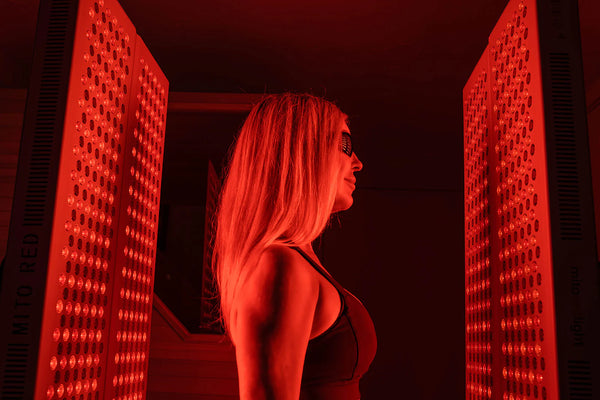
Panel Series
Red light therapy has moved from dermatology clinics into homes, but most people still have two core questions: does it actually work for anti-aging, and which at-home devices are worth it? Clinical trials now show that properly dosed red and near-infrared light can increase intradermal collagen density, improve skin roughness, and reduce wrinkle depth in human skin, which is exactly why we built a combined MitoGLOW + MitoAURA routine rather than a standalone gadget.Wunsch 2014Avci 2013
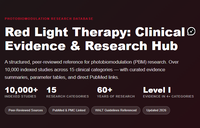
This guide explains how red light stimulates collagen, which wavelengths and doses are best, how long results really take, and how to build a layered anti-aging protocol that combines the MitoGLOW LED mask with the MitoAURA topical system. For deeper dives and full paper links, you can always head to the Mito Red Research & Evidence Hub.
1. Does red light therapy actually work for anti-aging?
A growing body of peer-reviewed research supports the use of low-level red and near-infrared light for skin rejuvenation.Wunsch 2014Avci 2013
- In a controlled trial of 136 subjects, Wunsch and Matuschka used red (611–650 nm) and polychromatic 570–850 nm light twice weekly for 30 sessions and found significant improvements in skin roughness, wrinkle scores, and intradermal collagen density compared with controls.PMID 24316810
- Barolet showed that 660 nm LED light at low fluences upregulated collagen while down-regulating MMP‑1 (a collagen-degrading enzyme) in a 3D human skin model, supporting a direct anti-aging mechanism.PMID 18394103
- Avci and colleagues reviewed low-level laser/light therapy in skin and concluded that red and near-infrared wavelengths can improve wrinkles, scars, and overall skin healing with a very low side-effect profile when dosed correctly.PMID 24049929
In plain language, these data suggest that if your device delivers the right wavelengths at a reasonable dose, you can expect improvements in texture, firmness, and fine lines over an 8–12 week period, especially around the eyes, forehead, and mouth.
“Red light therapy is one of the few non-invasive technologies where we see histology-level changes in collagen, elastin, and dermal structure, not just superficial plumping.” – Board-certified dermatologist summarizing the clinical literature.AARP dermatologist quote
2. How red light stimulates collagen and skin rejuvenation
Skin aging is largely a collagen story: with time and UV exposure, the dermis loses collagen density and organization while matrix-degrading enzymes increase.Reverse skin aging 2023Cleveland Clinic
Red and near-infrared light help reverse parts of this process through photobiomodulation:
- Photons in the 630–660 nm and 800–850 nm range are absorbed by cytochrome c oxidase in mitochondria, increasing ATP production and modulating nitric oxide.Avci 2013
- Higher ATP allows fibroblasts to synthesize more type I and III collagen, elastin, and hyaluronic acid.Clinic5C review
- In vitro and ex vivo work shows increased expression of collagen and elastin genes and higher procollagen and elastic fiber formation after combined red + NIR exposure.Barolet 2008 follow-on
In the Wunsch trial, repeated facial exposure to red and polychromatic red/NIR light increased intradermal collagen density and improved clinical wrinkle scores compared with untreated skin.PMID 24316810 Barolet’s work helps explain this at the molecular level by showing that 660 nm light can both stimulate collagen production and reduce collagen breakdown via MMP‑1 modulation.PMID 18394103
From a protocol standpoint, this is why we prioritize:
- Red around 630 nm for superficial collagen and fine lines.
- Near-infrared around 830 nm for deeper dermal remodeling and support.
MitoGLOW and MitoAURA are tuned around these wavelengths so you are stacking topical and device-level support on the same collagen pathway.MitoGLOW product pageEvidence Hub
3. What wavelengths are best for collagen and wrinkles?
Most dermatology-focused reviews converge on a relatively narrow band of “sweet spot” wavelengths for skin rejuvenation.Avci 2013LLLT in skin
- Red light: 630–660 nm – absorbed in the upper to mid dermis, directly stimulating fibroblasts and increasing type I procollagen.Wunsch 2014 full text
- Near-infrared (NIR): 800–850 nm – penetrates more deeply, supporting dermal remodeling, microcirculation, and deeper collagen architecture.Optimization paper
Wunsch and Matuschka used 611–650 nm and 570–850 nm ranges; both regimens improved collagen and wrinkles.PMID 24316810 Barolet focused on 660 nm and found collagen up-regulation plus MMP‑1 down-regulation.PMID 18394103 Avci’s review highlights 633 nm and 830 nm as well‑studied dermatologic wavelengths.PMID 24049929
MitoGLOW is built around this evidence-based range:
- 630 nm red (anti-aging, collagen, fine lines)
- 830 nm NIR (deep dermal support)
- 590 nm amber (tone, redness)
- 465 nm blue (acne, helpful for mixed routines)
The MitoAURA topical system is designed to complement those same pathways by providing substrates and signaling support for collagen and barrier repair.Evidence Hub: MitoAURA
4. Device + topical system: MitoGLOW + MitoAURA
Most competitors sell either an LED mask or a serum. Very few systems are designed as an integrated light + topical anti-aging stack.
Why pair a mask with a specialized topical?
- Photobiomodulation increases metabolic demand in fibroblasts; actives like peptides, retinoid analogs, and barrier-supportive lipids can help channel that extra energy into structural repair rather than irritation.Clinic5C
- Correctly timed application (before vs after treatment) lets you avoid photosensitizing interactions while still leveraging synergy between light-induced collagen signaling and topical pathways (for example, retinoid-driven collagen transcription).
A typical MitoGLOW + MitoAURA anti-aging stack might look like:
- Cleanse and gently pat dry.
- Run MitoGLOW in Anti-Aging (630 nm) or Deep Renewal (630 + 830 nm) mode for 8–10 minutes, 3–5 times per week.MitoGLOW review
- Apply MitoAURA serum and cream immediately post-treatment to capitalize on increased microcirculation and permeability while avoiding harsh exfoliants right before light exposure.Evidence Hub
- Layer retinol or stronger actives on alternate nights if tolerated, not immediately before long red/NIR sessions unless guided by a clinician.Cleveland Clinic
5. How long does red light therapy take to work for skin?
Most clinical and real-world protocols converge on an 8–12 week window for visible anti-aging changes.
- Wunsch and Matuschka: 30 sessions over about 15 weeks produced significant reductions in wrinkle severity and increased collagen density; benefits continued to peak around 4–6 months after completing treatment.PMID 24316810
- Other trials using 633 nm and 830 nm combinations report smoother texture and improved elasticity over 8–12 weeks with 2–3 sessions per week.Reverse skin aging 2023
Realistically, timelines break down as:
- Weeks 1–4: subtle increases in glow, slight improvement in texture and hydration.
- Weeks 4–8: more noticeable softening of fine lines, especially around crow’s feet and forehead; mild improvements in mottled pigmentation.
- Weeks 8–12+: measurable differences in wrinkle depth and elasticity in before/after images and, in trials, on profilometry and ultrasound.
The key is consistency: a lower-power device used reliably 3–5 times per week for 10 minutes often outperforms a high-power device used sporadically.Cleveland Clinic
6. MitoGLOW vs CurrentBody vs Omnilux Contour
Below is a high-level comparison focused on anti-aging and collagen support. Always confirm the latest specs with each manufacturer.
| Feature | MitoGLOW LED Mask | CurrentBody Skin LED Mask (Series 2) | Omnilux Contour Face |
|---|---|---|---|
| Primary wavelengths for anti-aging | 630 nm red, 830 nm NIR (plus 590 nm amber, 465 nm blue)MitoGLOW | 633 nm red, 830 nm NIR, 1072 nm deep NIRCurrentBody | 633 nm red, 830 nm NIROmnilux |
| LED count / coverage | 266 four-chip LED packages, including chin/neck extensionLight Therapy Insiders | Red + NIR arrays across face; added deep NIR chips in Series 2CurrentBody | 66 bulbs (132 diodes) across flexible silicone maskOmnilux |
| Design | Rigid, non-contact hover design with blackout eye protection and rotatable chin/neck coverageMitoGLOW vs Omnilux vs CurrentBody | Flexible silicone face maskCurrentBody | Flexible silicone face maskOmnilux |
| Modes | 5 modes: Anti-Aging, Purify, Calm, Deep Renewal, ClarifyMitoGLOW | Anti-aging presets, including added deep NIR emphasis in Series 2CurrentBody | Anti-aging presets for wrinkles and firmnessOmnilux |
| Regulatory status | OTC Class II, FDA 510(k) cleared for facial acne and full-face wrinklesMitoGLOW press release | Marketed with clinical testing; FDA-cleared status for specific indications, depending on regionWirecutter | FDA cleared for reducing fine lines and wrinklesOmnilux |
| Main anti-aging emphasis | Collagen, wrinkles, redness, with extra flexibility for acne-prone skin | Collagen and deep anti-aging with unique 1072 nm deep NIR optionWirecutter | Collagen and wrinkle reduction in a simple red/NIR routine |
MitoGLOW’s differentiation is its combination of 630 nm and 830 nm with dense coverage, dedicated acne modes, and lower-face/neck extension. This is helpful if you have mixed concerns such as fine lines plus breakouts, or you want contour coverage as part of a single mask rather than separate add-ons.MitoGLOW comparison article
7. Before-and-after expectations and disclaimers
When used consistently alongside a solid skincare routine, many users report:
- Softer fine lines around the eyes and forehead.
- Smoother texture and improved “bounce” in the cheeks.
- More even tone and reduced dullness.
Clinical trials suggest average improvements in wrinkle scores and collagen density, but individual results vary based on age, baseline damage, hormones, and lifestyle factors such as sun exposure and smoking.Wunsch 2014Reverse skin aging 2023
Important disclaimers:
- Red light therapy is not a facelift, filler, or laser replacement. It is a non-invasive tool that supports gradual remodeling.
- Results are not guaranteed and may be more subtle in advanced photoaging.
- Always follow device instructions, consider eye protection, and consult a dermatologist if you have photosensitive conditions, melasma, or a history of skin cancer.Cleveland Clinic
For representative clinical imaging and links to histology-based trials, visit the Mito Red Research & Evidence Hub.
8. Red light therapy + skincare serums and retinol
One of the most common questions is whether you can combine red light therapy with serums, acids, and retinoids.
General principles
- Use your mask on clean, dry skin to avoid unpredictable interactions with highly photosensitizing or reflective products.Cleveland Clinic
- Apply hydrating serums, peptides, ceramides, and barrier-supportive moisturizers after treatment to take advantage of increased circulation and permeability.Clinic5C
- Combine with retinol or stronger acids on alternate nights or after your skin has proven it tolerates both, unless your dermatologist advises otherwise.
Clinical and expert commentary suggest that red light can complement retinoids by stimulating overlapping collagen pathways without adding thermal damage, but both can be irritating if you push too fast.Cleveland Clinic
Where MitoAURA fits
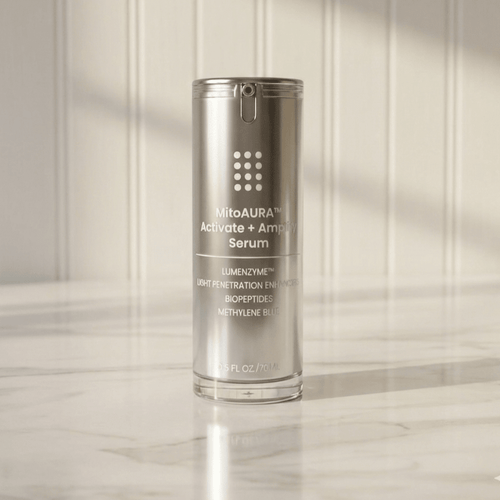
MitoAURA is formulated as a post-LED system: it layers collagen-supportive actives and barrier-repair ingredients on top of the metabolic “spark” created by red and NIR light. This helps you feed fibroblasts with the substrates they need to build collagen while supporting the lipid barrier so you are less prone to dryness and sensitivity as remodeling progresses.Evidence Hub
9. Building a practical anti-aging routine with red light therapy
Here is a sample MitoGLOW + MitoAURA anti-aging flow that also covers many of the search questions people ask about routines, serums, and retinol.
Evening routine (3–5 nights per week)
- Cleanse: gentle, non-stripping cleanser.
-
Red light session:
- Normal / combo skin: MitoGLOW Deep Renewal (630 + 830 nm) for 8–10 minutes.
- Sensitive or early users: start with Anti-Aging (630 nm only) for 5–8 minutes.
-
Post-light skincare:
- Apply MitoAURA serum and cream.
- Optional gentle hydrating serum underneath if needed.
-
Retinol nights (2–3 nights per week):
- Use retinol on a separate night from high-intensity acids, after your skin has adapted to the mask.
- On retinol nights, you can still run a short MitoGLOW session, but avoid stacking heavy acids and very long red/NIR sessions until you know your tolerance.
Morning routine
- Cleanse or rinse.
- Antioxidant serum, moisturizer, and broad-spectrum sunscreen.
Sunscreen is still non-negotiable: red light can help repair some UV-related damage but does not substitute for daily protection.Cleveland Clinic
For protocol variations by age, skin type, and sensitivity, see the device and protocol section inside the Research & Evidence Hub.
Frequently Asked Questions
1. Does red light therapy actually work for anti-aging?
Yes, multiple human studies have found that low-level red and near-infrared light can improve wrinkles, skin roughness, and collagen density when used consistently over several weeks.PMID 24316810PMID 24049929
2. What wavelengths are best for collagen production and wrinkle reduction?
The most studied ranges for collagen support are red light around 630–660 nm and near-infrared light around 800–850 nm. These wavelengths penetrate into the dermis, stimulate fibroblasts, and can upregulate collagen while reducing collagen breakdown.PMID 18394103LLLT in skin
3. How long does red light therapy take to improve wrinkles and skin texture?
Most clinical protocols report visible changes in 8–12 weeks with 2–5 sessions per week. Early improvements usually appear as better glow and texture, followed by softer wrinkles and improved elasticity over time.Wunsch 2014Reverse skin aging 2023
4. What is the best at-home red light therapy device for anti-aging?
The best device is one that delivers proven wavelengths in a therapeutic range, has good coverage, and fits your routine. MitoGLOW combines 630 nm red, 830 nm NIR, 590 nm amber, and 465 nm blue in a dense LED layout with chin and neck coverage, making it a strong choice for people who want both anti-aging and acne support in one mask.MitoGLOW specsIndependent review
5. How does MitoGLOW compare to CurrentBody and Omnilux LED masks?
MitoGLOW offers four wavelengths (red, NIR, amber, blue), a rigid non-contact shell, blackout eye protection, and chin/neck coverage. Omnilux Contour focuses on red and NIR in a flexible silicone format, while CurrentBody adds 1072 nm deep NIR for a more purely anti-aging focus.MitoGLOW vs Omnilux vs CurrentBodyWirecutter
6. Can I use red light therapy for fine lines, crow’s feet, and under-eye wrinkles?
Yes, fine lines around the eyes and crow’s feet are some of the most responsive areas in clinical trials, provided eye safety is respected. Masks like MitoGLOW are designed with cutouts and blackout shielding to protect the eyes while exposing periorbital skin to red and NIR light.Wunsch 2014 full text
7. Should I use red light therapy with skincare serums, peptides, or vitamin C?
Yes, many people see the best results when combining red light with supportive skincare. Use the mask on clean skin, then apply hydrating serums, peptides, and vitamin C after treatment so you can benefit from increased circulation and permeability without risking unpredictable interactions during the session.Clinic5C
8. Is it safe to combine red light therapy with retinol or retinoids?
Red light therapy and retinoids can complement each other, but both can cause irritation if you overdo it. Most dermatology sources recommend introducing them gradually, using red light on clean skin, and applying retinoids on alternate nights or after your skin has clearly adapted.Cleveland Clinic
9. How often should I use a red light therapy mask for collagen and anti-aging?
Typical anti-aging protocols call for 3–5 sessions per week at 5–10 minutes per session for at least 8–12 weeks, then 1–3 sessions per week for maintenance. Always follow your device’s specific instructions and reduce frequency if you experience irritation.LLLT in skin
10. What side effects or risks should I know about with at-home red light therapy?
Red light therapy is generally well tolerated, with side effects usually limited to temporary redness, tightness, or mild headaches in sensitive individuals. People with photosensitive conditions, certain eye diseases, or a history of skin cancer should speak with a dermatologist before starting any at-home device.Cleveland Clinic
11. Can red light therapy help with both acne and anti-aging at the same time?
Yes, protocols that combine red and blue light can address mild to moderate acne while also supporting collagen and anti-aging. MitoGLOW includes dedicated Purify (blue) and Clarify (red + blue) modes alongside Anti-Aging and Deep Renewal modes so you can target both concerns within one system.MitoGLOW product page
12. How do I build a full anti-aging routine with MitoGLOW and MitoAURA?
A simple routine is: cleanse, run MitoGLOW in Anti-Aging or Deep Renewal mode for 8–10 minutes, then apply MitoAURA serum and cream, followed by sunscreen in the morning. Retinol and stronger actives can be layered on alternate nights as tolerated. For step-by-step protocols by skin type, see the Mito Red Research & Evidence Hub.
Mito Red Light products are general wellness devices. They are not medical devices and have not been evaluated, cleared, or approved by the FDA or any regulatory body for the diagnosis, treatment, cure, or prevention of any disease or medical condition. Any references to peer-reviewed research or clinical studies on this page describe findings from independent scientific literature and do not imply that Mito Red Light devices have been studied, tested, or proven effective for any specific condition. Always consult a qualified healthcare provider before beginning any new wellness routine, particularly if you have a medical condition or are taking medication.