







Panel Series
Medically Reviewed by | Heidi Wright, BSN, RN, PCCN
Varicose veins are incredibly common in adults across the U.S., especially in warm, sun‑drenched regions like Phoenix and the greater Southwest where people are on their feet, active, and often dealing with heat‑related leg swelling and circulation issues. These veins are more than a cosmetic frustration — they can cause aching, heaviness, throbbing, and skin changes that make walking, working, or even relaxing at home uncomfortable.
Modern vein care offers effective options ranging from compression stockings and lifestyle changes to minimally invasive procedures such as sclerotherapy, radiofrequency ablation, and endovenous laser treatment. At the same time, many people understandably want to delay or avoid procedures when possible and are interested in supportive at‑home tools. This is where red light therapy devices can come in as an adjunct for comfort and skin health around varicose veins — not as a cure or replacement for professional vein treatment.
If you are exploring noninvasive approaches to ease leg discomfort, support local circulation, and promote healthier skin over and around varicose veins, using a targeted red and near‑infrared panel such as the MitoPRO Series at home can be a convenient option alongside your vein specialist’s recommendations. Always talk with your healthcare provider before starting any new therapy, especially if you have a history of blood clots or vascular disease.
What Are Varicose Veins?
Varicose veins are enlarged, twisted, and often bulging superficial veins that usually develop in the legs and feet, where blood has to work against gravity to return to the heart. They may be primarily a cosmetic concern for some, but for others they can cause significant discomfort and impact daily life. Guidance from Mayo Clinic notes that varicose veins can also signal underlying chronic venous disease if symptoms progress.
Spider veins are related but different: they are much smaller, web‑like red, blue, or purple veins that typically appear on the legs, face, or ankles and generally do not cause pain. These tiny surface veins are often treated with targeted laser or injection therapies offered by vein specialists or dermatologists.
Common Symptoms of Varicose Veins
Varicose veins most often appear on the lower legs and can present with the following signs and symptoms:
Dark blue or purple veins visible beneath the skin
Veins that appear twisted, rope‑like, or bulging above the surface
Aching, heaviness, or fatigue in the legs, especially after standing or sitting
Throbbing, burning, or cramping sensations in the calves or ankles
Swelling in the lower legs and ankles
Itching or changes in skin color or texture around the veins, particularly near the shins and ankles
Without management, symptoms can worsen over time, and some people may go on to develop complications like skin inflammation, venous eczema, or venous leg ulcers. Major vein guidelines emphasize early evaluation if symptoms are progressing.
What Causes Varicose Veins?
Varicose veins develop when the tiny one‑way valves inside your leg veins become weak or damaged. Normally, these valves help keep blood flowing upward toward the heart. When they fail, blood can pool in the vein, increasing pressure, stretching the vein wall, and eventually causing the vein to enlarge and twist.
Several factors increase the risk of developing varicose veins:
Family history: Having close relatives with varicose veins raises your likelihood.
Age: Vein walls and valves naturally weaken over time, making varicose veins more common with age.
Sex: Women are more likely than men to develop varicose veins, partly due to hormonal influences and pregnancy.
Pregnancy: Increased blood volume, hormonal shifts, and pressure from the growing uterus can all strain leg veins.
Obesity: Extra body weight increases pressure in leg veins.
Prolonged sitting or standing: Jobs that keep you on your feet or in a chair for long stretches can impair normal blood flow and raise venous pressure.
If untreated, varicose veins can sometimes lead to worsening swelling, skin changes, superficial blood clots, bleeding from traumatized veins, or chronic venous leg ulcers. Evaluation by a vein specialist or vascular clinic is important if you notice these warning signs.
Current Non‑Surgical Treatment Options
Many varicose veins can now be treated with non‑surgical or minimally invasive approaches, often done in an outpatient setting under local anesthesia:
Compression stockings: Often the first step; they gently squeeze the legs to support veins, reduce swelling, and relieve discomfort.
Lifestyle changes: Regular walking, elevating the legs, maintaining a healthy weight, and avoiding prolonged sitting or standing can all help.
Sclerotherapy: Injection of a solution or foam that irritates the vein lining so it collapses and is gradually reabsorbed by the body.
Endovenous laser or radiofrequency ablation: A thin catheter delivers heat inside the vein, sealing it closed so blood reroutes to healthier veins.
Other catheter‑based techniques: Newer devices (like mechanochemical ablation or foam systems such as Varithena) treat problem veins with minimal downtime.
These options are effective for eliminating or closing off diseased veins — something that red light therapy cannot do. Educational resources from USA Vein Clinics, for example, emphasize that red light therapy should not be considered a primary varicose vein treatment.
How Does Red Light Therapy Work?
Red light therapy (often called low‑level light therapy or photobiomodulation) uses specific wavelengths of visible red and near‑infrared (NIR) light to influence cellular function.
Red light typically spans roughly 620–700 nm.
Near‑infrared light usually falls around 800–900 nm.
These wavelengths can penetrate the skin and, in the case of NIR, reach deeper soft tissues. Within cells, photons are absorbed by components such as cytochrome c oxidase in mitochondria, boosting ATP (cellular energy) production and modulating signaling pathways involved in inflammation, blood flow, and tissue repair. Reviews of photobiomodulation note downstream effects on nitric oxide, oxidative stress, and microcirculation.
Some studies suggest that red light in the ~670 nm range can promote vasodilation (widening of blood vessels), partly via nitric‑oxide–related mechanisms, potentially enhancing local blood flow in the treated area.
What Can Red Light Therapy Realistically Do for Varicose Veins?
It is important to distinguish between treating varicose veins (closing or removing them) and supporting symptom relief and skin health around them.
Current evidence and expert guidance indicate:
Red light therapy does not repair faulty vein valves or permanently eliminate varicose veins. It cannot close diseased veins in the way that endovenous ablation or sclerotherapy can.
-
It may help to:
Support local microcirculation and blood flow in the treated area
Modulate inflammation in surrounding tissues
Provide temporary relief from aching, heaviness, or mild discomfort
Support skin health and wound healing, including in areas prone to venous ulcers, when used as part of a medical wound‑care plan
Skin Health and Ulcer‑Prone Areas
In people with chronic venous disease, longstanding varicose veins can lead to skin thinning, discoloration, itching, and in some cases venous leg ulcers. Photobiomodulation has been studied for wound healing and inflammatory skin conditions, with data suggesting that red/NIR light can:
Modulate inflammatory mediators
Stimulate fibroblasts, collagen production, and new tissue formation
Support faster epithelialization and improved tissue quality
These mechanisms are part of why some wound‑care clinics and researchers explore red light as an adjunct for chronic lower‑leg ulcers and difficult‑to‑heal skin. It should always be coordinated with a clinician’s plan, not used as a stand‑alone treatment for serious wounds.
Inflammation, Pain, and Leg Heaviness
By promoting vasodilation and nitric oxide signaling, red light therapy may transiently improve local circulation and reduce inflammatory responses in muscles and soft tissue around varicose veins. For some people, that can translate into:
Reduced sense of heaviness or fatigue in the legs
Mild reduction in aching or throbbing sensations
A subjective feeling of improved leg comfort after sessions
These effects are generally symptomatic and temporary, not curative. If symptoms are worsening or interfering with your function, a vascular evaluation remains essential.
Red Light Therapy vs. Medical Treatment
Because red light therapy does not correct the underlying valve dysfunction, it should be viewed as a supportive wellness modality, not a replacement for evidence‑based varicose vein treatments. If you have:
Progressive swelling
Skin breakdown or ulcers
Sudden pain, redness, or firmness along a vein
A history or suspicion of blood clots
you should see a vein specialist or vascular provider promptly for evaluation and appropriate treatment. Red light therapy can then be discussed as a possible adjunct for comfort or skin support, if your clinician agrees it is appropriate.
How To Use Red Light Therapy Safely
If you and your clinician agree that red light therapy is appropriate as an adjunct for comfort and skin support, you have two main access routes:
In‑office treatments at medspas, physical therapy clinics, or specialized wellness centers.
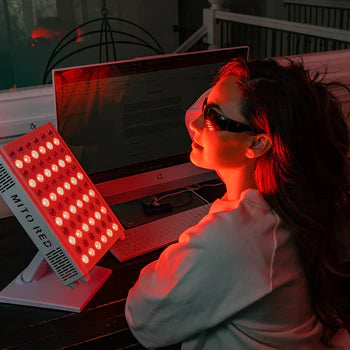
At‑home devices, such as full‑body panels or smaller targeted units like those in the Mito Red Light panel series.
General best‑practice tips drawn from current guidance and device manufacturers include:
Consistency over intensity: Short, regular sessions (for example, about 10–20 minutes per treated area on most days) are typically recommended rather than occasional marathon sessions.
Appropriate distance: Follow your device’s instructions for how far the LEDs should be from the skin for an effective irradiance dose.
Clean, dry skin: Use panels on bare, product‑free skin unless otherwise directed.
Monitor skin response: Stop and consult a professional if you notice unusual redness, burning, or worsening symptoms.
Medical clearance: Always check with your doctor if you’re pregnant, have a history of cancer in the treatment area, are taking photosensitizing medications, or have significant vascular disease.
Red light therapy has a strong safety profile when used correctly, but it is not risk‑free and should be integrated thoughtfully into your overall vascular and skin‑health plan.
At‑Home Red Light Therapy with Mito Red Light
For people dealing with chronic leg discomfort from varicose veins, traveling regularly to a clinic can be inconvenient and costly, especially if insurance does not cover photobiomodulation sessions. High‑output, medical‑grade panels designed for home use can make consistent therapy much easier.
Mito Red Light offers at‑home red and near‑infrared panels engineered for whole‑body or targeted use, allowing you to stand or sit in front of the device while treating your legs and lower body in a single session. Using a device from the MitoPRO Series or MitoADAPT Series, for example, you can incorporate roughly 10–20 minutes of lower‑body exposure as part of a broader routine that also includes compression, movement, leg elevation, and — when needed — professional vein procedures recommended by your doctor.
You do not need to dramatically exceed recommended session times; current photobiomodulation research does not support a “more is always better” approach. Many protocols focus on staying within a moderate dose range for optimal effects, something detailed further in our red light therapy dosing guide and buyer’s guide.
The Bottom Line
Red light therapy cannot cure or eliminate varicose veins. It does not close faulty veins or repair damaged valves.
It may, however, be a useful adjunct for symptom relief and skin support, helping support local circulation, modulate inflammation, and promote tissue healing in the treated area.
For lasting relief and prevention of complications, you should still discuss formal varicose vein treatments — including compression, lifestyle optimization, and minimally invasive procedures — with a qualified vein specialist.
If cleared by your clinician, incorporating an at‑home red and near‑infrared device like a Mito Red Light panel can be a practical way to support more comfortable, energized legs as part of a comprehensive vascular health strategy.
This article is for informational purposes only and does not constitute medical advice; always consult your healthcare provider about diagnosis and treatment options for varicose veins or any other vascular condition.
Frequently Asked Questions About Red Light Therapy for Varicose Veins
Can red light therapy make varicose veins go away?
No. Red light therapy cannot repair damaged vein valves or permanently close varicose veins. It may help with comfort and skin support, but procedures like sclerotherapy or endovenous ablation are required to eliminate diseased veins.
Is red light therapy safe if I have varicose veins?
Red and near‑infrared light are generally well tolerated when devices are used as directed, but you should always talk with your vein specialist or primary doctor first, especially if you have a history of blood clots, advanced venous disease, or other circulation problems.
Where should I position a red light therapy panel for varicose veins?
Most people stand or sit so that a full‑body or mid‑size panel is aimed at the front or back of the legs from the recommended distance (often 6–18 inches, depending on the device). Follow your panel’s manual and adjust your stance so the main problem areas are well covered.
How often should I use red light therapy on my legs?
Typical wellness routines use red light therapy on the legs about 3–5 times per week for 10–20 minutes per session. Your clinician may suggest specific parameters based on your circulation, skin status, and overall health.
Which Mito Red Light device is best if I have varicose veins in both legs?
If your goal is broad lower‑body support, a vertically mounted panel from the MitoPRO Series or MitoADAPT Series can allow you to treat both legs at once. For localized issues, you can pair a panel with targeted devices as needed.
References
- Mayo Clinic. Varicose veins – Diagnosis and treatment.
- USA Vein Clinics. Does Red Light Therapy Work for Varicose Veins?
- Cleveland Clinic. Red Light Therapy: Benefits, Side Effects & Uses.
- Brown Health. Red Light Therapy: Benefits, Safety and Things to Know.
- Nature. The surprising science behind red-light therapy — and how it really works.
- NIH PMC. Unlocking the Power of Light on the Skin.
- Mito Red Light. How Does Red Light Therapy Work?
- Mito Red Light. Red Light Therapy at Home – The Definitive Buyer’s Guide.
- Mito Red Light. Contraindications for Red Light Therapy.
This article discusses published scientific research and general educational information about photobiomodulation and red light therapy. It does not constitute medical advice and does not make specific claims about Mito Red Light devices. The research cited reflects independent peer-reviewed studies and does not imply that any Mito Red Light product has been evaluated, approved, or cleared by the FDA or any other regulatory body for the diagnosis, treatment, cure, or prevention of any disease or medical condition. Individual results vary. Consult a qualified healthcare professional before beginning any light therapy protocol, particularly if you have a pre-existing medical condition, are pregnant, or are taking photosensitising medications.
Mito Red Light products are general wellness devices. They are not medical devices and have not been evaluated, cleared, or approved by the FDA or any regulatory body for the diagnosis, treatment, cure, or prevention of any disease or medical condition. Any references to peer-reviewed research or clinical studies on this page describe findings from independent scientific literature and do not imply that Mito Red Light devices have been studied, tested, or proven effective for any specific condition. Always consult a qualified healthcare provider before beginning any new wellness routine, particularly if you have a medical condition or are taking medication.
Related articles
More from the skin health & anti-aging knowledge cluster