







Panel Series
Photobiomodulation (PBM) research suggests red and near-infrared light therapy may improve sleep quality by supporting melatonin synthesis pathways, modulating circadian-sensitive brain tissue, and reducing the neural hyperarousal that underlies chronic insomnia. Multiple human RCTs published between 2022 and 2026 have documented clinically meaningful improvements in validated sleep scores following structured light therapy protocols.
New to red light therapy? Read our introduction to red light therapy before diving into the sleep research below.
Reviewed for scientific accuracy by Dr. Alexis Cowan, PhD in Molecular Biology (Princeton University), who specializes in mitochondrial function and photobiomodulation research.
The Short Answer: What Red Light Therapy Does for Sleep
Red light therapy — also called photobiomodulation, or PBM — refers to the application of specific wavelengths of non-thermal red and near-infrared light, primarily between 630nm and 850nm, to stimulate biological function at the cellular level. Research suggests it may meaningfully support sleep quality through two primary pathways: direct modulation of circadian biology via melatonin synthesis, and improvement of the mitochondrial and neurological conditions that make sleep difficult to initiate or maintain.
Unlike blue-spectrum light, which suppresses melatonin production and signals alertness to the brain, red and near-infrared wavelengths do not activate the melanopsin photoreceptors that drive circadian clock suppression. Evening red light exposure is therefore compatible with — and research suggests may actively support — the natural transition into sleep.
A 2025 systematic review published in Frontiers in Behavioral Neuroscience (Gaggi et al.)[2] examined the cumulative human evidence for transcranial photobiomodulation and concluded that PBM can meaningfully enhance sleep quality, wakefulness regulation, and cognitive function — effects attributed to improvements in neural energy metabolism and modulation of the brain's default mode network. The sleep evidence base has grown substantially in the past three years, with multiple RCTs now confirming what earlier observational work suggested.
For a comprehensive library of peer-reviewed clinical studies on photobiomodulation by health category, Mito Red Light maintains a clinical research evidence hub that includes the most relevant sleep and brain research published to date.
The Modern Light Problem: Why Sleep Is Getting Worse
To understand why red light therapy matters for sleep, it helps to understand what has changed about the light environment humans now live in — because the changes are both recent and profound.
For most of human evolutionary history, light exposure followed a predictable daily pattern: intense, broad-spectrum sunlight during the day (including substantial red and near-infrared content), a gradual transition to red-orange wavelengths at dusk as the sun moved toward the horizon, and near-total darkness at night broken only by firelight — which, notably, emits almost exclusively in the red and infrared spectrum. This light pattern was the primary input calibrating the human circadian clock for hundreds of thousands of years.
The modern light environment has inverted this in two critical ways simultaneously. First, most people now spend 85–90% of their waking hours indoors, dramatically reducing daytime exposure to the full solar spectrum. Modern windows and building materials filter out much of the near-infrared content of sunlight that reaches indoor environments, so even people who sit near windows receive a spectrally impoverished version of natural light. Second, LED screens, overhead lighting, and artificial illumination flood the evening hours with blue-shifted light precisely when the ancestral pattern would have provided only warm red and amber — the frequencies that allow melatonin production to proceed naturally.
The result is a population that receives too little of the wavelengths that support healthy circadian function during the day, and too much of the wavelengths that suppress it at night. Rates of insomnia and poor sleep quality have increased markedly across industrialized populations, and researchers studying circadian biology increasingly point to the modern light environment as a key contributing variable.
Red light therapy, in this context, is not a pharmaceutical intervention. It is the deliberate restoration of a wavelength input that human biology developed to rely on — specifically, the red and near-infrared content of light that modern indoor life has largely eliminated. To understand the full cellular biology of how photobiomodulation works, see how red and near-infrared light trigger cellular response at the mitochondrial level.
How Light Controls Sleep Biology: Circadian Rhythm and Melatonin
The human sleep-wake cycle is governed by the circadian rhythm — an approximately 24-hour biological clock coordinated primarily by light input to the suprachiasmatic nucleus (SCN) of the hypothalamus. Light signals travel from retinal photoreceptors to the SCN, which then regulates the release of melatonin from the pineal gland. When light decreases in the evening, the SCN signals the pineal gland to begin producing melatonin, and sleep pressure builds. When morning light arrives, melatonin production is suppressed and cortisol rises, signaling wakefulness.
The wavelength of light hitting the retina determines how strongly this system is activated. Short-wavelength blue light (around 460–480nm) activates melanopsin-containing intrinsically photosensitive retinal ganglion cells (ipRGCs) with high efficiency — these are the primary biological sensors for circadian entrainment, and they are exquisitely sensitive to the blue spectrum emitted by LED screens, modern lighting, and electronic devices. Exposure to blue-rich light in the two to three hours before bed delays melatonin onset, reduces total melatonin production, shortens sleep duration, and disrupts slow-wave and REM sleep architecture.
Red and near-infrared wavelengths (630–850nm) sit at the opposite end of this spectrum. They have minimal melanopsin activation, which is why red light has been used in military operations, aviation, and submarine environments for decades — it allows visibility at night without triggering the circadian suppression that white or blue light would cause. This is the first mechanism by which red light supports sleep: not by actively inducing sleep, but by not doing the thing that prevents it.
There is a second mechanism that is less widely understood but increasingly supported by research. Near-infrared wavelengths delivered to the body during the day appear to support the capacity for melatonin synthesis that evening. This appears to involve cytochrome c oxidase (CCO) — the terminal enzyme in the mitochondrial electron transport chain, and the primary photoacceptor for red and NIR light first characterized by biophysicist Tiina Karu at the Russian Academy of Sciences. CCO has absorption peaks around 660nm and 830nm. When activated by these wavelengths, it increases mitochondrial ATP production, reduces oxidative stress, and modulates nitric oxide (NO) release.
In the pineal gland, which produces melatonin, this matters because melatonin synthesis is an energy-intensive enzymatic process. The conversion of serotonin to melatonin via N-acetyltransferase (NAT) and hydroxyindole-O-methyltransferase (HIOMT) requires adequate cellular energy and reduced oxidative load. Research suggests that NIR-driven mitochondrial support in pineal tissue may improve the gland's capacity to produce melatonin in response to the evening darkness signal — meaning daily NIR exposure during the day or evening may compound over time into more robust melatonin output.
"When we look at how red and near-infrared light interact with sleep biology, we need to think about two distinct mechanisms. The first is what the light does not do — it doesn't activate the melanopsin pathway the way blue light does, so it doesn't suppress melatonin. The second is more active: near-infrared penetration to neural and pineal tissue can support the mitochondrial function in those cells involved in melatonin production capacity. These are separate effects operating through different photobiological pathways, and both appear relevant to why people report better sleep with consistent red light exposure."
— Dr. Alexis Cowan, PhD, Molecular Biology (Princeton University), Scientific Advisor, Mito Red Light
The Aging Factor: Why Sleep Worsens With Age and What PBM Research Shows
Sleep quality declines measurably with age. Adults over 60 experience reduced slow-wave (deep) sleep, more frequent nighttime awakenings, earlier circadian phase advancement (waking earlier than desired), and substantially reduced melatonin production — melatonin production declines substantially with age — research consistently documents that older adults produce significantly less melatonin than younger people, with the decline accelerating after midlife. This age-related reduction in melatonin output is one of the primary biological drivers of sleep deterioration in older populations.
This matters for the red light therapy evidence base because several of the most compelling recent RCTs have specifically studied older adult populations — and the results have been consistent. A 2026 RCT (Chen PY et al.)[1] published in Photodiagnosis and Photodynamic Therapy compared 850nm near-infrared light, bright white light, and a combined NIR+white light condition in community-dwelling older adults with insomnia symptoms. All three intervention groups showed significant improvement on the Pittsburgh Sleep Quality Index (PSQI). The 850nm NIR group increased subjective sleep duration by 0.81 hours on average; the combined group achieved 1.08 hours of added sleep duration. For a population where pharmaceutical sleep aids carry serious risks of falls, cognitive impairment, and dependence, an 0.81-hour sleep duration improvement from a non-pharmacological light intervention is clinically meaningful.
A 2025 feasibility trial (Lai et al.)[6] published in Geriatric Nursing enrolled nursing home residents and applied low-level light therapy over a structured protocol period. Significant improvements were documented across sleep quality, fatigue, and depression scores. Cold limbs — a common circulatory complaint in older adults that frequently disrupts sleep — decreased from 50% prevalence to 6.7% in the treatment group, consistent with PBM's established effects on nitric oxide release and peripheral vascular tone.
A 2022 sham-controlled study (Zhao X et al.)[12] published in the Journal of Alzheimer's Disease applied transcranial brain photobiomodulation to adults with subjective cognitive decline and found improvements in sleep efficiency — the ratio of actual sleep time to total time in bed — alongside other cognitive measures.
The consistency of sleep improvement findings across diverse older-adult populations, and across varied PBM delivery methods (full-body, transcranial, acupoint-targeted), suggests the effect is not protocol-specific but reflects a fundamental biological responsiveness of the aging circadian and melatonin system to photobiomodulation.
The Clinical Evidence: Human Studies Organized by Population
The following section covers the current human RCT and systematic review evidence on red light therapy and sleep. This is not a comprehensive reference of all PBM sleep research — for that, see Mito Red Light's searchable database of over 9,500 peer-reviewed PBM studies. This is the highest-quality evidence most directly relevant to at-home use for sleep support.
Insomnia: Direct RCT Evidence
The most direct clinical evidence for red light therapy as a sleep intervention comes from RCTs specifically targeting insomnia populations with validated outcome measures.
A 2025 RCT (Mehdizadeh et al.)[3] published in Lasers in Medical Science investigated transcranial photobiomodulation using 810nm near-infrared light in patients with chronic insomnia. Participants in the active tPBM group showed a mean PSQI global score improvement of −4.6 points compared to sham (95% CI: −7.2 to −2.0; p=0.004; η²=0.272 — a large effect size). The tPBM group also showed significant reductions in Epworth Sleepiness Scale scores, indicating reduced daytime sleepiness, and measurable changes in EEG delta power — an objective neurological marker of sleep depth that is not susceptible to self-report bias. The inclusion of EEG data is significant because it provides physiological confirmation that the subjective sleep improvements reflected real changes in sleep architecture.
A 2023 sham-controlled RCT (Kennedy KER et al.)[9] published in the Journal of Clinical Sleep Medicine tested a cervical collar emitting 660, 740, 810, and 870 nm light, worn every other night for three weeks in adults with self-reported sleep complaints. Self-reported sleep quality, relaxation, and mood improved significantly in the active group versus sham; however, actigraphy-derived objective sleep parameters did not differ between groups. The authors note that optimal dosing, wavelengths, and power levels still need to be determined.
Shift Workers and Circadian Disruption
Shift workers represent a population with chronically disrupted circadian rhythms — and arguably the population most likely to benefit from a light-based circadian recalibration intervention. The evidence in this group is particularly compelling because the disruption mechanism is well understood and the outcome measures are objective.
A 2025 RCT (Lin et al.)[5] published in Lasers in Medical Science applied 830nm photobiomodulation to night-shift nurses across a multi-week protocol. Both global PSQI scores and Athens Insomnia Scale (AIS) scores improved significantly following treatment. The defining finding was durability: sleep quality improvements were sustained one full month after the end of the intervention period. This suggests the protocol produced lasting circadian recalibration — the biological clock had been shifted and held — rather than producing temporary symptomatic improvement that reverts when treatment stops.
A separate 2025 RCT (Liao YH et al.)[4] published in the Journal of Nursing Management enrolled a different cohort of shift-work nurses and applied LED-based light therapy over four weeks. Insomnia severity scores dropped from 12.6 to 4.3 in the intervention group — moving from a moderate-to-clinical insomnia range (12.6) to a sub-threshold range (4.3) on the Insomnia Severity Index — while control group scores were largely unchanged. The intervention group also showed significant reductions in depression scores (7.9 to 2.5) and anxiety scores (9.2 to 3.1). Heart rate variability did not change significantly during the four-week protocol — the authors suggest a longer intervention may be required to register autonomic shifts. These comorbid mood and sleep improvements are consistent with the understanding that insomnia, anxiety, and depression share overlapping neurobiological substrates.
Athletes and Performance Recovery
The earliest controlled human evidence connecting red light therapy to sleep came from an athletic population, and it remains some of the most often cited. The foundational 2012 study by Zhao J et al.,[13] published in the Journal of Athletic Training, enrolled 20 elite female basketball players and randomized them to 14 days of full-body red light therapy or a control condition. The red light group showed significantly elevated serum melatonin levels — a direct biochemical finding, not just a subjective report — and significantly improved PSQI scores, with global PSQI changes correlating with serum melatonin changes (r = −0.695, p = .006). The same group also showed improved endurance performance. This was among the earliest human studies to associate red light exposure with elevated melatonin output, though the small sample size and narrow athletic population mean the finding warrants replication in broader populations.
A 2022 study (Rentz et al.)[11] published in Sports (Basel) followed athletes receiving full-body photobiomodulation and found that the intervention was associated with enhanced cardiorespiratory recovery indicators — markers of physiological restoration — even during periods when sleep duration was reduced. This suggests that PBM may improve sleep efficiency (the biological quality of recovery achieved per hour of sleep) independently of total sleep time, which has direct relevance for athletes, travelers, new parents, and anyone else operating with structural sleep debt.
Mood, Neurology, and Secondary Sleep Improvement
A substantial portion of sleep disturbance is secondary to other conditions — anxiety, depression, chronic pain, traumatic brain injury, and cognitive decline. Several human studies have now documented that as PBM improves these underlying conditions, sleep quality improves as a secondary outcome, often with effect sizes comparable to studies targeting sleep directly.
A 2023 double-blind RCT (Giménez et al.)[8] published in Biology applied 850nm near-infrared light at 6.5 J/cm² to participants with mild sleep-related complaints and found consistent improvements in mood and subjective well-being, significant reductions in drowsiness ratings, and measurable reductions in interferon-gamma (IFN-γ) — a pro-inflammatory cytokine associated with immune activation, fatigue, and disrupted sleep architecture. Resting heart rate also improved, consistent with reduced autonomic arousal. The 6.5 J/cm² dose finding is noteworthy: it suggests that within the study's dose range, there was an optimal fluence for these outcomes rather than a simple linear dose-response relationship.
A 2022 review by Moro et al.[10] published in Frontiers in Neuroscience examined the mechanistic evidence for PBM effects on the sleeping brain specifically, proposing that NIR wavelengths delivered during sleep may enhance cerebrospinal fluid clearance via the glymphatic system — the brain's lymphatic waste-removal network, which operates primarily during sleep and is increasingly recognized as central to long-term cognitive health. Disrupted glymphatic function is associated with accumulation of amyloid beta and tau proteins implicated in neurodegenerative disease. If PBM enhances glymphatic efficiency during sleep, the implications extend well beyond feeling rested the next morning.
Sleep Apnea: Preliminary Evidence
Obstructive sleep apnea (OSA) is primarily a structural airway problem — the tongue and soft palate relax during sleep and obstruct airflow, causing repeated micro-awakenings that prevent restorative sleep. The primary treatment is CPAP therapy. However, a 2025 RCT (Attia AAMM et al.)[7] published in Sleep and Breathing compared low-level laser therapy against dextrose prolotherapy — not a sham control — in adults with obstructive sleep apnea. Both interventions reduced AHI significantly (LLLT: 46%; prolotherapy: 68%), with prolotherapy showing the larger reduction. Because neither arm was a placebo, the trial cannot establish whether LLLT outperforms no treatment. The finding is preliminary. Obstructive sleep apnea is a diagnosed medical condition; anyone with suspected OSA should pursue formal sleep evaluation rather than substituting any non-clinical intervention for established care.
Proposed Mechanisms: How Red Light Therapy Supports Sleep Biology
The clinical evidence is converging across several mechanistic pathways. These likely interact and reinforce each other rather than operating independently.
Melatonin Synthesis Pathway Support
As described above, near-infrared wavelengths may enhance mitochondrial function in the pineal gland, supporting the enzymatic energy requirements of melatonin synthesis. Separately, the absence of melanopsin activation from red/NIR wavelengths means these wavelengths do not suppress the natural melatonin surge. Both mechanisms favor evening melatonin onset and higher peak melatonin levels.
Circadian Entrainment via SCN Responsiveness
Emerging research suggests the suprachiasmatic nucleus may have direct photosensitivity to near-infrared wavelengths independent of the retinal melanopsin pathway. If confirmed in larger studies, this would mean that NIR light delivered transcranially — to the forehead and scalp — could modulate circadian timing directly through neural tissue, not just through the retina. This would explain the durable circadian recalibration effects observed in the Lin (2025) shift-worker study, where improvements held for a full month after treatment ended.
Neuroinflammation Reduction and Arousal Attenuation
Chronic insomnia is characterized not just by difficulty sleeping but by a state of generalized neurological hyperarousal — elevated activity in the HPA (hypothalamic-pituitary-adrenal) axis, heightened sympathetic nervous system tone, elevated inflammatory cytokines including IL-6, TNF-alpha, and IFN-γ, and dysregulated autonomic balance. This hyperarousal is both a cause and consequence of poor sleep, creating a self-reinforcing cycle. PBM's established anti-inflammatory effects — documented across multiple tissue types and disease states — may interrupt this cycle by reducing the neuroinflammatory burden that keeps the arousal system activated at night. The improvements in HRV and IFN-γ reduction seen in the Giménez (2023)[8] study are consistent with this mechanism. The Liao (2025) study found improvements in insomnia, depression, and anxiety scores but did not find significant changes in HRV over the four-week protocol.
Glymphatic Enhancement During Sleep
The glymphatic system — the brain's cerebrospinal fluid-based waste clearance network — operates primarily during slow-wave sleep and is driven by arterial pulsations and aquaporin-4 water channels in astrocytes. PBM's effects on nitric oxide release and cerebrovascular tone may enhance the arterial pulsatility that drives glymphatic flow, while its effects on astrocyte function may optimize the water channel dynamics that facilitate CSF movement through brain tissue. Moro and colleagues (2022, 2023)[10] have proposed that NIR wavelengths delivered during sleep may enhance cerebrospinal fluid clearance via the glymphatic system — one of the few interventions with a plausible mechanism for improving the brain's own overnight maintenance processes rather than simply extending time in bed.
ATP Production and Sleep Pressure Regulation
Adenosine, a byproduct of ATP metabolism in the brain, is the primary molecular driver of sleep pressure — it accumulates during wakefulness and is cleared during sleep, creating the homeostatic drive to sleep that grows stronger the longer you are awake. By supporting mitochondrial ATP efficiency through CCO activation, PBM may improve the cellular energy economy of neurons in ways that influence adenosine dynamics and sleep pressure regulation. This mechanism is more speculative than the others and requires further investigation, but it is consistent with the broader role of mitochondrial function in neurological health.
For deeper detail on how CCO activation and the mitochondrial cascade produce these downstream effects, see the clinical evidence on PBM and brain and nervous system function.
Practical Protocol: How to Use Red Light Therapy for Sleep
The following guidance reflects the approaches used in published human studies. It is educational information, not medical advice. Individuals with sleep disorders, photosensitizing medications, or relevant medical conditions should consult a healthcare provider before beginning any PBM protocol.
Timing: When to Use Red Light for Sleep
The circadian biology of sleep strongly favors evening application — roughly 30 to 90 minutes before your intended sleep time. This aligns with the natural melatonin onset window and maximizes the non-suppression advantage of red/NIR wavelengths during the period when blue light exposure is most damaging to sleep. Pairing a red light session with concurrent reduction of blue light exposure (screens off or on night mode, warm-spectrum lighting indoors) compounds both effects.
Morning red light exposure has different effects — it may support circadian phase advancement (helpful for people who struggle to wake up on time) and general energy levels, but the 2023 Giménez study found it did not produce the same sleep-quality improvements seen with evening use. For shift workers, jet lag recovery, or significant circadian phase disruption, a morning NIR session combined with deliberate evening red light may be warranted as a circadian resetting strategy.
Wavelength Reference: What the Sleep Research Used
| Wavelength | Mechanism Emphasis | Penetration Depth | Human Sleep Studies Using It |
|---|---|---|---|
| 630–660nm (Red) | Surface tissue, melatonin pathway, circadian signaling; does not suppress melanopsin | ~1–2cm | Zhao (2012)[13] full-body foundational study |
| 810nm (NIR) | Transcranial neural penetration, strong CCO activation in brain tissue | ~3–5cm | Mehdizadeh (2025) insomnia RCT, Gaggi (2025) systematic review |
| 830nm (NIR) | Deep tissue NIR, strong CCO affinity, anti-inflammatory, acupoint protocols | ~3–5cm | Lin (2025) shift nurses, Chang (2024) hemodialysis |
| 850nm (NIR) | Deep NIR, broad biological activation, circadian and mood effects | ~3–5cm | Chen (2026) insomnia RCT, Giménez (2023) well-being RCT |
The majority of recent sleep RCTs use NIR wavelengths (810–850nm), particularly for transcranial delivery targeting brain tissue directly. Full-body protocols have historically used red wavelengths (as in the foundational Zhao 2012 study) or combined red+NIR. Combination panels delivering both 660nm and 850nm align with the dual-wavelength approach used across the broadest range of human PBM research and cover both the surface melatonin pathway mechanisms and the deeper neural tissue targets.
The MitoPRO X Series delivers both 660nm and 850nm at clinical irradiance levels — the wavelength pairing used across the majority of human PBM RCTs. For a detailed comparison of how red and NIR wavelengths differ in tissue penetration and use cases, see the red vs. near-infrared light therapy comparison.
Session Duration and Treatment Frequency
Human sleep studies have used session durations ranging from 10 to 30 minutes, with treatment frequencies of 3–7 sessions per week over 2–8 weeks. Key protocol findings from the evidence:
- The Mehdizadeh (2025)[3] insomnia RCT used three frontal tPBM sessions delivered on consecutive days (810 nm, 250 mW/cm², 60 J/cm², 10 min per session) and produced large effect sizes (η²=0.272) on PSQI assessed one week post-treatment. The dose used in this trial was relatively high; at-home protocols generally apply lower-intensity exposure over a longer duration.
- The Lin (2025)[5] shift-worker RCT used a multi-week protocol that produced effects sustained one month post-treatment — suggesting the treatment window needs to be long enough to produce durable circadian and mitochondrial adaptation.
- The Kennedy KER (2023)[9] sham-controlled RCT found subjective sleep quality, relaxation, and mood improved in the active group after three weeks of every-other-night use — reinforcing that consistent use over time matters more than any single session. Actigraphy-derived objective sleep parameters did not differ between groups.
- The Giménez (2023)[8] study found a specific optimal fluence of 6.5 J/cm² for well-being and mood effects — suggesting that more is not always better, and dose matters.
For wavelength-specific dosing guidance and irradiance-to-fluence calculations, Mito Red Light's wavelength and dosing reference page covers the clinical parameters in detail.
Delivery Method: Full-Body vs. Transcranial
Both full-body panel exposure and transcranial application (light directed to the scalp and forehead) show evidence of benefit for sleep. They appear to work through partially overlapping but distinct mechanisms:
Full-body exposure maximizes systemic mitochondrial support, melatonin pathway enhancement across all photoreceptive tissues, and anti-inflammatory effects throughout the body. This is the method used in the foundational Zhao (2012)[13] athlete study and the Rentz (2022)[11] recovery study. It is also the most practical approach for at-home use with a standard panel.
Transcranial delivery targets the brain more directly — the SCN, pineal gland, prefrontal cortex, and glymphatic system. This is the approach used in the more recent insomnia RCTs (Mehdizadeh 2025, Zhao 2022, Kennedy 2023). Transcranial PBM requires NIR wavelengths (810–850nm) that can penetrate several centimeters into neural tissue; red wavelengths at 660nm are largely absorbed before reaching deep brain structures.
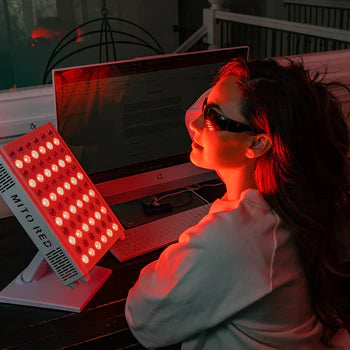
For at-home full-body use, positioning a panel at the manufacturer-recommended distance (typically 15–30cm) for a 10–20 minute session in the evening is consistent with the protocols showing sleep benefit, and covers the full-body systemic mechanisms.
Red Light Therapy as Part of a Sleep Hygiene Stack
Red light therapy works best when it is one element of a coherent sleep environment, not an isolated intervention. The most effective approach is to combine it with the behavioral and environmental practices that support the same underlying biology.
The light environment matters most. A red light session at 9pm provides limited benefit if it is preceded by two hours of blue-light-heavy screen use at full brightness. The goal is a consistent evening light environment that minimizes blue and green wavelengths from approximately two hours before bed, with red light as a positive addition rather than a partial offset against an otherwise problematic light environment. Blue-light-blocking glasses, night mode on devices, and warm-spectrum bulbs in the bedroom and living spaces all compound the benefit of a deliberate red light session.
Consistency with sleep timing amplifies circadian effects. The circadian clock is most responsive to light cues when they are delivered at consistent times. A red light session at the same time each evening — especially if it coincides with a broader wind-down routine — trains the circadian system to associate that time with sleep preparation. The sustained effects observed in the Lin (2025) shift-worker study may in part reflect this conditioning mechanism, not just the direct photobiological effects.
Temperature and darkness still matter. A bedroom temperature of approximately 65–68°F supports the core body temperature drop that facilitates sleep onset. Complete darkness during sleep (or a quality sleep mask) prevents the nocturnal light exposure that disrupts melatonin and sleep architecture. Red light therapy supports the pre-sleep window; the sleep environment must support the sleep itself.
Alcohol and caffeine timing interacts with circadian biology. Caffeine blocks adenosine receptors — the same adenosine that builds sleep pressure during waking hours. Late caffeine intake directly blunts one of the primary homeostatic sleep drivers. Alcohol may induce sleep onset but consistently disrupts sleep architecture in the second half of the night, reducing REM sleep and increasing nocturnal awakening. Neither has a direct interaction with red light therapy, but both undermine the circadian and homeostatic mechanisms that PBM is supporting.
Morning light exposure reinforces the system. Bright morning light — ideally natural sunlight, or a 10,000-lux lamp if sunlight is unavailable — anchors the circadian clock to local time and supports the cortisol awakening response that sets the phase for that evening's melatonin onset. A consistent morning light signal combined with a consistent evening red light session creates a clear circadian pattern: wake signal in the morning, sleep signal in the evening. For comprehensive guidance on device selection and practical at-home protocols, the red light therapy buyer's guide covers what to look for in a panel for whole-body use.
Red Light vs. Blue Light: The Critical Distinction
| Blue Light (450–490nm) | Red / NIR Light (630–850nm) | |
|---|---|---|
| Melanopsin activation | High — strong circadian suppression | Minimal — does not suppress circadian timing |
| Melatonin effect | Suppresses melatonin production | Compatible with or supportive of melatonin synthesis |
| Evening use impact | Delays sleep onset, reduces sleep quality | May support sleep onset; used safely in evening protocols |
| Primary photoreceptor | Melanopsin in retinal ganglion cells (ipRGCs) | Cytochrome c oxidase in mitochondria |
| Tissue penetration | Surface (primarily retinal activation) | 1–7cm depending on wavelength |
| Historical night use | Actively avoided in military/aviation | Standard in cockpits, submarines, military ops |
The distinction is not merely about intensity. The wavelength itself determines which biological receptors are activated and which pathways respond. This is why the military and aviation industries adopted red cockpit lighting — it allows operators to see without resetting their circadian clocks. It is also why current sleep research consistently associates red and near-infrared light exposure in the evening with improved sleep markers, while evening blue light exposure is associated with sleep disruption.
What Red Light Therapy Cannot Do for Sleep
Calibrated confidence is a feature, not a weakness. Red light therapy is not a treatment for obstructive sleep apnea — which in most cases requires a CPAP device, oral appliance, or surgical consultation for meaningful AHI reduction. It is not a substitute for cognitive behavioral therapy for insomnia (CBT-I), which has the strongest evidence base of any insomnia intervention and addresses the behavioral and cognitive drivers that PBM alone cannot reach. It is not a replacement for addressing hypothyroidism, untreated depression, or other medical conditions that impair sleep as a secondary effect.
The evidence for restless leg syndrome improvement with NIR light remains preliminary — two small controlled studies showing symptom improvement, which is promising but not conclusive. Sleep paralysis, somnambulism, and narcolepsy involve mechanisms that current PBM research has not addressed in sleep-specific studies.
Anyone with persistent sleep difficulties lasting more than three months, significant daytime impairment, witnessed apnea episodes, or suspected sleep disorder should pursue formal evaluation from a sleep medicine specialist or physician. Red light therapy may be a valuable component of a comprehensive sleep strategy — and the evidence increasingly supports its inclusion — but it works best in combination with other evidence-based approaches, not as a standalone substitute for professional care.
The Mito Red Light research evidence hub provides the full indexed library of human studies by topic, including direct PubMed links for independent verification of every study referenced in our educational content. The photobiomodulation and sleep evidence is organized under the Brain & Nervous System and Sleep Medicine categories.
Frequently Asked Questions
Does red light therapy help with insomnia?
Multiple human RCTs now support this. A 2025 RCT (Mehdizadeh et al.) using 810nm transcranial photobiomodulation found a mean PSQI improvement of −4.6 points in chronic insomnia patients versus sham, with EEG delta power changes confirming objective neurological improvement alongside subjective reports. A 2026 RCT (Chen et al.) found 850nm NIR increased sleep duration by 0.81 hours in older adults with insomnia symptoms. Results vary by protocol, insomnia type, and individual. Anyone with chronic insomnia should consult a healthcare provider; CBT-I is the first-line recommended treatment.
When should I use red light therapy for sleep — morning or evening?
Evidence favors evening use, approximately 30–90 minutes before bed, to align with the melatonin window and avoid the circadian suppression caused by blue-shifted evening light. A 2023 study found morning red light application did not produce the same sleep-quality improvements seen in evening protocols. For shift workers or jet lag recovery, strategic morning NIR exposure combined with deliberate evening red light may support circadian resetting — with timing adjusted to the target sleep phase, not the current disrupted one.
How long does it take for red light therapy to improve sleep?
Human sleep studies suggest consistent improvement typically requires five or more sessions, with most RCTs running 2–8 week protocols. The Lin (2025) shift-worker RCT found sleep quality improvements sustained one month after the intervention ended, indicating durable circadian recalibration rather than temporary symptomatic relief. Research protocols have ranged from three consecutive daily sessions (Mehdizadeh 2025) to multi-week every-other-night use (Kennedy KER 2023). Subjective sleep improvements may become apparent within the first few weeks of consistent use, though optimal dosing and duration remain an active area of investigation.
What wavelength of red light is best for sleep?
The most recent insomnia RCTs used NIR wavelengths in the 810–850nm range for transcranial delivery — these wavelengths penetrate 3–5cm into tissue and can reach neural structures including the SCN and pineal gland. The foundational 2012 athlete study used full-body red light (630–660nm range) and documented direct melatonin increases and PSQI improvement. For at-home full-body panels, a combination of 660nm red and 850nm NIR covers both the surface melatonin pathway mechanisms and the deeper neural tissue targets used in the most recent RCTs.
Can I use red light therapy every night?
Published protocols have used daily sessions without reported adverse effects, and the Lin (2025)[5] study showed durable benefits following a regular multi-week protocol. There is no established evidence of harm from nightly red light use at typical at-home irradiance levels. The biological effects are cumulative — consistent daily use appears to produce better outcomes than intermittent use, based on the dose-response patterns observed in the insomnia and shift-work RCTs.
Can red light therapy help with sleep apnea?
Early evidence is preliminary. A 2025 RCT found low-level laser therapy reduced the apnea-hypopnea index by 46% — meaningful but not definitive evidence from a single trial comparing it against a prolotherapy control. Obstructive sleep apnea is a structural airway condition requiring medical diagnosis; CPAP therapy and other clinical interventions remain the standard of care. Red light therapy should not replace established sleep apnea treatment. Anyone with suspected sleep apnea — particularly those who snore loudly, wake unrefreshed, or have a sleep partner who reports witnessed apneas — should seek formal evaluation.
This article discusses published scientific research and general educational information about photobiomodulation and red light therapy. It does not constitute medical advice and does not make specific claims about Mito Red Light devices. The research cited reflects independent peer-reviewed studies and does not imply that any Mito Red Light product has been evaluated, approved, or cleared by the FDA or any other regulatory body for the diagnosis, treatment, cure, or prevention of any disease or medical condition. Individual results vary. Consult a qualified healthcare professional before beginning any light therapy protocol, particularly if you have a pre-existing medical condition, are pregnant, or are taking photosensitising medications.
References
- Chen PY, et al. (2026). Effects of bright light and near-infrared light on insomnia symptoms in community-dwelling older adults: a randomized clinical trial. Photodiagnosis and Photodynamic Therapy. PMID 41794313
- Gaggi G, et al. (2025). Enhancing sleep, wakefulness, and cognition with transcranial photobiomodulation: a systematic review. Frontiers in Behavioral Neuroscience. PMID 40822571
- Mehdizadeh M, et al. (2025). Transcranial photobiomodulation improves sleep quality, reduces daytime sleepiness, and modulates delta power in chronic insomnia: a randomized controlled trial. Lasers in Medical Science. PMID 41125953
- Liao YH, et al. (2025). The Effectiveness of Low-Level LED Light Therapy for Sleep Problems, Psychological Symptoms, and Heart Rate Variability in Shift-Work Nurses: A Randomized Controlled Trial. Journal of Nursing Management. PMID 40557249
- Lin YY, et al. (2025). Effects of photobiomodulation on the sleep quality and quality of life of night-shift nurses. Lasers in Medical Science. PMID 40358743
- Lai FC, et al. (2025). Low-level light therapy for sleep quality, fatigue, depression, and cold limbs in older adults in nursing homes: A feasibility trial. Geriatric Nursing. PMID 40633237
- Attia M, et al. (2025). Dextrose prolotherapy versus low level laser therapy in the treatment of patients with obstructive sleep apnea syndrome; a randomized controlled trial. Sleep and Breathing. PMID 40794160
- Giménez MC, et al. (2023). Effects of Near-Infrared Light on Well-Being and Health in Human Subjects with Mild Sleep-Related Complaints: A Double-Blind, Randomized, Placebo-Controlled Study. Biology. PMID 36671752
- Kennedy KER, et al. (2023). A randomized, sham-controlled trial of a novel near-infrared phototherapy device on sleep and daytime function. Journal of Clinical Sleep Medicine. PMID 37141002
- Moro C, et al. (2022). The effect of photobiomodulation on the brain during wakefulness and sleep. Frontiers in Neuroscience. PMID 35968381
- Rentz LE, et al. (2022). Full-Body Photobiomodulation Therapy Is Associated with Reduced Sleep Durations and Augmented Cardiorespiratory Indicators of Recovery. Sports (Basel). PMID 36006085
- Zhao X, et al. (2022). Brain Photobiomodulation Improves Sleep Quality in Subjective Cognitive Decline: A Randomized, Sham-Controlled Study. Journal of Alzheimer's Disease. PMID 35491787
- Zhao J, et al. (2012). Red Light and the Sleep Quality and Endurance Performance of Chinese Female Basketball Players. Journal of Athletic Training. PMC3499892
Mito Red Light products are general wellness devices. They are not medical devices and have not been evaluated, cleared, or approved by the FDA or any regulatory body for the diagnosis, treatment, cure, or prevention of any disease or medical condition. Any references to peer-reviewed research or clinical studies on this page describe findings from independent scientific literature and do not imply that Mito Red Light devices have been studied, tested, or proven effective for any specific condition. Always consult a qualified healthcare provider before beginning any new wellness routine, particularly if you have a medical condition or are taking medication.
Related articles
More from the sleep & circadian rhythm knowledge cluster