














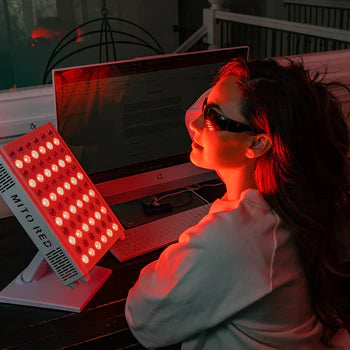


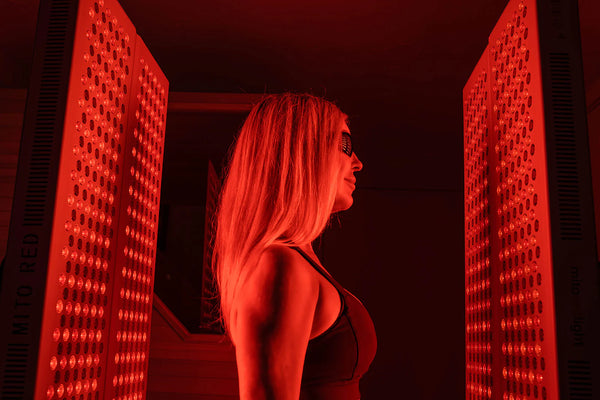
Panel Series
The LED face mask category has become genuinely hard to navigate. Dozens of devices now claim clinical-grade results, most cite wavelength numbers without context, and prices range from under a hundred dollars to well over a thousand. Independent reviewers have started doing the work of separating real performers from cosmetic gadgets — and in 2026, one mask has appeared at the top of multiple category rankings: MitoGLOW by Mito Red Light.
What sets MitoGLOW apart from most of the competition isn't positioning or price. It's a regulatory fact: MitoGLOW holds FDA 510(k) clearance (K221775) for the over-the-counter treatment of mild to moderate acne vulgaris of the face, as well as for full-face wrinkle reduction. That dual clearance - verified in the FDA's Device Registration and Listing Module - is the clinical credibility signal that separates devices reviewed by a federal agency from those that simply use marketing language. It's a meaningful distinction that informed buyers and independent reviewers are now paying attention to.
What Independent Reviewers Found in 2026
The team at glownofilter.com — a publication focused on evidence-informed skincare technology - has published several head-to-head evaluations of the current LED mask landscape. Their findings are worth reviewing in detail, because they reflect the kind of hands-on comparative testing that most brand-owned content can't replicate.
In their 2026 LED face mask roundup, which evaluated current-generation devices across wavelength output, coverage, build quality, and overall value, MitoGLOW placed among the top performers - appearing alongside devices at two to three times the price. The evaluation considered both the technical specifications and practical usability across a range of skin concerns.
Their guide to the best red light devices for face similarly featured MitoGLOW prominently in the category, noting its dual-wavelength design as a key differentiator. Red and near-infrared light serve different biological targets - a point covered in detail below - and masks that combine both wavelengths are generally better supported by the photobiomodulation research literature than single-wavelength designs.
Most significantly for buyers researching the acne angle: in glownofilter's dedicated guide to the top-rated LED masks for acne, MitoGLOW earned the #1 position. The guide specifically highlights its FDA clearance as a differentiating factor - the kind of third-party validation that reflects genuine regulatory scrutiny, not a self-applied claim.
What Does FDA-Cleared Actually Mean for a Light Therapy Mask?
FDA clearance via the 510(k) pathway means the FDA reviewed the device's intended use, safety testing data, and clinical rationale and determined it is substantially equivalent to a legally marketed predicate device. It is not the same as FDA approval (which applies to drugs and high-risk devices), but it is a meaningful regulatory threshold that most LED masks on the market have not crossed for an acne indication specifically.
For MitoGLOW, clearance K221775 covers two distinct indications: the over-the-counter treatment of mild to moderate acne vulgaris of the face, and full-face wrinkle reduction. Both are OTC use cases - meaning no prescription is required and the device is intended for home use.
It's worth being precise about what clearance means in practice: it signals that the FDA reviewed the submission, found the safety and effectiveness data sufficient, and permitted the device to be marketed with those specific claims. It does not mean the FDA endorses the device or that results are guaranteed for every user. For a wellness device, this is nonetheless a significant bar - one that requires engineering documentation, biocompatibility testing, electromagnetic safety testing, and usability validation before a number like K221775 is assigned.
For buyers who have been evaluating LED masks and wondering which claims are substantiated versus marketing, FDA clearance is the most direct answer available. It means someone outside the company looked at the evidence and agreed the device can be marketed for that use.
MitoGLOW vs. Omnilux: The Comparison Buyers Are Searching
The most common comparison question in the LED mask category is MitoGLOW versus Omnilux - two premium devices that frequently appear in the same shortlists. Mito Red Light has published a detailed MitoGLOW vs. Omnilux comparison that breaks down both devices across wavelengths, LED count, coverage area, FDA clearance scope, and price — the full spec-by-spec breakdown for buyers who want the complete picture. The glownofilter team has also published an independent MitoGLOW vs. Omnilux head-to-head that reflects third-party hands-on testing. Both are worth reading together. The headline summary:
MitoGLOW delivers amber light (590nm). red light (630nm) and near-infrared light (830nm) a three-band combination that targets both surface skin tissue and deeper dermal structures. On the acne-specific clearance, MitoGLOW holds K221775 covering mild to moderate acne vulgaris; Omnilux devices hold their own 510(k) clearances for different indications, but the clearance scope differs. On price-to-specification, MitoGLOW is positioned below Omnilux's flagship pricing while delivering comparable or greater wavelength coverage.
Neither device is a medical treatment, and results will vary depending on skin type, severity of concern, consistency of use, and individual biology. What the comparison reveals is that MitoGLOW competes on technical merit, not just on price, and that its regulatory documentation is a genuine differentiator rather than a marketing abstraction.
The Science Behind MitoGLOW's Wavelengths
Understanding why MitoGLOW's multi-wavelength design matters requires a brief look at how different wavelengths of light interact with skin tissue. For a thorough explanation of the underlying cellular mechanisms, the Mito Red Light science overview covers the photobiomodulation pathway in full. The version relevant to a face mask:
MitoGLOW's cleared multi-indication configuration delivers blue light at 465nm, red light at 630nm, and near-infrared (NIR) light at 830nm - plus an additional 590nm amber mode. Each wavelength operates on a different primary target. The blue light targets Cutibacterium acnes (the bacteria associated with inflammatory acne lesions) by activating porphyrins naturally present in the bacteria - this is the photochemical mechanism underlying the mild acne indication. The 630nm red light acts on surface skin tissue and supports the skin's response to inflammation and sebum regulation. The 830nm near-infrared light penetrates more deeply into dermal structures, reaching tissue that visible red light does not, and is associated with collagen-related processes relevant to the wrinkle reduction indication.
On the wrinkle reduction side, a 2023 randomized controlled trial by Mota et al. published in Photobiomodulation, Photomedicine, and Laser Surgery (PMID 36780572) enrolled 137 women aged 40–65 in a split-face design comparing 660nm red and 590nm amber PBM over 10 sessions. Both wavelengths produced approximately 30% reduction in periocular wrinkle volume as measured by objective imaging equipment. Participants also reported improvements in quality of life outcomes. The study did not show improvements in skin hydration or viscoelasticity.
On the acne side, the research picture is more nuanced. A 2021 systematic review and meta-analysis by Wu et al. in the Journal of Cosmetic Dermatology (PMID 34363730) pooled 13 RCTs involving 422 participants and found no statistically significant difference between red light therapy and conventional acne treatments in lesion counts - while noting that adverse events in the red light groups were generally mild or absent. More encouraging results have been reported for combination blue-red protocols specifically. A 2013 double-blind RCT by Kwon et al. published in the British Journal of Dermatology (PMID 23278295) evaluated home-use combination 420nm blue and 660nm red LED therapy over 12 weeks in 35 patients with mild-to-moderate acne vulgaris and found significant reductions of 77% in inflammatory lesions and 54% in non-inflammatory lesions in the treatment group, with no significant change in the sham control group.
These studies represent the research context informing the photobiomodulation field — they do not constitute evidence that any specific device will produce specific outcomes for any individual user. Mito Red Light maintains a comprehensive clinical research evidence library organized by health category, and their Evidence Explorer provides searchable access to over 10,000 peer-reviewed photobiomodulation studies.
How to Use MitoGLOW and What to Expect
MitoGLOW is designed for home use without a prescription. The cleared protocol for the acne indication is four sessions per week for six weeks; for wrinkle reduction, five sessions per week for six weeks, with 10-minute sessions. The mask is worn on the face and held in place by adjustable straps.
As with any light-based skin device, consistency matters more than intensity. Photobiomodulation research consistently shows that dose accumulates over time - irregular use produces inconsistent results. Users with active skin conditions, photosensitivity, or who are taking medications that affect light sensitivity should consult a healthcare provider before starting any light therapy protocol.
For full specifications, current pricing, and configuration options, the MitoGLOW product page has the complete detail. For buyers still evaluating the broader LED mask and red light device landscape, the red light therapy buyer's guide covers what specifications to evaluate and what questions to ask before purchasing any device in the category.
CITATIONS
[1] Mota LR, Duarte IDS, Galache TR, et al. 2023. "Photobiomodulation Reduces Periocular Wrinkle Volume by 30%: A Randomized Controlled Trial." Photobiomodul Photomed Laser Surg. 41(2):48–56. PMID: 36780572 | DOI: 10.1089/photob.2022.0114
[2] Wu Y, Deng Y, Huang P. 2021. "Application of red light therapy for moderate-to-severe acne vulgaris: A systematic review and meta-analysis." J Cosmet Dermatol. 20(11):3498–3508. PMID: 34363730 | DOI: 10.1111/jocd.14369
[3] Kwon HH, Lee JB, Yoon JY, et al. 2013. "The clinical and histological effect of home-use, combination blue-red LED phototherapy for mild-to-moderate acne vulgaris in Korean patients: a double-blind, randomized controlled trial." Br J Dermatol. 168(5):1088–94. PMID: 23278295 | DOI: 10.1111/bjd.12186
Frequently Asked Questions
Is MitoGLOW actually FDA cleared?
Yes. MitoGLOW holds FDA 510(k) clearance. The clearance covers full-face wrinkle reduction. The proprietary name "MitoGLOW Mask" is confirmed in the FDA's Device Registration and Listing Module under listing number D401872. FDA clearance means the agency reviewed the device's safety and effectiveness data and permitted it to be marketed for those specific uses.
What wavelengths does MitoGLOW use?
MitoGLOW emits blue light at 465nm, amber light at 590nm and red light at 630nm (±5nm), and near-infrared light at 830nm. The blue wavelength targets acne-associated bacteria. The red wavelength supports surface skin tissue response. The near-infrared wavelength penetrates more deeply into dermal structures and supports the wrinkle reduction indication.
How does MitoGLOW compare to Omnilux?
Both are premium LED face masks with FDA clearances. MitoGLOW's K221775 covers full-face wrinkle reduction. Omnilux devices hold separate clearances for different indications. MitoGLOW's multi-wavelength configuration (blue, red, and NIR) supports a broader indication scope than single-wavelength designs. For a detailed technical and practical comparison, the independent review at glownofilter.com covers both devices side-by-side.
How long does it take to see results with MitoGLOW?
The cleared protocols specify six-week treatment courses: four sessions per week for acne, five per week for wrinkle reduction, at 10 minutes per session. Clinical photobiomodulation research generally shows results accumulating over multiple weeks of consistent use rather than after single sessions. Individual results vary based on skin type, condition severity, and adherence to protocol. MitoGLOW is a wellness device - it is not a substitute for dermatological care for persistent or severe skin conditions.
This article is for educational purposes and is not medical advice. Consult your healthcare provider before starting any new wellness practice, especially if you have a medical condition, take photosensitizing medications, or are under the care of a dermatologist.
Mito Red Light products are general wellness devices. They are not medical devices and have not been evaluated, cleared, or approved by the FDA or any regulatory body for the diagnosis, treatment, cure, or prevention of any disease or medical condition. Any references to peer-reviewed research or clinical studies on this page describe findings from independent scientific literature and do not imply that Mito Red Light devices have been studied, tested, or proven effective for any specific condition. Always consult a qualified healthcare provider before beginning any new wellness routine, particularly if you have a medical condition or are taking medication.