





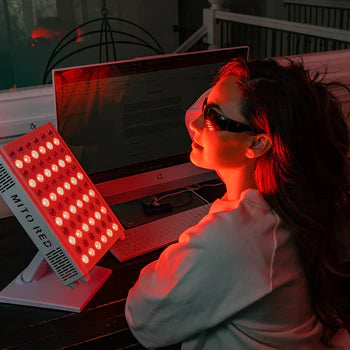



Panel Series
The most research-backed wavelengths for red light therapy are 630nm and 660nm in the red range, and 810nm, 830nm, and 850nm in the near-infrared range. Red wavelengths (630–680nm) are primarily absorbed in skin and surface tissue, making them best suited for skin health and collagen support. Near-infrared wavelengths (810–850nm) penetrate deeper into muscle, joints, and connective tissue, making them the primary choice for recovery and deeper tissue applications. Most clinical panels combine both ranges in a single session.
Wavelength is one of the most misunderstood variables in red light therapy — both overcomplicated by device manufacturers stacking more colors and undercomplicated by articles that treat all "red light" as interchangeable. This guide covers what the research actually shows for each wavelength, which goals each serves, and how to use Mito Red Light's complete wavelength reference guide to match specifications to your specific protocol.
For the cellular mechanism behind why these wavelengths work — including how cytochrome c oxidase absorbs red and near-infrared photons — see the science of photobiomodulation.
Wavelength Comparison: The Core Evidence-Backed Ranges
The table below covers every major wavelength used in consumer and clinical red light therapy. Penetration depth is approximate and varies by tissue type, skin tone, irradiance, and treatment distance.
| Wavelength | Type | Primary tissue target | Core clinical applications | Evidence base |
|---|---|---|---|---|
| 630nm Red | Visible red | Epidermis, upper dermis | Acne support, surface tone, texture, mild skin rejuvenation | Strong human RCTs in dermatology; commonly paired with blue light for acne protocols |
| 660nm Red | Visible red | Dermis, fibroblasts, superficial soft tissue | Collagen support, fine lines, skin rejuvenation, surface wound healing | One of the most extensively studied single wavelengths in PBM; hundreds of human studies across skin, pain, wound, and oral categories |
| 810nm NIR | Near-infrared | Deep soft tissue, muscle, neural tissue | Transcranial PBM, brain and nerve research, deep muscle recovery | Most studied NIR wavelength in neurological and transcranial PBM research; in-vivo CCO activation confirmed in human tissue[1] |
| 830nm NIR | Near-infrared | Deep dermis, connective tissue, deeper soft tissue | Deeper dermal support, skin rejuvenation combined protocols, connective tissue | Commonly paired with 630–660nm in multi-wavelength skin and LED mask protocols; studied for combined red+NIR outcomes |
| 850nm NIR | Near-infrared | Muscle, fascia, joints, deep soft tissue | Muscle recovery, joint support, full-body panel protocols | Core NIR wavelength in recovery and musculoskeletal literature; widely used in full-body panels[1] |
| 940–1072nm NIR | Longer near-infrared | Variable; protocol-dependent | Emerging uses; salivary gland, wound, and some neurological research | Thinner consumer evidence base than 660/810/830/850nm; evaluate carefully against dose and device testing |
For the complete technical specifications — irradiance at distance, beam angle data, and wavelength-specific dosing guidance — see Mito Red Light's wavelength-specific dosing and penetration depth reference.
Why Wavelength Matters: The Photochemistry, Not the Marketing
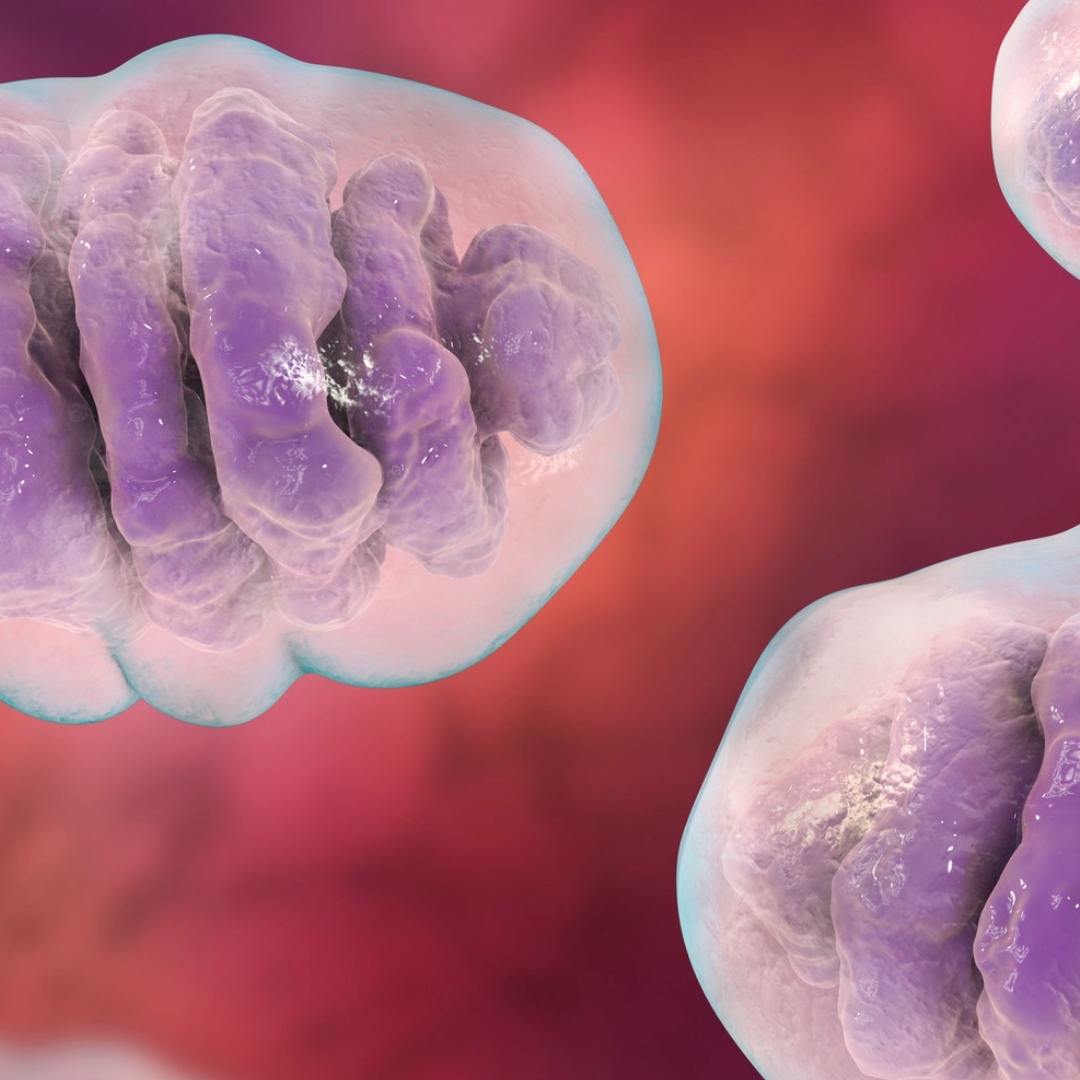
In photobiomodulation (PBM), wavelength determines which biological molecules absorb the light — and therefore which cellular processes are activated. The primary photoacceptor for red and near-infrared light is cytochrome c oxidase (CCO — the terminal enzyme of the mitochondrial electron transport chain). CCO has absorption peaks in the red range around 660nm and in the near-infrared range around 810–830nm. When photons at these wavelengths reach tissue containing CCO, they trigger a cascade: ATP production increases, nitric oxide (NO) is released from its inhibitory binding to CCO, and reactive oxygen species (ROS) are modulated as secondary messengers. [QUOTABLE]
A 2020 review by Quirk and Whelan in Photobiomodulation, Photomedicine, and Laser Surgery — one of the most cited mechanistic analyses in the field — identified CCO activation and nitric oxide release as the central events driving PBM effects across the red and NIR spectrum, with wavelength selection determining which tissue depths those events occur in.[3]
Finlayson's 2022 study in Photochemistry and Photobiology provided the most rigorous modern dataset on penetration depth as a function of wavelength across 200–1000nm, confirming that longer wavelengths penetrate systematically deeper into biological tissue — the optical foundation for why red and NIR serve different tissue targets.[2] Pruitt et al. (2022) in Metabolites went further, measuring real-time increases in oxidized CCO — a direct biomarker of mitochondrial activation — in living human forearm tissue following exposure to both red and NIR wavelengths, with 810nm LED at ~135 mW/cm² producing statistically significant increases compared to sham.[1]
660nm — The Most Studied Red Wavelength
660nm is the single most extensively studied wavelength in the photobiomodulation literature for skin, collagen, and surface tissue applications. It sits at the center of the red spectrum, penetrates into the dermis where fibroblasts and collagen-producing cells reside, and activates CCO at a depth that makes it effective for skin-level outcomes. [QUOTABLE]
The clinical evidence is specific and quantified. Barolet's landmark 2009 study in the Journal of Investigative Dermatology — using 660nm LEDs at 50 mW/cm² — found a 31% increase in type-1 procollagen levels and an 18% reduction in MMP-1 (the enzyme that breaks down collagen) in human fibroblasts, with over 90% of participants showing reduction in wrinkle depth and surface roughness after 12 sessions.[6] More recently, Mota et al. (2023) published a randomized controlled trial in Photobiomodulation, Photomedicine, and Laser Surgery finding that red PBM reduced periocular wrinkle volume by 31.6%.[4]
Beyond skin, 660nm has one of the broadest evidence bases of any single wavelength across multiple categories — wound healing, pain management, oral health, and hair growth — because its absorption characteristics make it effective in any tissue where surface-to-mid-depth photon delivery is sufficient. A 2025 human study by Jiang et al. in Lasers in Medical Science using a wearable 660nm device found a 65–66% reduction in pain scores (VAS) over 4 weeks in patients with neck pain — one of the most striking quantified outcomes recently published for this wavelength.[12]
Barolet's 2023 comprehensive review in Photobiomodulation, Photomedicine, and Laser Surgery mapped the full cell signaling landscape activated by red wavelengths in skin — documenting pathway-specific responses in keratinocytes and fibroblasts that explain the collagen and rejuvenation outcomes observed in clinical trials.[5]
For the full evidence base on 660nm and skin outcomes, see the skin and anti-aging clinical evidence page.
630nm — Surface Skin and Acne Protocols
630nm sits at the shorter end of the red spectrum and concentrates more of its energy in the upper skin layers — the epidermis and superficial dermis — compared to 660nm. This makes it the more relevant red wavelength when the target is at or near the skin surface, particularly for acne-focused protocols and surface tone and texture.
In acne applications, 630nm is typically paired with blue light (415–465nm). Blue light targets porphyrins in Cutibacterium acnes bacteria — the photosensitive compounds that make the bacteria susceptible to light-induced damage — while red light supports skin recovery and reduces post-breakout redness and inflammation. The combination addresses both the bacterial component and the skin-level recovery process simultaneously.
For skin rejuvenation, 630nm contributes to surface-level outcomes alongside 660nm, and many multi-wavelength devices include both for complementary coverage of the upper and mid-dermis. The 2025 LED mask RCT referenced in the current wavelengths page — using 630nm red and 850nm NIR over 16 weeks — found significant improvements in crow's-feet wrinkle scores compared to sham, demonstrating that 630nm contributes meaningfully to multi-wavelength skin protocols even when paired with NIR.[note: verify PMID]
850nm — The Recovery and Deep Tissue Wavelength
850nm is the most widely used near-infrared wavelength in consumer red light therapy panels, and for good reason — it penetrates past the skin surface into muscle, fascia, joints, and connective tissue, where it activates the same CCO pathway as red light but in cells that red wavelengths cannot reach in therapeutically meaningful quantities. [QUOTABLE]
The musculoskeletal and recovery evidence base for NIR wavelengths in this range is extensive. Canez et al.'s 2025 meta-analysis in the Journal of Bodywork and Movement Therapies, evaluating PBM for muscle recovery alongside other physical modalities, confirmed photobiomodulation's role as an effective intervention for post-exercise recovery outcomes.[10] Vanin et al.'s earlier RCT in Photomedicine and Laser Surgery, using 810nm at 50J, found that pre-exercise NIR PBM significantly improved muscle performance and reduced damage markers compared to placebo — one of the most cited dose-finding studies in the field.[8]
850nm is also the dominant NIR wavelength in sleep and systemic wellness research. Giménez et al. (2023), in a double-blind randomized placebo-controlled study published in Biology, found that 850nm PBM at 6.5 J/cm² produced significant improvements in mood, drowsiness, and resting heart rate — systemic outcomes consistent with the broader mitochondrial signaling effects of NIR on deeper tissue.[7]
For the full evidence base on muscle recovery and NIR outcomes, see the muscle recovery and performance clinical evidence page.
810nm — The Neurological and Deep Tissue Wavelength
810nm has a unique evidence profile: it sits at a depth that makes it suitable for both deep musculoskeletal applications and transcranial photobiomodulation — the use of near-infrared light applied near the scalp to study brain-related effects. The result is the largest and most specific NIR evidence base for neurological outcomes of any single wavelength.
Pruitt et al.'s 2022 in-vivo human study in Metabolites measured direct CCO activation at 810nm in living human tissue using broadband near-infrared spectroscopy — providing the most rigorous current confirmation that this wavelength produces measurable mitochondrial effects at depth, not just in cell culture.[1] For transcranial applications, Helali et al. (2025) published a double-blind RCT in BMC Psychiatry finding that transcranial 810nm PBM (at 25 mW/cm², 60 J/cm²) produced significant and sustained improvements in anxiety, depression, and opioid craving in patients undergoing methadone maintenance treatment — one of the highest-quality recent trials in the transcranial PBM literature.
810nm is also the primary wavelength in Mito Red Light's MitoMIND Helmet, which delivers 256 LEDs at this wavelength for transcranial application.
For the full brain and nervous system evidence base, see the brain and nervous system clinical evidence page.
830nm — Versatile Mid-NIR for Skin and Deeper Tissue
830nm occupies a useful middle position in the NIR spectrum: it penetrates deeper than visible red light while remaining within the range commonly used in dermatology and skin-focused LED protocols. This makes it the most versatile NIR wavelength — effective in multi-wavelength skin devices like the MitoGLOW and in full-body panels where deeper dermal and connective tissue coverage is desired alongside red wavelengths.
In skin applications, 830nm is frequently paired with 630nm and 660nm in clinical protocols. Wu et al. (2023), using 830nm near-infrared light in a human EEG study published in Life, found significant improvements in beta-wave brain activity and performance on attention tests — demonstrating that 830nm's reach extends to neural tissue as well as skin. In dermatological multi-wavelength protocols, the combination of 633nm + 830nm has been studied for improvements in skin roughness, tone, and elasticity.
The MitoGLOW LED mask uses 830nm as its NIR wavelength specifically because it delivers deeper dermal support while remaining well within the studied range for face-focused LED protocols.
Matching Wavelengths to Your Goals
| Goal | Primary wavelength(s) | Supporting wavelength(s) | Device type |
|---|---|---|---|
| Skin anti-aging, collagen, fine lines | 660nm | 630nm, 830nm | LED face mask or facial panel — MitoGLOW |
| Acne and surface skin recovery | 465nm blue + 630nm red | 660nm | Multi-wavelength LED mask — MitoGLOW |
| Muscle recovery and performance | 850nm | 660nm, 810nm | Full-body or half-body panel — MitoPRO X or MitoPRO+ |
| Joint support and orthopedic applications | 850nm | 810nm, 660nm | Panel or targeted device — MitoPRO+ |
| Brain wellness and transcranial PBM | 810nm | 830nm | Transcranial device — MitoMIND Helmet |
| Full-body wellness and recovery protocols | 660nm + 850nm | 810nm, 830nm | Full-body panel — MitoPRO X (6 wavelengths) |
| Hair and scalp protocols | 630nm, 650nm, 660nm | 830nm | Scalp-targeted device or helmet |
| Sleep and evening light routines | 630–660nm red | 850nm | Panel or mask — avoid blue light modes in evening |
For detailed protocol guidance — irradiance levels at treatment distance, session duration recommendations, and how dose interacts with wavelength — see Mito Red Light's complete wavelength dosing and penetration depth guide. This is the most technically detailed wavelength resource on the site and goes well beyond what any blog article can cover.
Does More Wavelengths Mean Better Results?
No — and this is one of the most common misconceptions in device marketing. The value of adding a wavelength depends entirely on whether it addresses a distinct tissue target or biological mechanism that the existing wavelengths don't already cover. Adding a wavelength that mostly overlaps with an existing one adds complexity and cost without adding clinical benefit. [QUOTABLE]
Frankowski's 2025 review in Geroscience — one of the most comprehensive recent analyses of PBM mechanisms and applications — framed the wavelength question as a depth-targeting problem: the goal is to ensure the right wavelengths reach the right tissue at the right dose, not to maximize the number of colors on a spec sheet.[11]
The devices with the strongest clinical logic use deliberate combinations: one or two red wavelengths to address surface tissue, one or two NIR wavelengths to address deeper tissue. The MitoPRO X uses six wavelengths (590nm, 630nm, 660nm, 810nm, 830nm, 850nm) because each addresses a distinct depth or tissue target. The MitoPRO+ uses four (630nm, 660nm, 830nm, 850nm) for the same reason. Adding a seventh wavelength that largely overlaps with 660nm would not meaningfully change outcomes — it would just inflate the LED count.
For a deeper breakdown of this question, see: Does Adding More Wavelengths Make a Device Better?
What Wavelengths Are Best for Hair Growth?
Hair growth research has concentrated primarily on 630–660nm red wavelengths, with most LLLT/LED helmet and cap devices using wavelengths in this range. The mechanism is consistent with surface-level photobiomodulation: follicle cells in the scalp are within reach of red wavelengths, and CCO activation in those cells is thought to support the anagen (growth) phase of the hair cycle.
Mawu et al.'s 2025 meta-analysis in Lasers in Medical Science, comparing LLLT plus topical minoxidil versus minoxidil alone for androgenetic alopecia, found that the combination outperformed monotherapy — the strongest recent aggregate evidence for red/NIR light as a meaningful addition to established hair loss treatment protocols.[9]
For the full hair and scalp evidence base, see the hair and scalp clinical evidence page.
Choose by wavelength and use case
Mito Red Light devices are built around the most evidence-backed wavelength combinations. For face-focused skin goals, compare MitoGLOW's four wavelength modes (465nm, 590nm, 630nm, 830nm). For body-wide recovery and wellness, compare MitoPRO panel options and review independent lab output data before choosing a size.
For peer-reviewed clinical studies organized by health category, Mito Red Light's research evidence hub covers 15 clinical categories — from skin and muscle to brain and circulation. The underlying database of over 9,500 peer-reviewed PBM studies is fully searchable at mitoredlight.com/pages/evidence-explorer.
Frequently Asked Questions
What is the best wavelength for red light therapy?
There is no single best wavelength for every goal. For skin rejuvenation and collagen support, 660nm has the most extensive human clinical evidence. For muscle recovery and joint support, 850nm is the most widely used NIR wavelength. For brain and nerve-related research, 810nm dominates the transcranial PBM literature. For acne protocols, 630nm paired with blue light is the standard. Most effective devices combine red and NIR wavelengths to cover multiple tissue depths simultaneously.
What is the difference between 660nm and 850nm?
660nm is visible red light absorbed primarily in the epidermis and dermis — the tissue layers where collagen-producing fibroblasts reside. 850nm is invisible near-infrared light that penetrates past the skin surface into muscle, fascia, connective tissue, and joints. Both activate cytochrome c oxidase (the core PBM mechanism) but at different tissue depths. This is why most clinical panels combine both: 660nm addresses skin-level goals, 850nm addresses deeper tissue goals, and together they cover the full depth range in one session.
Is 630nm or 660nm better for skin?
For surface-level concerns — acne, redness, visible texture near the skin surface — 630nm is often more relevant because it concentrates more energy in the upper skin layers. For collagen support, firmness, and anti-aging goals that involve the mid-to-deep dermis, 660nm is the more studied and clinically supported wavelength. Many quality skin-focused devices use both because they cover complementary depths within the skin structure.
Why is 810nm used for brain research?
810nm is the most studied NIR wavelength for transcranial photobiomodulation because its longer wavelength allows it to penetrate through scalp and skull tissue to reach neural cells at depth, where it activates cytochrome c oxidase in brain mitochondria. Pruitt et al. (2022) confirmed direct CCO activation in living human tissue at 810nm using real-time spectroscopy — the most direct in-vivo mechanistic evidence available for this wavelength.
Do more wavelengths mean better results?
Not automatically. Each wavelength only adds value if it addresses a distinct tissue target or biological pathway that the existing wavelengths don't already cover. Devices that add wavelengths primarily for marketing reasons — without a clear mechanistic rationale for each one — often deliver no additional benefit over a well-designed dual or quad-wavelength device. The right question is not "how many wavelengths" but "do these wavelengths cover the tissue depths and mechanisms relevant to my goals at adequate irradiance?"
What wavelengths does the MitoPRO X use?
The MitoPRO X Series delivers six wavelengths: 590nm (amber), 630nm (red), 660nm (red), 810nm (NIR), 830nm (NIR), and 850nm (NIR). Each wavelength addresses a distinct depth or application — from surface skin to deep muscle — covering the full therapeutic window used in human photobiomodulation research.
References
- Pruitt T, et al. (2022). Photobiomodulation at Different Wavelengths Boosts Mitochondrial Redox Metabolism and Hemoglobin Oxygenation: Lasers vs. Light-Emitting Diodes In Vivo. Metabolites. PubMed
- Finlayson L, et al. (2022). Depth Penetration of Light into Skin as a Function of Wavelength from 200 to 1000 nm. Photochemistry and Photobiology. PubMed
- Quirk BJ, Whelan HT. (2020). What Lies at the Heart of Photobiomodulation: Light, Cytochrome C Oxidase, and Nitric Oxide — Review of the Evidence. Photobiomodulation, Photomedicine, and Laser Surgery. PubMed
- Mota LR, et al. (2023). Photobiomodulation Reduces Periocular Wrinkle Volume by 30%: A Randomized Controlled Trial. Photobiomodulation, Photomedicine, and Laser Surgery. PubMed
- Barolet D, et al. (2023). Low-Intensity Visible and Near-Infrared Light-Induced Cell Signaling Pathways in the Skin: A Comprehensive Review. Photobiomodulation, Photomedicine, and Laser Surgery. PubMed
- Barolet D, Roberge CJ, Auger FA, et al. (2009). Regulation of skin collagen metabolism in vitro using a pulsed 660 nm LED light source: clinical correlation with a single-blinded study. Journal of Investigative Dermatology. PubMed
- Giménez MC, et al. (2023). Effects of Near-Infrared Light on Well-Being and Health in Human Subjects with Mild Sleep-Related Complaints: A Double-Blind, Randomized, Placebo-Controlled Study. Biology. PubMed
- Vanin AA, et al. (2016). Pre-Exercise Infrared Low-Level Laser Therapy (810 nm) in Skeletal Muscle Performance and Postexercise Recovery in Humans. Photomedicine and Laser Surgery. PubMed
- Mawu FO, et al. (2025). Comparative efficacy of LLLT and topical Minoxidil combination vs. Minoxidil monotherapy in androgenetic alopecia: a systematic review and meta-analysis. Lasers in Medical Science. PubMed
- Canez JH, et al. (2025). Effects of photobiomodulation, intermittent pneumatic compression and neuromuscular electrical stimulation on muscle recovery: Systematic review with meta-analysis. Journal of Bodywork and Movement Therapies. PubMed
- Frankowski M, et al. (2025). Light buckets and laser beams: mechanisms and applications of photobiomodulation (PBM) therapy. Geroscience. PubMed
- Jiang Y, et al. (2025). Efficacy of a wearable 660 nm red light therapy device in alleviating neck pain and enhancing neck function. Lasers in Medical Science. PubMed
This article was reviewed for scientific accuracy by Dr. Alexis Cowan, PhD in Molecular Biology (Princeton University), who specializes in mitochondrial function and photobiomodulation research. Last updated: May 2026.
This article discusses published scientific research and general educational information about photobiomodulation and red light therapy. It does not constitute medical advice and does not make specific claims about Mito Red Light devices. The research cited reflects independent peer-reviewed studies and does not imply that any Mito Red Light product has been evaluated, approved, or cleared by the FDA or any other regulatory body for the diagnosis, treatment, cure, or prevention of any disease or medical condition. Individual results vary. Consult a qualified healthcare professional before beginning any light therapy protocol, particularly if you have a pre-existing medical condition, are pregnant, or are taking photosensitising medications.
Mito Red Light products are general wellness devices. They are not medical devices and have not been evaluated, cleared, or approved by the FDA or any regulatory body for the diagnosis, treatment, cure, or prevention of any disease or medical condition. Any references to peer-reviewed research or clinical studies on this page describe findings from independent scientific literature and do not imply that Mito Red Light devices have been studied, tested, or proven effective for any specific condition. Always consult a qualified healthcare provider before beginning any new wellness routine, particularly if you have a medical condition or are taking medication.
Related articles
More from the wavelengths & science knowledge cluster