Lasers and Energy-Based Devices in the Treatment of Androgenetic Alopecia: A Systematic Review and Meta-Analysis
Alahmadi et al., Skin Appendage Disord, 2026. PMID 42339398
MitoPRO X
6 wavelengths, touchscreen, app control. Medical-grade performance.
from $449.00
MitoADAPT 4.0
8 wavelengths, 11 modes, patent-pending TruDUAL™ chip technology.
from $549.00
MitoPRO+
4 wavelengths, exceptional power, unbeatable value.
from $369.00
Mito Red Original 2.0
660nm + 850nm. ETL certified. Great value starting point.
from $249.00
MitoAURA Complete System
MitoAURA 3-Step System is the first skincare protocol engineered to work with your red and near-infrared light therapy sessions, not just alongside them.
from $93.00
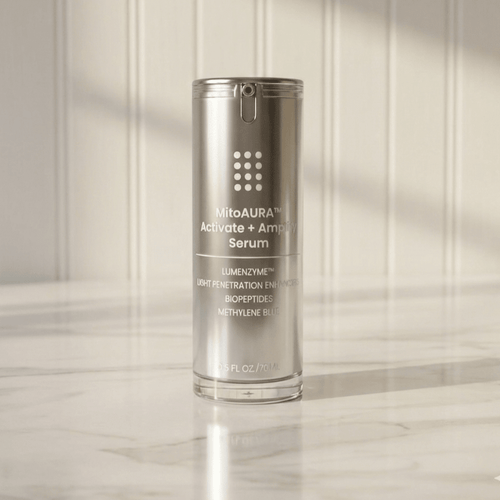
MitoAURA Serum
Light-responsive. Firms, brightens, and amplifies every session.
from $40.00
MitoGLOW Mask
FDA-cleared LED mask. 1,064 LEDs, 4 wavelengths, 5 modes.
from $499.00
MitoAURA™ Gentle Cleanser
Gently cleanses without stripping skin's natural moisture.
from $25.00
MitoAURA™ Prime Pre-LED Serum
Helps prepare and condition skin for red light therapy.
from $39.00
MitoAURA™ Seal Post LED Moisturizer
Helps lock in moisture and support long-lasting hydration.
from $39.00
MitoPRO Mobile
5 wavelengths, pulse mode, UL-listed battery. Pro light anywhere.
from $349.00
MitoQUAD Belt
Hands-free wearable belt. UL medical grade, 4 wavelengths.
from $349.00
MitoPOD
Full-body pod. IEC 60601 certified, 6,960 LEDs total.
from $1,699.00
MitoBOOST
Intranasal device. Red, blue & NIR for sinus, immune & brain.
from $199.00

What is Red Light Therapy
The science behind PBM — how red and near-infrared light works at the cellular level.

The Mito Red Difference
Why our devices outperform — specs, certifications, and build quality explained.

In the Press
Media coverage, expert reviews, and editorial features.

FAQ
Common questions about devices, protocols, safety, and shipping.

Take the Quiz
Four quick questions to find the right panel for your goals.

Research & Evidence
Browse the clinical studies and data behind photobiomodulation therapy.

Community
Meet the Mito Red community — real people, real results.
About the research on this page. The studies cited here investigate photobiomodulation (PBM) as a therapeutic modality and the specific wavelengths used in PBM research — not Mito Red Light devices. The wavelengths in our panels were chosen because the peer-reviewed PBM literature supports them. Evidence levels and study counts reflect the broader research base, not studies of our products. See the full methodology note at the bottom of this page.
For androgenetic alopecia (pattern hair loss), meta-analyses consistently find that low-level laser and LED therapy increases hair density. A 2026 meta-analysis of 37 studies (3,298 patients) found an average gain of 18.6 hairs per square centimeter and thicker hair shafts compared with sham (Alahmadi 2026). A 2025 meta-analysis of 38 studies found density gains after 4 to 26 weeks, with larger effects beyond 20 weeks (Perez 2025). Seven double-blind trials of FDA-cleared home devices found more hair growth than sham in men and women, with both comb and helmet designs (Lueangarun 2021).
Combining light with minoxidil gave more density than minoxidil alone in 7 randomized trials, with no increase in side effects (Mawu 2025). Light therapy is not the strongest option, though: a 2024 network meta-analysis of male pattern hair loss ranked oral 5-alpha reductase inhibitors above photobiomodulation (Gupta 2024), and fractional lasers combined with topical agents outperformed low-level light in the 2026 analysis (Alahmadi 2026).
Based on 155 indexed studies in this category, 58 of them in people. These studies test photobiomodulation in general, not Mito Red Light devices.
Number of studies in our database for each condition. Direction and certainty are shown only where a meta-analysis or systematic review reports them; otherwise the row says "not graded".
| Condition | Human randomized trials | All human studies | Direction of results | Certainty |
|---|---|---|---|---|
| Androgenetic alopecia | 21 | 39 | More hair density and thicker hair versus sham Alahmadi 2026 (PMID 42339398); Perez 2025 (PMID 39404126) |
Not graded by authors; consistent across meta-analyses, high heterogeneity |
| Alopecia areata | 1 | 3 | Not graded | Not graded |
| Scarring alopecia & CCCA | 0 | 3 | Not graded | Not graded |
The strongest human evidence: systematic reviews and meta-analyses first, then the newest randomized trials. Each card comes straight from our study database and links to the paper.
Alahmadi et al., Skin Appendage Disord, 2026. PMID 42339398
Perez et al., Dermatol Surg, 2025. PMID 39404126
Mawu et al., Lasers Med Sci, 2025. PMID 40826200
Lueangarun et al., J Clin Aesthet Dermatol, 2021. PMID 34980962
Zhang et al., Dermatol Surg, 2022. PMID 35510860
Gupta et al., J Cosmet Dermatol, 2024. PMID 38725143
Not every trial is positive. "No effect" means the main outcome did not differ from sham or control. "Mixed" means some outcomes improved but the outcome named here did not differ.
| Year | Study | Design | Result | Outcome with no difference |
|---|---|---|---|---|
| 2025 | Photobiomodulation therapy in the prevention of chemotherapy-induced alopecia in breast cancer patients: a randomized controlled trial | RCT, n = 29 | No effect | Preventing chemotherapy hair loss when added to scalp cooling |
| 2025 | Comparative efficacy of minoxidil alone versus minoxidil combined with low-level laser therapy in the treatment of androgenic alopecia: a systematic review and meta-analysis | Meta-analysis | No effect | Added benefit over minoxidil alone |
| 2023 | Efficacy of Low-Level Laser Therapy in Androgenetic Alopecia - A Randomized Controlled Trial | RCT, n = 54 | No effect | Hair density when added to minoxidil |
| 2021 | Efficacy of Minoxidil Combined With Photobiomodulation for the Treatment of Male Androgenetic Alopecia. A Double-Blind Half-Head Controlled Trial | RCT, n = 21 | No effect | Added benefit over topical minoxidil |
The 25 most recent human studies in our database for this category.
Wavelengths reported in our database for the 28 human randomized trials in this category (17 wavelength entries; many database records lack a wavelength, and some trials report more than one). This describes the research; it is not a dosing recommendation.
| Wavelength band | Times used in trials |
|---|---|
| Red (600-699 nm) | 13 |
| Blue/green (400-599 nm) | 4 |
Most common wavelengths: 650-659 nm, 660-669 nm, 630-639 nm, 620-629 nm, 420-429 nm.
For pattern hair loss, yes, modestly. A 2026 meta-analysis of 37 studies found an average gain of 18.6 hairs per square centimeter versus sham (Alahmadi 2026).
Trials ran 4 to 26 weeks, and density gains were larger after 20 weeks than before (Perez 2025).
In 7 randomized trials, light plus minoxidil increased hair density and satisfaction more than minoxidil alone, with no difference in side effects (Mawu 2025).
Yes. Trials of FDA-cleared home devices showed more hair growth than sham in both men and women (Lueangarun 2021).
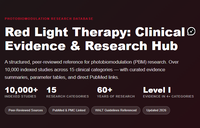
All 155 studies in this category from our study database, built on the PBM Research Database by Vladimir Heiskanen.
Search every study across all categories: Open the Full Evidence Explorer →
The published research indexed and referenced on this page studies photobiomodulation (PBM) as a therapeutic modality and the specific wavelengths used in those studies — not Mito Red Light devices specifically. The wavelengths used across our panels were chosen because the peer-reviewed PBM literature supports them: this is where published evidence is deepest, where dosing parameters have been characterized in human studies, and where clinical guidelines (such as WALT for inflammation and pain) exist. Mito Red Light has not funded or conducted registered clinical trials on our specific devices, and the study counts referenced here reflect the broader PBM research base — not studies of our products.
Where review authors graded certainty (for example with GRADE), we report their grade; other ratings are Mito’s summary. Study counts reflect peer-reviewed photobiomodulation research drawn from major scientific literature databases, peer-reviewed journals, and other published research repositories. PBM response varies meaningfully by person, tissue, condition, dose, wavelength, and session timing; outcomes reported in the published literature may not be replicable for every user. Mito Red Light devices are not intended to diagnose, treat, cure, or prevent any disease. If you have a medical condition or are under a physician’s care, please consult your healthcare provider before beginning any photobiomodulation regimen.