





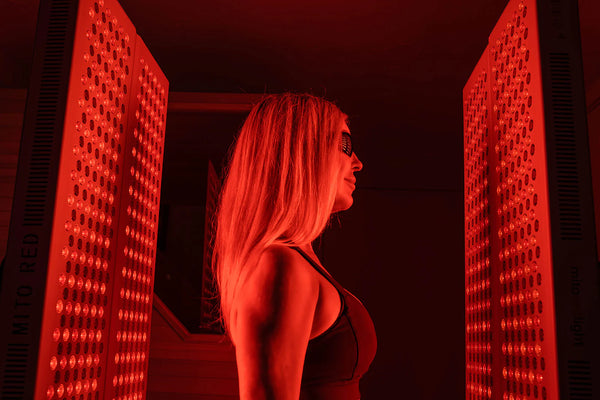
Panel Series
To use red light therapy for hair growth, choose a device that can deliver evidence-aligned red wavelengths to the scalp, use it consistently 3–5 times per week, keep the scalp clean and unobstructed during treatment, and track progress for at least 16–26 weeks before judging results. Red light therapy works best for thinning areas where follicles are still present. It is not a quick fix and it cannot revive follicles that have been permanently lost.
Last updated: April 2026
Quick Answer: The Hair Growth Protocol
For most people using red light therapy for hair growth, the practical protocol is:
- Use frequency: 3–5 sessions per week
- Session length: 15–25 minutes, or per your device instructions
- Primary wavelength range: 630–670 nm red light
- Scalp prep: clean, dry scalp with no heavy oils, styling products, or opaque layers
- Timeline: reduced shedding may appear around 8–12 weeks; visible density changes usually require 16–26 weeks
- Best fit: early-to-moderate thinning where follicles are still active
This guide is the practical protocol companion to our broader evidence review on red light therapy for hair growth. If you want the deeper clinical research breakdown, start there. If you want to know exactly how to build a routine, use this guide.
Who This Protocol Is For
Red light therapy is most relevant for people with early or moderate thinning, especially androgenetic alopecia, also known as male or female pattern hair loss. In this type of hair loss, follicles gradually miniaturize over time. Red light therapy may help support follicle activity while follicles are still viable.
It is less predictable for sudden shedding, autoimmune hair loss, medication-related shedding, postpartum shedding, or scarring hair loss. Those situations can have very different causes and should be evaluated by a dermatologist or qualified healthcare professional before relying on any home protocol.
The key distinction is simple: red light therapy can support existing follicles. It cannot create new follicles where follicles have been permanently lost.
Step 1: Confirm the Type of Hair Loss
Before starting a red light therapy routine, try to identify what kind of hair loss you are dealing with. Different causes require different strategies.
| Hair loss pattern | Common cause | Red light therapy fit |
|---|---|---|
| Gradual thinning at crown, part line, or temples | Androgenetic alopecia | Best-supported use case |
| Sudden shedding after illness, stress, weight loss, or childbirth | Telogen effluvium | May be supportive, but address trigger first |
| Patchy round hair loss | Alopecia areata or autoimmune process | Dermatology guidance recommended |
| Smooth shiny scalp or scarring | Scarring alopecia or permanent follicle loss | Unlikely to help regrow hair in scarred areas |
If you are unsure which category fits, get a diagnosis first. A protocol is only useful if it matches the underlying cause.
Step 2: Choose the Right Device Setup
The best device for hair growth is the one that can deliver the right wavelength range to the scalp consistently. Hair creates a physical barrier, so scalp access matters as much as the light itself.
Wavelengths to look for
The most common evidence-backed range for hair applications is visible red light around 630–670 nm. This range has been used in many low-level light therapy studies and is the primary range associated with hair follicle stimulation.
Near-infrared wavelengths may support circulation and deeper tissue effects, but for scalp hair growth, red wavelengths in the 630–670 nm range are the main target.
Coverage matters
Hair-growth protocols work best when the same scalp zones receive a consistent dose over time. That means your setup should allow stable, repeatable coverage of the thinning area.
- Helmet or cap devices: easiest for uniform scalp coverage, especially for crown and top-of-head thinning
- Panels: flexible and useful if positioned carefully, but hair must be parted or moved so light reaches the scalp
- Handheld combs or wands: can work, but are harder to dose evenly because coverage depends on movement and consistency
Whatever form factor you choose, verify the device’s wavelength and output claims. Mito Red Light publishes independent test data so users can evaluate wavelength accuracy, irradiance, and product-output transparency instead of relying only on marketing claims.
Step 3: Prepare the Scalp Before Each Session
Red light therapy works only if light reaches the target tissue. For hair growth, that target is the scalp and follicle region. Heavy products, oils, dry shampoo, thick styling creams, and dense hair coverage can all reduce light delivery.
Before each session:
- Use the device on a clean, dry scalp
- Remove or avoid heavy styling products before treatment
- Part longer hair to expose thinning areas
- Avoid applying minoxidil, oils, or topical products immediately before light exposure
- Apply topical hair products after the session unless your clinician instructs otherwise
If you use minoxidil, the simplest sequence is: red light session first, then apply minoxidil after. That keeps the scalp clear during light exposure and avoids placing a product layer between the LEDs and the skin.
Step 4: Follow a 16–26 Week Timeline
Hair growth is slow because the hair cycle is slow. You should not judge a protocol after two or three weeks. The first visible sign of progress is usually reduced shedding, not instant regrowth.
| Timeframe | What to expect | What to do |
|---|---|---|
| Weeks 0–4 | No obvious change for most users | Build the habit and take baseline photos |
| Weeks 4–8 | Possible early changes in shedding or scalp comfort | Keep schedule consistent; do not over-treat |
| Weeks 8–12 | Reduced shedding may become noticeable | Compare photos under identical lighting |
| Weeks 12–16 | Early density or part-line changes may begin | Continue unless irritation or medical concerns appear |
| Weeks 16–26 | Best window to evaluate visible improvement | Decide whether to maintain, adjust, or consult a clinician |
The most common mistake is stopping around week 8–10 because the mirror has not changed yet. That is often before density changes would be expected.
Step 5: Use the Right Weekly Schedule
Most hair-focused red light therapy protocols use 3–5 sessions per week. More is not always better. Photobiomodulation follows a dose-response curve, meaning too little may underdose and too much may not improve results.
A practical starting schedule:
- Beginner: 3 sessions per week for the first month
- Standard protocol: every other day, or 3–5 sessions per week
- Maintenance: continue 2–4 sessions per week after results stabilize
Follow the device’s exact instructions if they differ. Session length depends on the device’s output, distance, and design.
Step 6: Combine Carefully With Other Hair Treatments
Red light therapy can be used alongside other evidence-based hair strategies, but timing matters.
Minoxidil
Use red light therapy before applying minoxidil. This keeps light delivery unobstructed. After the session, apply minoxidil according to the product instructions or your clinician’s guidance.
Finasteride or other prescriptions
Finasteride and other prescription treatments should be managed with a healthcare professional. Red light therapy works through a different pathway, so some people use it as part of a broader hair-loss routine, but prescription decisions should be individualized.
Microneedling and PRP
Microneedling and platelet-rich plasma are clinical or semi-clinical interventions. Do not stack aggressive scalp treatments without guidance. If your scalp is irritated, inflamed, or healing from a procedure, ask your provider when light therapy is appropriate to resume.
Step 7: Track Results Objectively
Hair changes are gradual, and mirrors are unreliable. The best way to evaluate progress is with consistent photos.
Use this tracking method:
- Take photos every 4 weeks
- Use the same room, lighting, distance, and camera angle
- Photograph the hairline, part line, crown, and temples
- Keep hair length and styling as consistent as possible
- Track shedding separately with notes, not memory
Do not compare a wet-hair photo to a dry-hair photo or a bright-overhead-light photo to a soft-window-light photo. Inconsistent photos can make progress look worse or better than it is.
Common Mistakes to Avoid
- Expecting results in 30 days: hair-growth biology usually requires months, not weeks
- Using the device inconsistently: one session per week is unlikely to match study protocols
- Blocking the scalp: thick hair, oils, and styling products can reduce light exposure
- Using a device without verified output: visible red light is not the same as verified therapeutic wavelength output
- Ignoring the cause of hair loss: iron deficiency, thyroid issues, medication changes, stress, and hormones may need medical evaluation
- Stopping too early: the most meaningful evaluation window is usually 16–26 weeks
When to See a Dermatologist
See a dermatologist or qualified healthcare professional if your hair loss is sudden, patchy, painful, associated with scalp scaling or inflammation, or progressing quickly. You should also seek medical guidance if you are postpartum, undergoing cancer treatment, have an autoimmune condition, or suspect a nutritional, hormonal, or medication-related cause.
Red light therapy can be part of a hair wellness routine, but it should not delay diagnosis of an underlying medical issue.
Build a better light therapy routine
Choose verified output, then follow a consistent protocol.
For hair-focused use, scalp access, wavelength accuracy, and consistency matter more than marketing claims.
Frequently Asked Questions
How often should I use red light therapy for hair growth?
Most hair-growth protocols use red light therapy 3–5 times per week. Every other day is a practical starting point. Follow your device’s instructions, because the correct frequency depends on wavelength, irradiance, distance, and session length.
How long should each hair growth session be?
Many hair-focused devices use sessions in the 15–25 minute range, but the correct time depends on the device. A higher-output device may require a shorter session, while a lower-output device may require longer exposure. Use the manufacturer’s protocol rather than guessing.
Should I apply minoxidil before or after red light therapy?
Apply minoxidil after red light therapy unless your clinician gives different instructions. For the light session itself, the scalp should be clean and unobstructed so the light can reach the skin and follicle area more effectively.
How long does red light therapy take to work for hair growth?
Reduced shedding may appear after 8–12 weeks of consistent use. Visible density changes usually require 16–26 weeks. Hair growth is slow, so a 30-day trial is usually not long enough to judge whether the protocol is working.
Can red light therapy regrow hair on a bald spot?
Red light therapy works best where follicles are still present and active. It is unlikely to regrow hair in areas where follicles have been permanently lost or replaced by scar tissue. Early thinning usually responds better than long-standing complete hair loss.
What wavelength is best for hair growth?
The most commonly studied range for hair growth is visible red light around 630–670 nm. Near-infrared wavelengths may provide supportive effects, but red wavelengths in this range are the primary target for scalp and follicle-focused protocols.
Can I use red light therapy every day for hair growth?
Some device protocols allow daily use, but more is not always better. A 3–5 day per week schedule is a more common starting point. If you experience scalp irritation, warmth, dryness, or discomfort, reduce frequency and consult a healthcare professional if needed.
Do I need to keep using red light therapy after my hair improves?
Yes, maintenance is usually needed. Pattern hair loss is ongoing, and benefits may gradually diminish if the routine stops. After results stabilize, many users continue with a lower-frequency maintenance schedule.
References
Jimenez JJ, Wikramanayake TC, Bergfeld W, et al. Efficacy and safety of a low-level laser device in the treatment of male and female pattern hair loss. American Journal of Clinical Dermatology. 2014;15(2):115–127. https://pubmed.ncbi.nlm.nih.gov/24920481/
Afifi L, Maranda EL, Zarei M, et al. Low-level laser therapy as a treatment for androgenetic alopecia: a systematic review and meta-analysis. Journal of the American Academy of Dermatology. 2017;77(2):363–371. https://pubmed.ncbi.nlm.nih.gov/31638696/
Avci P, Gupta GK, Clark J, Wikonkal N, Hamblin MR. Low-level laser therapy for treatment of hair loss. Lasers in Surgery and Medicine. 2014;46(2):144–151. https://pubmed.ncbi.nlm.nih.gov/24348529/
Hamblin MR. Photobiomodulation for the management of alopecia: mechanisms of action, patient selection and perspectives. Clinical, Cosmetic and Investigational Dermatology. 2019;12:669–678. https://pubmed.ncbi.nlm.nih.gov/31576622/
Darwin E, Heyes A, Hirt PA, Wikramanayake TC, Jimenez JJ. Low-level laser therapy for the treatment of androgenic alopecia: a review. Lasers in Medical Science. 2018;33(2):425–434. https://pubmed.ncbi.nlm.nih.gov/29214200/```
Mito Red Light products are general wellness devices. They are not medical devices and have not been evaluated, cleared, or approved by the FDA or any regulatory body for the diagnosis, treatment, cure, or prevention of any disease or medical condition. Any references to peer-reviewed research or clinical studies on this page describe findings from independent scientific literature and do not imply that Mito Red Light devices have been studied, tested, or proven effective for any specific condition. Always consult a qualified healthcare provider before beginning any new wellness routine, particularly if you have a medical condition or are taking medication.
Related articles
More from the hair growth knowledge cluster