

















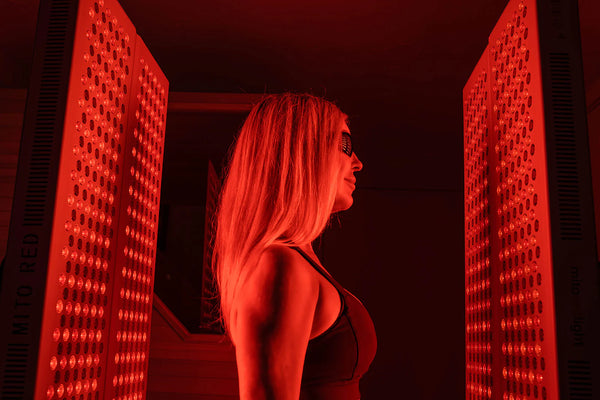
Panel Series
Red light therapy can support hair growth — and there is clinical evidence behind it. Multiple randomized controlled trials have shown that low-level laser and LED light at 630–670nm wavelengths can stimulate hair follicles, promote the transition from resting phase to active growth phase, and increase hair density. The most studied application is androgenetic alopecia (pattern hair loss) in both men and women, but the research extends to other types of hair loss as well. If you are wondering whether red light therapy is actually effective for hair loss or just a gimmick, the answer is that multiple randomized controlled trials show real, measurable gains in hair density for pattern hair loss when the right wavelengths and doses are used consistently.
Short answer: For androgenetic alopecia and early-stage thinning, red light therapy is one of the most evidence-backed non-drug options for supporting hair growth and density when used consistently for several months. It is not a cure for every type of hair loss and cannot regrow hair in areas where follicles are already gone. We explain this in more detail in A Deep Dive into the RLT+ Hair Mist.
If you are new to photobiomodulation, our overview of what red light therapy is and how it works provides useful background before diving into the hair-specific research.
What Is Red Light Therapy for Hair Growth?
Red light therapy for hair growth — also called low-level laser therapy (LLLT) or photobiomodulation (PBM) applied to the scalp — involves delivering specific wavelengths of non-thermal red light directly to scalp tissue to influence the biology of hair follicles. It is non-invasive, painless, and does not damage tissue the way surgical or ablative procedures do.
In the research literature, the terms LLLT and photobiomodulation are used interchangeably for this application. Consumer devices marketed as "red light therapy caps," "laser helmets," and "laser combs" all operate on the same underlying principle: delivering photons to scalp tissue at wavelengths that are absorbed by cellular chromophores, triggering downstream biological responses in the follicle.
The key distinction from other light-based hair treatments (like high-powered laser vein or hair removal devices) is that these are low-level, non-thermal devices — the goal is cellular stimulation, not tissue destruction. How red and near-infrared light trigger cellular response is covered in detail on our Learn page.
How Does Red Light Therapy Stimulate Hair Follicles?
The mechanism begins at the mitochondria. Red light wavelengths in the 630–670nm range are absorbed by cytochrome c oxidase (CCO), the terminal enzyme in the mitochondrial electron transport chain and the primary photoacceptor for red light in biological tissue. This absorption drives increased ATP (adenosine triphosphate) production - in effect, giving follicle cells more energy to function.
According to Dr. Alexis Cowan, PhD in Molecular Biology (Princeton University), who advises Mito Red Light on the photobiology of light therapy, cytochrome c oxidase has absorption peaks that fall squarely within the 630–680nm range - which is precisely why this wavelength band is used in hair follicle research rather than arbitrary visible light. The photochemical activation is specific, not incidental.
At the follicle level, this increase in cellular energy is believed to support several processes relevant to hair growth:
- Anagen phase induction: Hair follicles cycle between active growth (anagen phase), regression (catagen phase), and rest (telogen phase). LLLT is hypothesized to shift follicles that are in telogen — resting and dormant — back into anagen, the active growth phase. This phase-shifting mechanism is considered the primary explanation for increased hair counts in clinical trials.
- Follicle miniaturization reversal: In androgenetic alopecia (pattern hair loss), dihydrotestosterone (DHT) progressively shrinks follicles over time — a process called follicle miniaturization. Red light therapy may help counteract the oxidative stress and inflammatory environment that accelerates this miniaturization, supporting follicle health while follicles are still viable.
- Scalp microcirculation: PBM promotes nitric oxide (NO) release from the endothelium — the cells lining blood vessels — which produces vasodilation and increased local blood flow. Improved circulation to the scalp means better oxygen and nutrient delivery to follicle tissue, supporting the metabolic demands of active hair growth.
- Oxidative stress reduction: ROS (reactive oxygen species) accumulation in follicle tissue is associated with premature follicle aging and hair loss. PBM modulates ROS at the cellular level, potentially reducing one of the contributing drivers of androgenetic alopecia at the tissue level.
Together, these mechanisms make the 630–670nm wavelength range a scientifically coherent target for follicle support — not a marketing claim, but a photochemical rationale grounded in the absorption properties of cytochrome c oxidase.
Does Red Light Therapy Really Work for Hair Loss?
For pattern hair loss (androgenetic alopecia) with follicles still present, multiple double-blind randomized controlled trials show that low-level red light can increase hair count and density compared to sham treatment. For autoimmune or scarring hair loss, the evidence is smaller or mixed, so expectations should be more cautious.
The clinical evidence is more robust than most people realize. The strongest evidence base is for androgenetic alopecia in both men and women, with multiple double-blind randomized controlled trials using sham-device controls — the gold standard for eliminating placebo effects.
Lanzafame et al. (2013) - Men with Androgenetic Alopecia
One of the most cited trials in this field was conducted by Lanzafame et al. and published in Lasers in Surgery and Medicine in 2013. The double-blind RCT enrolled 44 men aged 18–48 with androgenetic alopecia. Active-group participants used a helmet-style device containing 21 diode lasers and 30 LEDs at 655nm, every other day for 16 weeks (60 total treatments). The placebo device appeared identical but used incandescent red lights with no therapeutic output. Hair counts were assessed by a blinded evaluator from standardized photographs of a fixed 2.85 cm² scalp area.
In the primary analysis of all completers (n = 41), the active group demonstrated a 39% increase in hair count compared to the sham group at 16 weeks (P = 0.001). A sensitivity analysis removing one outlier in the placebo group yielded a 35% increase (P = 0.003), corroborating the primary result. No adverse events were reported in either group.1
Lanzafame et al. (2014) - Women with Androgenetic Alopecia
The same research group followed up with an analogous RCT specifically in women, published in Lasers in Surgery and Medicine in 2014. The trial enrolled 47 women with androgenetic alopecia using the same 655nm helmet device protocol — every other day for 16 weeks. In the active treatment group, hair counts increased by 37% above baseline compared to the sham group (P < 0.001). The authors concluded that LLLT at 655nm significantly improved hair counts in women with androgenetic alopecia at a rate comparable to that observed in men using the same parameters.2
Jimenez et al. (2014) - Multicenter Double-Blind RCT in Men and Women
A large multicenter, randomized, sham-device-controlled, double-blind study by Jimenez et al., published in the American Journal of Clinical Dermatology in 2014, enrolled 128 male and 141 female subjects across multiple institutional and private practice sites. Participants were randomized to receive either a HairMax LaserComb device (one of three models, all using low-level red laser) or a sham device, used three times per week for 26 weeks.
At 26 weeks, terminal hair density in the treatment area increased by 18–26 hairs per cm² across all active device groups, compared to increases of 1.6–9.4 hairs per cm² in sham groups — statistically significant differences across all four trial comparisons. Results were independent of the age or sex of the subject. No serious adverse events were reported in any group.3
Avci et al. (2013) - Literature Review, Harvard/Massachusetts General Hospital
A literature review by Avci, Gupta, Clark, Wikonkal, and Hamblin — conducted at the Wellman Center for Photomedicine, Massachusetts General Hospital, Harvard Medical School — surveyed the available evidence for LLLT applied to the scalp for hair loss, published in Lasers in Surgery and Medicine in 2013. The review found that controlled clinical trials demonstrated LLLT stimulated hair growth in both men and women, and that among proposed mechanisms, the primary hypothesized pathway is stimulation of epidermal stem cells in the hair follicle bulge and shifting follicles into the anagen phase. The authors concluded that LLLT for hair growth appears to be both safe and effective.4
Hamblin (2019) - Mechanisms, Patient Selection, Perspectives
A 2019 review by Michael R. Hamblin (Harvard Medical School, Wellman Center for Photomedicine) published in Clinical, Cosmetic and Investigational Dermatology summarized the current understanding of photobiomodulation for alopecia management. The review covered the three main types of alopecia (androgenetic, areata, and chemotherapy-induced), the mechanisms of PBM for each, and criteria for patient selection. Hamblin noted that most clinical devices use low-powered red laser diodes and that dosimetry optimization remains an area of ongoing research.5
Meta-Analyses: Pooled Evidence Across Multiple Trials
Beyond individual RCTs, multiple systematic reviews and meta-analyses have pooled results across trials. A 2017 systematic review and meta-analysis published in the Journal of the American Academy of Dermatology (Adil & Godwin) included separate meta-analyses for five non-surgical hair loss treatments and found that LLLT was superior to placebo in men with androgenetic alopecia (P < .00001) — placing it alongside minoxidil and finasteride as treatments with strong pooled evidence.6 A more recent 2024 systematic review and meta-analysis from the University of Miami Miller School of Medicine (Dermatologic Surgery), pooling 38 studies and 3,098 patients, reported standardized mean differences in hair density of SMD = 1.14 at treatment durations under 20 weeks and SMD = 1.44 at durations over 20 weeks — both statistically significant and in the large effect size range for androgenetic alopecia patients.7
The weight of this evidence - multiple double-blind RCTs, a literature review from a Harvard research center, a mechanisms review, and now meta-analyses pooling dozens of trials — provides a meaningful foundation. It is worth noting that most trials used specific helmet or comb devices at defined wavelengths and doses; results depend on using devices that actually deliver therapeutic parameters to the scalp. For a comprehensive library of peer-reviewed studies on photobiomodulation and hair and scalp health, Mito Red Light maintains a dedicated Hair & Scalp Clinical Evidence page within its research evidence hub.
A balanced note: the evidence base is strongest for androgenetic alopecia with follicles still present and active. Individual results vary, and anyone with diagnosed or progressing hair loss should consult a dermatologist before relying solely on any at-home protocol.
Does Red Light Therapy Work for Hair Loss? Types Covered by Research
Androgenetic Alopecia (Pattern Hair Loss)
This is the best-supported application. Androgenetic alopecia — male pattern baldness (receding hairline, crown thinning) and female pattern hair loss (diffuse thinning at the part line and crown) — affects the majority of people who develop hair loss. The Lanzafame and Jimenez trials cited above were all conducted in patients with androgenetic alopecia. The mechanism (follicle miniaturization driven by DHT sensitivity, responsive to anagen-phase induction from PBM) is well-matched to this type of hair loss.
Alopecia Areata
Alopecia areata is an autoimmune condition producing patchy hair loss. Some early research and the Hamblin 2019 review acknowledge PBM as a potential supportive approach, but the evidence here is less robust than for androgenetic alopecia. Alopecia areata involves an immune-mediated attack on follicles that has a different pathophysiology. Anyone with suspected alopecia areata should seek dermatology evaluation — this is not a condition to self-manage with a light device. For a related topic, see Red Light Therapy for Skin.
Telogen Effluvium
Telogen effluvium is diffuse shedding triggered by a systemic stressor — illness, surgery, significant weight loss, nutritional deficiency, postpartum hormonal changes, or psychological stress. The mechanism underlying PBM's potential benefit (shifting follicles from telogen back into anagen phase) is directly relevant here, since telogen effluvium represents an abnormally large proportion of follicles stalling in the resting phase. However, the primary intervention is always addressing the underlying trigger. Red light therapy may be supportive during recovery, but it does not resolve iron deficiency, thyroid dysfunction, or nutritional gaps — those require medical evaluation.
Hair Loss from Thinning vs. Permanent Follicle Loss
This is the most important caveat in the entire field: red light therapy works on follicles that are alive but dormant, miniaturized, or resting. It cannot generate new follicles where follicles have been permanently destroyed. Scarring alopecias (conditions that replace follicles with scar tissue) and areas of complete, long-standing baldness where follicles are gone are unlikely to respond. The earlier in the hair loss process red light therapy is introduced — while follicles are still present and viable — the more relevant the research findings are to your situation.
In practical terms, red light therapy for hair growth and thinning is best suited for:
- Men and women with early-to-moderate pattern hair loss or thinning hair
- People recovering from telogen effluvium once the underlying trigger is addressed
- Post-transplant patients whose surgeons recommend light therapy as a supportive tool during recovery
Red Light Therapy for Hair Loss and Thinning in Men
Male pattern hair loss (androgenetic alopecia) follows the Hamilton-Norwood scale — typically beginning with recession at the temples and thinning at the crown, progressing toward broader coverage over time. The driver is sensitivity to DHT, which progressively miniaturizes follicles in androgen-sensitive scalp regions. Most of the clinical RCTs in the PBM hair literature enrolled male subjects, making this the most evidence-backed application.
For men with early-to-moderate thinning who still have follicles present in the affected areas, red light therapy may support follicle activity as part of a broader hair wellness routine. Consulting a dermatologist or trichologist for a formal assessment before starting any hair loss regimen is always advisable.
Red Light Therapy for Hair Loss and Thinning in Women
Female pattern hair loss presents differently than male pattern loss — it typically produces diffuse thinning across the top and crown of the scalp rather than a receding hairline, following the Ludwig-Savin scale. Hormonal shifts (perimenopause, postpartum, thyroid changes) can accelerate or trigger patterned thinning in women with underlying androgenetic alopecia predisposition.
The Lanzafame 2014 women's RCT is particularly relevant here: it demonstrated a 37% increase in hair counts at 16 weeks using the same 655nm protocol as the men's trial, conducted in women with confirmed androgenetic alopecia across Ludwig-Savin patterns I-2 through II-2. Women experiencing postpartum shedding (telogen effluvium) may also find value in a consistent red light protocol as follicles reactivate — though addressing any nutritional deficiencies (particularly ferritin and iron) remains the first clinical priority.
What Wavelengths Are Best for Hair Growth?
The research is concentrated in the 630–670nm range of visible red light. This is not arbitrary: it maps directly to the absorption peaks of cytochrome c oxidase in the mitochondrial electron transport chain, which is the primary photoacceptor for red wavelengths in biological tissue. The Lanzafame trials used 655nm; the Jimenez multicenter trial used laser comb devices operating in the same red range. The Avci and Hamblin reviews both identify this wavelength band as the primary evidence-backed range for follicle stimulation.
Some research has explored near-infrared wavelengths (810–850nm) for their deeper tissue penetration and circulatory effects, which may support scalp blood flow, but the direct follicle stimulation evidence is more concentrated in the red 630–670nm band. Most dedicated scalp devices use red wavelengths in this range as their primary output for hair applications.
Wavelength accuracy matters: a device emitting light that appears red to the eye is not necessarily emitting therapeutic wavelengths at adequate irradiance. For more detail on wavelength specificity and its biological significance, see our red vs. near-infrared wavelength comparison.
How to Use Red Light Therapy for Hair Growth at Home
Protocol consistency is the single biggest determinant of whether a red light hair program delivers results. The clinical trials ran for 16–26 weeks — not two weeks. Results are cumulative and, in the case of pattern hair loss, require ongoing maintenance. Most people who see meaningful red light therapy hair growth results do so after 3–6 months of consistent use, not in the first few weeks.
Session frequency: 3–5 sessions per week. Every-other-day use is a practical starting schedule. Daily use is supported by some protocols, but more is not always better — photobiomodulation follows a dose-response curve where exceeding optimal fluence (J/cm²) can reduce rather than enhance the effect.
Session length: Follow your device's specific instructions, as optimal time depends on the device's irradiance output. Most helmet and cap devices use sessions in the 15–25 minute range.
Scalp preparation: Use on a clean, dry scalp. Remove or avoid heavy styling products, dry shampoo, and thick oils before treatment — these create a physical barrier between the LEDs and the scalp. If you use minoxidil, apply it after your red light session, not before, so the scalp is unobstructed during light delivery.
Device choice: For scalp coverage, helmet and cap designs are more practical than panels because they deliver consistent, dose-repeatable exposure to the entire treatment area without requiring you to position your scalp at a precise distance from a flat panel. There is no single best device for every person, but red light therapy caps and helmets that use 630–670nm LEDs and deliver consistent scalp coverage tend to be the most practical for full-scalp use. If you decide to use a dedicated scalp device, the MitoGROW Cap is built around the red wavelengths studied in the hair growth trials and designed for hands-free sessions at the frequency that matters most.
Timeline expectations:
- Weeks 0–4: No visible change expected for most users. Build the habit and take baseline photos.
- Weeks 4–8: Some users notice reduced shedding during this window — the first sign the protocol is working.
- Weeks 8–16: Early density or part-line changes may begin to appear. Compare consistent, standardized photos rather than relying on the mirror.
- Weeks 16–26: The standard clinical trial endpoint. This is the appropriate window to make a meaningful evaluation of results.
For detailed dosing guidance including fluence ranges and session parameters, see our red light therapy dosing guide.
How Long Does Red Light Therapy Take to Work for Hair?
Based on the clinical trial timelines, the realistic expectation is:
- Reduced shedding — often noticed first, typically around weeks 4–8 of consistent use
- Visible new growth — usually beginning around weeks 12–16
- Full assessment point — 26 weeks is the standard endpoint in the major clinical trials; this is when the Jimenez multicenter trial made its primary efficacy measurement
- Maintenance required — pattern hair loss is an ongoing process; results typically diminish if treatment is stopped
The most common reason people don't see results is stopping around week 6–8 because the mirror hasn't changed. That is usually before meaningful density changes would be expected based on the research timelines. LLLT hair growth results at 3–6 months reflect the actual trial durations — patience and consistency are both required.
Red Light Therapy vs. Other Hair Loss Treatments
Red light therapy is best understood as a non-invasive, non-systemic tool that can work alongside other evidence-based approaches — not as a standalone replacement for medical treatment when that is warranted.
| Treatment | How it helps hair growth | Can you combine with red light therapy? | Best suited for… |
|---|---|---|---|
| Minoxidil (Rogaine) | Prolongs anagen phase, increases follicle size | Yes — apply after RLT session | Pattern hair loss in men and women; different mechanism from LLLT, combination is common |
| Finasteride / Dutasteride | Inhibits DHT conversion (systemic) | Yes — separate pathways | Male pattern hair loss primarily; prescription only; manage with prescribing physician |
| PRP (Platelet-Rich Plasma) | Growth factor injection into scalp | Potentially; ask your provider | Clinical/semi-clinical procedure; do not use RLT on inflamed or post-procedure scalp without guidance |
| Hair transplant surgery | Follicle relocation (surgical) | May support recovery post-op | Moderate-to-advanced loss; discuss RLT timing with surgeon |
| Red light therapy (LLLT/PBM) | Mitochondrial activation, anagen induction, scalp microcirculation; supports hair growth and thickness in pattern hair loss | Yes — no systemic effects | Early-to-moderate pattern hair loss and thinning; requires consistency; works while follicles are still viable |
Always consult a dermatologist for formally diagnosed hair loss conditions. Red light therapy can be a useful component of a broader strategy — it is not a substitute for medical evaluation if your hair loss is progressing, sudden, or associated with other symptoms.
Frequently Asked Questions About Red Light Therapy for Hair Growth
Does red light therapy actually work for hair loss?
Multiple double-blind randomized controlled trials have found statistically significant increases in hair count and density in subjects using red light devices at 630–670nm compared to sham devices. The strongest evidence is for androgenetic alopecia (pattern hair loss) in both men and women, and meta-analyses pooling multiple trials have reported large standardized effect sizes for hair density improvement. It works best for early-stage pattern hair loss and thinning, and must be used consistently for at least 3–6 months to match the results seen in clinical studies.
How often should you use red light therapy for hair growth?
Most clinical protocols and device guidelines recommend 3–5 sessions per week. The Jimenez 2014 multicenter RCT used a three-times-per-week protocol over 26 weeks. Consistency matters more than session frequency extremes — missing sessions significantly slows the cumulative dose required for follicle response.
Can red light therapy regrow hair that's already gone?
Only where follicles are still alive and viable. Red light therapy can support dormant, miniaturized, or telogen-phase follicles. It cannot generate new follicles where follicles have been permanently destroyed by scarring alopecia or very long-standing complete hair loss. Early-to-moderate thinning — where follicles are still present — is the appropriate use case.
What is the best red light therapy device for hair growth?
There is no single best device for every person. Red light therapy caps and helmets designed for hair growth that use 630–670nm LEDs and deliver consistent, full-scalp coverage tend to be the most practical option — they provide repeatable dose delivery without requiring precise positioning. If you are looking for a dedicated scalp device, look for one with published testing data and red wavelengths in the 630–670nm range that the clinical literature supports.
Is red light therapy safe for hair and scalp?
Clinical trials uniformly report no significant adverse events associated with scalp LLLT at the parameters studied. It is non-thermal, non-ionizing, and does not damage tissue. Standard precautions apply: eye protection is advisable when panels are used near the face; anyone with a history of photosensitizing medications or scalp conditions should obtain medical clearance before starting.
How long does it take to see results from red light therapy for hair?
Reduced shedding is typically noticed first, often around weeks 4–8 of consistent use. Visible new growth or density changes usually require 12–16 weeks. The standard clinical endpoint in the major RCTs is 26 weeks — this is the appropriate timeframe to evaluate meaningful results. Most users who see red light therapy hair growth results reach that point at 3–6 months of consistent use.
References
- Lanzafame RJ, Blanche RR, Bodian AB, Chiacchierini RP, Fernandez-Obregon A, Kazmirek ER. The growth of human scalp hair mediated by visible red light laser and LED sources in males. Lasers in Surgery and Medicine. 2013;45(8):487–495. PMID: 24078483. https://pubmed.ncbi.nlm.nih.gov/24078483/
- Lanzafame RJ, Blanche RR, Chiacchierini RP, Kazmirek ER, Sklar JA. The growth of human scalp hair in females using visible red light laser and LED sources. Lasers in Surgery and Medicine. 2014;46(8):601–607. PMID: 25124964. https://pubmed.ncbi.nlm.nih.gov/25124964/
- Jimenez JJ, Wikramanayake TC, Bergfeld W, et al. Efficacy and safety of a low-level laser device in the treatment of male and female pattern hair loss: a multicenter, randomized, sham device-controlled, double-blind study. American Journal of Clinical Dermatology. 2014;15(2):115–127. PMID: 24474647. https://pubmed.ncbi.nlm.nih.gov/24474647/
- Avci P, Gupta GK, Clark J, Wikonkal N, Hamblin MR. Low-level laser (light) therapy (LLLT) for treatment of hair loss. Lasers in Surgery and Medicine. 2013;46(2):144–151. PMID: 23970445. https://pubmed.ncbi.nlm.nih.gov/23970445/
- Hamblin MR. Photobiomodulation for the management of alopecia: mechanisms of action, patient selection and perspectives. Clinical, Cosmetic and Investigational Dermatology. 2019;12:669–678. PMID: 31686888. https://pubmed.ncbi.nlm.nih.gov/31686888/
- Adil A, Godwin M. The effectiveness of treatments for androgenetic alopecia: a systematic review and meta-analysis. Journal of the American Academy of Dermatology. 2017;77(1):136–141.e5. PMID: 28396101. https://pubmed.ncbi.nlm.nih.gov/28396101/
- Perez SM, Vattigunta M, Kelly C, Eber A. Low-level laser and LED therapy in alopecia: a systematic review and meta-analysis. Dermatologic Surgery. 2025;51(2):179–183. PMID: 39404126. https://pubmed.ncbi.nlm.nih.gov/39404126/
This article discusses published scientific research and general educational information about photobiomodulation and red light therapy. It does not constitute medical advice and does not make specific claims about Mito Red Light devices. The research cited reflects independent peer-reviewed studies and does not imply that any Mito Red Light product has been evaluated, approved, or cleared by the FDA or any other regulatory body for the diagnosis, treatment, cure, or prevention of any disease or medical condition. Individual results vary. Consult a qualified healthcare professional before beginning any light therapy protocol, particularly if you have a pre-existing medical condition, are pregnant, or are taking photosensitising medications.
Mito Red Light products are general wellness devices. They are not medical devices and have not been evaluated, cleared, or approved by the FDA or any regulatory body for the diagnosis, treatment, cure, or prevention of any disease or medical condition. Any references to peer-reviewed research or clinical studies on this page describe findings from independent scientific literature and do not imply that Mito Red Light devices have been studied, tested, or proven effective for any specific condition. Always consult a qualified healthcare provider before beginning any new wellness routine, particularly if you have a medical condition or are taking medication.
Related articles
More from the hair growth knowledge cluster