










Panel Series
Medically Reviewed by | Heidi Wright, BSN, RN, PCCN
Eczema is more than "just dry skin" - it is a chronic inflammatory condition that can itch, burn and flare at the least convenient times, affecting sleep, confidence and quality of life. More than 31 million Americans live with some form of eczema, and many cycle through creams and prescriptions looking for longer term options that fit real life.
Alongside standard care from a dermatologist, non invasive light based therapies are getting more attention. Traditional phototherapy uses ultraviolet (UV) light under medical supervision, while newer approaches such as red light therapy at home use non UV wavelengths that have been studied for wound healing, inflammation and skin barrier support. In this article, we will walk through the seven main eczema types, common triggers and flare strategies, then explore how red and near infrared light may help support skin health and comfort as part of an eczema management plan with devices from Mito Red Light.
What Is Eczema?
Although eczema is incredibly common, it is still not fully understood in terms of exact causes, cures and optimal treatments. There are seven recognized types of eczema:
- Atopic dermatitis: The most common form of eczema, often beginning in childhood but also affecting adults.
- Contact dermatitis: Triggered by direct contact with an irritant or allergen such as metal, fragrance or certain plants.
- Dyshidrotic eczema: Characterized by very dry skin on the hands and feet that can progress to burning, blisters and cracking.
- Neurodermatitis: Typically presents as intensely itchy, thickened patches of scaly skin.
- Nummular eczema: Shows up as coin shaped spots, often on the arms and legs.
- Seborrheic dermatitis: Primarily affects the scalp and sometimes the face.
- Stasis dermatitis: Appears on the lower legs, often in people with underlying circulation issues and can resemble varicose veins.
It is possible to have more than one type of eczema, or to experience overlapping symptoms that do not fit neatly into a single category.
What Causes Eczema?
One of the most challenging parts of living with eczema is identifying what causes or triggers a flare for you personally. Because every person's skin, genetics and environment are different, there is no single universal trigger list. Many people learn over time which fabrics, products, foods or situations set off their own flares.
We do know that genetics plays a role. Some people carry variants in genes involved in producing filaggrin, a structural protein that helps maintain a healthy skin barrier. When filaggrin is low, the barrier is more prone to dryness and irritation.
Other potential eczema triggers include:
- Contact with external allergens or irritants, like metals, grass, detergents or certain chemicals
- Jobs or hobbies that keep hands and feet wet, such as hair styling, dishwashing or swimming
- Psychological or physical stress
- Bug bites, burns or scrapes that disrupt the skin barrier
- Underlying circulatory or venous issues, especially in the legs
Beneath these triggers is an immune system that is on high alert. In eczema, the immune response becomes over activated in the skin, leading to inflammation, barrier disruption and the classic rashes and itching many people know too well.
What Are The Most Common Symptoms Of Eczema?
Although symptoms vary across the seven types, the most common eczema symptoms include:
- Dryness: Skin often becomes very dry, flaky and rough. In more severe cases, it can crack, bleed and form painful fissures.
- Itchiness: Itching is one of the hallmark symptoms of eczema and can range from mild annoyance to intense, sleep disrupting discomfort.
- Papules and blisters: Some flares involve tiny fluid filled blisters or small red bumps that may ooze and crust.
- Visible color changes: Affected skin may look red, purple, gray or darker or lighter than the surrounding skin, depending on your baseline skin tone.
- Rashes and lesions: Patches of inflamed, thickened or scaly skin can appear on the face, neck, hands, inner elbows, backs of knees and many other areas.
These symptoms can be mild and intermittent or severe and persistent. In more serious cases, people may require prescription medications, including immunosuppressive or biologic therapies, under the care of a dermatologist.
How Is Eczema Commonly Managed?
"The most common treatments for eczema include maintaining a good skincare routine and taking a proactive approach to your skin health by working with a healthcare provider to treat the underlying cause," highlights Heidi Wright, Registered Nurse. Even with diligent care and moisturizing, most people with eczema will experience flares from time to time.
When a flare happens, knowing what to do - and what to avoid - can help limit discomfort and support faster recovery, alongside your dermatologist's recommendations.
What To Do When You Have A Flare Up
General recommendations for managing an eczema flare up often include:
- Do try not to pick, scratch or rub the inflamed area. Breaking the skin can increase inflammation and raise infection risk.
- Do use anti inflammatory topical steroid creams if they have been prescribed to you and follow your provider's instructions carefully.
- Do use a fragrance free, dermatologist approved emollient regularly. Emollients help soften and protect the skin barrier and are usually a first line at home treatment.
- Do contact your doctor if a flare is severe, spreading, painful or not improving as expected. Prompt medical input can prevent complications.
What Not To Do When You Have A Flare Up
When eczema flares, certain habits can make things worse. Common cautions include:
- Don't scratch or pick at the skin, even though the urge can be strong. Ask your provider about safe anti itch options if needed.
- Don't feel pressured to attend social events if a flare is making you uncomfortable. Stress itself can be a trigger, so giving yourself permission to rest can be helpful.
- Don't use products that are more likely to irritate eczema prone skin. Skincare ingredients such as fragrance, certain essential oils, urea, lanolin, alcohol, retinol, propylene glycol and cocamidopropyl betaine are among the common irritants listed by the National Eczema Association.
Avoiding known irritants and following a consistent, gentle routine can help keep your skin calmer and may shorten the length of flares.
What Should You Know About Photobiomodulation And Eczema?
For people whose eczema is not adequately controlled with topicals alone, dermatologists sometimes recommend phototherapy. Traditional eczema phototherapy uses controlled ultraviolet (UV) light in a medical setting to reduce inflammation and itch. The American Academy of Dermatology notes that phototherapy can help reduce stubborn eczema and itch, although repeated UV exposure carries a small long term skin cancer risk, so it is closely supervised.
Alongside UV based phototherapy, there is growing interest in non UV light based options, including red and near infrared light therapies. These approaches are sometimes grouped under the term photobiomodulation and use different wavelengths than traditional UV phototherapy. They aim to modulate inflammation and support skin health in a non invasive, non medicated way.
What Is Red Light Therapy?
Red light therapy and near infrared (NIR) light therapy use specific wavelengths in the visible red and near infrared portions of the light spectrum to interact with skin and underlying tissues. Red light is often used for cosmetic and wellness goals such as promoting collagen, supporting wound healing and helping with muscle and joint comfort, while NIR can reach deeper layers.
Near infrared light can penetrate the skin and affect deeper tissues, which may be relevant for barrier support, circulation and inflammation in chronic skin conditions.
How Does Red Light Therapy Work?
Red and NIR light target skin health at the cellular level. Each skin cell contains mitochondria, the organelles that produce ATP, the primary form of cellular energy. When mitochondria are under stress, ATP production drops and repair processes slow down.
Photobiomodulation research suggests that specific wavelengths of light are absorbed by components of the mitochondrial respiratory chain, helping them work more efficiently. Some Mito Red Light devices, for example, include a 590 nm amber/red wavelength alongside other red and NIR peaks to more fully cover the action spectrum.
Clinical work supports this mechanism in eczema. In one study using an 830 nm GaAlAs diode laser for atopic dermatitis, people who received brief light treatments showed substantial reductions in symptoms such as:
- Skin itching
- Redness
- Flaking
- Bumps and papules
Participants receiving light therapy reported less pain and discomfort during flares and faster healing compared with control conditions, and no significant side effects were observed in the treated group. While more large scale trials are needed, these early results suggest that low level red and NIR light may be a safe adjunct to standard eczema care for some patients.
How To Use Red Light Therapy At Home
Some dermatology clinics and medspas offer red light or LED sessions, but if you live with recurring eczema you may want access to supportive options at home between appointments. High quality at home red light therapy devices give you a way to explore this modality more consistently in the privacy of your own space.
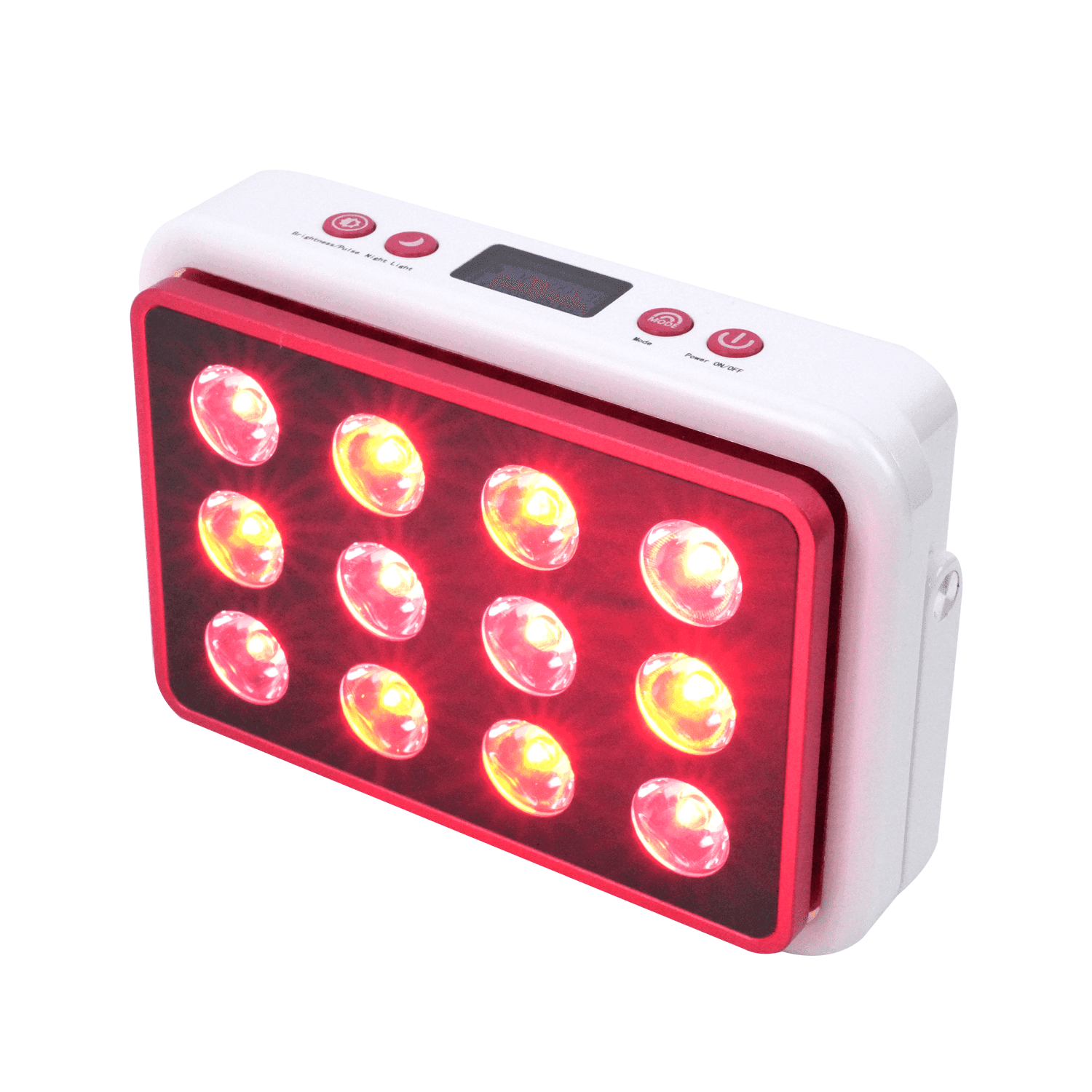
For smaller areas such as the face, hands or patches on the neck, Mito Red Light portable devices can be a convenient choice. They allow you to comfortably position the light over localized areas without treating your entire body.
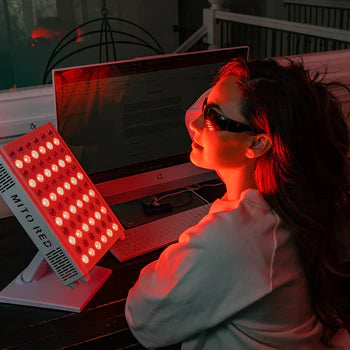
If you experience eczema on larger body areas, panel systems from the MitoPRO Series or XL panels provide broader coverage. Many users aim for roughly 20-30 minutes of exposure once per day to the affected areas, within the timing and distance guidelines in their device manual. Always consult your dermatologist about how to integrate at home light use with your existing eczema treatment plan.
Why Mito Red Light?
There are many LED devices on the market, and choosing a well designed, independently tested system is important when you are dealing with sensitive, reactive skin. Mito Red Light devices are engineered to deliver high output, research aligned red and near infrared wavelengths for general wellness use.
Our devices feature:
- Higher diode density per square inch compared with many competitors to reduce "dead space" and minimize a spotty or polka dot effect on the treatment area.
- Third party testing to verify that our lights operate within target therapeutic ranges for red and NIR wavelengths.
- Enhanced Spectral Energy Output™, a design approach that distributes power across multiple carefully selected wavelengths of red and near infrared light.
Combined with our 60 day risk free trial and responsive customer support, Mito Red Light makes it easier to evaluate whether at home red light therapy is a good fit as part of your eczema management strategy.
Eczema: In The Clear
Living with eczema can be frustrating, especially when flares interfere with sleep, confidence or daily activities. Standard treatments sometimes cause side effects or do not fully control symptoms, which drives many people to explore supportive options.
Always talk with your healthcare professional before adding red light therapy to your routine, especially if you are using prescription creams, systemic medications or phototherapy. For people cleared by their dermatologist to try at home LED, Mito Red Light devices offer a non invasive way to support overall skin health and comfort from the cells up in between appointments.
Frequently Asked Questions About Eczema And Red Light Therapy
Can red light therapy cure eczema?
No. Eczema is a chronic inflammatory condition with genetic and immune components, and there is currently no known cure. Red light therapy may help support skin health, reduce some symptoms and complement standard treatments, but it should be viewed as an adjunct, not a cure.
Is red light therapy safe for eczema prone skin?
Low level red and near infrared light are generally well tolerated, and early studies in eczema report symptom improvements without serious side effects. However, every skin type is different, so you should get clearance from your dermatologist and start slowly, following device guidelines.
How often should I use a Mito Red Light device for eczema?
Many people start with short daily or near daily sessions in the 10-30 minute range for affected areas, depending on device strength and provider advice. Consistency over weeks usually matters more than very long single sessions.
What is the difference between UV phototherapy and red light therapy for eczema?
UV phototherapy, typically done in a dermatologist's office, uses ultraviolet wavelengths to reduce inflammation and itch and has more long term safety considerations. Red light therapy uses non UV red and NIR wavelengths aimed at supporting cellular function and barrier health, and is generally used as a wellness adjunct at home.
Which Mito Red Light device is best if I have widespread eczema?
If eczema affects larger areas such as the legs, torso or back, a full size panel from the MitoPRO Series or an XL array can provide more efficient coverage than a small handheld. For localized areas, portable devices work well and can be combined with larger panels if recommended.
References
- National Eczema Association. Eczema (Atopic Dermatitis): Overview.
- American Academy of Dermatology. Eczema treatment: Phototherapy.
- National Eczema Association. Types of Eczema.
- National Eczema Association. 8 Skincare Ingredients to Avoid.
- Salehpour F et al. Transcranial near-infrared light in treatment of neurodegenerative diseases.
- Morita H et al. Clinical application of GaAlAs 830 nm diode laser for atopic dermatitis.
- Mito Red Light. How Does Red Light Therapy Work?
- Mito Red Light. Red Light Therapy Benefits.
Red light therapy (photobiomodulation) has been investigated for hundreds of specific health applications, with core mechanisms including increased ATP synthesis, reduced oxidative stress and modulated inflammatory signalling. Mito Red Light devices are general wellness devices and are not intended to diagnose, treat, cure or prevent any disease.
This article discusses published scientific research and general educational information about photobiomodulation and red light therapy. It does not constitute medical advice and does not make specific claims about Mito Red Light devices. The research cited reflects independent peer-reviewed studies and does not imply that any Mito Red Light product has been evaluated, approved, or cleared by the FDA or any other regulatory body for the diagnosis, treatment, cure, or prevention of any disease or medical condition. Individual results vary. Consult a qualified healthcare professional before beginning any light therapy protocol, particularly if you have a pre-existing medical condition, are pregnant, or are taking photosensitising medications.
Mito Red Light products are general wellness devices. They are not medical devices and have not been evaluated, cleared, or approved by the FDA or any regulatory body for the diagnosis, treatment, cure, or prevention of any disease or medical condition. Any references to peer-reviewed research or clinical studies on this page describe findings from independent scientific literature and do not imply that Mito Red Light devices have been studied, tested, or proven effective for any specific condition. Always consult a qualified healthcare provider before beginning any new wellness routine, particularly if you have a medical condition or are taking medication.
Related articles
More from the skin health & anti-aging knowledge cluster