














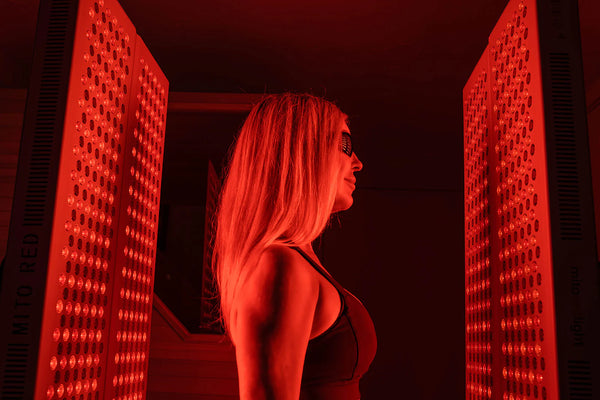
Panel Series
Jet lag can turn an exciting trip into a blur of sleepless nights, daytime crashes, and brain fog just when you want to feel sharp. By understanding how time zones disrupt your circadian rhythm—and how light shapes that internal clock—you can use simple strategies, including red light therapy, to prepare your body before you fly, adjust faster when you land, and feel more like yourself on the other side of the world.
Table of Contents
- What Causes Jet Lag?
- Symptoms of Jet Lag
- Your Circadian Rhythm
- Light Affects Your Sleep Cycle
- Preventing Jet Lag
- Managing Jet Lag Once You Arrive
- Red Light Therapy for Jet Lag
- Tips for Traveling with Red Light
Overcoming Jet Lag with Red Light Therapy
Have you ever traveled only to find yourself struggling with jet lag once the trip is over? As anyone who has experienced it knows, adjusting to a new time zone can be unpleasant, leaving you tired and out of sync right when you want to feel your best. Whether you are traveling for high-stakes work or a long-awaited vacation, having strategies that help you manage or reduce jet lag can make a big difference in how you feel and perform.
There are many natural steps you can take to offset jet lag and support better sleep while you travel, including thoughtful light exposure, timing your sleep and meals, and using tools like red light therapy.
What Causes Jet Lag?
Jet lag is a temporary sleep and alertness problem that travelers experience when they cross multiple time zones in a short period of time. Crossing a single time zone rarely causes significant issues, but longer east–west trips—such as coast-to-coast or international flights—can shift your local clock by many hours at once.
The primary driver of jet lag is disruption of the body’s internal clock, known as the circadian rhythm. This internal timing system regulates sleep–wake cycles, hormone secretion, body temperature, digestion, and many other processes. When your internal clock is misaligned with the local time at your destination, you can feel sleepy, foggy, or wide awake at the “wrong” times until your body gradually adjusts.
Jet lag is different from travel fatigue. Travel fatigue is the tiredness that comes from long journeys, cramped seating, dehydration, and changes in cabin pressure. Travel fatigue can make jet lag feel worse, but you can experience it even without crossing time zones.
Symptoms of Jet Lag
The severity of jet lag varies and depends on several factors, including:
- The number of time zones crossed
- The direction of travel (eastward trips often feel harder than westward)
- Your individual sensitivity and age
- How well you slept and hydrated before and during travel
Common symptoms of jet lag include:
- Sleep disturbances – Difficulty falling asleep, staying asleep, or waking up too early. You might also feel very sleepy during the day when your body thinks it should be night.
- Fatigue – Daytime drowsiness, low energy, and a general sense of being “wiped out.”
- Cognitive difficulties – Trouble concentrating, slower thinking, and short-term memory issues while your sleep and hormones are out of sync.
- Mood changes – Irritability, mood swings, or feeling a bit low as disrupted sleep and circadian hormones affect emotional regulation.
- Digestive issues – Constipation, loose stools, or stomach upset can happen as your gut’s internal clock adjusts to new meal and sleep times.
- Headaches – Some people develop headaches related to sleep loss, hormone shifts, or changes in hydration and cabin pressure.
Most people notice that symptoms improve over several days as their circadian rhythm gradually realigns. You can help this process along with light exposure, timing of sleep and meals, and other gentle interventions.
Your Circadian Rhythm
Your circadian rhythm is the internal timing system that organizes your sleep–wake cycle and many other bodily functions over roughly 24 hours. It is often called the “body clock” and is strongly influenced by light and dark.
Specialized cells in your eyes send signals about light to the brain’s master clock, which then coordinates daily patterns in hormone release, body temperature, digestion, and alertness. When your circadian rhythm is aligned with your environment, you tend to fall asleep, stay asleep, and wake up more easily at consistent times.
Light Affects Your Sleep Cycle
Light is the most powerful external signal for your circadian rhythm. Your brain constantly tracks the timing, brightness, and color of light in your environment and adjusts your internal clock accordingly.
Bright, short-wavelength light—especially blue and some ultraviolet—tells your brain that it is daytime and time to be awake. Sunlight is rich in this type of light, which helps keep you alert during the day. In contrast, warmer light such as orange and red is less stimulating to the circadian system and is more typical of sunrise, sunset, and firelight—the cues that historically signaled evening and night.
Modern screens and LED lighting can complicate this picture. When you are exposed to significant amounts of blue-rich light late at night, your brain gets a “daytime” signal at the wrong time, which can delay melatonin release and sleep onset. Many devices now include night modes that shift screens toward warmer tones to reduce this effect.
During jet lag, both the intensity and timing of light exposure relative to your internal clock change abruptly, which is why managing light is one of the most powerful ways to help your body adjust.
Preventing Jet Lag
You may not be able to prevent jet lag entirely on long trips, but you can reduce its impact by preparing in advance:
- Shift your sleep schedule – In the days before your trip, gradually move your bedtime and wake time closer to the schedule at your destination. Even moving by 30–60 minutes per day can help.
- Stay hydrated – Dehydration can worsen headaches, fatigue, and sleep quality. Drink water before, during, and after your flight, and go easy on alcohol and excessive caffeine.
- Sleep well before traveling – Starting your trip already sleep deprived makes jet lag feel much worse. Use good sleep hygiene—and, if appropriate, gentle tools such as red light therapy or a short course of melatonin—so you board as rested as possible.
Managing Jet Lag Once You Arrive
Once you land, your goal is to encourage your internal clock to adopt the local schedule as quickly and comfortably as possible.
- Align with local time – Eat meals, move your body, and go to bed according to local time rather than your “home” clock, even if you feel off. This gives your circadian system clear cues to adapt.
- Seek daylight and move – Natural daylight, especially in the morning, is one of the most effective tools for resetting your internal clock. Light physical activity such as walking outside can help you stay awake and reinforce the new schedule.
- Consider melatonin at night – A short course of low-dose melatonin in the evening can help your brain understand when “night” is in the new time zone, especially for eastward travel or if you have a history of sleep difficulties.
- Limit long naps – Short, strategic naps (20–30 minutes) can help if you are extremely tired, but long or late naps can make it harder to fall asleep at local bedtime.
Red Light Therapy for Jet Lag
Red light therapy is increasingly used as a non-drug way to support sleep quality and circadian balance. Several small studies have suggested that appropriately dosed red light exposure in the evening may support natural melatonin production and improve subjective sleep quality, especially in people who are physically or mentally stressed.
While there is limited research looking specifically at red light therapy for jet lag, existing findings support several relevant applications:
- Promoting relaxation and sleep before travel
- Supporting better sleep quality during adjustment to a new time zone
- Helping stabilize circadian rhythms without introducing blue-rich light at night
- Supporting daytime alertness when protocols are timed earlier in the day
One advantage of red light therapy in this context is that it does not rely on high-energy blue or ultraviolet wavelengths. This means short evening sessions are less likely to send a “daytime” signal to your brain, making it useful as part of a calming wind-down routine while you are adapting to a new schedule.
Tips for Traveling with Red Light
To get the most from your red light routine on the road, it helps to plan ahead:
- Check power requirements – If you are traveling internationally, confirm that your device’s voltage range and plug type are compatible with your destination, or bring an appropriate converter and adapter.
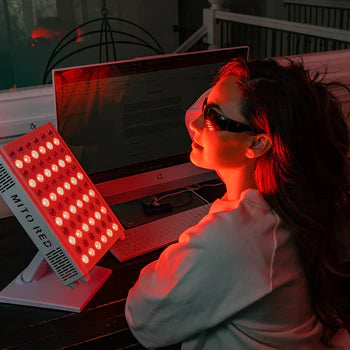
- Choose a portable device – A compact, travel-friendly red light panel or wearable is easier to pack and set up in hotel rooms or guest spaces.
- Protect your device – Use a padded case or protective packaging to minimize damage in transit, especially if you are checking luggage or moving between multiple stops.
- Bring accessories – Pack any required power cords, adapters, protective eyewear, or stands so you are not improvising once you arrive.
- Plan your sessions – Think ahead about when and where you will use your device. For example, you might schedule short evening sessions at your destination to support wind-down, or morning sessions to reinforce wakefulness, depending on your strategy.
At Mito Red Light, we offer a range of products suitable for at-home red light therapy as well as options that travel well. You can explore our panel series and other devices, or reach out to us at +1 866‑861‑6486 (MITO) or info@mitoredlight.com if you’d like help choosing a solution that fits your travel and sleep goals.
Frequently Asked Questions
How many days does jet lag usually last?
Most people find that symptoms improve within a few days, although full adjustment can take longer when crossing many time zones. A common rule of thumb is that your body may need about one day per time zone crossed, but this varies by person and direction of travel.
Is jet lag worse when flying east or west?
Many travelers find eastward trips more difficult because you “lose” hours and have to fall asleep earlier than your internal clock expects. Westward travel often feels like staying up late, which can be easier for some people. Individual experience varies.
Can red light therapy replace melatonin or other sleep aids?
Red light therapy is not a medication and is not a direct substitute for melatonin or prescription sleep aids. Some people use it as a supportive, non-drug tool in addition to other strategies, but decisions about supplements or medications should be made with a healthcare professional.
When should I use red light therapy to help with jet lag?
Many people use red light therapy in the evening at their destination as part of a calming pre-sleep routine, especially if they are avoiding bright screens. Others may use it earlier in the day for alertness, depending on their schedule and how their body is responding. Consistency and timing relative to your target sleep period matter more than the exact clock time.
Is red light therapy safe to use while traveling?
Red light therapy is generally well tolerated for most healthy adults when used as directed. If you have a medical condition, use photosensitizing medications, are pregnant, or have concerns about light exposure, talk with your healthcare provider before adding it to your travel routine.
References
- National Health Service (NHS). Jet lag – Overview.
- Centers for Disease Control and Prevention (CDC). Jet Lag and Motion Sickness.
- Reid KJ, et al. Circadian rhythm sleep disorders. Sleep Medicine Clinics.
- Brainard GC, et al. Action spectrum for melatonin regulation in humans. Journal of Neuroscience.
- Teo W, et al. Effects of light therapy on sleep and circadian rhythms. Chronobiology International.
- Journal of Athletic Training. Red light therapy and melatonin in female athletes.
- SAGE Journals. Red light and circadian rhythms in human subjects.
- Mito Red Light. Red and near infrared light and melatonin. Mito Red Light Blog.
- Mito Red Light. Everything you need to know about red light therapy and sleep. Mito Red Light Blog.
- Mito Red Light. Red light therapy on the go. Mito Red Light Blog.
This article discusses published scientific research and general educational information about photobiomodulation and red light therapy. It does not constitute medical advice and does not make specific claims about Mito Red Light devices. The research cited reflects independent peer-reviewed studies and does not imply that any Mito Red Light product has been evaluated, approved, or cleared by the FDA or any other regulatory body for the diagnosis, treatment, cure, or prevention of any disease or medical condition. Individual results vary. Consult a qualified healthcare professional before beginning any light therapy protocol, particularly if you have a pre-existing medical condition, are pregnant, or are taking photosensitising medications.
Mito Red Light products are general wellness devices. They are not medical devices and have not been evaluated, cleared, or approved by the FDA or any regulatory body for the diagnosis, treatment, cure, or prevention of any disease or medical condition. Any references to peer-reviewed research or clinical studies on this page describe findings from independent scientific literature and do not imply that Mito Red Light devices have been studied, tested, or proven effective for any specific condition. Always consult a qualified healthcare provider before beginning any new wellness routine, particularly if you have a medical condition or are taking medication.
Related articles
More from the sleep & circadian rhythm knowledge cluster