












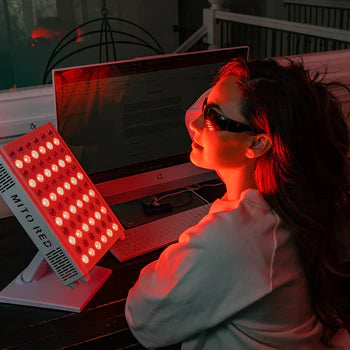


Panel Series
Last updated: June 2026. Specifications verified June 2026 against manufacturer pages and independent testing - confirm current specs and pricing before purchase, as both change.
The best red light therapy panel in 2026 is the one whose published output you can actually trust — and that starts with how the irradiance was measured, not just how big the number is. For most home buyers, a six-wavelength full-body panel with disclosed, third-party-verified output and app control covers the widest range of goals. For advanced users who want to vary protocols, an eight-wavelength, multi-mode panel offers the most spectral flexibility on the consumer market. Below, we break down the best panels by use case, credit competitors where they genuinely lead, and — most importantly — show you how to read every irradiance claim you encounter so you can judge the whole category yourself.
This guide is built around one rule: every spec traces to a manufacturer page or independent test as of the publish date. Where a brand doesn't disclose how it measured a number, we say so rather than guess.
Best red light therapy panels of 2026 at a glance
Here is the full comparison. Note the two separate irradiance rows — one for consumer-grade solar (broadband) meter readings, one for calibrated spectroradiometer readings. This split is the single most useful thing on the page, and we explain why in the next section.
| Spec | MitoPRO X (Mito Red Light) | MitoADAPT 4.0 (Mito Red Light) | Joovv Solo 3.0 | PlatinumLED BIOMAX 600 | Hooga PRO300 |
|---|---|---|---|---|---|
| Wavelengths | 6 (590, 630, 660, 810, 830, 850nm) | 8 (590, 630, 660, 670, 810, 830, 850, 940nm) | 2 (660, 850nm) | 7 (480, 630, 660, 810, 830, 850, 1060nm) | 2 (660, 850nm) |
| Selectable modes | 3 (full Red / full NIR / 50–50) | 11 (independent-circuit spectral mixes) | 2 (plus Recovery+ pulsed mode via app) | 3 (Red / NIR / both) | 1 (Red + NIR combined) |
| Irradiance at 6" — solar/broadband meter | >130–160 mW/cm² (Mito's own solar reading, instrument disclosed) | >125–140 mW/cm² (Mito's own solar reading, instrument disclosed) | Not publicly disclosed | Manufacturer claim; measurement method not disclosed | ~109 mW/cm² claimed; method not disclosed |
| Irradiance at 6" — spectroradiometer (lab) | >56–73 mW/cm² (third-party verified) | >56–60 mW/cm² (third-party verified) | Not published | Not published | Not published |
| App / smart control | Yes (touchscreen + app) | Yes (app, 11 modes) | Yes (app, Recovery+) | No | No |
| Price range | $449 (300X) – $1,299 (1500X) | $549 (MIN) – $1,499 (MAX) | ~$1,295–$1,699 | ~$1,049 | ~$299 |
| Warranty | 3 years | 3 years | ~2 years | 3 years | 3 years |
| Best for | Best all-around traditional panel | Most wavelengths / protocol flexibility | Brand ecosystem, resale, modularity | Wavelength legacy, warranty | Budget entry |
A note on the table: Where a brand does not specify the measurement instrument, the figure shown is the manufacturer's published claim. Independent testing has repeatedly shown that solar/broadband meters read roughly 2–2.5× higher than calibrated spectroradiometers measuring the same panel — so undisclosed figures should be read with that context in mind. Mito Red Light's solar-meter rows are labeled honestly as Mito's own solar readings, never as independent data; the spectroradiometer rows reflect independent third-party testing. Competitor irradiance and regulatory details should be re-verified against each brand's current materials before purchase, including FDA clearance status, which varies by device and indication and should be confirmed directly in the FDA 510(k) database.
Why most red light therapy irradiance numbers are wrong — and why Mito Red Light publishes two
Most "best panel" roundups rank devices by a single irradiance number, and almost none state what instrument produced it. That omission means the rankings are comparing numbers that aren't comparable — like ranking cars by top speed when half the figures came from a speedometer and half from a wind tunnel.
The mechanism is simple. Two tools produce two very different numbers from the same panel. A solar or pyranometer-style meter is built to measure broad-spectrum sunlight; it also picks up heat and stray light, which inflates the reading for a narrow-band LED panel. A spectroradiometer (a lab instrument that isolates the actual therapeutic wavelengths) reports only the light that matters for photobiomodulation. Measuring the same panel, a solar meter can read roughly 2–2.5× higher. Independent sources cite a 2–3× range, and some put the stacked inflation — solar meter plus contact-distance measurement plus a cold panel plus a center hot-spot reading — even higher. The 2–2.5× figure is the conservative, defensible one.
This isn't a Mito Red Light talking point. The agreement is industry-wide: budget brands, premium brands, and independent reviewers all acknowledge that solar meters overstate LED panel output and that spectroradiometers are the accurate standard. When everyone who actually measures these panels agrees on the same caveat, it's the documented state of the field, not marketing.
Here's the contradiction that should bother any careful buyer: some premium brands decline to publish detailed irradiance figures at all, yet roundups still rank disclosed-but-inflated solar numbers above brands that won't play the inflation game. The result is that published rankings often propagate exactly the kind of numbers the field's own experts say are unreliable.
"Cytochrome c oxidase, the primary photoacceptor in photobiomodulation, only absorbs the specific wavelengths a panel actually emits — not the broadband energy a solar meter happens to register. A spectroradiometer measures the light that reaches that target; a solar meter measures a great deal of light that never does. That's the entire reason the two numbers diverge, and it's why measurement method belongs in every spec sheet."
— Dr. Alexis Cowan, PhD, Molecular Biology (Princeton University), Scientific Advisor, Mito Red Light
This is why Mito Red Light publishes two irradiance figures for its panels: the solar-meter reading, so you can compare apples-to-apples against competitors who only quote solar numbers, and the spectroradiometer reading, which reflects true therapeutic output. As an example, the MitoPRO 1500X publishes a solar reading above 160 mW/cm² at 6 inches alongside a third-party spectroradiometer reading above 73 mW/cm² at the same distance — and an independent reviewer who measured the same model with their own spectroradiometer reported a figure in the same range, which is the kind of corroboration disclosure makes possible. Mito Red Light is not the only brand moving toward dual disclosure (at least one other manufacturer now publishes both), but it remains uncommon enough to be a genuine differentiator in 2026.
Screenshot this before you buy any panel
Before trusting any irradiance number, ask the seller:
- At what distance was it measured? (6 inches is a common, meaningful reference.)
- What instrument was used — a spectroradiometer or a solar/broadband meter?
- Is it a center-only reading or a grid average across the panel face?
- What's the red/near-infrared split?
- Can they show the raw data or calibration records?
A brand that can answer all five is telling you something a single big number never can.
More isn't automatically better: the dose reframe
One last guardrail, because it protects you from chasing the biggest number on the page. Irradiance (power density, measured in mW/cm²) is the speedometer; fluence (dose, measured in J/cm², which equals irradiance multiplied by time) is the odometer. Photobiomodulation follows a biphasic dose-response — too little does nothing, an appropriate dose helps, and substantially overshooting can blunt the benefit. The right dose for your distance and session length matters more than the largest headline figure. For how dose works in practice, see Mito Red Light's primer on how red and near-infrared light trigger cellular response. Here is how often to use red light therapy at home, with session times by device.
Best overall traditional panel: MitoPRO X
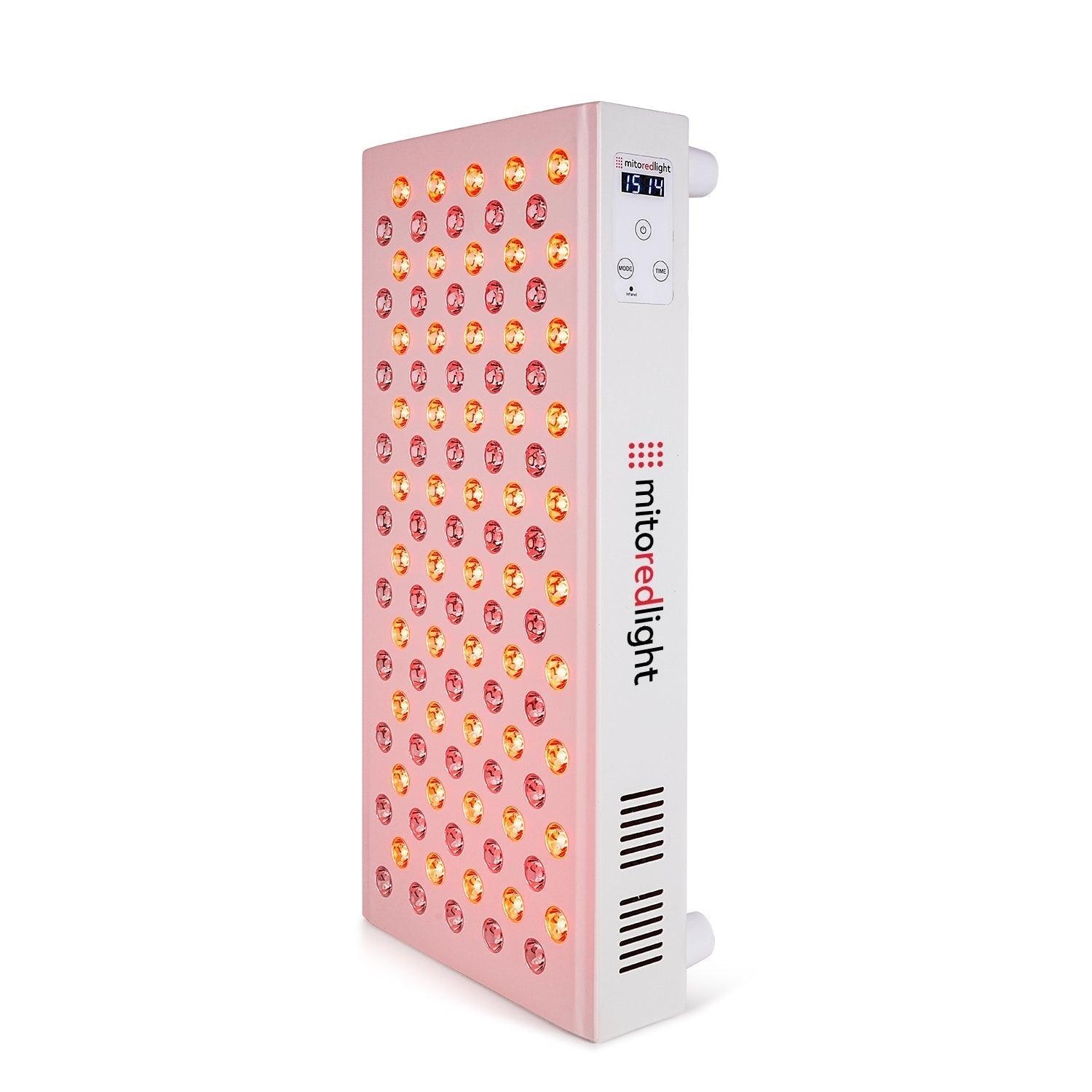
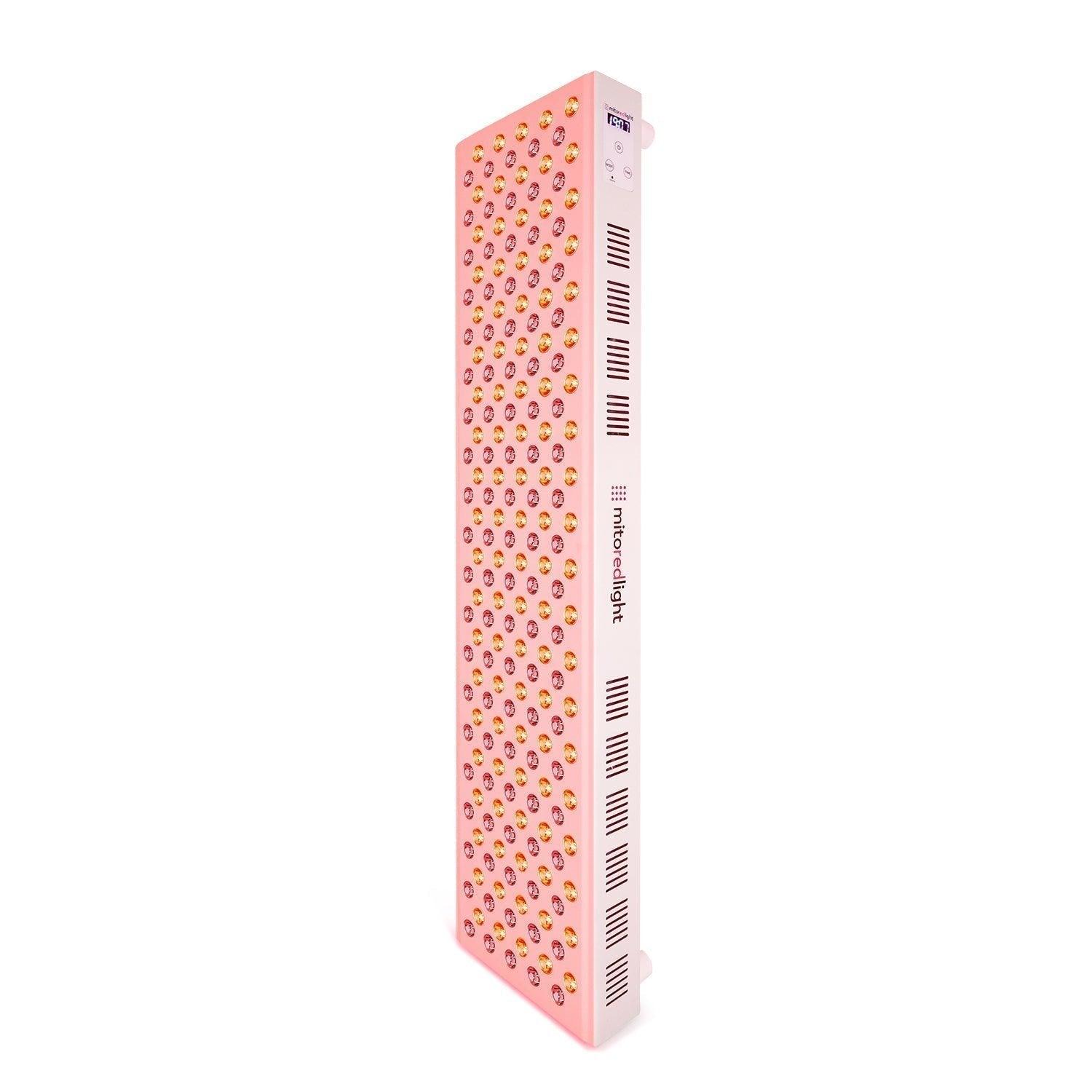
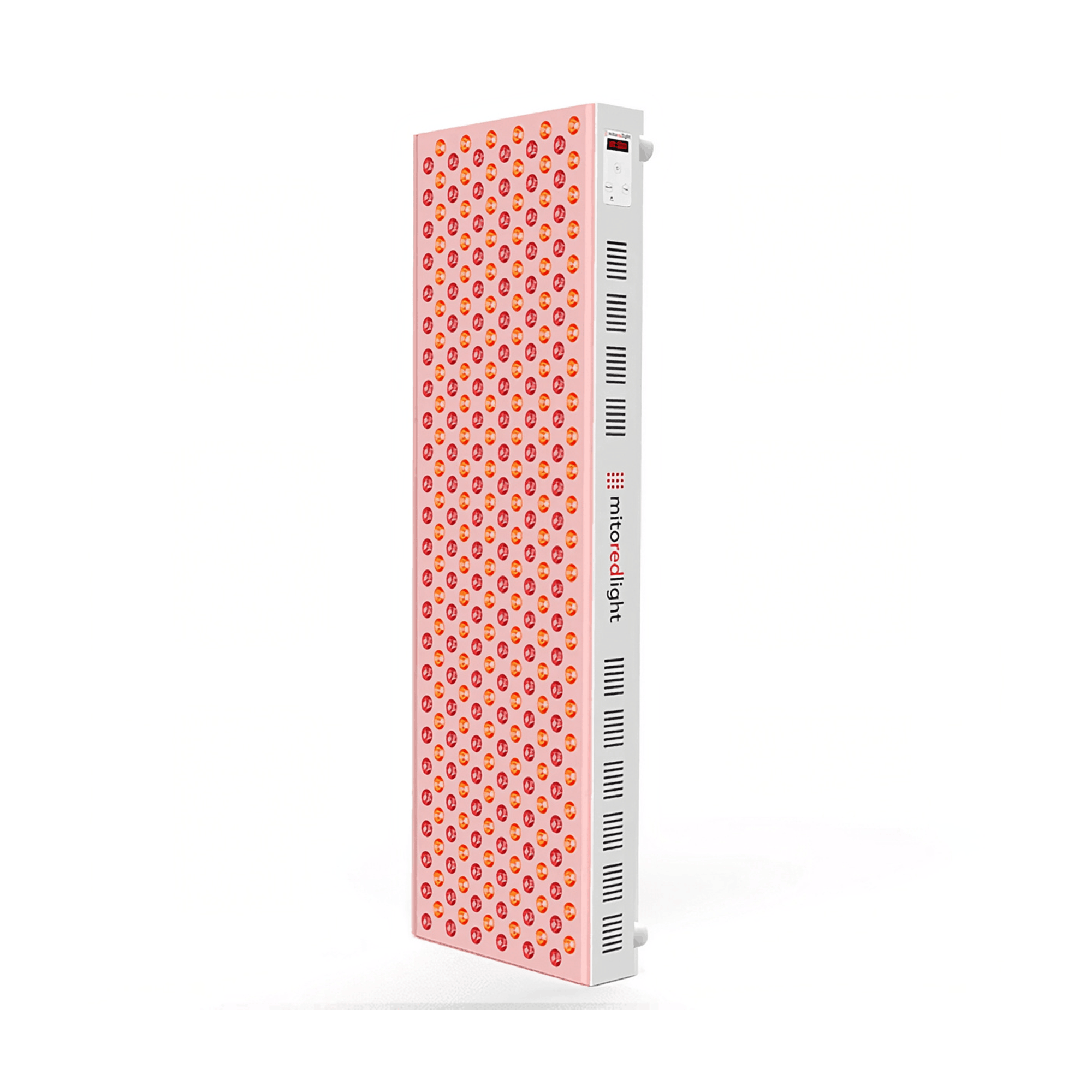
For most buyers who want one excellent full-body device without managing eleven modes, the MitoPRO X is the confident default. It delivers six wavelengths — 590nm, 630nm, 660nm, 810nm, 830nm, and 850nm — with full-panel Red, full-panel NIR, or combined operation, plus touchscreen and smartphone-app control. That's more spectral coverage and more control than the typical two-wavelength premium panel, generally at a lower price.
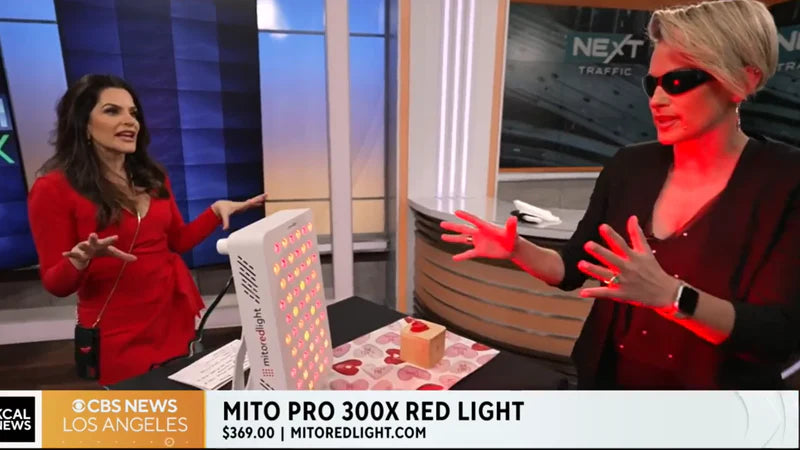
The lineup spans the MitoPRO 300X ($449, targeted/face and neck), the 750X ($749, upper or lower body), and the 1500X ($1,299, full-body coverage in a single session). Published output runs from a solar-meter reading above 130 mW/cm² at 6 inches on the 300X to above 160 mW/cm² on the larger panels, with third-party spectroradiometer readings from above 56 to above 73 mW/cm² at the same distance — both figures disclosed, with the instrument named.
Honest competitor note: If your priority is a mature, resale-friendly brand ecosystem with a long track record, Joovv is the stronger pick on those specific dimensions — see the dedicated section below. The MitoPRO X wins on wavelength count, disclosed-method irradiance, and price-per-feature.
For at-home full-body use where you want a do-it-all device, the MitoPRO X series delivers the 660nm + 850nm pairing studied in much of the human research on musculoskeletal and skin outcomes, alongside 810nm — the most-studied near-infrared wavelength in photobiomodulation — with output reported under both measurement standards.
Most wavelengths and protocol flexibility: MitoADAPT 4.0
The MitoADAPT 4.0 is the most spectrally versatile consumer panel we're aware of in 2026, with eight peak wavelengths: 590nm, 630nm, 660nm, 670nm, 810nm, 830nm, 850nm, and 940nm. That's more discrete wavelengths than any competitor in this guide, including PlatinumLED's seven. Where it earns the "most advanced" label, though, is the eleven selectable modes. A patent-pending multi-circuit design puts wavelengths on independent circuits, so each mode is a genuinely distinct spectral mix firing at full output — not an on/off toggle that dims everything.
That matters for a specific buyer: the person who wants to run different protocols on different days — a skin-focused session weighted toward 590/630/660nm, a deep-tissue recovery session weighted toward 810/830/850/940nm — from a single device, and refine over time based on response. Pricing runs $549 (MIN), $999 (MID), and $1,499 (MAX). Published output is a solar reading above 125–140 mW/cm² at 6 inches with a third-party spectroradiometer reading above 56–60 mW/cm².
One honest caveat on the superlatives: while MitoADAPT 4.0 leads on wavelength count, PlatinumLED's BIOMAX 600 includes 480nm and 1060nm — wavelengths outside MitoADAPT's range. "Most wavelengths" (eight) is the defensible claim; if your interest is specifically blue (480nm) or far-NIR (1060nm), check PlatinumLED.
The MitoADAPT 4.0 series suits advanced users who treat protocol variability as the point rather than a complication. For the wavelength reasoning behind why combination panels dominate, see our breakdown of red versus near-infrared wavelengths.
Best for full-body coverage
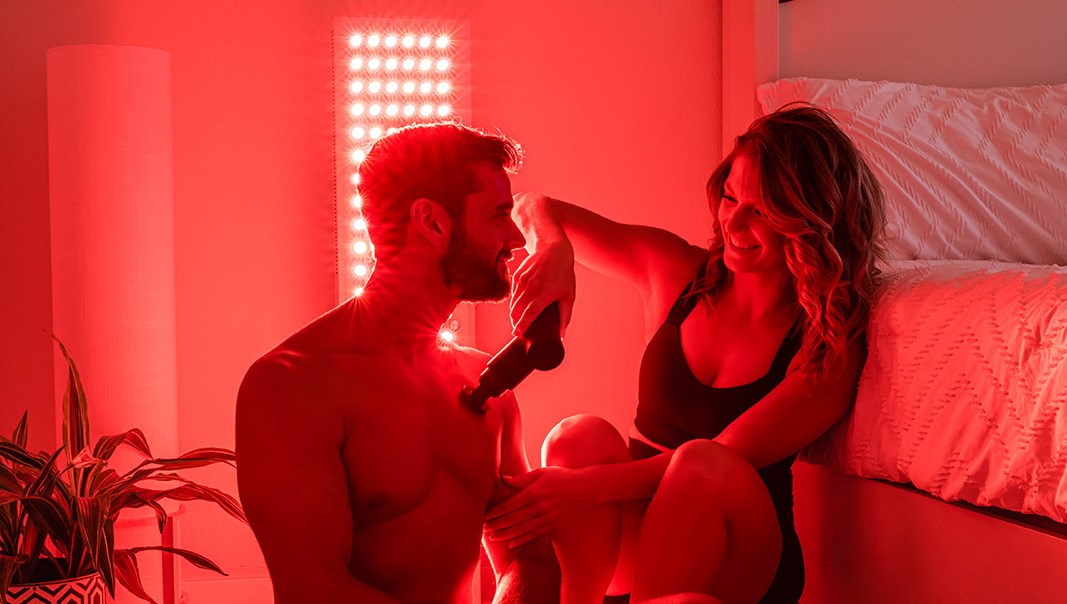
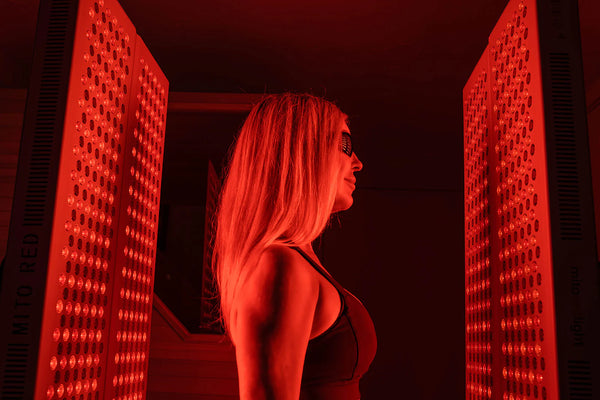
For covering the whole body in a single standing session, the choice is between the MitoPRO 1500X and the MitoADAPT MAX 4.0. The 1500X (300 dual-chip LEDs, 43-inch panel height) is the simpler full-body option; the MAX 4.0 (36-inch panel) adds the eight-wavelength, eleven-mode flexibility. Both are tall enough that ceiling clearance and a proper floor or universal stand matter — plan for roughly 6–8 inches of added height with a stand. If you want one device for whole-body sessions and don't need protocol switching, the 1500X is the value pick; if you want full-body coverage and spectral flexibility, the MAX 4.0 is the upgrade.
Best for muscle recovery and athletes
For recovery-focused use, near-infrared-weighted output is what the research points to, which favors the MitoADAPT 4.0's NIR-heavy modes (810/830/850/940nm) or the MitoPRO X in full-NIR mode. The evidence here is among the stronger areas in the photobiomodulation literature. According to PubMed, a systematic review with meta-analysis by Leal-Junior and colleagues found that phototherapy applied before exercise improved muscular performance and accelerated recovery, with the most consistent results from red or infrared wavelengths ([Leal-Junior 2015, PMID 24249354] DOI). A later systematic review and meta-analysis by Ferlito and colleagues reported that photobiomodulation improved muscle strength and reduced delayed-onset muscle soreness compared with cryotherapy after high-intensity exercise, while noting the modest number of included trials ([Ferlito 2021, PMID 34669081] DOI).
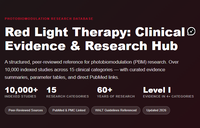
These findings describe photobiomodulation as a modality and the wavelengths studied — not any specific Mito Red Light device. For athletes choosing equipment, the practical takeaway is to prioritize near-infrared coverage and a panel size that lets you treat large muscle groups efficiently. Mito Red Light maintains a category-organized library of recovery and performance studies in its clinical research evidence hub.
Best for skin and anti-aging
For skin and appearance goals, red and amber wavelengths (590/630/660nm) are the relevant band, which suits the MitoPRO X in full-Red mode or the MitoADAPT 4.0's skin-weighted modes. The most directly on-point clinical evidence comes from a randomized, controlled trial by Wunsch and Matuschka. According to PubMed, treated participants showed significantly improved skin complexion and feeling, reduced skin roughness on profilometry, and increased intradermal collagen density measured by ultrasound, compared with untreated controls, after a course of red and near-infrared light sessions ([Wunsch & Matuschka 2013, PMID 24286286] DOI). Notably, the broadband polychromatic spectrum showed no advantage over the red-light-only spectrum in that trial — a useful reminder that more spectral breadth is not automatically better for skin outcomes.
If skin is your primary goal and full-body coverage isn't essential, a compact targeted panel such as the MitoPRO 300X may be the more sensible spend than a large full-body unit.
Best premium brand ecosystem: Joovv (honest credit)
Crediting where a competitor genuinely leads: Joovv has built one of the most recognized brand ecosystems in the category. Its strengths are real — a mature mobile app with a Recovery+ pulsed mode, strong resale value, and a modular design that lets owners expand a setup over time. The Joovv Solo 3.0 uses two wavelengths (660nm and 850nm) and sits at the premium end on price (roughly $1,295–$1,699).
The trade-offs are wavelength count (two, versus six on the MitoPRO X and eight on the MitoADAPT 4.0) and irradiance transparency: Joovv does not publicly disclose detailed irradiance figures, so neither the solar nor the spectroradiometer row can be filled from its materials. If brand maturity, resale, and modular expansion are your priorities, Joovv is a legitimate choice. If disclosed, verifiable output and more wavelengths matter more to you, the Mito Red Light panels lead on those dimensions. Buyers who need a device with a specific FDA 510(k) clearance for a medical indication should verify the current 510(k) record for any brand directly in the FDA database before purchasing, since clearance status and indications change.
Best budget entry: Hooga (honest credit)
For the most cost-conscious entry into full-body-adjacent red light therapy, Hooga is the honest value leader. The Hooga PRO300 runs about $299, includes a stand, carries a 3-year warranty, and uses long-life LEDs. It's a two-wavelength panel (660nm and 850nm), and Hooga's higher ULTRA series steps up to four wavelengths (630/660/810/850nm). Hooga's claimed irradiance (around 109 mW/cm² at 6 inches) does not state the measurement instrument, so read it with the solar-versus-spectroradiometer context from above in mind. For a first panel on a tight budget, Hooga delivers strong price-per-watt; buyers wanting more wavelengths or disclosed-method output will look higher up the range. See also What To Look For in a Red Light Therapy Panel: Buying Guide 2026.
How to choose a red light therapy panel: the short version
If you want a single, do-it-all full-body device, start with a six-wavelength panel with disclosed output and app control. If you want to run varied protocols and treat wavelength flexibility as the point, step up to an eight-wavelength, multi-mode panel. If budget is the hard constraint, a reputable two-wavelength panel with a stand and a real warranty will still deliver therapeutic doses at a sensible session length. Across all three, judge irradiance by method and distance, not by the headline figure alone — and remember the biphasic dose principle: the right dose beats the biggest number.
For a deeper buyer's walkthrough of specs, certifications, and EMF considerations, see Mito Red Light's red light therapy buyer's guide, and for the underlying science, what red light therapy is and what the research shows. Mito Red Light's Evidence Explorer provides searchable access to over 9,500 peer-reviewed photobiomodulation studies — the same database that informs the research cited throughout this guide.
Frequently asked questions
What is the best red light therapy panel for home use?
For most home users, a six-wavelength full-body panel with disclosed, third-party-verified irradiance and app control offers the widest coverage of common goals — skin, recovery, and general wellness — without protocol complexity. Buyers who want to vary protocols across sessions may prefer an eight-wavelength, multi-mode panel. The key is choosing a panel whose output is reported with a stated distance and measurement instrument.
How many wavelengths does a red light therapy panel need?
There is no single required number. Two well-chosen wavelengths (such as 660nm red and 850nm near-infrared) cover the most-studied red and NIR bands. Additional wavelengths like 590nm, 630nm, 810nm, 830nm, and 940nm broaden the range of tissue depths and applications a single panel can address. More wavelengths add versatility, not a guarantee of better results.
What irradiance is good for a red light therapy panel?
It depends entirely on the measurement method and distance. A solar/broadband meter reads roughly 2–2.5× higher than a calibrated spectroradiometer on the same panel, so a "high" number means little without context. Rather than chasing the largest figure, look for disclosed methodology and aim for a panel that delivers an appropriate therapeutic dose (fluence, in J/cm²) at your treatment distance and session length.
Is Mito Red Light better than Joovv?
They lead on different things. Mito Red Light panels offer more wavelengths (six to eight versus two) and publish irradiance under both solar-meter and spectroradiometer standards with the instrument disclosed, typically at lower prices. Joovv leads on brand maturity, resale value, and modular ecosystem. The better choice depends on whether wavelength count and output transparency or brand ecosystem and resale matter more to you.
Why do red light therapy brands list such different irradiance numbers?
Mostly because they measure differently and often don't say how. Solar/broadband meters report substantially higher numbers than calibrated spectroradiometers for the same LED panel, and measurement distance, center-versus-grid readings, and panel temperature all shift the figure. When a brand doesn't disclose its instrument and distance, its irradiance number can't be meaningfully compared to another brand's.
These statements have not been evaluated by the FDA. Mito Red Light devices are not intended to diagnose, treat, cure, or prevent any disease. Mito Red Light maintains FDA establishment registration as a medical device establishment; this is not the same as FDA clearance or approval of a specific device for a medical indication. This information is for educational purposes and is not medical advice. Consult your healthcare provider before beginning any new wellness routine, especially if you have a medical condition or take medications.
REFERENCES
[1] Wunsch A, Matuschka K. 2013 (vol. 32(2):93–100). "A controlled trial to determine the efficacy of red and near-infrared light treatment in patient satisfaction, reduction of fine lines, wrinkles, skin roughness, and intradermal collagen density increase." Photomedicine and Laser Surgery.
PMID 24286286 — https://pubmed.ncbi.nlm.nih.gov/24286286/ — DOI 10.1089/pho.2013.3616
NOTE: brief listed this as 2014; PubMed publication year is 2013. Used 2013.
[2] Leal-Junior ECP, Vanin AA, Miranda EF, de Carvalho PdTC, Dal Corso S, Bjordal JM. 2015 (vol. 30(2):
925–39; e-pub 2013). "Effect of phototherapy (LLLT and LED) on exercise performance and markers of exercise recovery: a systematic review with meta-analysis." Lasers in Medical Science.
PMID 24249354 — https://pubmed.ncbi.nlm.nih.gov/24249354/ — DOI 10.1007/s10103-013-1465-4
[3] Ferlito JV, Ferlito MV, Leal-Junior ECP, Tomazoni SS, De Marchi T. 2021 (vol. 37(3):1375–88).
"Comparison between cryotherapy and photobiomodulation in muscle recovery: a systematic review and meta-analysis." Lasers in Medical Science.
PMID 34669081 —
https://pubmed.ncbi.nlm.nih.gov/34669081/ — DOI 10.1007/s10103-021-03442-7
[4] Hamblin MR. 2018 (vol. 94(2):199–212). "Mechanisms and Mitochondrial Redox Signaling in Photobiomodulation." Photochemistry and Photobiology.
Supports: CCO as primary photoacceptor, NO dissociation, biphasic response. PMID 29164625 —
https://pubmed.ncbi.nlm.nih.gov/29164625/ — DOI 10.1111/php.12864
[5] de Freitas LF, Hamblin MR. 2016. "Proposed Mechanisms of Photobiomodulation or Low-Level Light Therapy." IEEE Journal of Selected Topics in Quantum Electronics. DOI 10.1109/JSTQE.2016.2561201
Dive deeper into the research
- Mito Red Research Evidence Hub — 10,000+ indexed PBM studies across 15 clinical categories.
- Wavelength reference — 633, 660, 810, and 830 nm comparison and dosing data.
- Independent third-party testing — spectrometer-verified output across the Mito Red product line.
- Mito Red Scientific Advisory Board — review workflow, evidence grading, primary-literature sourcing.
Mito Red Light products are general wellness devices. They are not medical devices and have not been evaluated, cleared, or approved by the FDA or any regulatory body for the diagnosis, treatment, cure, or prevention of any disease or medical condition. Any references to peer-reviewed research or clinical studies on this page describe findings from independent scientific literature and do not imply that Mito Red Light devices have been studied, tested, or proven effective for any specific condition. Always consult a qualified healthcare provider before beginning any new wellness routine, particularly if you have a medical condition or are taking medication.