







Panel Series
When evaluating a red light therapy panel, four criteria are non-negotiable: verified wavelengths at clinically studied frequencies (630, 660, 810, or 850 nm); adequate irradiance of at least 20–50 mW/cm² at your intended treatment distance; independent third-party spectral testing that confirms what the device actually emits; and LED chip quality that maintains wavelength stability and output consistency over time. Everything else — panel size, mounting options, price — matters only after these four are confirmed. A panel that does not pass the basics will not produce results regardless of its other features.
The Four Non-Negotiable Criteria
1. Verified wavelengths
Wavelength is the single most important specification in any red light therapy device. The therapeutic effects of photobiomodulation are wavelength-specific — they occur because cytochrome c oxidase in cell mitochondria has absorption peaks at specific nanometer values. Light at 660 nm produces different biological effects than light at 700 nm. If a panel does not emit the wavelengths it claims, it will not produce the outcomes the research supports.
The most studied and clinically supported wavelengths are:
- 630 nm — surface skin applications, acne, collagen support
- 660 nm — the primary collagen wavelength; fibroblast stimulation in the dermis
- 810 nm — deep muscle and neural tissue; transcranial applications
- 850 nm — deep muscle recovery, joint support, anti-inflammatory
Near-infrared wavelengths (810–850 nm) are invisible to the naked eye. You cannot verify what a panel emits by looking at it. The only reliable verification is spectrometer testing by an independent third-party lab — not manufacturer self-reporting, not LED supplier datasheets.
2. Adequate irradiance at treatment distance
Irradiance is the power per unit area delivered to your skin, measured in milliwatts per square centimetre (mW/cm²). It is the most direct determinant of how quickly a therapeutic dose is delivered per session. Irradiance follows the inverse square law — double your distance from a panel and irradiance drops to roughly one quarter.
General reference ranges for consumer panels:
| Irradiance at treatment distance | Assessment |
|---|---|
| Under 20 mW/cm² | Insufficient for reliable therapeutic dosing — very long sessions required |
| 20–50 mW/cm² | Minimum effective range — 10–20 minute sessions appropriate |
| 50–100 mW/cm² | Strong consumer range — 10–15 minute sessions deliver good dose |
| 100+ mW/cm² | High-power panels — shorter sessions, closer treatment distance typical |
Always confirm irradiance at the distance you plan to use the panel — not at 6 inches if you plan to stand 12 inches away. Manufacturers sometimes publish the highest possible measurement without stating the distance clearly.
3. Independent third-party testing
Third-party spectrometer testing by an accredited independent lab is the only way to confirm a panel actually emits its stated wavelengths at the stated irradiance. This is different from:
- Manufacturer self-testing or internal QC data
- LED supplier specifications (LEDs shift in output when assembled into a device)
- Generic safety certifications (ETL, CE, FCC — these confirm electrical safety, not photobiomodulation output accuracy)
Ask: does the brand publish independent lab test results showing the actual emission spectrum and irradiance of the specific device model? If this data is not published, the wavelength claims are unverified. All Mito Red Light panels publish independent third-party spectrometer test results for each device.
4. LED chip quality and consistency
LED chip quality affects two things: whether the chip emits the correct wavelength at rated power, and how long it maintains that output over time. Low-quality chips drift in wavelength as they age or heat up — a device that passes spectrometer testing on day one may emit different wavelengths after months of regular use. Quality chips from reputable suppliers maintain wavelength stability within tight tolerances across their rated lifespan.
LED chip quality is difficult to assess from marketing materials. The most reliable proxies are: third-party testing data at time of purchase, manufacturer reputation and years in the market, and warranty length (manufacturers confident in chip longevity offer longer warranties).
Choosing the Right Panel Size
| Treatment area | Panel size | Typical LED count | Examples |
|---|---|---|---|
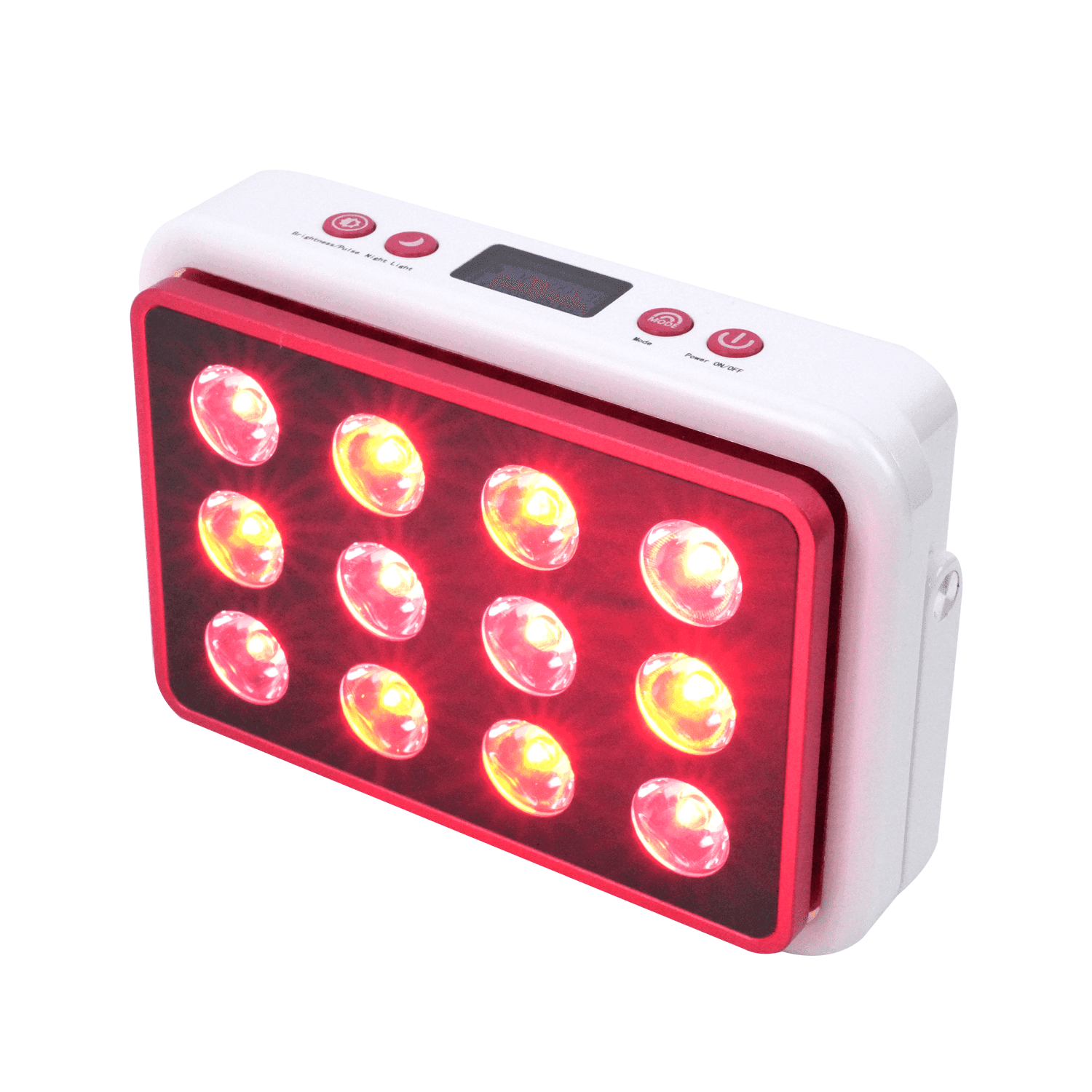
| Face and neck (tabletop) | Mini / tabletop | 60–150 | MitoMIN 2.0 |
| Upper or lower body (half-body) | Mid / 750 series | 100–300 | MitoMID 2.0, MitoPRO 750X |
| Full body (single panel) | Max / 1500 series | 200–500 | MitoMAX 2.0, MitoPRO 1500X |
| Full body (two-panel array) | Mega / stacked array | 500–1000+ | MitoMEGA 2.0, stacked MitoPRO X |
For face-focused applications, the MitoGLOW LED mask provides more targeted and consistent facial coverage than a panel at the same price point. Panels are better suited for body, recovery, and joint applications where larger treatment areas are needed.
Wavelength Combinations by Goal
| Goal | Primary wavelengths | Minimum panel requirement |
|---|---|---|
| Skin anti-aging and collagen | 660 nm + 830 nm | Any panel with verified red + NIR |
| Muscle recovery and DOMS | 850 nm primary + 660 nm | Mid or full-body panel |
| Joint and deep tissue | 850 nm + 810 nm | Panel with verified 850 nm NIR |
| Brain health / cognitive | 810 nm (transcranial) | Targeted device (e.g. MitoMIND helmet) |
| Comprehensive multi-goal | 630 + 660 + 810 + 850 nm | 4-wavelength flagship panel |
Red Flags to Avoid
- No published irradiance data — if the brand won't state mW/cm² at a specific treatment distance, the number is probably unflattering
- LED count used as primary spec — more LEDs is not always better; irradiance and wavelength accuracy matter more than raw count
- No third-party test results — manufacturer self-reporting is not verification
- "Full spectrum" or "broad spectrum" claims without specific nm values — photobiomodulation is wavelength-specific, not broad-spectrum
- Extremely low price for a "full-body" panel — quality LEDs, chips, and third-party testing cost money; sub-$100 full-body panels almost universally fail irradiance and wavelength accuracy requirements
- Warranty under 1 year — quality panels should last 3+ years; short warranties signal low confidence in durability
Mito Red Light panels
Third-party tested. Published irradiance data. 2–3 year warranty.
Every Mito Red Light panel has independently verified wavelength and irradiance data published at the device level.
Frequently Asked Questions
What wavelengths should a red light therapy panel have?
At minimum, a quality panel should include 660 nm red and 850 nm near-infrared — the two most studied wavelengths for skin and recovery applications respectively. Better panels add 630 nm (surface skin) and 810 nm (deep muscle and neural tissue) for broader coverage. The wavelengths must be independently verified — not just listed on a spec sheet.
How much irradiance does a red light therapy panel need?
At least 20–50 mW/cm² at your actual treatment distance for reliable therapeutic dosing. 50–100 mW/cm² is a strong consumer range that allows 10–15 minute sessions. Confirm the irradiance figure is measured at the distance you plan to use the panel — not at 6 inches if you'll stand 12 inches away.
What is the difference between red light therapy panels and masks?
Panels cover larger body areas and are suited for full-body or targeted body applications — muscle recovery, joint support, back pain. Masks provide more consistent, contoured facial coverage and are better for skin-focused goals. For face and neck applications, a quality LED mask typically outperforms a panel at the same price point because it maintains consistent LED-to-skin geometry.
How far should I stand from a red light therapy panel?
Follow the manufacturer's specified treatment distance — typically 6–18 inches depending on the panel's irradiance. Closer distance increases irradiance but reduces coverage area. Most users stand 6–12 inches for targeted sessions and 12–18 inches for full-body coverage. Do not exceed the maximum recommended distance or your session will underdose.
What is third-party testing for red light therapy panels?
Third-party testing means an independent accredited laboratory (not the manufacturer) uses a spectrometer to measure the actual wavelengths and irradiance the device emits. This is different from safety certifications like ETL or CE, which confirm electrical safety — not photobiomodulation output accuracy. Look for brands that publish the actual spectrometer test reports, not just a certification badge.
How long should a red light therapy panel session be?
Typically 10–20 minutes per targeted area at the recommended treatment distance. Higher-irradiance panels can deliver the therapeutic dose in less time. Follow your device's guidance — there is a biphasic dose-response, meaning too much exposure can blunt results. More is not always better.
This article discusses published scientific research and general educational information about photobiomodulation and red light therapy. It does not constitute medical advice and does not make specific claims about Mito Red Light devices. The research cited reflects independent peer-reviewed studies and does not imply that any Mito Red Light product has been evaluated, approved, or cleared by the FDA or any other regulatory body for the diagnosis, treatment, cure, or prevention of any disease or medical condition. Individual results vary. Consult a qualified healthcare professional before beginning any light therapy protocol, particularly if you have a pre-existing medical condition, are pregnant, or are taking photosensitising medications.
Mito Red Light products are general wellness devices. They are not medical devices and have not been evaluated, cleared, or approved by the FDA or any regulatory body for the diagnosis, treatment, cure, or prevention of any disease or medical condition. Any references to peer-reviewed research or clinical studies on this page describe findings from independent scientific literature and do not imply that Mito Red Light devices have been studied, tested, or proven effective for any specific condition. Always consult a qualified healthcare provider before beginning any new wellness routine, particularly if you have a medical condition or are taking medication.
Related articles
More from the buying guides & comparisons knowledge cluster