




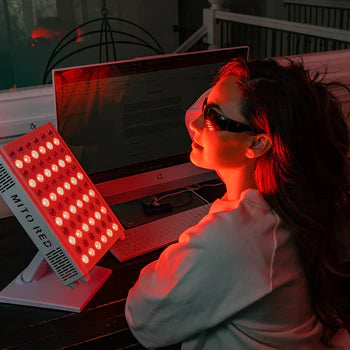



Panel Series
Infrared saunas and red light therapy both use light-related technologies, but they are not the same. Infrared saunas primarily use longer infrared wavelengths to generate heat and raise body temperature, while red light therapy uses red and near-infrared wavelengths in the photobiomodulation window to support cellular signaling without relying on heat. If your goal is sweating, relaxation, and heat exposure, an infrared sauna may make sense. If your goal is targeted cellular support, skin health, muscle recovery, joint comfort, or a research-aligned photobiomodulation routine, a dedicated red light therapy device is usually the better fit.
Last updated: April 2026
Infrared Sauna vs Red Light Therapy: The Direct Answer
Infrared saunas and red light therapy work through different mechanisms. An infrared sauna heats the body, mainly through mid- and far-infrared wavelengths that are absorbed by water and converted into heat. Red light therapy, also called photobiomodulation, uses red and near-infrared wavelengths to interact with light-sensitive molecules in cells, especially mitochondrial pathways involved in cellular energy and signaling.
The simplest distinction is this:
- Infrared sauna = heat therapy. The main effect is raising body temperature, increasing sweating, and creating a controlled heat-stress response.
- Red light therapy = photobiomodulation. The main effect is delivering specific non-UV wavelengths to tissue to support cellular function, recovery, and skin health.
Both can be useful, and some people use both. But they should not be marketed as interchangeable. A sauna that says “infrared” is not automatically delivering therapeutic red light therapy, and a red light therapy panel is not trying to make you sweat like a sauna.
Quick Comparison Table
| Category | Infrared Sauna | Red Light Therapy |
|---|---|---|
| Primary mechanism | Heat stress, sweating, cardiovascular-like thermal response | Photobiomodulation and cellular light signaling |
| Typical wavelengths | Primarily mid- and far-infrared, often above 1,000 nm | Red and near-infrared, commonly around 630, 660, 810, 830, and 850 nm |
| Heat level | High heat; sweating is expected | Non-thermal or mildly warm at normal use distances |
| Best suited for | Relaxation, sweating, heat tolerance, sauna-style recovery routines | Skin, recovery, joint comfort, performance routines, cellular energy support |
| Session feel | Hot, sweaty, full-body heat exposure | Comfortable light exposure, usually 10–20 minutes |
| Home footprint | Large; often requires a dedicated space | Flexible; panels, masks, portable devices, belts, and targeted systems |
| Key limitation | Not a substitute for concentrated red/NIR photobiomodulation | Not designed to produce sauna-level sweating or heat stress |
What Is an Infrared Sauna?
An infrared sauna is a heat-based wellness device that uses infrared emitters to warm the body more directly than a traditional hot-air sauna. Instead of only heating the room air, infrared saunas use infrared radiation that is absorbed by the body and converted into heat.
According to the Mayo Clinic, infrared sauna research has examined areas such as blood pressure, heart failure, dementia, headache, type 2 diabetes, and arthritis, but larger and more exact studies are still needed. The Cleveland Clinic describes infrared saunas as using lamps to create heat at lower air temperatures than traditional saunas, with potential benefits related to relaxation, pain relief, muscle recovery, and cardiovascular-like effects.
The key point: an infrared sauna is primarily a heat therapy tool. Its effects come largely from raising tissue temperature, increasing sweating, and creating a physiological heat-stress response.
What Is Red Light Therapy?
Red light therapy is a non-UV light therapy that uses specific wavelengths of red and near-infrared light to support photobiomodulation. The most common red light therapy wavelengths are in the visible red range around 630–660 nm and the near-infrared range around 810–850 nm.
These wavelengths are studied because they can interact with light-sensitive molecules in cells. A major proposed mechanism involves cytochrome c oxidase, a mitochondrial enzyme involved in cellular energy production. Research in Scientific Reports describes photobiomodulation as using red-to-near-infrared light and discusses cytochrome c oxidase as one proposed photoacceptor. Additional research on photobiomodulation mechanisms has also examined nitric oxide signaling, mitochondrial function, and downstream cellular responses.
Red light therapy is not intended to heat the body like a sauna. A good device should deliver targeted wavelengths at appropriate irradiance so the user receives a consistent light dose at the intended treatment distance.
For a deeper explanation of the wavelength ranges used in red light therapy, see the Mito Red Light wavelength hub.
The Main Difference: Heat vs Photobiomodulation
The most important difference between infrared sauna and red light therapy is the biological pathway each one emphasizes.
Infrared saunas work through heat
Infrared saunas use infrared energy that is absorbed as heat. This heat raises body temperature, increases sweating, and creates a sauna-like cardiovascular and thermal response. That is why sauna sessions feel hot, require hydration, and typically include a cool-down period.
Red light therapy works through targeted light exposure
Red light therapy uses concentrated red and near-infrared wavelengths below the range where water absorption becomes the dominant effect. Instead of trying to produce a sweat response, red light therapy aims to deliver light to skin, muscle, joints, or other target areas at wavelengths studied for photobiomodulation.
This is why high-quality red light therapy devices are evaluated by wavelength accuracy, irradiance at treatment distance, coverage area, and independent spectral testing. Mito Red Light publishes device-level output data on the Independent Test Data page so customers can verify wavelength and irradiance claims before choosing a device.
Why “Infrared” Can Be Confusing
The word “infrared” covers a wide range of wavelengths. This is where much of the confusion comes from.
- Near-infrared used in red light therapy: Often around 810–850 nm in consumer photobiomodulation devices.
- Infrared used in saunas: Often longer infrared wavelengths, especially mid- and far-infrared, that are absorbed more strongly by water and create heat.
Both are technically part of the infrared spectrum, but they behave very differently in the body. Red light therapy devices concentrate energy in the optical window used for photobiomodulation. Infrared saunas concentrate energy in heat-producing infrared ranges.

As water absorption increases at longer infrared wavelengths, more energy is converted into heat. That is useful for saunas, but it is not the same mechanism as targeted red and near-infrared photobiomodulation.
Benefits of Infrared Saunas
Infrared sauna use may be helpful for people who enjoy heat exposure and want a relaxation-focused routine. The most common reasons people use infrared saunas include:
- Relaxation and stress relief: Heat exposure can feel calming and may help some users unwind.
- Sweating: Saunas increase sweating, which many users associate with a restorative wellness routine.
- Muscle relaxation: Heat may help temporarily loosen tight muscles and support comfort after training.
- Cardiovascular-style heat response: Sauna sessions can increase heart rate in a way that resembles mild cardiovascular stress.
- Sleep wind-down: Some users find evening sauna sessions help them relax before bed.
Sauna benefits are still an active research area. The strongest practical takeaway is that infrared saunas are best understood as heat therapy, not as a replacement for red light therapy.
Benefits of Red Light Therapy
Red light therapy is typically used when the goal is targeted light exposure rather than heat. Common application areas include:
Skin and anti-aging
Red and near-infrared light have been studied for skin texture, collagen-related processes, and overall skin appearance. For face-specific routines, the MitoGLOW LED mask hub explains how a multi-wavelength mask can target facial skin concerns with red, near-infrared, blue, and amber light.
Muscle recovery and performance
Red and near-infrared light are often used before or after exercise to support recovery routines. Larger panels are usually better suited for these goals than masks because they cover more tissue area per session.
Joint comfort and targeted support
Near-infrared wavelengths are commonly used in protocols aimed at deeper tissues. For users focused on knees, shoulders, hips, back, or larger treatment areas, a panel or targeted device is typically more practical than a sauna if the goal is photobiomodulation.
Cellular energy and mitochondrial support
Photobiomodulation research has examined how red and near-infrared light may influence mitochondrial pathways, cellular energy production, nitric oxide signaling, and oxidative stress responses. For a deeper evidence map, visit the Mitochondrial Function & Cellular Energy clinical evidence page.
Which Is Better for Your Goal?
| Goal | Better fit | Why |
|---|---|---|
| Sweating and heat exposure | Infrared sauna | Saunas are designed to raise body temperature and produce sweating. |
| Skin anti-aging | Red light therapy | Red and NIR wavelengths are used in skin-focused photobiomodulation protocols. |
| Face-focused treatment | LED mask or targeted red light device | Masks provide consistent facial coverage without sauna-level heat. |
| Muscle recovery | Red light therapy panel, or both | Panels deliver red/NIR light directly to muscle areas; sauna heat may complement recovery routines. |
| Relaxation and wind-down | Either | Saunas offer heat relaxation; red light can fit into a lower-heat evening routine. |
| Small home footprint | Red light therapy | Panels, masks, and portable devices require far less space than most saunas. |
| Evidence-based wavelength precision | Red light therapy | A quality panel can publish specific wavelength and irradiance data. |
Can You Combine Red Light Therapy and Infrared Sauna?
Yes. Red light therapy and infrared sauna can be complementary because they work through different pathways. The key is to use them intentionally rather than assuming one replaces the other.
If you combine them, a practical approach is:
- Red light therapy before sauna: Useful if you want clean, dry skin for light exposure before sweating.
- Sauna first, then shower, then red light therapy: Useful if you prefer heat first but still want a clean-skin red light session afterward.
- Separate sessions: Often easiest for consistency. For example, red light in the morning and sauna in the evening.
There is no universal “best” order for everyone. The best order depends on your goals, heat tolerance, schedule, and whether you can keep your red light session consistent.
Safety Considerations
Infrared sauna safety
Infrared saunas involve heat stress. People who are pregnant, prone to dizziness, dehydrated, sensitive to heat, managing cardiovascular conditions, or taking medications that affect blood pressure or sweating should consult a healthcare professional before using a sauna. Hydration and gradual session progression matter.
Red light therapy safety
Red light therapy is generally well tolerated when devices are used as directed, but people with photosensitive conditions, people taking photosensitizing medications, and people with active medical conditions should consult a qualified healthcare professional before beginning. Eye protection should be used when recommended by the device manufacturer, especially with high-output panels.
For a full safety overview, read our guide to red light therapy contraindications.
Why Mito Red Light Focuses on Verified Output
For red light therapy, results depend on the device actually delivering the wavelengths and irradiance claimed. That is why Mito Red Light emphasizes independent output transparency rather than vague “infrared” or “full spectrum” language.
Mito Red Light offers multiple form factors depending on your goal:
- Panels: Best for full-body, recovery, joint, and multi-area routines. Explore the Mito Red Light panel series.
- Face masks: Best for face-focused skin and acne routines. Explore the MitoGLOW LED mask hub.
- Targeted devices: Best for smaller areas, portability, or specific use cases.
If you are comparing red light devices, start with the Definitive Red Light Therapy Buyer’s Guide and review Mito Red Light’s Independent Test Data before choosing a product.
Build a non-heat light therapy routine
Use red and near-infrared light when you want targeted photobiomodulation, not sauna heat.
Mito Red Light panels are designed around specific red and NIR wavelengths, published output data, and practical at-home protocols.
The Bottom Line
Infrared saunas and red light therapy can both belong in a wellness routine, but they solve different problems. Choose an infrared sauna if you primarily want heat, sweating, and sauna-style relaxation. Choose red light therapy if you want targeted red and near-infrared wavelengths for photobiomodulation, skin, recovery, joint comfort, or a more flexible at-home routine.
If you already enjoy sauna sessions, red light therapy can complement them. But if your goal is evidence-aligned light therapy, make sure the device you choose publishes specific wavelength and irradiance data rather than relying on the broad word “infrared.”
Frequently Asked Questions
Is red light therapy the same as an infrared sauna?
No. Infrared saunas primarily use longer infrared wavelengths to create heat and sweating. Red light therapy uses red and near-infrared wavelengths to support photobiomodulation without relying on sauna-level heat. They are different technologies with different mechanisms.
Which is better, red light therapy or infrared sauna?
It depends on your goal. Infrared saunas are better for heat exposure, sweating, and sauna-style relaxation. Red light therapy is better for targeted photobiomodulation goals such as skin routines, muscle recovery, joint comfort, and cellular energy support.
Does an infrared sauna provide red light therapy?
Usually no. Many infrared saunas use mid- or far-infrared wavelengths that create heat, not concentrated red and near-infrared wavelengths used in photobiomodulation devices. A sauna may include red-colored lights, but that does not necessarily mean it delivers therapeutic red light therapy output.
Can you use red light therapy and an infrared sauna together?
Yes. They can complement each other because they work through different pathways. Many people use red light therapy before sauna on clean, dry skin, or sauna first followed by a shower and a separate red light session. The best order depends on your goals and heat tolerance.
Should you do red light therapy before or after sauna?
Red light therapy before sauna is often the simplest option because clean, dry skin allows unobstructed light exposure before sweating. If you prefer sauna first, shower and cool down before using red light therapy so sweat and heat do not interfere with comfort or consistency.
Is near-infrared in red light therapy the same as infrared in a sauna?
Not exactly. Near-infrared wavelengths used in red light therapy are commonly around 810–850 nm. Infrared saunas often rely more on longer infrared wavelengths that are absorbed as heat. Both are part of the infrared spectrum, but they behave differently in the body.
Which is better for muscle recovery?
For targeted muscle recovery, a red and near-infrared panel is usually the better fit because it can deliver specific wavelengths directly to the treatment area. Infrared sauna heat may also support relaxation and general recovery, so some users combine both.
Which is better for skin?
For skin-focused photobiomodulation, red light therapy is typically the better choice because it uses specific red and near-infrared wavelengths studied for skin appearance, collagen-related processes, and recovery. Infrared saunas may support skin indirectly through sweating and circulation, but they are not a substitute for a targeted red light device.
Sources
- Mayo Clinic: Do infrared saunas have any health benefits?
- Cleveland Clinic: Infrared Saunas: 6 Health Benefits
- Cleveland Clinic: Red Light Therapy: Benefits, Side Effects & Uses
- Scientific Reports: Increase in cytochrome c oxidase and oxygenated hemoglobin after transcranial laser stimulation
- Photobiomodulation, cytochrome c oxidase, and nitric oxide mechanisms
Mito Red Light products are general wellness devices. They are not medical devices and have not been evaluated, cleared, or approved by the FDA or any regulatory body for the diagnosis, treatment, cure, or prevention of any disease or medical condition. Any references to peer-reviewed research or clinical studies on this page describe findings from independent scientific literature and do not imply that Mito Red Light devices have been studied, tested, or proven effective for any specific condition. Always consult a qualified healthcare provider before beginning any new wellness routine, particularly if you have a medical condition or are taking medication.
Related articles
More from the biohacking & wellness knowledge cluster