














Panel Series
LED face masks deliver targeted red and near-infrared wavelengths directly to facial tissue, with peer-reviewed evidence for collagen production, acne reduction, and photorejuvenation. The MitoGLOW LED mask combines red, near-infrared, blue, and yellow wavelengths for full-spectrum facial photobiomodulation.
Summary: Choosing the best red light therapy device for skin depends on your goals and routine. LED face masks are convenient and specialized for facial skincare, while red light panels offer larger coverage and greater versatility over time. This article compares masks and panels and helps you decide which option makes the most sense for your skin.
How Masks and Panels Differ for Skin-Focused Use
When choosing the best red light therapy device for skin, the biggest differences between a mask and a panel come down to design, treatment area, and overall flexibility. Both formats can support skin-focused routines, but they deliver light in different ways and are built around different use cases.
Curved Design and Controlled Distance in Masks
Red light therapy masks are contoured to fit the face, which helps maintain a relatively consistent distance between the LEDs and the skin during treatment. Because the device is worn directly on the face, exposure remains stable throughout the session without requiring repositioning.
This curved, fixed design makes masks highly specialized for facial use. The controlled placement can simplify treatment by reducing variability, which is one reason masks appeal to users focused primarily on skincare rather than broader applications.
Treatment Area and Light Intensity Differences
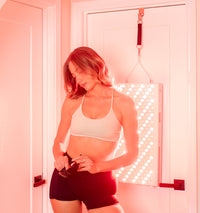
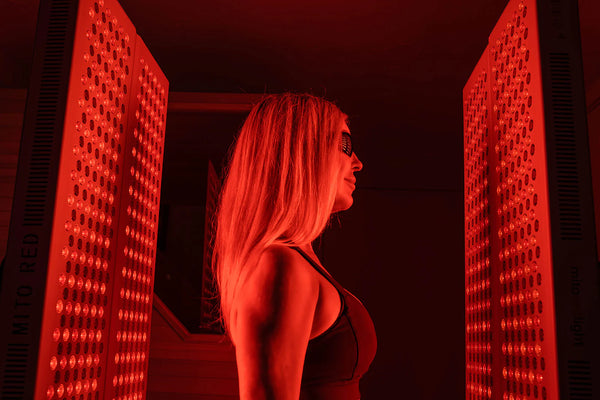
Panels are positioned in front of the body and can treat a much larger area in a single session, including the face, neck, upper chest, hands, and shoulders without switching devices.
Because they expose more total skin during treatment and often deliver higher overall output, panels provide greater cumulative light exposure per session. For anti-aging routines, this expanded reach can be advantageous. Visible signs of aging are not limited to the face, and addressing areas like the neck, chest, and hands alongside the face can create a more cohesive aesthetic approach.
Masks, by comparison, are designed specifically for facial skin and are best viewed as a targeted tool rather than a multi-area device.
Mobility Versus Versatility
One of the clearest tradeoffs between masks and panels is mobility versus versatility. Masks are wearable and hands-free, allowing users to move around, relax, or multitask during treatment. This flexibility often makes them easier to integrate into busy schedules.
Panels, on the other hand, usually require a more stationary setup. That tradeoff comes with greater versatility. Instead of wearing the device, the body can be repositioned relative to the panel to treat different areas, support broader skincare goals, and adapt as a user’s needs evolve over time.
In simple terms, masks are specialized and routine-friendly, while panels are larger, more adaptable tools that extend beyond face-focused use.
Key Takeaways
-
Masks use a contoured design to maintain consistent distance and facial-focused exposure
- Panels treat a larger surface area, including the face, neck, chest, and hands
-
Broader coverage can be advantageous for anti-aging routines that extend beyond the face
- Masks prioritize mobility and convenience, while panels offer greater versatility over time

When a Red Light Therapy Mask Is the Better Choice for Skin
For users focused primarily on facial skincare, masks offer a specialized format built around controlled, repeatable exposure. Their design prioritizes consistency, proximity, and simplicity, which can align well with how light therapy is commonly studied for superficial skin applications.
Best for Targeted Facial Skin Goals
Many photobiomodulation studies examining skin appearance and collagen support emphasize the importance of controlled energy delivery, consistent with the broader literature on biphasic dose response. Rather than a single universal number, effective skin protocols are typically built around delivering an appropriate fluence to superficial tissue based on wavelength, distance, and session duration.
A mask’s contoured design helps maintain a stable distance between the LEDs and the skin throughout treatment. Because the device remains fixed in place, exposure tends to be more uniform across the face, reducing variability that can occur when distance changes during a session.
Ideal for Convenience, Travel, and Consistency
Masks are wearable and hands-free, allowing users to move around, relax, or multitask during treatment. Their lightweight design makes them easier to travel with compared to larger panels and they require minimal setup.
That convenience often translates into better consistency over time. When a device is simple to use and fits naturally into a routine, users are more likely to maintain regular sessions, which is critical for skin focused results.
When Specialization Is an Advantage
The curved design of most masks allows light to follow facial contours more closely, which can reduce geometric shadowing around areas like the sides of the nose or jawline. This may support more even exposure across the face compared to a flat light source positioned farther away.
Built in eye protection or enclosed eye cups can improve comfort during sessions and reduce the need for additional eyewear. Curated wavelength modes tailored to common skin goals can further simplify treatment by offering specialized preset options for facial use.
Key Takeaways
-
Masks are configured around commonly studied dose ranges for superficial skin applications
- A contoured design supports consistent distance and more predictable facial exposure
-
Wearable construction makes masks convenient for travel and daily use
- Integrated eye protection and curated wavelength modes simplify facial treatment

When a Red Light Therapy Panel Is the Better Choice for Skin
While masks are optimized for facial routines, panels are designed for users who want broader treatment in a single setup. The difference is not just size, but how the device integrates into a larger skin or wellness routine.
Larger Coverage for Face, Neck, and Body
A panel allows you to address multiple visible areas in the same session rather than isolating treatment to the face. For individuals focused on anti-aging, this can be significant, since areas such as the neck, chest, and hands often influence how age is perceived.
By incorporating these regions into one session, panels support a more comprehensive aesthetic strategy instead of treating facial skin in isolation.
Broader Wavelength Range and Output Options
Panels often include multiple red and near infrared wavelengths, with some models offering eight or more distinct options. This expanded spectral range provides flexibility across different tissue depths and treatment goals.
Higher total output and adjustable positioning also allow panels to be used across varied distances and body regions, offering more control over session structure compared to a fixed facial device.
Greater Versatility for Wellness and Long-Term Use
Because panels can expose a larger portion of the body at once, they are often incorporated into routines that extend beyond skincare. Larger treatment areas have been explored in research examining broader physiological responses, including sleep support, exercise recovery, and reductions in perceived pain and stiffness.
For users who anticipate expanding their goals over time, a panel offers adaptability that a face-specific device cannot match.
Key Takeaways
-
Panels treat larger areas in a single session, supporting a more unified skin routine
- Expanded coverage can be advantageous for anti-aging goals beyond the face
-
Some panels offer eight or more wavelengths, providing broader flexibility across use cases
- Larger treatment areas are being studied for wellness applications including sleep support, recovery, and perceived muscle comfort
 MitoPRO 750X & 1500X | Red Light Therapy Panel Series - Mito Red Light">
How to Choose the Best Red Light Therapy Device for Your Skin
Choosing between a mask and a panel comes down to your primary goals, your routine, and how you expect your needs to evolve. Both formats can support skin-focused use, but they differ in convenience, flexibility, and long-term expandability.
Matching Device Type to Your Primary Skin Goals
If your focus is limited to facial skincare, a mask offers a specialized and streamlined approach. Devices like the MitoGLOW mask are designed specifically for the contours of the face and help simplify routine-based treatments.
If you want to address multiple visible areas or take a broader approach to skin and wellness, a panel may be the better fit. The MitoADAPT 4.0 panel series provides wider coverage and flexibility, allowing users to treat the face, neck, chest, and other regions as part of a more comprehensive aesthetic routine.
Some users ultimately incorporate both formats, using a panel for larger coverage and a mask for dedicated facial sessions.
Considering Routine, Space, and Lifestyle
Masks are lightweight, require minimal setup, and travel easily. They are well suited for frequent travelers or users who prefer flexibility in where and how they treat.
Panels typically require a more permanent setup and adequate space, making them better suited for home-based routines. Your environment and consistency habits often determine which format is more practical long term.
Long-Term Value and Upgrade Potential
Panel systems offer scalability. Users can begin with a single unit and add additional panels over time to expand coverage toward more complete body exposure.
For those seeking maximum flexibility, combining an expandable panel setup with a specialized mask provides the greatest versatility, allowing both broader coverage and convenient facial treatment within the same overall routine.
Key Takeaways
-
Masks are best suited for focused facial skincare and portable, travel-friendly use
- Panels are better for home setups and broader skin coverage
-
Panel systems can be expanded over time by adding additional units
- Using both a mask and a panel offers the greatest overall versatility
Frequently Asked Questions
What is the main difference between a red light therapy mask and a panel?
Masks use a curved, contoured design to sit close to the face and maintain consistent distance during treatment. Panels are positioned externally and can treat larger areas like the face, neck, and body.
Are red light therapy masks effective for skin?
Yes, masks are specialized for facial skincare and provide controlled, repeatable exposure. Their contoured shape helps deliver more uniform light across the face.
Do panels work better than masks for anti-aging?
Not necessarily better, but broader. Panels allow you to treat areas beyond the face, like the neck and chest, which can be important for a more complete anti-aging approach.
Can a red light panel be used on the face?
Yes, panels can be used on the face along with other areas. They offer flexibility in positioning but do not maintain a fixed distance like a mask.
Why do masks feel easier to use consistently?
Masks are wearable and require minimal setup. This convenience makes it easier to maintain a regular routine, which is key for skin-focused results.
Do panels deliver more light than masks?
Panels often expose a larger total surface area and may have higher overall output. This can increase total light exposure during a session.
Are masks only useful for the face?
Yes, masks are designed specifically for facial treatment. Their curved structure is optimized for facial contours rather than broader body use.
Is a panel a better long-term investment?
For users who want flexibility or plan to expand beyond facial use, panels offer more versatility. They can adapt to different goals over time.
Can you use both a mask and a panel together?
Yes, some users combine both. A panel can cover larger areas while a mask can be used for more focused facial sessions.
How do you choose between a mask and a panel?
It comes down to your goals and routine. Choose a mask for simple, face-focused use, or a panel for broader coverage and long-term flexibility.
This article discusses published scientific research and general educational information about photobiomodulation and red light therapy. It does not constitute medical advice and does not make specific claims about Mito Red Light devices. The research cited reflects independent peer-reviewed studies and does not imply that any Mito Red Light product has been evaluated, approved, or cleared by the FDA or any other regulatory body for the diagnosis, treatment, cure, or prevention of any disease or medical condition. Individual results vary. Consult a qualified healthcare professional before beginning any light therapy protocol, particularly if you have a pre-existing medical condition, are pregnant, or are taking photosensitising medications.
If you've decided a face mask is right for you, the MitoGLOW™ at-home LED face mask is the only consumer device we know of delivering four therapeutic wavelengths — red, NIR, blue, and yellow — with third-party verified irradiance output. Read the full MitoGLOW brand hub and clinical comparison →
Mito Red Light products are general wellness devices. They are not medical devices and have not been evaluated, cleared, or approved by the FDA or any regulatory body for the diagnosis, treatment, cure, or prevention of any disease or medical condition. Any references to peer-reviewed research or clinical studies on this page describe findings from independent scientific literature and do not imply that Mito Red Light devices have been studied, tested, or proven effective for any specific condition. Always consult a qualified healthcare provider before beginning any new wellness routine, particularly if you have a medical condition or are taking medication.
Related articles
More from the skin health & anti-aging knowledge cluster