








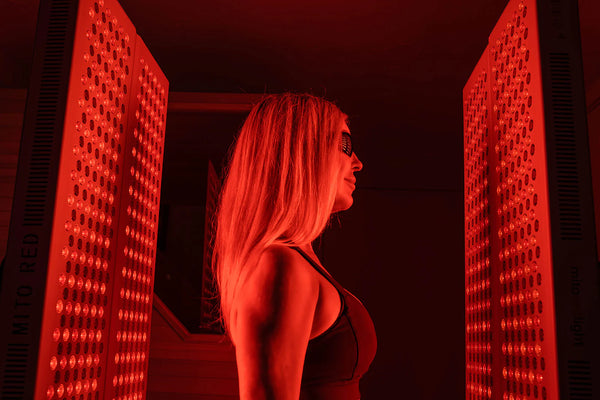
Panel Series
Yes — red light therapy masks work for specific, well-defined skin applications when used correctly and consistently. Published randomized controlled trials show statistically significant improvements in skin texture, wrinkle depth, collagen density, and elasticity after structured red and near-infrared light protocols. Blue light at 465 nm has a separate, well-established antimicrobial mechanism for mild to moderate acne. Results are not immediate — meaningful changes typically require 8–12 weeks of consistent use — and the quality of the device, particularly wavelength accuracy and irradiance output, significantly affects outcomes. LED face masks are not a gimmick, but they are also not magic: they are a delivery format for a photochemical process with real biological mechanisms and a real evidence base.
The Short Answer
Red light therapy masks work by delivering specific wavelengths of light to facial skin, triggering a photochemical process in the mitochondria of skin cells that supports energy production, collagen synthesis, and cellular repair. The mechanism is well-understood. The evidence from clinical trials is real, if modest. The key variables are wavelength accuracy, adequate irradiance, and consistent use over weeks rather than days.
What they cannot do: produce overnight results, replace sunscreen, reverse severe photoaging in a single course, or substitute for medical treatment of serious skin conditions. What they can do — reliably, with the right device and protocol — is support gradual, cumulative improvement in skin texture, firmness, fine lines, and for acne-prone users, bacterial load and post-inflammatory redness.
How Red Light Therapy Masks Work
LED face masks contain arrays of light-emitting diodes calibrated to emit specific wavelengths. When worn against or close to the face, these wavelengths penetrate the skin to different depths depending on their nanometer value, and interact with chromophores — light-absorbing molecules — in the cells they reach.
The primary chromophore for red and near-infrared light is cytochrome c oxidase (CCO), an enzyme in the mitochondrial respiratory chain. When CCO absorbs light at 630–850 nm, electron transfer is enhanced, ATP production increases, and the cell's capacity for repair and synthesis improves. In the dermis, this translates to greater fibroblast activity — and fibroblasts are the cells that make collagen and elastin.
Blue light at 465 nm works through a different pathway entirely. It activates endogenous porphyrins inside Cutibacterium acnes bacteria, generating reactive oxygen species that damage bacterial cell membranes. This is an antimicrobial effect, not a mitochondrial one — which is why blue light treats acne while red light addresses aging.
What the Clinical Research Shows
The evidence base for red and near-infrared light on skin is genuinely strong by the standards of non-invasive skincare. Here is what the most relevant studies show.
Skin rejuvenation and photoaging
A prospective randomized placebo-controlled split-face RCT by Lee et al. (2007) — one of the most rigorous studies in this field — evaluated LED-based red and near-infrared light on facial skin. After the treatment period, participants showed statistically significant improvements in wrinkle depth, smoothness, and elasticity in treated versus untreated areas. Histological analysis confirmed increases in collagen and elastic fibers in the dermis, demonstrating that the observed visual changes corresponded to underlying structural changes, not just surface effects.
Collagen and dermal structure
Red light (630–660 nm) stimulates fibroblasts in the upper dermis; near-infrared (830 nm) reaches deeper fibroblast populations. A study examining combined 633 nm and 830 nm treatment found significant improvements in skin roughness, tone, and elasticity, with the authors attributing the results to collagen remodeling across both dermal depths. This dual-depth coverage is why combining red and NIR wavelengths in a single mask session is more effective than either alone.
Acne
Blue light therapy for acne has been studied extensively. A 2025 systematic review of blue light therapy in dermatology confirmed efficacy for mild to moderate acne vulgaris, with a favorable side effect profile compared to topical antibiotics. Combined blue (465 nm) and red (630 nm) protocols outperform blue light alone because the red component reduces post-inflammatory redness and supports skin barrier repair after bacterial clearance.
Systematic review-level evidence
A 2024 comprehensive review published in the International Journal of Molecular Sciences summarized the photobiomodulation literature for skin and concluded that red and near-infrared wavelengths have well-supported mechanisms for dermal remodeling, with consistent findings for texture, fine lines, and elasticity across studies when light is applied at appropriate doses over a defined treatment period.
What Each Wavelength Does
| Wavelength | Type | Penetration | What it does | Best for |
|---|---|---|---|---|
| 465 nm | Blue | <1 mm | Activates bacterial porphyrins → antimicrobial | Acne, bacterial reduction |
| 590 nm | Amber | ~1 mm | Vascular tone, surface anti-inflammatory | Redness, uneven tone |
| 630 nm | Red | ~1–2 mm | Mitochondrial activation, upper-dermis fibroblasts | Anti-aging, fine lines, surface collagen |
| 830 nm | Near-infrared | ~3–5 mm | Deep-dermis fibroblasts, anti-inflammatory | Deep collagen, structural firming, recovery |
Benefits by Goal
Anti-aging and collagen support
The most evidence-supported use case. Red (630 nm) and near-infrared (830 nm) wavelengths stimulate fibroblasts at different depths across the dermis. With consistent use over 8–12 weeks, clinical studies show measurable improvements in skin firmness, fine lines, and elasticity. This is a cumulative biological process — it cannot be rushed, but it also does not stop working as long as treatment continues.
Acne treatment
Blue light (465 nm) kills acne-causing bacteria at the skin surface. Red light (630 nm) reduces post-inflammatory redness and supports barrier repair. Combined blue + red protocols are the most studied approach for mild to moderate acne. Results typically begin within 4–6 weeks of consistent use. For hormonal or cystic acne, LED therapy is a supportive tool rather than a primary treatment — consult a dermatologist.
Skin tone and redness
Amber light (590 nm) and red light (630 nm) support microvascular tone and surface-level anti-inflammatory signaling, which contributes to more even-looking skin, reduced flushing, and a generally calmer complexion over time. Most users notice these changes before the more structural collagen benefits become apparent.
Skin recovery and barrier support
Red and near-infrared light support cellular repair mechanisms that are relevant after cosmetic procedures, minor skin stress, or prolonged environmental exposure. Some dermatologists use LED therapy as a post-procedure tool for this reason — though at-home masks are a maintenance-level intervention rather than a clinical one.
Realistic Expectations: What a Timeline Looks Like
| Timeframe | What to expect |
|---|---|
| Week 1–2 | Improved skin feel, slight reduction in redness; no major visible changes yet |
| Week 3–4 | Acne users: reduced active breakouts; anti-aging users: improved glow, early texture improvement |
| Week 6–8 | Visible improvements in skin tone, texture, pore appearance; fine lines beginning to soften |
| Week 10–12 | Clearest anti-aging results: improved firmness, reduced line depth, measurable elasticity improvement |
| Ongoing | Continued improvement and maintenance; results decline gradually if treatment is stopped |
At-Home vs. In-Office: What Is the Difference?
Professional LED devices deliver higher irradiance than consumer masks and allow for more precisely controlled protocols. This means clinical sessions can produce faster initial results, particularly for more significant skin concerns. However, professional sessions cost $50–$250 each, require repeated appointments, and are not practical for daily or near-daily maintenance use.
At-home masks deliver lower peak irradiance but can be used 4–5 times per week indefinitely. The cumulative dose over a consistent 12-week at-home protocol is substantial — and consistency of use is ultimately the primary driver of outcomes in photobiomodulation. Many dermatologists use a hybrid approach: a short series of clinical sessions for initial stimulus, followed by regular at-home maintenance.
The critical variable for at-home devices is whether the device actually delivers what it claims. A cheap mask with inaccurate wavelengths and negligible irradiance will not produce the results seen in clinical studies. See our guide to choosing a red light therapy mask for what to evaluate.
Who Should Not Use a Red Light Therapy Mask
Red and near-infrared LED face masks have a strong safety record when used as directed. People who should consult a healthcare professional before starting include:
- Those who are pregnant or breastfeeding
- Those with photosensitive skin conditions (lupus, porphyria, solar urticaria)
- Those taking photosensitizing medications (certain antibiotics, retinoids, diuretics, or psychiatric medications)
- Those with active skin cancer or a history of skin cancer in the treatment area
- Those with melasma or a strong tendency toward hyperpigmentation — consult a dermatologist before starting any light protocol
- Those with epilepsy or seizure sensitivity to pulsed light
The MitoGLOW LED Mask
Four wavelengths. FDA 510(k) cleared. Third-party verified.
465 nm blue, 590 nm amber, 630 nm red, and 830 nm near-infrared — independently tested for wavelength accuracy and irradiance. FDA 510(k) cleared for acne and wrinkle indications. Fold-out wings for jaw and neck coverage.
Frequently Asked Questions
Do red light therapy masks actually work?
Yes, for specific applications with a real evidence base. Randomized controlled trials show measurable improvements in skin texture, wrinkle depth, collagen density, and elasticity after consistent red and near-infrared light therapy. Blue light at 465 nm has a well-established antimicrobial mechanism for acne. Results require 8–12 weeks of consistent use and depend heavily on device quality — wavelength accuracy and irradiance output matter significantly.
How quickly do red light therapy masks show results?
Acne users typically see reduced breakout frequency within 4–6 weeks. Skin tone and texture improvements begin around week 6–8. The most significant anti-aging results — improved firmness, reduced fine lines, measurable elasticity change — become clear at 10–12 weeks of consistent use. Results continue to build with ongoing use and diminish gradually if treatment is stopped.
How often should I use a red light therapy mask?
Four to five sessions per week is the standard protocol for anti-aging goals. Acne-focused sessions can be done daily. Session duration is typically 8–10 minutes. Consistency matters more than session length — five regular sessions per week outperforms one long session.
Are red light therapy masks worth the money?
For consistent users with realistic expectations, yes. A quality device used 4–5 times per week delivers a cumulative photon dose comparable to multiple professional LED sessions per month — at a fraction of the ongoing cost. The investment is not in the device itself but in the habit. A mask that sits unused in a drawer is not worth any amount of money. The question is whether you will use it consistently for 12+ weeks.
What is the difference between a cheap and expensive LED mask?
The primary differences are wavelength accuracy, irradiance output, LED density and coverage, and FDA clearance status. Cheap masks frequently emit incorrect wavelengths, deliver insufficient irradiance to produce photobiomodulation effects, and have sparse LED arrays with coverage gaps. Third-party spectrometer testing is the only way to verify that a mask actually emits what it claims. Look for published irradiance data, verified wavelengths, and 510(k) clearance for the specific indications you want to treat.
Can I use a red light therapy mask with retinol or acids?
Avoid applying strong exfoliating acids (AHAs, BHAs) or prescription retinoids immediately before a session, as these can increase photosensitivity. Use the mask on clean bare skin, then apply serums and moisturizer after. If you use retinoids nightly, consider alternating: retinoid one evening, LED mask the next. Mild over-the-counter retinol at lower concentrations is generally tolerated, but follow your specific device's guidance.
Do LED masks work for sensitive skin?
Generally yes. Red and NIR wavelengths are non-thermal and non-ablative, making them well-tolerated even on reactive skin. Start with shorter sessions (5 minutes) and build up. Avoid blue light if your skin is acutely sensitized or inflamed. If you have rosacea, eczema, or a diagnosed photosensitive condition, consult a dermatologist before starting.
What makes the MitoGLOW different from other LED masks?
Three things: FDA 510(k) clearance for both acne and wrinkle indications (not just "FDA registered"), independently verified wavelengths and irradiance via third-party spectrometer testing, and four wavelengths (465 nm, 590 nm, 630 nm, 830 nm) with programmable modes for different skin goals. Most generic masks do not publish third-party wavelength verification or irradiance data. See the testing results for the specific numbers.
References:
1. Lee SY, Park KH, Choi JW, et al. A prospective, randomized, placebo-controlled, double-blinded, and split-face clinical study on LED phototherapy for skin rejuvenation. Journal of Photochemistry and Photobiology B: Biology. 2007;88(1):51–67. https://pubmed.ncbi.nlm.nih.gov/17566756/
2. Lodi G, Cassalia F, Sannino M, et al. Blue Light Therapy in Dermatological Practice: A Review. Cosmetics. 2025;12(1):30. https://www.mdpi.com/2079-9284/12/1/30
3. Barolet D, Christiaens F, Hamblin MR. Infrared and skin: Friend or foe. Journal of Photochemistry and Photobiology B: Biology. 2016;155:78–85. https://pubmed.ncbi.nlm.nih.gov/26706184/
4. Hernández-Bule ML, Naharro-Rodríguez J, Bacci S, Fernández-Guarino M. Unlocking the Power of Light on the Skin: A Comprehensive Review on Photobiomodulation. International Journal of Molecular Sciences. 2024;25(8):4483. https://www.mdpi.com/1422-0067/25/8/4483
5. Yi S, Ding J, Li X, et al. Efficacy and safety of 570 nm and 590 nm yellow light combined with red light and infrared LED in treating facial skin photoaging. Lasers in Medical Science. 2025;40(1):435. https://pubmed.ncbi.nlm.nih.gov/41091280/
This article discusses published scientific research and general educational information about photobiomodulation and red light therapy. It does not constitute medical advice and does not make specific claims about Mito Red Light devices. The research cited reflects independent peer-reviewed studies and does not imply that any Mito Red Light product has been evaluated, approved, or cleared by the FDA or any other regulatory body for the diagnosis, treatment, cure, or prevention of any disease or medical condition. Individual results vary. Consult a qualified healthcare professional before beginning any light therapy protocol, particularly if you have a pre-existing medical condition, are pregnant, or are taking photosensitising medications.
Mito Red Light products are general wellness devices. They are not medical devices and have not been evaluated, cleared, or approved by the FDA or any regulatory body for the diagnosis, treatment, cure, or prevention of any disease or medical condition. Any references to peer-reviewed research or clinical studies on this page describe findings from independent scientific literature and do not imply that Mito Red Light devices have been studied, tested, or proven effective for any specific condition. Always consult a qualified healthcare provider before beginning any new wellness routine, particularly if you have a medical condition or are taking medication.
Related articles
More from the red light therapy masks knowledge cluster