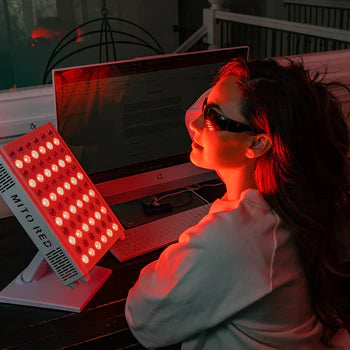
Controlled trials show that red and near-infrared light can improve signs of skin aging. In a trial of 113 people, red and near-infrared light improved skin complexion, roughness and ultrasound-measured collagen density compared with untreated controls (Wunsch 2014). A 2023 randomized trial of 137 people found about a 30% reduction in wrinkle volume around the eyes after 4 weeks of red (660 nm) or amber (590 nm) light, although hydration and elasticity did not change (Mota 2023). A 2025 sham-controlled trial found shorter glabellar and eye-area wrinkles and higher satisfaction, and more sessions did not improve results beyond two a week (Bragato 2025).
Beyond aging, preventive light therapy reduced severe radiation dermatitis in cancer patients in a 2023 meta-analysis (Gobbo 2023). A 2023 meta-analysis of 31 studies found benefits of LEDs across several skin conditions (Ngoc 2023). For acne, a 2021 meta-analysis of 13 trials found red light no better than conventional treatments (Wu 2021). A 2023 systematic review found no clinical evidence linking light therapy for skin rejuvenation to new or recurrent cancer (Glass 2023).
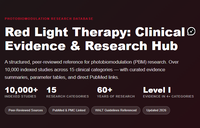
Based on 536 indexed studies in this category, 269 of them in people. These studies test photobiomodulation in general, not Mito Red Light devices.