





Panel Series
Red Light Therapy and Quick Tips to Getting Better Sleep
Table of Contents
- Sleep
- Sleep Cycles
- Circadian Rhythm
- Sleep Disturbances
- Does Red Light Therapy Help Sleep?
- How Does Red Light Therapy Promote Sleep?
- Quick Tips to Getting Better Sleep

Red light therapy leverages unique properties of certain wavelengths of red (visible) and near-infrared (invisible) light to help promote overall wellness. People use red light therapy for a variety of purposes, including to support skin appearance, improve wound healing, increase energy levels, reduce inflammation, promote joint comfort, and get better sleep.
The way red light therapy works is still an area of ongoing research. Many studies have shown that red light therapy has various potential benefits and that the use of at-home red light therapy can be a safe and painless way to support health and recovery when used as directed.
The simple presence of light has long been known to affect our biology in a variety of ways. Sleep hormones are regulated in part by the amount and timing of light entering our eyes. Light affects how much pigmentation our skin produces. Certain wavelengths of light also stimulate our body to make vitamin D. Light is used to break down a chemical called bilirubin in some newborns and is used for this purpose in hospitals around the world. High-energy light can also be used to kill bacteria and disinfect surfaces.
Red light therapy uses specific wavelengths of light that are longer than other colors of visible light. Red light and near-infrared light can penetrate deeper into body tissues than many other wavelengths and reach tissues that those wavelengths will not.
One of the potential red light therapy benefits is improved sleep. Red light therapy has been used to help promote better sleep for many years, but it is only recently that research has started to explore what kind of benefits red light therapy provides and how it works to support sleep and circadian rhythm.
Sleep
Sleep is a vital part of health. We often do not consider the implications of sleep, but most people spend more time sleeping throughout their lives than any other activity. People who consistently sleep the recommended eight hours a night will spend roughly one-third of their lives asleep.
Despite the high importance of sleep, the exact biological purpose it serves is still a medical mystery. Sleep has been shown to help form and maintain neurological pathways in your brain, allowing you to think more clearly, concentrate better, and have better memory abilities. Sleep has also been shown to help remove toxins that accumulate in your brain during the day.
Sleep Cycles
There are two basic types of sleep that everyone has. These two types of sleep occur in cycles and include rapid eye movement (REM) sleep and non-REM sleep.
Non-REM sleep occurs in three stages:
- Stage 1: This stage of sleep is the transition from wakefulness into sleep. Brain waves begin to transition from an active stage into a slower sleep state.
- Stage 2: During the second stage of sleep, your brain waves slow even more. Your eyes stop moving, your heart rate and breathing slow, and your body temperature decreases.
- Stage 3: Brain waves become even slower in the deepest stage of sleep. Your body becomes very relaxed, and it would be difficult to wake up in this stage. This stage of sleep plays a large role in helping you feel refreshed in the morning.
REM sleep occurs periodically while you are sleeping between the stages of non-REM sleep. Longer and deeper periods of REM sleep occur the longer that you sleep. REM sleep is the stage of sleep in which dreams occur. REM sleep happens more frequently as morning approaches and is the closest form of sleep to wakefulness.
Circadian Rhythm
The circadian rhythm is the overall cycle that your body goes through in roughly a 24-hour period. While there are many important biological functions that the circadian rhythm influences, sleep is one of the most important. The circadian rhythm synchronizes to light, encouraging sleep when light levels fall.
The impact of light on the circadian rhythm is well established, and science has shown that exposure to bright light immediately before going to bed can disrupt sleep. More recently, it has become better understood that the wavelength of light plays an essential role. Blue light, which has a higher energy and shorter wavelength, has been shown to suppress melatonin , a hormone that the circadian rhythm uses to promote sleep.
The negative effects of blue light on sleep are so impactful that smartphone makers now provide settings that can automatically reduce the amount of blue, high-energy light that your phone generates at night. People use these settings to reduce exposure to high-energy light in the evening and to sleep more soundly.
Sleep Disturbances
While sleep is regenerative and essential to good health, sleep disturbances can have a profound negative effect. Chronic lack of sleep has been connected to many health problems, including:
- High blood pressure
- Heart disease
- Diabetes
- Depression
- Obesity
People who struggle to get to sleep or have chronic sleep problems have a higher risk of disease when compared to those who sleep well and may develop long-term health problems that could otherwise be avoided.
Does Red Light Therapy Help Sleep?
Red light therapy uses specific wavelengths of red and near-infrared (NIR) light to help rejuvenate cells and promote overall health. One of the popular uses of red light therapy is to help people experience better sleep quality and smoother sleep-wake transitions.
While the use of red light therapy to promote sleep health is a newer application, there are several studies that have shown potential benefits. One of the first studies to examine red light therapy and sleep looked at a group of elite female basketball players. In this study , the players were divided into two groups. One group was not given any red light therapy, while the other group was given full-body red light therapy for 30 minutes every night for two weeks.
The researchers then evaluated the athletic performance of the two groups, the quality of their sleep, and the levels of melatonin in their blood. They found that the physical endurance of the group that received red light therapy improved more than the group that did not. The group that received red light therapy also reported that the quality of their sleep improved after two weeks of therapy. The levels of melatonin in the blood of those who received red light therapy were significantly higher than those who did not receive red light therapy.
In addition to multiple small studies showing that red light therapy has positive effects on sleep quality, many people anecdotally report that consistent use of an at-home red light therapy device helps them fall asleep more easily and feel more refreshed upon waking.
While several small studies show promise in this area, scientists have not yet performed the large-scale trials needed to conclusively prove the benefits of red light therapy for sleep in all populations. However, the combination of early research and real-world reports suggests that red light therapy may be a useful tool for supporting healthy sleep patterns when used appropriately.
How Does Red Light Therapy Promote Sleep?
While early studies on red light therapy show that it may help promote better sleep, the question of how this occurs is one that scientists are only starting to address.
A group of researchers, led by research scientist Dr. Ronnie Yeager, published an important paper outlining their scientific hypothesis for how red light therapy influences sleep. This hypothesis hinges on the hormone melatonin. Melatonin plays a crucial role in regulating the circadian rhythm and encouraging sleep. Blue light has been shown to suppress melatonin levels, which is the primary reason blue light encourages wakefulness.
The researchers provided insights into how red light therapy could interact with cells in a way that supports melatonin and mitochondrial function. They also proposed potential mechanisms explaining how the interaction of specific wavelengths of red and near-infrared light with melatonin and mitochondria could help explain some of the other health effects of red light therapy that had previously not been well understood.
If the hypothesis provided by these researchers is correct, then by supporting melatonin, red light therapy could encourage the initiation of sleep and help sleep be more continuous once you fall asleep. While further research is needed to verify this initial model, the foundational concepts of this work help explain why evening red light exposure may pair well with a sleep-supportive routine.
Quick Tips to Getting Better Sleep
So how do we pull this all together into some practical actions you can take to get better, deeper sleep with and without red light therapy?
Here are some suggestions:
1) Start the day with natural light. Start the day by going outside in the sun to “reboot” your circadian clock. Early morning sun exposure has been shown to improve sleep.
2) Get daylight throughout the day. If possible, get outside in the sun periodically throughout the day. As discussed in this paper from Oxford, the quality and architecture of sleep are associated with preceding light exposure .
3) Avoid caffeine late in the day. Try to avoid consuming caffeine after noon.
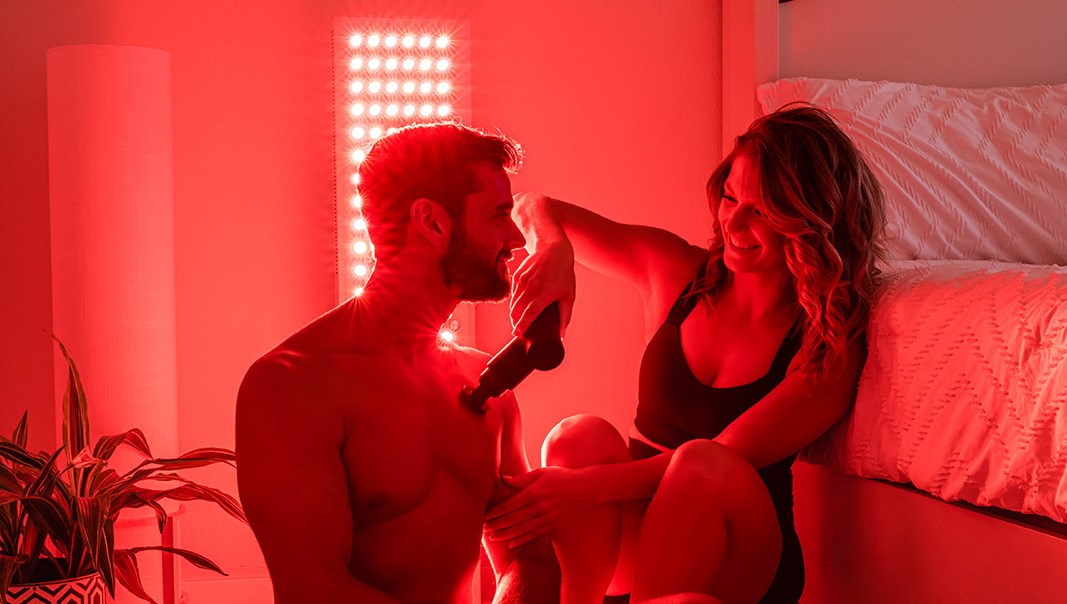
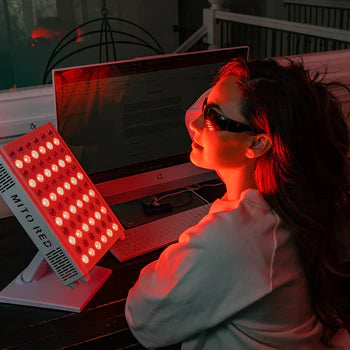
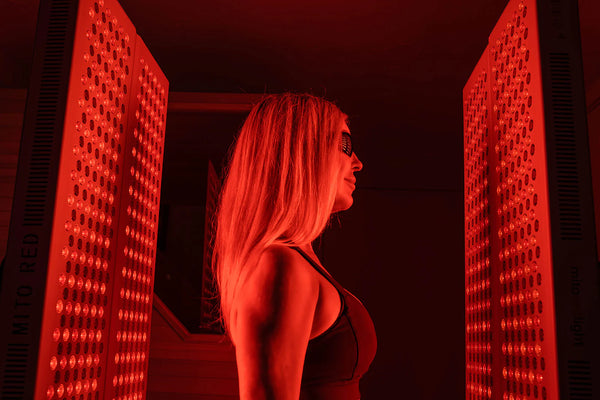
4) Time your red light therapy. Consider using a Mito Red Light device around sunset (with eyes properly shielded) for about 8–10 minutes to support a relaxing evening routine and natural melatonin rhythms.
5) Soften evening lighting. Reduce bright ambient light in the evenings by opting for amber, orange, or red bulbs instead of harsh overhead lighting.
6) Block blue and green light at night. Further reduce blue/green light in the evening by wearing blue-blocking glasses .
7) Adjust your screens. Use programs like Iris and/or f.lux to automatically reduce blue/green light from computer, tablet, and smartphone screens. Use driftTV to remove blue light from the TV when possible.
8) Darken your bedroom. Use blackout curtains to reduce “light pollution” in the bedroom from outside sources.
These simple tips can help you leverage your light environment—and tools like Mito Red Light devices—to work with your biology and promote better, more restorative sleep
Can red light therapy really help me sleep better?
Early research and real-world reports suggest that evening red light therapy sessions may support sleep quality and melatonin rhythms, especially when combined with good sleep hygiene and reduced blue-light exposure.
When is the best time to use red light therapy for sleep?
Many people use red light therapy in the late afternoon or around sunset as part of their wind-down routine. Short, consistent sessions several nights per week tend to be more helpful than occasional long treatments.
How does red light therapy differ from blue light at night?
Blue light from screens and overhead lighting can suppress melatonin and signal to your brain that it is time to stay awake, while red wavelengths are less likely to disrupt melatonin and may be more compatible with nighttime routines.
Can I use my Mito Red Light device for both energy and sleep?
Yes. Many users use their Mito Red Light device earlier in the day to support energy and recovery, then run shorter sessions later in the day to complement their sleep routine, always following the device guidelines.
Do I need to shield my eyes during red light therapy sessions?
For higher-intensity or close-range sessions, it is generally recommended to shield your eyes with appropriate protection and follow the instructions provided with your red light therapy device.
This article discusses published scientific research and general educational information about photobiomodulation and red light therapy. It does not constitute medical advice and does not make specific claims about Mito Red Light devices. The research cited reflects independent peer-reviewed studies and does not imply that any Mito Red Light product has been evaluated, approved, or cleared by the FDA or any other regulatory body for the diagnosis, treatment, cure, or prevention of any disease or medical condition. Individual results vary. Consult a qualified healthcare professional before beginning any light therapy protocol, particularly if you have a pre-existing medical condition, are pregnant, or are taking photosensitising medications.
Mito Red Light products are general wellness devices. They are not medical devices and have not been evaluated, cleared, or approved by the FDA or any regulatory body for the diagnosis, treatment, cure, or prevention of any disease or medical condition. Any references to peer-reviewed research or clinical studies on this page describe findings from independent scientific literature and do not imply that Mito Red Light devices have been studied, tested, or proven effective for any specific condition. Always consult a qualified healthcare provider before beginning any new wellness routine, particularly if you have a medical condition or are taking medication.
Related articles
More from the sleep & circadian rhythm knowledge cluster