





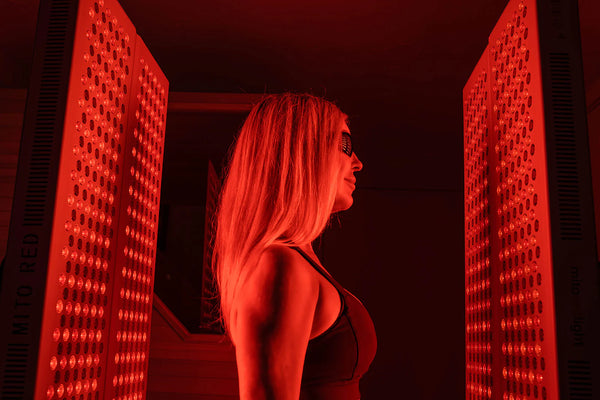
Panel Series
The best red light therapy device for home use depends on your goal, treatment area, and how consistently you will use it. Panels are best for full-body routines and recovery, LED face masks are best for facial skin, portable pods and mats are best for immersive full-body convenience, intranasal devices target nasal and systemic wellness routines, and brain-focused helmets use specialized near-infrared wavelengths for transcranial photobiomodulation. The right buying decision comes down to verified wavelengths, irradiance, coverage area, form factor, safety certifications, warranty, independent testing, and whether the device fits your actual daily routine.
Last updated: April 2026
The Direct Answer: How to Choose a Red Light Therapy Device
To choose the right red light therapy device, start with the outcome you care about most. Do not start with the biggest panel, the lowest price, or the highest advertised irradiance number. Start with the use case.
| Primary goal | Best form factor | Why | Mito Red Light example |
|---|---|---|---|
| Full-body wellness and recovery | Panel or multi-panel setup | High output, large coverage, flexible positioning | Mito Red Light panel series |
| Face, acne, wrinkles, tone | LED face mask | Contoured face coverage, skin-specific modes, easy routine fit | MitoGLOW LED mask |
| Portable full-body sessions | Pod or mat | Immersive coverage without a permanent panel setup | MitoPOD and speciality devices |
| Targeted areas | Small panel, pad, wrap, or handheld | Focused treatment for joints, shoulders, knees, back, or travel | MitoMIN and speciality devices |
| Nasal, sinus, immune-support routines | Intranasal light device | Specialized light delivery to nasal cavity and ear-based routines | MitoBOOST |
| Brain wellness and focus routines | Brain-focused helmet | Specialized transcranial near-infrared design | MitoMIND helmet |
The most common mistake is buying one device and expecting it to do every job equally well. A full-body panel, an LED face mask, a mat, an intranasal device, and a brain-focused helmet solve different problems. The best purchase is the device you will use consistently for the goal it was designed to support.
What Actually Matters When Buying a Red Light Therapy Device?
Red light therapy devices are often marketed with impressive numbers, but not all specs matter equally. The most important buying criteria are:
- Wavelengths: The specific nanometer outputs the device emits.
- Irradiance: The light power delivered at the actual treatment distance.
- Coverage area: How much skin or tissue the device can treat at once.
- Form factor: Whether the device fits the body area and routine you need.
- Independent testing: Whether wavelength and output claims are verified.
- Safety certifications: Whether the device is built to recognized electrical and medical-device safety standards.
- Warranty and company track record: Whether the brand will support the device over time.
- Ease of use: Whether the device is realistic to use 3–5 times per week.
For Mito Red Light, two differentiators matter in this evaluation: the breadth of device options and the transparency of output data. The Independent Test Data page helps users evaluate wavelength accuracy and output transparency, while the Research Evidence Hub connects device decisions back to the underlying photobiomodulation literature.
Wavelengths: The First Spec to Check
Wavelength determines what type of light a device emits and how that light interacts with tissue. In red light therapy, wavelength is measured in nanometers (nm).
The most common evidence-aligned ranges are visible red light around 630–660 nm and near-infrared light around 810–850 nm. Red light is commonly used for skin-focused routines because it interacts with surface and dermal layers. Near-infrared light penetrates deeper and is commonly used for muscle, joint, and recovery-oriented routines.
| Wavelength | Type | Common use case | Where it appears in Mito devices |
|---|---|---|---|
| 465 nm | Blue | Acne-focused facial routines | MitoGLOW |
| 590 nm | Amber | Tone, visible redness, facial skin routines | MitoGLOW |
| 630–660 nm | Red | Skin, collagen support, general photobiomodulation | Panels, MitoGLOW, MitoPOD, MitoBOOST |
| 810 nm | Near-infrared | Deeper tissue and transcranial photobiomodulation research | MitoMIND and select devices |
| 830–850 nm | Near-infrared | Recovery, joints, deeper tissue, full-body routines | Panels, MitoGLOW, MitoPOD, speciality devices |
| 1070 nm | Near-infrared | Specialized intranasal and brain wellness routines | MitoBOOST system / specialized NIR applications |
A device that simply says “red light” is not specific enough. Look for the exact wavelength list, then verify that the brand publishes testing or documentation showing the device emits those wavelengths accurately. For a deeper technical explanation, see the Mito Red Light wavelength hub.
Irradiance: Power at the Actual Treatment Distance
Irradiance is the amount of light power delivered to a given area, usually measured in mW/cm². It matters because it influences how long you need to use a device to deliver a meaningful dose.
The key phrase is “at the actual treatment distance.” A device may show impressive irradiance numbers measured directly at the LEDs, but that number may be much lower at the distance you actually use it. For panels, the relevant distance is often several inches away. For masks and wraps, the distance may be close to the skin. For pods and mats, output should be evaluated based on the device’s intended contact or near-contact design.
When comparing irradiance claims, ask these questions:
- Was the measurement taken at the skin, at the LEDs, or at a realistic treatment distance?
- Was the measurement taken by the brand or by an independent lab?
- Does the brand publish a testing methodology?
- Does the device deliver even coverage or just a few high-output hot spots?
- Does the device provide enough power for the intended session time?
Higher irradiance is not automatically better. The goal is appropriate dose, not maximum brightness. Too little light may underdose; too much light for too long may be unnecessary or counterproductive. Consistency, distance, and session duration matter just as much as peak output.
Independent Testing: The Trust Signal Most Buyers Miss
Independent testing is one of the most important ways to separate serious red light therapy brands from generic LED products. Without testing, customers are relying on marketing claims.
The best brands make it easy to answer three questions:
- Does the device emit the wavelengths it claims?
- How much light does it deliver at realistic use distances?
- Does the product meet relevant safety and quality standards?
Mito Red Light’s Independent Test Data page is a major differentiator because it gives buyers a place to verify output transparency before choosing a device. This matters especially for panels, masks, mats, pods, and comparison shopping, where many competing products publish incomplete or inflated specs.
Form Factor: Match the Device to the Body Area
Form factor is where most buyer’s guides fall short. A few years ago, the at-home red light therapy market was dominated by panels. Today, a complete buying guide has to include panels, masks, pods, mats, portable targeted devices, intranasal systems, and brain-focused helmets.
The right choice depends on where you want the light to go and how you want to use it.
Panels: Best for Full-Body Power and Flexibility
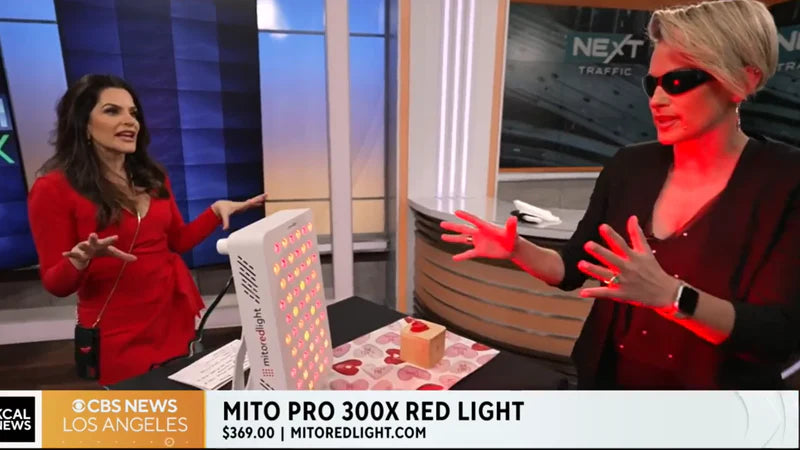
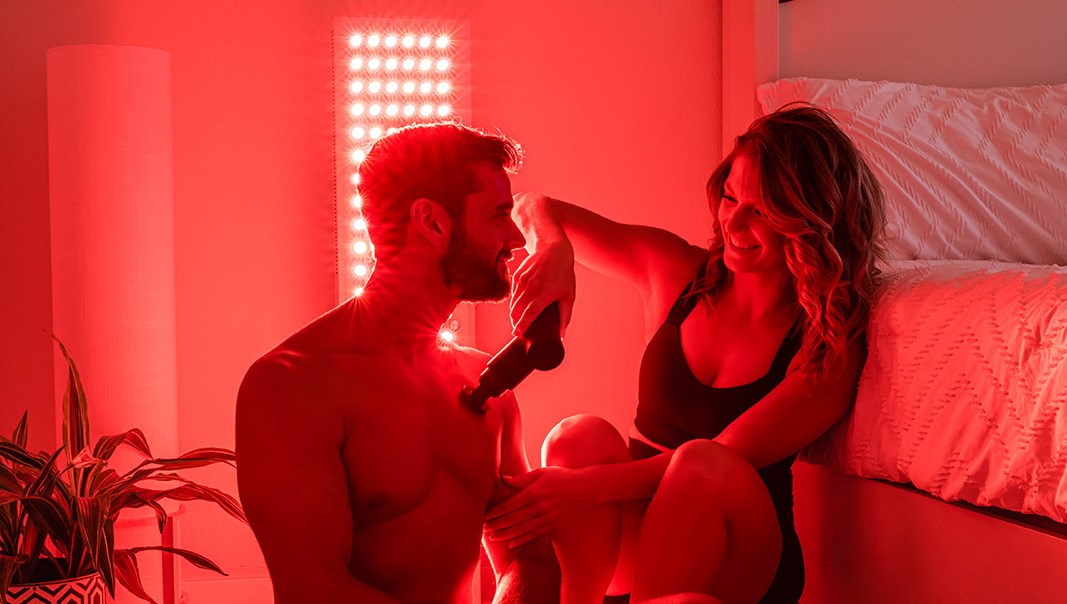
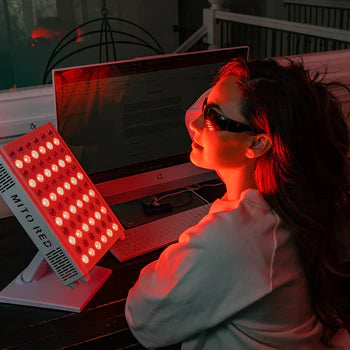
Panels remain the most versatile red light therapy form factor. A panel can be used for the face, torso, back, legs, joints, or full-body routines depending on size and setup.
Panels are best for:
- Full-body wellness routines
- Muscle recovery
- Joint-focused routines
- Large-area skin support
- Athletic performance and recovery routines
- Households where multiple people will use one device
The main advantage of a panel is flexibility. You can stand in front of it, sit in front of it, use it on one body area, or combine multiple panels for larger coverage. The trade-off is that panels require space, setup, and the discipline to use them consistently.
For most users who want one serious “do-it-all” red light therapy device, a panel from the Mito Red Light panel series is the strongest starting point.
LED Face Masks: Best for Facial Skin, Acne, and Anti-Aging
An LED face mask is not just a small panel. A good face mask is designed around facial geometry, eye protection, skin-specific wavelengths, and routine convenience.
Masks are best for:
- Fine lines and wrinkles
- Skin tone and texture
- Acne-focused routines
- Facial redness and complexion support
- People who want a simple skincare-adjacent routine
The MitoGLOW LED mask is Mito Red Light’s flagship face-focused device. It uses four wavelengths: blue, amber, red, and near-infrared. It is designed for users who want a more complete facial device than basic red-only masks.
MitoGLOW is especially relevant for buyers comparing premium masks because it combines 1,064 LEDs, multiple wavelengths, FDA 510(k) clearance for acne and wrinkles, and a design built for facial coverage. For a deeper product-specific overview, see the MitoGLOW brand hub.
Pods and Mats: Best for Immersive Full-Body Convenience
Pods and mats solve a different problem than panels. Instead of standing in front of a device, you lie down in or on the light source. This can make sessions feel more passive, comfortable, and spa-like.
Pods and mats are best for:
- People who want a full-body session without mounting panels
- Yoga, meditation, and recovery routines
- Users who prefer lying down during sessions
- Portable or storable full-body setups
- Households without space for a large panel wall
The MitoPOD is a portable full-body option using triple-chip diode technology with red and near-infrared wavelengths. It is built for users who want broad coverage without a permanent panel installation.
Mito Red Light also offers speciality form factors through the speciality devices collection, including mat-style and targeted solutions for users who want alternatives to standard panels.
Targeted Devices: Best for Specific Areas and Travel
Smaller targeted devices are useful when you do not need a full panel or full-body setup. These devices are easier to move, easier to store, and better suited for specific areas.
Targeted devices are best for:
- Knees, elbows, shoulders, wrists, and ankles
- Lower back routines
- Travel
- Desk-side or bedside use
- People starting with a smaller budget
The MitoMIN is an example of a targeted panel that works well for smaller treatment zones or users who want to start with a compact device before upgrading to a larger panel.
Intranasal and Ear-Based Devices: Best for Specialized Wellness Routines
Intranasal and ear-based devices are newer and more specialized than panels or masks. They are designed to deliver light to areas that panels cannot easily target, such as the nasal cavity or ear canal.
The MitoBOOST is designed for users interested in nasal, sinus, circadian, and daily wellness routines. It includes intranasal and ear-based light delivery options, making it very different from a standard panel or mask.
This type of device is not a replacement for a full-body panel. It is a specialized tool. Buyers should consider it when their goals are specifically related to nasal, respiratory, travel, circadian, or systemic wellness routines rather than general body coverage.
Brain-Focused Helmets: Best for Transcranial Photobiomodulation Routines
Brain-focused helmets are another specialized form factor. Instead of treating the body or skin broadly, they are designed to deliver near-infrared light around the head.
The MitoMIND helmet uses 810 nm near-infrared LEDs, a wavelength commonly discussed in transcranial photobiomodulation research. This makes it a very different device from a panel, mask, or pod.
MitoMIND is best for users specifically interested in brain wellness, focus routines, and transcranial near-infrared light exposure. It should not be confused with hair-growth helmets, which are usually designed for scalp and follicle-focused protocols rather than brain-focused near-infrared delivery.
Device Selection by Goal
If you are still unsure which form factor fits your goal, use this simplified decision guide.
| Goal | Best first device | Best upgrade path |
|---|---|---|
| General wellness | Panel | Larger panel or multi-panel setup |
| Skin and anti-aging | MitoGLOW or panel | MitoGLOW + panel for face and body |
| Acne-focused facial routine | MitoGLOW | Add skincare routine and consistency tracking |
| Muscle recovery | Panel | Larger panel or full-body setup |
| Joint-focused routines | Panel or targeted device | Add wrap, pad, or compact panel for difficult angles |
| Meditation and lying-down routines | MitoPOD or mat | Add panel for upright full-body sessions |
| Travel and sinus/nasal routines | MitoBOOST | Add panel for home full-body use |
| Brain wellness and focus routines | MitoMIND | Add panel for full-body recovery and wellness |
Safety Certifications and FDA Language
When buying a red light therapy device, pay close attention to regulatory and safety language. “FDA registered,” “FDA cleared,” “FDA compliant,” and “medical-grade” do not mean the same thing.
- FDA registered: The company or facility is listed with the FDA. This does not mean the product has been reviewed for effectiveness.
- FDA 510(k) cleared: The FDA has reviewed the device for a specific intended use and found it substantially equivalent to a legally marketed device.
- FDA compliant: A broad marketing phrase that should be interpreted cautiously unless backed by specific documentation.
- IEC 60601 certification: A recognized medical electrical equipment safety standard relevant for certain device categories.
For example, a facial LED device may have clearance for acne and wrinkles, while a panel may be positioned for general wellness or topical heating depending on its regulatory status and labeling. Always evaluate the specific product and the specific claims being made.
Warranty, Company History, and Support
A red light therapy device should last for years. That makes warranty, support, and company history important buying factors.
Before purchasing, check:
- Warranty length and what it actually covers
- Return window and whether it is long enough to evaluate routine fit
- Replacement and repair process
- Availability of customer support
- How long the brand has been in the market
- Whether the brand publishes testing, education, and clinical references
Mito Red Light has been operating in the red light therapy category for years and now offers one of the broadest at-home device lineups: panels, masks, pods, mats, targeted devices, intranasal devices, and brain-focused devices. That breadth matters because it lets customers match device type to goal instead of forcing every buyer into one product format.
Why Mito Red Light Stands Out
Mito Red Light’s biggest advantage is not just one product. It is the combination of selection, testing, research infrastructure, and practical device design.
- Large device selection: Panels, MitoGLOW, MitoPOD, MitoBOOST, MitoMIND, MitoMIN, mats, and speciality devices.
- Independent output transparency: Buyers can review the Independent Test Data page before purchasing.
- Research ecosystem: The Research Evidence Hub and clinical evidence pages help connect product decisions to science.
- Wavelength education: The wavelength hub explains why different wavelengths matter.
- Scientific advisory support: Mito Red Light’s Scientific Advisory Board adds an E-E-A-T layer most device brands do not have.
- Multiple form factors: Customers can choose based on real use case, not a one-size-fits-all recommendation.
That combination is what this buyer’s guide is designed to help you navigate: the right wavelength, the right form factor, the right output, and the right routine.
Red Flags When Buying Red Light Therapy Devices
Not every red light therapy device is worth buying. Be cautious if you see any of these warning signs:
- No exact wavelengths listed
- No irradiance data at a realistic treatment distance
- No independent testing or unclear testing methodology
- Unrealistic claims about curing diseases or replacing medical care
- Very short warranty
- No return policy or unclear support process
- Overemphasis on LED count without output or coverage data
- “More wavelengths” claims without explaining what each wavelength does
- Before/after claims without disclaimers, timelines, or routine context
The strongest brands make it easy to verify what the product emits, how it should be used, and what kind of results are realistic.
Common Buying Mistakes
Buying the cheapest device first
A low-cost device is not always a bad purchase, but extremely cheap red light products often lack verified wavelength data, meaningful irradiance, and durable build quality. If the device does not deliver the right wavelengths at the right output, a lower price does not create better value.
Choosing by LED count alone
LED count matters only when you understand what kind of LEDs are being counted, how they are arranged, what wavelengths they emit, and how much light reaches the skin. A device with fewer high-quality, properly driven LEDs can outperform a device with more poorly specified LEDs.
Ignoring treatment area
A mask is not ideal for back recovery. A full-size panel is not as convenient as a mask for nightly facial skincare. A helmet is not a general wellness device. The form factor has to match the body area.
Expecting instant results
Photobiomodulation is consistency-dependent. Skin changes often require 8–12 weeks. Recovery routines may feel useful sooner, but long-term value still comes from repeated use. A device that sits in a closet is always a bad investment.
Confusing red light therapy with heat therapy
Red light therapy is not the same as an infrared sauna. Far-infrared saunas primarily work through heat. Red and near-infrared light therapy work through light exposure in specific wavelength ranges. Both can be useful, but they are not interchangeable.
Recommended Buying Path
If you are starting from scratch, use this buying path:
- Define your primary goal: skin, recovery, full-body wellness, nasal wellness, brain wellness, or targeted joints.
- Pick the correct form factor: panel, mask, pod, mat, targeted device, intranasal device, or helmet.
- Verify wavelengths: Look for exact nanometer outputs, not generic “red light.”
- Check irradiance and output data: Prefer brands that publish independent testing.
- Evaluate fit and routine: Choose the device you will actually use 3–5 times per week.
- Review warranty and return policy: Make sure the purchase is protected.
- Use the device consistently: Follow the protocol long enough to evaluate results.
Best Mito Red Light Device by Buyer Type
| Buyer type | Best starting point | Why |
|---|---|---|
| First-time serious buyer | Panel series | Most versatile option for broad wellness and recovery use |
| Skincare-focused buyer | MitoGLOW | Face-specific design with blue, amber, red, and NIR wavelengths |
| Apartment or small-space user | MitoMIN or compact panel | Small footprint, easier storage, targeted sessions |
| Recovery and relaxation user | MitoPOD or mat | Immersive lying-down routine with broad coverage |
| Frequent traveler | MitoBOOST or compact device | Portable, routine-friendly, specialized wellness use |
| Brain wellness buyer | MitoMIND | Purpose-built near-infrared helmet for transcranial routines |
Bottom Line
The best red light therapy device is not the most expensive device, the brightest device, or the device with the longest feature list. It is the device that matches your goal, emits verified wavelengths, delivers appropriate output, fits your space, and is easy enough to use consistently.
If you want one flexible home device, start with a panel. If your goal is facial skin, start with MitoGLOW. If you want immersive full-body convenience, consider MitoPOD or a mat. If your interest is nasal or travel wellness, consider MitoBOOST. If you are specifically interested in brain-focused near-infrared routines, consider MitoMIND.
For buyers who want to go deeper, review the Research Evidence Hub, compare wavelengths in the Wavelength Hub, and verify product transparency on the Independent Test Data page before choosing your device.
Frequently Asked Questions
What is the best red light therapy device for home use?
The best red light therapy device for home use depends on your goal. A panel is the best all-around choice for full-body wellness, muscle recovery, and large treatment areas. An LED face mask is best for facial skin, acne, and wrinkles. A pod or mat is best for immersive lying-down sessions. Intranasal and brain-focused devices are best for specialized routines.
Should I buy a red light therapy panel or mask?
Buy a panel if you want flexible full-body or multi-area use. Buy a mask if your main goal is facial skin, acne, wrinkles, tone, or skincare convenience. Many users eventually use both: a panel for body and recovery, and a mask for face-specific routines.
What wavelengths should I look for in a red light therapy device?
For most users, the most important wavelengths are red light around 630–660 nm and near-infrared light around 810–850 nm. Blue light around 465 nm may be useful for acne-focused facial routines, while amber around 590 nm may support tone-focused facial routines. Specialized devices may use other wavelengths for specific applications.
How important is irradiance when buying a red light therapy device?
Irradiance is important, but only when measured at the actual treatment distance. A high number measured directly at the LEDs may not reflect real-world use. Look for published irradiance data, testing methodology, and independent verification whenever possible.
Are more LEDs always better?
No. More LEDs are not automatically better. LED count matters only when you also know the wavelengths, chip type, power output, spacing, coverage area, and irradiance. A well-designed device with verified output can outperform a device with more LEDs but poor testing and weak coverage.
Is a red light therapy pod better than a panel?
A pod is better for users who want a lying-down, immersive, full-body experience without installing panels. A panel is better for users who want flexible positioning, higher modularity, and the ability to target specific body areas. Neither is universally better; they solve different problems.
What makes Mito Red Light different from other brands?
Mito Red Light offers a broad device ecosystem that includes panels, MitoGLOW, MitoPOD, MitoBOOST, MitoMIND, MitoMIN, mats, and speciality devices. The brand also supports buyers with independent test data, wavelength education, a research evidence hub, and scientific advisory resources.
What should I avoid when buying a red light therapy device?
Avoid devices that do not list exact wavelengths, do not publish irradiance data, make disease-treatment claims, have unclear warranties, or rely only on vague phrases like “medical-grade” without documentation. Also avoid choosing based only on price, LED count, or influencer recommendations.
Sources and Further Reading
- Mito Red Light Research Evidence Hub
- Mito Red Light Wavelength Hub
- Mito Red Light Independent Test Data
- Mito Red Light Scientific Advisory Board
- Controlled trial on red and near-infrared light for skin outcomes
- Mechanisms and applications of photobiomodulation
- Photobiomodulation and exercise recovery systematic review
- NASA Spinoff: NASA research illuminates medical uses of light
Mito Red Light products are general wellness devices. They are not medical devices and have not been evaluated, cleared, or approved by the FDA or any regulatory body for the diagnosis, treatment, cure, or prevention of any disease or medical condition. Any references to peer-reviewed research or clinical studies on this page describe findings from independent scientific literature and do not imply that Mito Red Light devices have been studied, tested, or proven effective for any specific condition. Always consult a qualified healthcare provider before beginning any new wellness routine, particularly if you have a medical condition or are taking medication.
Related articles
More from the red light therapy knowledge cluster