









Panel Series
Is Red Light Therapy Bad for Your Eyes?
Medically Reviewed by Heidi Wright, BSN, RN, PCCN
Table of Contents
- Is Red Light Therapy Bad for Your Eyes
- What To Know About Red Light Therapy and Eye Safety
- How Does Red Light Therapy Affect Your Eyes?
- What Does the Evidence Say About Red Light Therapy and Eye Safety?
- What Are Some Best Practices for Red Light Therapy Around the Eyes?
- Special Considerations for Red Light and Sensitive Eyes
- In Summary
- FAQs
Is Red Light Therapy Bad for Your Eyes?
Key Takeaways
- Red light therapy uses non-ionizing wavelengths that are fundamentally different from harmful UV or high-energy blue light, and expert reviews consider it generally safe for the eyes when used correctly.
- Emerging research suggests red and near-infrared light may actually support eye health by stimulating mitochondrial function in ocular tissue, with promising early findings for dry eye and retinal health.
- Following manufacturer guidelines, using appropriate eyewear when recommended, and choosing quality devices are key steps for safe sessions.
If you’re using red light therapy—or are interested in starting—it’s natural to wonder whether it might be harmful for your eyes. The good news is that red light therapy, when used correctly with quality devices and appropriate eye protection, is generally considered safe for healthy adult eyes. A growing body of research suggests it may even support certain aspects of eye health.
Here’s what the science says about red light therapy and your eyes, plus practical safety tips for at-home use with Mito Red Light devices.
What To Know About Red Light Therapy and Eye Safety
Red light therapy typically uses light wavelengths in roughly the 630–850 nm range to stimulate cellular activity through a process called photobiomodulation. These are non-ionizing wavelengths, meaning they do not carry the kind of energy that damages DNA or tissue in the way ultraviolet (UV) or high-energy blue light can.
That distinction is important. Prolonged exposure to high-energy visible blue light from screens and artificial lighting can contribute to retinal stress and eye strain, and UV light is well known to damage ocular structures over time. In contrast, red and near-infrared light operate in a different part of the spectrum and interact with cells through a different mechanism: they are absorbed by mitochondria, where they support energy production and cellular resilience rather than causing direct photochemical damage. [web:68][web:71][web:72][web:78]
How Does Red Light Therapy Affect Your Eyes?
Red and near-infrared wavelengths can penetrate into ocular tissue , reaching structures like the retina, where they stimulate mitochondrial function and ATP production. The retina has one of the highest energy demands of any tissue in the body, which is why it is particularly responsive to mitochondrial support. As retinal cells age, their mitochondria become less efficient, producing less energy and generating more oxidative stress; photobiomodulation aims to support these mitochondria. [web:71][web:78]
Research in ophthalmology has found that photobiomodulation may potentially:
- Help ease dry eye symptoms and support tear production
- Support retinal cell health and mitochondrial resilience
- Support general visual function , including aspects of contrast sensitivity and visual acuity as we age
One clinical study reported that over 64% of participants reported improvements in their ocular condition following photobiomodulation, with no safety issues or phototoxicity concerns observed through 16 months of follow-up. Other work has explored red and near-infrared light in early dry age-related macular degeneration (AMD), with some trials reporting improvements in visual function and slower progression in certain patients under professional supervision. [web:71][web:78]
What Does the Evidence Say About Red Light Therapy and Eye Safety?
Reviews of clinical research have found no consistent evidence of ocular damage from red light or near-infrared light therapy in healthy individuals when used at appropriate parameters. A broader review of light-based therapies also concluded that light therapy is generally safe for the eyes in physically healthy, unmedicated people, though more research is needed in specific clinical populations. [web:72][web:78]
That said, any intense light source can cause discomfort or temporary symptoms if used incorrectly. Potential issues from improper use could include eye strain, irritation, or—in extreme cases—retinal or lens stress from very high-intensity exposures at close range or from wavelengths outside the therapeutic range. [web:68][web:69][web:70][web:79]
What Are Some Best Practices for Red Light Therapy Around the Eyes?
Even though the safety profile is strong, a few common-sense practices can help make sure you are getting the benefits without unnecessary risk.
- Follow your device’s guidelines. Every device has recommended distances, session durations, and usage instructions. Stick to them and avoid exceeding recommended times or intensities.
- Avoid staring directly into high-powered LEDs at close range. The light itself is not designed to be looked at like a lamp or screen. Prolonged direct viewing at very close distances can cause discomfort and fatigue, even if wavelengths are in the therapeutic range.
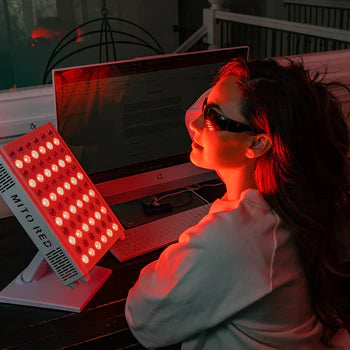
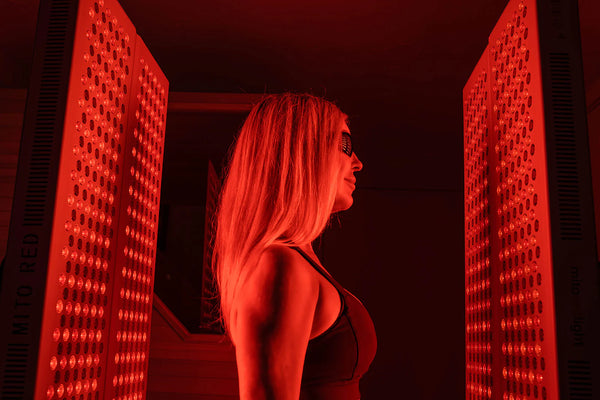
- Use protective eyewear when appropriate. Goggles or safety glasses are recommended for direct facial exposure with powerful panels, extended sessions, or if you have any light sensitivity. Our IR3 PRO Safety Glasses are designed specifically for red and near-infrared light therapy sessions and provide comfortable protection without unnecessarily blocking beneficial wavelengths.
- Monitor how your eyes feel. If you notice discomfort, excessive tearing, persistent afterimages, or visual changes during or after sessions, stop and consult an eye care professional before continuing.
Special Considerations for Red Light and Sensitive Eyes
Most healthy adults can use red light therapy around the eyes without issue when instructions are followed, but a few groups should take extra precautions:
- Children and teens may have increased light sensitivity due to developing eyes. Consult a pediatric provider before starting any red light therapy routine near the face.
- People on photosensitizing medications (such as certain antibiotics, antidepressants, retinoids, or other drugs that increase light sensitivity) should check with their doctor, as these can increase sensitivity to light across many wavelengths.
- Anyone with existing eye conditions—including active retinal disease, ongoing ocular inflammation, glaucoma under evaluation, or recent eye surgery—should get clearance from an ophthalmologist before using red light therapy near the eyes.
When in doubt, a quick conversation with your eye doctor is always worth it, especially if you plan to use red light therapy regularly or at higher intensities.
In Summary
Is red light therapy bad for your eyes? Based on current evidence, for healthy adults using quality devices as directed, the answer appears to be no. When used properly, red and near-infrared light are generally considered safe for the eyes and may even offer meaningful benefits for ocular comfort and retinal health over time. [web:68][web:71][web:72][web:78]
The keys are simple: choose devices with verified wavelengths and power output, follow manufacturer guidelines, avoid staring directly into intense LEDs at close range, and use appropriate eye protection when recommended or if you have any sensitivity.
At Mito Red Light, all of our at-home red light therapy devices are independently tested and IEC 60601 safety certified. We believe the best results start with confidence in what you are using, especially when it involves your eyes.
DISCLAIMER: Mito Red Light devices are Class II wellness devices aimed at affecting the body through supporting cellular function. The information provided in this article and on this site is for educational purposes only and is not intended to imply effectiveness of Mito Red Light devices for any specific application. The information provided in this article and on this site is not intended to diagnose, treat, cure, or prevent any disease, is not a substitute for consultation with a licensed medical provider and should not be construed as medical advice. Click here to read our article on potential contraindications of red light therapy.
FAQs
Is red light therapy safe for your eyes with daily use?
Daily use at recommended distances is generally considered safe for healthy adult eyes. Always follow your
device’s guidelines and wear protective eyewear if you are doing direct facial sessions with high-powered
panels.
Do you need goggles when using red light therapy devices?
Not always. Goggles are recommended for direct facial exposure with powerful panels, longer sessions, or if you
have light sensitivity. For standard body sessions where you are not looking at the device, eye protection is
typically optional but still a conservative choice.
What should I do if I accidentally stare directly into the LEDs?
Brief accidental exposure is unlikely to cause harm. If you notice vision changes, discomfort, or persistent
afterimages, stop your session and consult an eye care professional for guidance.
How does red light therapy compare to blue light or UV light for eye risk?
Red light therapy carries a much lower risk profile than blue or UV light. Blue light can contribute to retinal
stress with prolonged exposure, and UV light is well documented to damage ocular structures. Red and
near-infrared wavelengths work through a different, non-ionizing mechanism that supports mitochondrial function
rather than directly damaging DNA.
Can red light therapy help improve eye health?
Emerging research suggests potential benefits for dry eye, retinal support, and early dry age-related macular
degeneration under professional supervision. Results are promising, but this area of research is still
developing, and red light therapy should not replace regular eye exams or treatments prescribed by your eye
doctor.
Frequently Asked Questions
Is red light therapy safe for your eyes with daily use?
Daily use at recommended distances is generally considered safe for healthy adult eyes. Always follow your device’s guidelines and wear protective eyewear if you are doing direct facial sessions with high-powered panels.
Do you need goggles when using red light therapy devices?
Not in every scenario. Goggles are recommended for direct facial exposure with powerful panels, longer sessions, or if you have any light sensitivity. For standard body sessions where you are not looking at the device, eye protection is typically optional.
What should I do if I accidentally stare directly into the LEDs?
Brief accidental exposure is unlikely to cause harm. If you experience vision changes, discomfort, or persistent afterimages, stop your session and consult an eye care professional before continuing red light therapy.
How does red light therapy compare to blue light or UV light for eye risk?
Red and near-infrared light carry a much lower risk profile than blue or UV light. Blue light can contribute to retinal stress with prolonged exposure, and UV light is known to damage ocular structures, while red light works through a non-ionizing, mitochondrial mechanism.
Can red light therapy help improve eye health?
Early research suggests that photobiomodulation may support dry eye symptoms and retinal health, especially in certain age-related conditions, but this field is still developing and should complement—not replace—regular eye care and medical treatment.
This article discusses published scientific research and general educational information about photobiomodulation and red light therapy. It does not constitute medical advice and does not make specific claims about Mito Red Light devices. The research cited reflects independent peer-reviewed studies and does not imply that any Mito Red Light product has been evaluated, approved, or cleared by the FDA or any other regulatory body for the diagnosis, treatment, cure, or prevention of any disease or medical condition. Individual results vary. Consult a qualified healthcare professional before beginning any light therapy protocol, particularly if you have a pre-existing medical condition, are pregnant, or are taking photosensitising medications.
Mito Red Light products are general wellness devices. They are not medical devices and have not been evaluated, cleared, or approved by the FDA or any regulatory body for the diagnosis, treatment, cure, or prevention of any disease or medical condition. Any references to peer-reviewed research or clinical studies on this page describe findings from independent scientific literature and do not imply that Mito Red Light devices have been studied, tested, or proven effective for any specific condition. Always consult a qualified healthcare provider before beginning any new wellness routine, particularly if you have a medical condition or are taking medication.
Related articles
More from the safety & contraindications knowledge cluster