












Panel Series
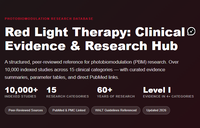
Red light therapy (photobiomodulation) uses specific wavelengths of red and near-infrared light to stimulate cellular energy production through mitochondrial pathways. Our database of 10,000+ peer-reviewed studies documents effects across skin health, muscle recovery, inflammation, brain function, hair growth, and more.
A New Nature Article Marks a Turning Point in Red Light Therapy
A recent publication in Nature - one of the most respected scientific journals in the world -highlights something we’ve believed for years:
Modern humans are likely exposed to significantly less red and near-infrared light than we evolved with.
This isn’t a fringe idea anymore.
It’s now being explored at the highest levels of scientific research.
At Mito Red Light, this has been a core thesis from day one.
Our CEO, Scott Chaverri, has spoken extensively about how modern environments have fundamentally changed our relationship with light—and the biological consequences of that shift.
Now, the science is catching up.
The Big Idea: Humans May Be “Starved” of Near-Infrared Light
The Nature article highlights a striking reality:
- Humans spend significantly more time indoors
- Artificial lighting lacks key wavelengths
- Modern windows filter beneficial light
- Outdoor exposure has dropped dramatically
Together, these shifts have altered the spectral environment our bodies are exposed to.
At Mito Red Light, we’ve long described this as:
Light deprivation - a modern condition where we receive dramatically less red and near-infrared light than humans historically did.
This concept is central to our educational resources:
👉 https://mitoredlight.com/pages/learn
And now, it’s being echoed in one of the most authoritative scientific publications in the world.

For years, we’ve argued that red light therapy isn’t just a “treatment” - it may be a way to restore a missing biological input.
Now, Nature is validating that perspective.
For the last century, we’ve optimized lighting for efficiency, cost, and brightness - not for human biology.
Indoor Lighting vs. Sunlight: A Fundamental Shift
One of the most important insights from the Nature article is how dramatically modern lighting differs from natural sunlight.

What the Science Shows
Different light sources emit very different spectra:
- Sunlight (daylight & sunset) → Full spectrum, rich in red and near-infrared
- Incandescent bulbs → Strong red and infrared output
- Fluorescent lighting → Incomplete, spiky spectrum
- Modern LEDs (even “warm” LEDs) → Minimal near-infrared
Sunlight delivers a continuous spectrum rich in red and near-infrared light.
Modern LEDs- despite appearing bright - emit very little of these wavelengths.
The key takeaway:
Most modern indoor environments are deficient in near-infrared light.
From Firelight to LEDs: A Rapid Environmental Change
For most of human history, light exposure came from:
- Sunlight
- Firelight
- Incandescent-like sources
All of these naturally included meaningful amounts of red and near-infrared light.
Today, the environment looks very different:
- LED lighting dominates homes and offices
- Screens emit mostly blue and visible light
- Energy-efficient windows block portions of infrared
- Time outdoors is at historic lows
This may be one of the most significant - and least discussed - environmental changes in modern human history.
The Science: Why Red and Near-Infrared Light Matter
The article highlights a key mechanism:
Mitochondria: Your Cellular Power Plants
Red and near-infrared light (roughly 600–940 nm) interact with:
- Cytochrome c oxidase
- A key enzyme in the mitochondrial electron transport chain
This interaction may help:
- Support ATP (energy) production
- Improve cellular efficiency
- Influence inflammation and oxidative stress
In simple terms:
Light helps your cells function more efficiently at an energy level.
This is why red light therapy is often referred to as photobiomodulation—light influencing biology.
From Fringe to Mainstream Medicine
The Nature article makes something very clear:
Red light therapy is moving from fringe to clinically relevant.
There is now evidence (with varying levels of strength) for:
Stronger evidence areas:
- Skin health and rejuvenation
- Wound healing
- Hair growth
- Oral mucositis (clinical guidelines)
Emerging areas:
- Muscle recovery
- Joint pain
- Neurological health
- Metabolic function
This mirrors what we’ve seen in real-world use across:
- Dermatology clinics
- Performance and recovery centers
- At-home wellness routines
Why Device Quality Matters More Than Ever
The article also raises an important warning:
Not all red light therapy devices are created equal.
Critical variables include:
- Wavelength accuracy
- Irradiance (light intensity)
- Treatment distance
- Device design and build quality
This is exactly why we’ve prioritized:
- Independent lab verification
- Transparent performance data
- Precision-engineered wavelength targeting
As the science matures, precision matters more than marketing claims.
Mito Red Light: Leading Before It Was Popular
Long before red light therapy became a trend, Mito Red Light focused on:
1. Science-Driven Design
We build devices around the exact wavelength ranges now being validated in research:
- Red (~630–660 nm)
- Near-infrared (~810–880+ nm)
2. Full Ecosystem Approach
From red light therapy panels to LED masks to Biophotonic Skincare, we design systems that work together.
3. Education First
Our Learn Page (linked above) and ongoing content have consistently emphasized:
- Light as a biological input
- Mitochondrial function
- Spectrum matters
4. Thought Leadership
As discussed publicly by Scott Chaverri:
The modern environment has fundamentally changed our relationship with light - and that has biological consequences.
Now, leading scientific publications are reinforcing that same idea.
A New Way to Think About Light
For decades, light has been viewed primarily as:
- Something we see
- Something that affects circadian rhythm
But emerging research suggests something deeper:
Light is a fundamental input into cellular health.
And when that input is missing - or reduced - it may impact:
- Energy production
- Recovery
- Skin health
- Overall biological function
The Bottom Line
The latest research from Nature confirms several key ideas:
- Red and near-infrared light have real biological effects
- Mitochondria are likely a central mechanism
- Modern lifestyles may reduce our exposure to these wavelengths
- Proper dosing and device quality are critical
Most importantly:
What was once considered fringe is now being validated at the highest levels of science.
FAQ: Red Light Therapy, Near-Infrared Light, and Modern Light Deficiency
Are humans really deficient in near-infrared light today?
Emerging research suggests that modern lifestyles—especially indoor living and artificial lighting—have significantly reduced our exposure to near-infrared light compared to historical norms.
What is near-infrared (NIR) light?
Near-infrared light is a wavelength of light (typically ~700–1000+ nm) that penetrates deeper into tissue than visible light and is associated with cellular and mitochondrial activity.
How does red light therapy work?
Red and near-infrared light are absorbed by mitochondrial components, which may support cellular energy (ATP) production and influence biological processes like inflammation and repair.
Is red light therapy scientifically proven?
There is strong evidence for certain applications (like skin health and wound healing), while other areas (like brain health and systemic effects) are still being actively studied.
Why are modern light sources different from sunlight?
Most modern lighting (LEDs, fluorescent lights) emits limited red and near-infrared wavelengths, unlike sunlight, which provides a full spectrum of light.
Can red light therapy replace sunlight?
No. Sunlight provides a broad spectrum of wavelengths. Red light therapy is best viewed as a targeted supplement to modern light environments.
What should I look for in a red light therapy device?
Key factors include:
- Verified wavelength output
- Sufficient intensity (irradiance)
- Reliable testing and manufacturing
- Appropriate design for your use case
Why does Mito Red Light emphasize near-infrared wavelengths?
Because research—including recent findings highlighted in Nature—shows that these wavelengths penetrate deeper into tissue and interact with cellular energy systems.
Is more light always better?
No. Research suggests there is a biological “sweet spot”—too little or too much light may reduce effectiveness.
Where can I learn more?
Visit our full educational guide here:
👉 https://mitoredlight.com/pages/learn
Mito Red Light products are general wellness devices. They are not medical devices and have not been evaluated, cleared, or approved by the FDA or any regulatory body for the diagnosis, treatment, cure, or prevention of any disease or medical condition. Any references to peer-reviewed research or clinical studies on this page describe findings from independent scientific literature and do not imply that Mito Red Light devices have been studied, tested, or proven effective for any specific condition. Always consult a qualified healthcare provider before beginning any new wellness routine, particularly if you have a medical condition or are taking medication.
This article discusses published scientific research and general educational information about photobiomodulation and red light therapy. It does not constitute medical advice and does not make specific claims about Mito Red Light devices. The research cited reflects independent peer-reviewed studies and does not imply that any Mito Red Light product has been evaluated, approved, or cleared by the FDA or any other regulatory body for the diagnosis, treatment, cure, or prevention of any disease or medical condition. Individual results vary. Consult a qualified healthcare professional before beginning any light therapy protocol, particularly if you have a pre-existing medical condition, are pregnant, or are taking photosensitising medications.
Mito Red Light products are general wellness devices. They are not medical devices and have not been evaluated, cleared, or approved by the FDA or any regulatory body for the diagnosis, treatment, cure, or prevention of any disease or medical condition. Any references to peer-reviewed research or clinical studies on this page describe findings from independent scientific literature and do not imply that Mito Red Light devices have been studied, tested, or proven effective for any specific condition. Always consult a qualified healthcare provider before beginning any new wellness routine, particularly if you have a medical condition or are taking medication.
Related articles
More from the wavelengths & science knowledge cluster