











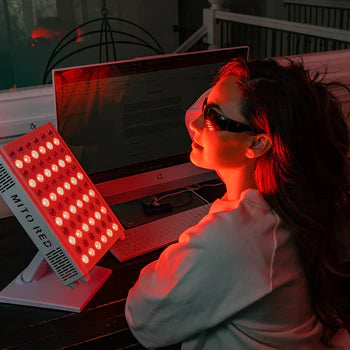


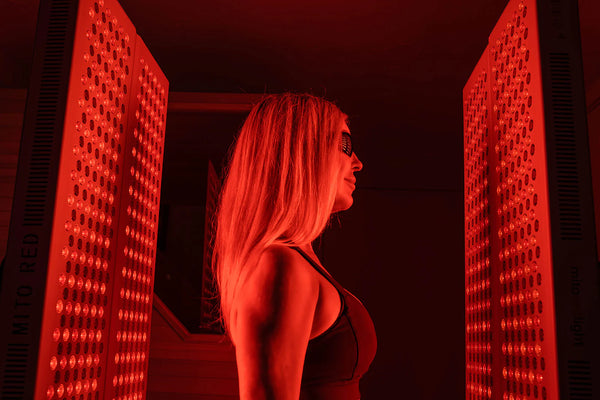
Panel Series
Choosing the right red light therapy device means looking at wavelength accuracy, irradiance at treatment distance, coverage area, and the strength of the evidence base. Mito Red Light panels are built around the most-studied wavelengths in photobiomodulation research: 630nm, 660nm, 810nm, and 830nm.
Red light therapy is growing in popularity for skin appearance, recovery routines, and everyday wellness.
When comparing home red light therapy vs clinic treatments, the right choice usually comes down to consistency, budget, convenience, and how much coverage you need. For many people, a quality home device delivers the best long-term value because it removes travel and scheduling friction, making regular use much easier to maintain.
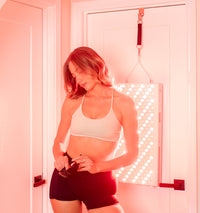
At-home red light therapy also fits more naturally into real life. Instead of booking appointments at a spa, gym, or wellness clinic, you can run short sessions on your own schedule — before work, after training, or as part of an evening wind-down routine.
Who Can Benefit From Red Light Therapy?
Red light therapy may be a useful addition for people who want a low-friction wellness routine they can perform consistently at home. The best candidates are usually those with clear goals, realistic expectations, and the discipline to follow the device instructions over time.
People Who Value Simple, Consistent Wellness Routines
If you prefer habits that are easy to repeat, red and near-infrared light sessions can fit neatly into a daily or near-daily routine. Because outcomes tend to build gradually, the biggest advantage usually goes to people who will actually use a device as directed several times per week.
Sessions are quiet, non-UV, and easy to pair with habits like stretching, breathwork, post-shower skincare, or evening relaxation. For that reason, home devices can be especially appealing to people who want wellness tools that integrate into normal life rather than requiring extra appointments.
Active Individuals Focused on Recovery Habits
Recreational lifters, runners, cyclists, and other active people often use red and near-infrared light as part of a broader recovery routine. In general, these users are less focused on one-off sessions and more interested in maintaining a repeatable rhythm around training days.
For recovery-minded users, home access can be a meaningful advantage. A panel at home makes it easier to stay consistent after workouts without commuting to a clinic or coordinating treatment times around a busy schedule.
Skincare Enthusiasts
If your goals center on skin appearance, tone, texture, and overall glow, red light therapy can fit alongside a simple skincare routine, good sleep, and daily sun protection. Most users focus on the face, neck, and chest with short sessions several times per week.
Expect gradual changes over weeks or months rather than overnight results. A home device can be attractive here because it allows frequent, low-friction use, which is often more practical than booking repeated clinic visits for appearance-focused routines.
Scalp and Hair-Appearance Routines
People building a patient, long-term scalp routine often add light sessions to support consistency. Hair-related routines usually depend on regular use over months, so convenience matters a great deal.
At-home treatment can be especially helpful because it allows repeated sessions without the cost and effort of ongoing appointments. For targeted scalp use, dedicated headgear or smaller focused devices can make positioning easier and more repeatable.
Older Adults Prioritizing Ease and Comfort
Light sessions are quiet, non-invasive, and straightforward to set up, which appeals to people who want gentle wellness habits at home. Many users appreciate the ease, comfort, and privacy of performing sessions in a familiar space rather than traveling for treatment.
As with any new wellness routine, it is smart to check with a healthcare professional first, especially if you have a medical condition, take medications, or have questions about photosensitivity or light exposure.
What Happens During a Red Light Therapy Session?
Photobiomodulation refers to the use of low-level red and near-infrared light on body tissues to support normal cellular processes. Proposed mechanisms in the research literature involve light-tissue interactions with mitochondrial chromophores and downstream signaling pathways thought to be linked to ATP production, reactive oxygen species signaling, and nitric oxide-related vasodilation — though how these translate to specific outcomes in individuals continues to be studied.
- Circulation support: Red light may support healthy circulation through proposed nitric oxide-related vasodilation pathways, which helps explain why many users describe sessions as warming or circulation-supportive.
- Inflammation pathways: Some photobiomodulation research examines anti-inflammatory signaling across different tissues, which is one reason red and near-infrared light are often included in broader recovery and wellness routines. Results vary by application and protocol.
The evidence base is promising in some areas and mixed in others. Results depend on the application, protocol, device quality, and consistency of use, so it is important to set realistic expectations and follow the manufacturer's guidance rather than assuming more is better.
What the Evidence Says About Red Light Therapy
Red light therapy has been studied across several popular consumer use cases. Evidence quality and consistency vary by indication, and individual results depend on device, protocol, and the user's consistency.
- Skin appearance: Some controlled trials have examined measures of skin roughness, fine lines, and collagen-related markers following repeated red and near-infrared sessions; results vary by study design, device, and protocol.
- Skin blemishes: Red and near-infrared wavelengths are studied in skin-appearance contexts including blemish-prone skin; results vary by device, routine, and individual. Consult a dermatologist for medical concerns about acne.
- Scalp and hair appearance: Red and near-infrared light is studied in routines focused on the appearance of hair density; outcomes appear to depend on device design, wavelength, and consistency of use. Consult a healthcare provider for medical concerns about hair loss.
For a broader review of the science, see our guide to red light therapy benefits. For a plain-language explanation of the underlying science, visit How Does Red Light Therapy Work?
Home vs. Clinic Red Light Therapy: Side-by-Side Comparison
Understanding the practical differences between at-home red light therapy and clinic-based sessions can help you choose the setup that best matches your goals, lifestyle, and budget.
|
Factor |
Home Panels |
Clinic Sessions |
|
Intensity |
Varies by device; well-built home panels can reach irradiance levels comparable to many clinic systems at recommended treatment distances |
Some clinical systems are designed with higher output and larger treatment areas than entry-level home devices |
|
Session Length |
Usually 10–20 minutes depending on distance and treatment area |
May be shorter depending on power and coverage |
|
Frequency |
Easy to use several times per week |
Often limited by scheduling and clinic availability |
|
Timeline |
Usually builds gradually with consistency over weeks to months |
May feel faster initially because of higher intensity and larger coverage |
|
Cost |
One-time device purchase |
Recurring per-session fees |
|
Convenience |
Use any time at home |
Requires appointments and travel |
|
Coverage |
Depends on panel size and setup |
Often larger professional systems with broad body coverage |
Why Many People Prefer At-Home Red Light Therapy
The biggest advantage of home use is usually consistency. A device that lives in your bedroom, office, or home gym is far easier to use regularly than a treatment that requires booking, driving, parking, and fitting appointments into an already busy week.
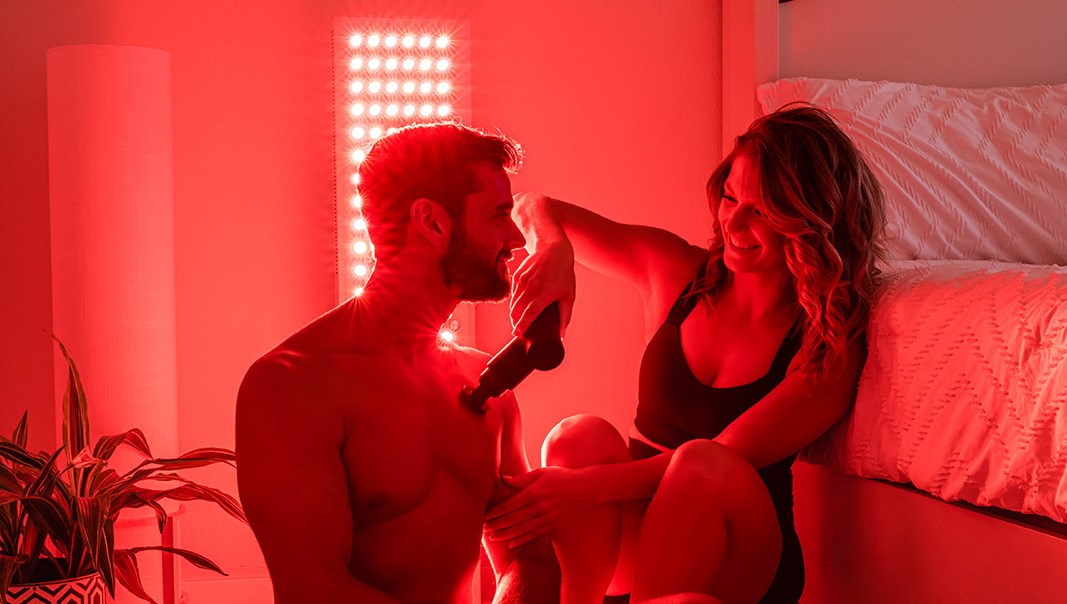
Home use also offers comfort and privacy. You control the environment, timing, and pacing of the session, which often makes the routine feel more sustainable and less like another obligation on your calendar.
For many households, the economics can also be compelling. Once you own a quality device, you can use it repeatedly without per-session charges, and multiple people in the home may be able to share the same unit, lowering the effective cost per person over time.
Light Intensity and Wavelength Precision
Some clinical systems are designed with higher output and larger treatment areas than entry-level home devices, which can shorten session times. Output varies considerably between products in both categories, and well-built home panels can reach comparable irradiance at recommended treatment distances.
Both home and clinic systems are generally designed to work within the red and near-infrared wavelengths used in photobiomodulation research. In practice, the most important differences between the two are often output, coverage, and treatment convenience — not the use of fundamentally different light.
Mito Red Light devices are independently tested by an ISO/IEC 17025-accredited lab for wavelength accuracy, irradiance, and beam uniformity. View our full independent test data, including wavelength-resolved spectra and iso-irradiance maps for each panel.
Session Length, Frequency, and Expected Outcomes
Professional systems can often deliver target exposure quickly because they combine higher output with larger treatment areas. That can be attractive for users who want guided sessions and minimal setup.
At home, progress usually depends more on routine adherence than on chasing maximum power. Short, repeated sessions several times per week are often easier to maintain than occasional visits, which is why many people find home treatment more realistic over the long term.
Expected timelines vary based on the goal, the device, the dose, and the user's consistency. In most cases, meaningful changes accumulate over weeks to months rather than after a single session.
User Experience, Safety Controls, and Maintenance
Clinics offer convenience in one sense: equipment is already set up, staff can guide positioning, and maintenance is handled for you. If you want a hands-off experience or broad full-body exposure in a single visit, that can be appealing.
Home devices offer a different kind of convenience. You can treat on your own schedule, build a personalized routine, and target the areas that matter most to you without leaving the house.
For a more detailed, condition-by-condition breakdown, see our master guide to contraindications for red light therapy, which summarizes absolute and relative contraindications, medication-related precautions, and when to seek medical clearance before starting. For eye-specific considerations, see is red light therapy bad for your eyes?
Up-Front Device Cost Versus Per-Session Clinic Fees
Clinic treatment is usually pay-as-you-go, which can work well for short trial periods or professionally guided blocks. But recurring per-session pricing can add up quickly if you plan to use red light therapy regularly over weeks or months.
At home, the economics are different. A one-time purchase can become more cost-effective over time, especially if you intend to use the device consistently or share it with a partner or family member.
For people who want frequent sessions, home use often becomes the more practical long-term option simply because it reduces both financial and scheduling friction.
Comfort, Control, and Self-Care at Home
One of the underappreciated benefits of at-home red light therapy is the ability to create a session environment that feels calming and repeatable. You can control the room, the timing, the music, the setup, and which body areas you want to focus on.
That flexibility also makes it easier to personalize the routine around your actual goals. Rather than following a fixed clinic schedule, you can build a consistent habit that matches your lifestyle, available time, and preferred level of privacy.
Space-Saving Designs for Small Rooms and Studios
Large clinic systems often require dedicated rooms and fixed installations. That setup can be hard to replicate in a home environment, especially in apartments, small bedrooms, or multi-use wellness spaces.
By contrast, home setups can be much more modular. Compact panels, rolling stands, portable devices, belts, and mats make it possible to start with a smaller footprint and expand only if your space and goals justify it.
Choosing the Right Device for Your Needs
The best device depends on your main goals, the amount of coverage you want, your available space, and how likely you are to follow a consistent routine. In most cases, the "best" device is the one that matches your lifestyle closely enough that you will actually use it regularly.
At Mito Red Light, we offer options for different use cases:
- MitoPRO+ Series: A versatile panel option for people building a dependable home routine with broad wellness applications.
- MitoPRO® Mobile: A portable option for travel, desk setups, and smaller targeted routines.
- MitoQUAD™ Belt: A hands-free option designed for convenient targeted use.
Final Take: Is Home or Clinic Red Light Therapy Better?
Neither option is automatically better for everyone. Clinic sessions can make sense if you want higher-powered professional systems, broader coverage, and guided treatment, while home devices are often the stronger choice for people who value consistency, privacy, convenience, and long-term cost control.
For many users, at-home red light therapy wins because it is easier to stick with. A practical routine you can follow several times per week usually beats an ideal routine that is too expensive, inconvenient, or difficult to maintain.
No matter which path you choose, the same fundamentals apply: use a quality device, follow the recommended treatment distance and session times, protect the eyes when appropriate, and avoid assuming that longer sessions are always better.
To explore trusted options for at-home use, browse the full Mito Red Light collection.
This article discusses published scientific research and general educational information about photobiomodulation and red light therapy. It does not constitute medical advice and does not make specific claims about Mito Red Light devices. The research cited reflects independent peer-reviewed studies and does not imply that any Mito Red Light product has been evaluated, approved, or cleared by the FDA or any other regulatory body for the diagnosis, treatment, cure, or prevention of any disease or medical condition. Individual results vary. Consult a qualified healthcare professional before beginning any light therapy protocol, particularly if you have a pre-existing medical condition, are pregnant, or are taking photosensitising medications.
Mito Red Light products are general wellness devices. They are not medical devices and have not been evaluated, cleared, or approved by the FDA or any regulatory body for the diagnosis, treatment, cure, or prevention of any disease or medical condition. Any references to peer-reviewed research or clinical studies on this page describe findings from independent scientific literature and do not imply that Mito Red Light devices have been studied, tested, or proven effective for any specific condition. Always consult a qualified healthcare provider before beginning any new wellness routine, particularly if you have a medical condition or are taking medication.
Related articles
More from the buying guides & comparisons knowledge cluster