





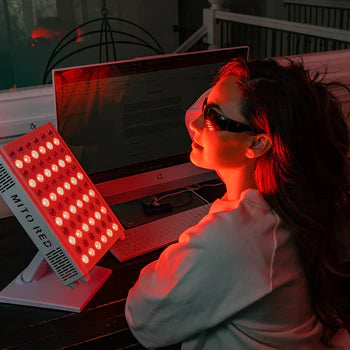


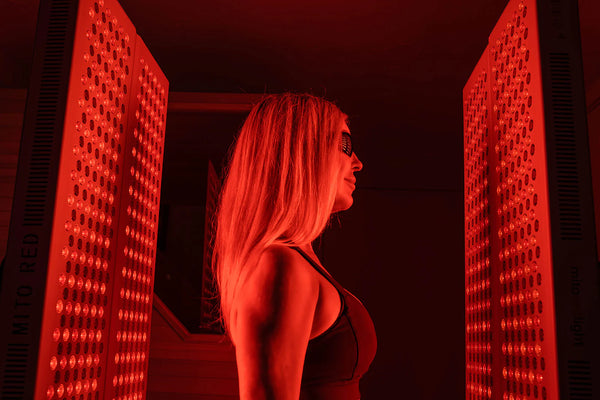
Panel Series
What Is Near Infrared (NIR) Light Therapy?
Near infrared light sits just beyond the red spectrum. It is invisible to the human eye but is still non ionizing and part of the same low level category that defines red light therapy.
For therapeutic purposes, NIR is typically used in the range of about 800 to 850 nm. Because these wavelengths are longer, they can travel deeper into the body than visible red light, reaching deeper layers of skin, subcutaneous tissue, muscles and joint structures under the right conditions.
Common uses of NIR light
NIR is usually chosen for goals that involve deeper tissues, including:
-
Muscle recovery and performance support
-
Joint comfort and mobility
-
Deeper circulation and tissue oxygenation support
-
General aches, stiffness and post workout soreness
-
Certain brain and cognitive protocols in specialized settings
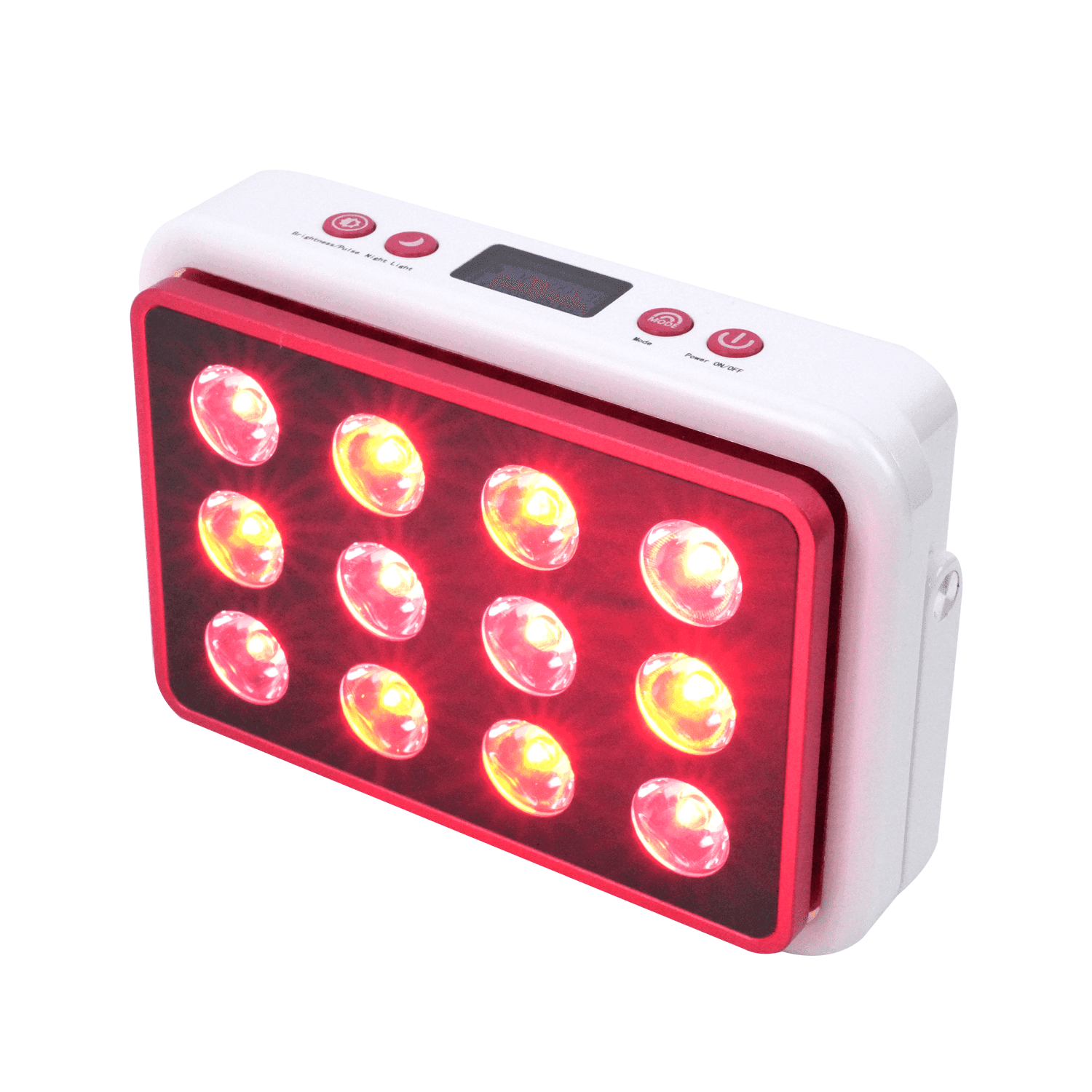
Many Mito Red Light panels, such as the MitoPRO and ESPEO Series, include high output NIR LEDs so that a single panel can support both surface and deep tissue applications depending on how you position and time your sessions.
Key Differences Between Red and NIR Light
Red and near infrared are often grouped together under the umbrella of “red light therapy,” but they differ in a few important ways.
1. Visibility
-
Red light: Visible to the eye as a red glow when the device is on.
-
NIR light: Invisible to the eye, even though it is still on and emitting energy.
This is why a panel may look “less bright” when it is running NIR only. The LEDs can be fully active even if you do not see them lit up.
2. Penetration depth
-
Red light: Primarily affects the epidermis and dermis, along with superficial capillaries and nerve endings.
-
NIR light: Reaches deeper structures, including fascia, muscle, connective tissue and some joint surfaces under appropriate dosing conditions.
The longer the wavelength, the deeper the potential penetration, up to a point. This is why combining both ranges can give you “surface to depth” coverage.
3. Typical use cases
-
Red dominant protocols: Skin appearance, fine lines, pigmentation support, superficial inflammation and acne protocols.
-
NIR dominant protocols: Recovery from training, ongoing joint issues, general soreness and deeper tissue support.
Most real world regimens combine both, which is why multi wavelength panels from brands like Mito Red Light are popular with people who want a single device to do more than one job.
Why Many Devices Combine Red and NIR
On a cellular level, both red and NIR wavelengths appear to act primarily through photobiomodulation. This is the process where light is absorbed by components like cytochrome c oxidase in mitochondria, leading to increased ATP production, nitric oxide modulation and changes in oxidative stress and signaling pathways.
In simple terms, this can translate into improvements in:
-
Cellular energy availability
-
Local blood flow and oxygenation
-
Inflammation markers
-
Tissue repair and resilience over time
Because red and NIR both work through these mechanisms but at different depths, combining them in one device can:
-
Support the skin at the surface
-
Support muscles, joints and connective tissues underneath
-
Allow you to tailor a session by adjusting distance, time and which wavelengths are active
For example, some Mito Red Light panels let you choose between “red only,” “NIR only,” or “both,” so you can run a skin focused session, a deep tissue session or a combined protocol with just a few taps on the control panel.
Practical Tips For Choosing And Using Red vs. NIR
When you are deciding how to use red and NIR in your routine, consider the following points.
-
Match wavelength to goal
-
Skin and cosmetic goals: Emphasize red wavelengths and shorter treatment distances for the face or other target areas.
-
Deeper tissue and recovery goals: Make sure your device has sufficient NIR output and use it on the larger muscle and joint groups you want to support.
-
-
Look for transparent specs
-
Check that the manufacturer clearly lists the wavelengths (for example 630 nm and 660 nm red plus 810 nm and 850 nm NIR) and does not just say “red” or “infrared.”
-
The Mito Red Light panel pages provide detailed spectral information and output data so you know exactly what you are getting.
-
-
Use consistent, moderate dosing
-
Most protocols rely on short, regular sessions rather than occasional marathon use.
-
Typical session times are often in the 10 to 20 minute range per area for red, and slightly longer for deeper NIR dominant applications, depending on device power and distance.
-
-
Think long term
-
Just like training or skincare, results build over time. With a home panel such as those in the Mito Red Light Panel Series, it becomes much easier to stack consistent sessions into your daily or weekly routine.
-
You can browse Mito Red Light’s main site at https://mitoredlight.com and explore the panel lineup at https://mitoredlight.com/collections/panel-series to see examples of devices that combine red and NIR intelligently.
The Takeaway
Red and near infrared light therapy are two sides of the same coin. Red wavelengths give you visible, surface focused support, while NIR reaches deeper muscles and joints. Used together in a well designed device, they provide a versatile toolkit for skin health, recovery and overall wellness at home.
Mito Red Light panels and targeted products are built around this synergy, combining evidence based wavelengths in user friendly formats so you can take advantage of both ranges in a way that fits your life.
References
-
Platinum Therapy Lights. “Red Light vs. Infrared vs. Near-Infrared: Clearing Up the Confusion.” https://platinumtherapylights.com/blogs/news/red-vs-infrared-and-nir-light-therapy
-
Golden Health and Beauty Center. “Red Light vs Infrared Light Therapy.” https://www.goldenhealthcenter.com/red-vs-infrared-light
-
LumeBox. “Red Light, Near-Infrared Light, IR Radiation: What is the Difference?” https://thelumebox.com/blogs/lumebox-blog/red-vs-nir-light-therapy
-
Renu Lounge. “Infrared Light Therapy vs. Red Light Therapy.” https://www.renulounge.com/blog/infrared-light-therapy-vs-red-light-therapy
-
Mito Red Light. “Understanding Red vs. Near-Infrared (NIR) Light Therapy.” https://mitoredlight.com/blogs/mito-red-blog/understanding-red-vs-near-infrared-nir-light-therapy
-
Lumivisage. “Near Infrared vs Red Light Therapy: Key Differences Explained.” https://lumivisage.com/blog/near-infrared-vs-red-light-therapy/
-
Kineon. “Red Light Therapy vs Near Infrared vs Infrared: Key Differences.” https://kineon.io/blogs/news/red-light-therapy-vs-near-infrared-vs-infrared
-
Peninsula Doctor. “Red and Infrared Light Therapy Explained: Clinical Insights and Proven Benefits.” https://www.peninsuladoctor.com/blog/red-and-infrared-light-therapy-explained-clinical-insights-and-proven-benefits/
-
Foreo. “Red Light Therapy vs Infrared: Wavelengths, Benefits and Applications.” https://www.foreo.com/mysa/infrared-vs-red-light-therapy-rtl
-
Mito Red Light. “Red Light Therapy Panels” collection. https://mitoredlight.com/collections/panel-series
-
Mito Red Light. “MitoGLOW LED Red Light Therapy Mask.” https://mitoredlight.com/products/mitoglow-red-light-therapy-mask-with-blue-yellow-red-nir-led
This article discusses published scientific research and general educational information about photobiomodulation and red light therapy. It does not constitute medical advice and does not make specific claims about Mito Red Light devices. The research cited reflects independent peer-reviewed studies and does not imply that any Mito Red Light product has been evaluated, approved, or cleared by the FDA or any other regulatory body for the diagnosis, treatment, cure, or prevention of any disease or medical condition. Individual results vary. Consult a qualified healthcare professional before beginning any light therapy protocol, particularly if you have a pre-existing medical condition, are pregnant, or are taking photosensitising medications.
Mito Red Light products are general wellness devices. They are not medical devices and have not been evaluated, cleared, or approved by the FDA or any regulatory body for the diagnosis, treatment, cure, or prevention of any disease or medical condition. Any references to peer-reviewed research or clinical studies on this page describe findings from independent scientific literature and do not imply that Mito Red Light devices have been studied, tested, or proven effective for any specific condition. Always consult a qualified healthcare provider before beginning any new wellness routine, particularly if you have a medical condition or are taking medication.
Related articles
More from the wavelengths & science knowledge cluster