








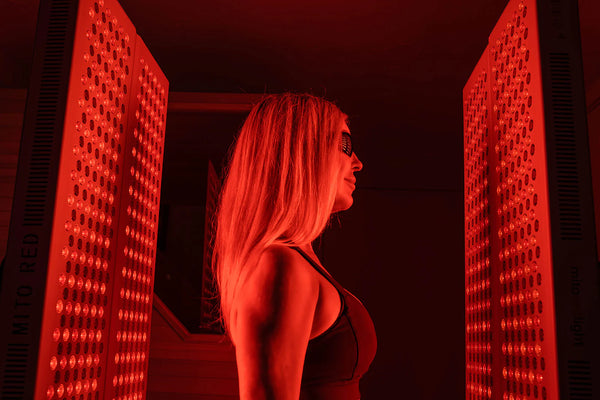
Panel Series
The best time to use red light therapy depends on your goal. Morning sessions support circadian alignment, daytime alertness, and early-day mitochondrial responsiveness — particularly with shorter red and amber wavelengths (590–660nm). Evening sessions support cellular recovery and sleep quality when timed near sunset and kept dim, favoring longer red and near-infrared wavelengths (660–850nm) that minimally disrupt melatonin. For most people, consistency matters more than perfect timing — photobiomodulation effects are cumulative, and a routine maintained over weeks outperforms an optimized schedule that gets skipped.
For the foundational overview of how red light therapy works, see what red light therapy is and what the research shows, or the full cellular mechanism explanation at the science of photobiomodulation.
This article was reviewed for scientific accuracy by Dr. Alexis Cowan, PhD in Molecular Biology (Princeton University), who specializes in mitochondrial function, circadian biology, and photobiomodulation research.
Morning vs. Evening: At a Glance
| Factor | Morning Session | Evening Session |
|---|---|---|
| Primary benefit | Circadian alignment, alertness, early-day mitochondrial response | Cellular recovery, sleep quality support, melatonin preservation |
| Best wavelengths | 590nm amber, 630nm red, 660nm red — more stimulating, reinforce wake signals | 660nm deep red, 810–850nm NIR — low melanopic stimulus, minimal sleep disruption |
| Brightness | Higher brightness acceptable — reinforces daytime alertness | Lower brightness preferred — circadian system more sensitive after dark |
| Timing relative to bed | Within 30–60 min of waking is optimal | 1–2 hours before bed; allow time to cool after session |
| Eye considerations | Normal use; close-eyes or goggles if using near face | IR3/IR5 glasses recommended to reduce visual stimulation |
| Research backing | Shinhmar/Jeffery 2021 — morning timing amplifies mitochondrial and visual response | Zhao 2012, Giménez 2022, Chen 2026, Lin 2025 — evening PBM improves sleep outcomes |
| Best for | Energy, mental clarity, performance priming, skin goals | Muscle recovery, sleep quality, shift workers, athletes post-training |
The Case for Morning: Circadian Alignment and Mitochondrial Timing
Morning is a strategically important window for red light therapy because two biological systems converge: the circadian system is transitioning from night-state to day-state, and mitochondrial responsiveness to photon input appears to be elevated earlier in the day. Using red or amber wavelengths within this window means the light is working with both systems simultaneously rather than against either one.
Professor Glen Jeffery's Research on Morning Timing
The most direct evidence for morning-specific benefits comes from Professor Glen Jeffery's group at University College London. His 2021 study in Scientific Reports (Shinhmar et al.) found that a single 3-minute exposure to 670nm light between 8–9am improved color-contrast vision in older adults by activating retinal mitochondria — while the same exposure at midday produced no measurable benefit.[4] The retina's high mitochondrial density makes it a sensitive indicator of systemic mitochondrial timing, and the morning-specific effect suggests that circadian gating influences how strongly tissue responds to photobiomodulation.
Jeffery's 2025 study in Scientific Reports extended this further — demonstrating that 830–860nm near-infrared wavelengths can pass through the human thorax and produce significant improvements in visual function measured 24 hours later, even when light was blocked from the eyes during the session itself.[3]
Shorter Wavelengths, Wake Signals, and the Circadian Clock
Shorter visible wavelengths — 590nm amber and 630nm red — sit closer to the melanopsin peak sensitivity range (460–500nm) of intrinsically photosensitive retinal ganglion cells (ipRGCs), the specialized photoreceptors that signal the brain about environmental lighting and help regulate the circadian clock. Their proximity to this range makes them slightly more stimulating to the circadian system than longer wavelengths like 660nm or 850nm — which is a feature in the morning, when reinforcing daytime alertness and melatonin suppression is exactly the goal.
Giménez MC et al. (2022) in the Journal of Pineal Research confirmed that both spectral composition and brightness shape how light influences circadian phase, melatonin suppression, and alertness — with the combination of shorter wavelengths and higher brightness producing the strongest morning wake signal.[1] In the morning context, this means using brighter red and amber wavelengths actively works in your favor.
Metabolism and Morning Light
Powner and Jeffery (2024) in the Journal of Biophotonics found that a 15-minute exposure to 670nm light reduced blood glucose elevation following a glucose challenge by 27.7% integrated over 2 hours, with maximum glucose spiking reduced by 7.5% — suggesting that morning red light exposure may integrate with metabolic as well as circadian timing systems.[10]
The Case for Evening: Recovery, Sleep Quality, and Melatonin Preservation
Evening red light therapy serves a different purpose: supporting the body's transition from daytime output mode to nighttime repair mode. The key is wavelength selection and brightness management — longer red and near-infrared wavelengths (660–850nm) have minimal impact on the melatonin-sensitive circadian pathways, allowing the body to move naturally toward sleep while still delivering photobiomodulation benefits to recovering tissue. This is a wellness application; anyone managing a diagnosed sleep condition should work with a healthcare provider.
Red Light, Melatonin, and Sleep Quality — The Research
The melatonin-preserving effect of red versus blue light at night is well documented. Sanchez-Cano et al. (2025) in Life conducted a 3-hour evening experiment in healthy adults comparing 631nm red and 464nm blue LED light exposure — participants under red light maintained melatonin levels more than three times higher than those under blue light, because red wavelengths allowed melatonin to rise normally while blue light sharply suppressed it.[5]
Beyond melatonin preservation, research shows evening PBM may actively support sleep outcomes. Chen PY et al. (2026) in Photodiagnosis and Photodynamic Therapy conducted a randomized controlled trial in older adults with insomnia symptoms, finding that NIR light (850nm applied to the neck) increased subjective sleep duration by 0.81 hours compared to controls — the NIR-only group outperforming both white light and sham conditions.[6]
Lin MY et al. (2025) in Lasers in Medical Science ran a 4-week RCT with night-shift nurses using 830nm PBM, finding significant reductions in PSQI global scores (sleep quality) and Athens Insomnia Scale scores, with benefits sustained for at least one month after the intervention ended.[7] Giménez et al. (2022) in Biology — a double-blind, randomized, placebo-controlled study — found that 850nm PBM at 6.5 J/cm² improved mood, reduced drowsiness, and lowered resting heart rate compared to sham.[2]
Transcranial PBM and Sleep — New Evidence
Mehdizadeh et al. (2025) in Lasers in Medical Science published a randomized controlled trial of transcranial PBM (810nm, 60 J/cm², 3 sessions on consecutive days) in chronic insomnia patients — finding that 3 sessions produced a mean PSQI score improvement of 4.6 points compared to sham (p=0.004) alongside significant reductions in daytime sleepiness and normalization of pathological frontal delta wave activity.[8] Gaggi et al. (2025) in Frontiers in Behavioral Neuroscience further consolidated this picture in a systematic review of transcranial PBM for sleep, wakefulness, and cognition — finding consistent benefits across study designs.[9]
Athletes and Evening Recovery
Zhao et al. (2012) in the Journal of Athletic Training remains one of the most-cited studies on evening red light and recovery — finding that Chinese female basketball players using red light before bed showed improvements in sleep quality and endurance performance compared to controls over a 14-day protocol.[12]
"The great thing about red light panels is that you can use them strategically to help round out the light environment in a room that you're spending time in — and not just use them as a stand-alone therapy. Modern indoor environments give us bright blue-rich light at night and dim, incomplete light during the day. A red or near-infrared panel is one of the most practical tools for correcting that mismatch in both directions."— Dr. Alexis Cowan, PhD, Molecular Biology (Princeton University), Scientific Advisor, Mito Red Light
The Broader Picture: Light Environment, Not Just Session Timing
Dr. Cowan's point connects to a key insight from recent chronobiology research: the body's circadian system responds to the cumulative light environment across the entire day, not just to isolated sessions. Nagare et al. (2021) in International Journal of Environmental Research and Public Health demonstrated this in a crossover study — residents with access to high-quality daytime light showed 22-minute earlier sleep onset, higher sleep regularity, and better daytime vitality compared to when the same residents used standard blinds that limited daytime light exposure.[13]
This means the most effective approach to red light therapy timing isn't just choosing morning or evening — it's considering how sessions fit into the full arc of light exposure across the day. A morning red light session that reinforces the daytime wake signal, combined with an evening session that supports recovery without disrupting melatonin, addresses both ends of the circadian cycle that modern indoor environments tend to compress.
Siqueira et al. (2025) in Photobiomodulation, Photomedicine, and Laser Surgery reviewed the intersection of circadian mitochondrial rhythms and PBM timing specifically — noting that mitochondrial function itself follows circadian oscillations, suggesting that aligning PBM sessions with periods of peak mitochondrial responsiveness may amplify outcomes beyond what timing-agnostic protocols achieve.[8b]
Tissue-Specific Response: Why Mitochondrial Density Changes the Equation
Different tissues respond to red and NIR light at different rates — not because the mechanism differs, but because mitochondrial density varies dramatically across the body. Understanding this helps explain why timing effects are most pronounced in certain tissues and why consistent use matters more than perfect session scheduling for slower-responding tissues.
High-density tissues — brain, retina, heart, active muscle: These tissues carry exceptionally high mitochondrial concentrations to support continuous electrical, visual, and mechanical output. Vincent et al. (2019) in Cell Reports quantified the 3D mitochondrial network in human skeletal muscle, demonstrating the scale of mitochondrial infrastructure in active tissue.[14] High-density tissues tend to show faster and more pronounced responses — and are where morning-timing effects are most evident, as in Jeffery's retinal research.
Moderate-density tissues — skin, connective tissue: Skin contains fewer mitochondria than neural or muscle tissue, and its energy requirements are steadier and less immediate. Martic et al. (2023) in Frontiers in Physiology documented the mitochondrial dynamics of skin cells and their implications for aging — noting that skin-level outcomes from PBM follow slower timelines governed by collagen remodeling and barrier repair cycles that unfold over weeks, not sessions.[15] For skin goals, timing matters less than session frequency and cumulative dose.
Choosing Your Timing Based on Your Primary Goal
Choose Morning If Your Goal Is
- Energy and daytime alertness
- Mental clarity and cognitive performance
- Circadian rhythm support
- Eye health and visual function
- Pre-workout performance priming
- Metabolic health support
- Skin goals (timing less critical — consistency matters more)
Choose Evening If Your Goal Is
- Muscle recovery after training
- Sleep quality support
- Stress and cortisol wind-down
- Shift worker circadian support
- Athletic recovery protocols
- General cellular repair and tissue maintenance
- Reducing evening light environment disruption
Managing Evening Sessions: Wavelength and Brightness Both Matter
Brown (2020) in the Journal of Pineal Research established that melanopic illuminance — the circadian-effective component of a light source — is determined by both spectral composition and overall brightness.[16] Red and near-infrared wavelengths produce far lower melanopic stimulus than blue-rich light, but a very bright red panel can still be visually alerting late at night when the circadian system is maximally sensitive. Two practical tools manage this:
The MitoADAPT Series allows wavelength mode selection — running longer wavelength settings (810nm, 830nm, 850nm NIR-only modes) in the evening produces naturally lower melanopic stimulation while still delivering full photobiomodulation benefits to deeper tissue. The IR3 (Dark) and IR5 (Extra Dark) glasses provide broad coverage around the eye socket, reducing visual stimulation substantially without affecting the photons delivered to skin and subcutaneous tissue below the eye line.
Harding et al. (2019) in Frontiers in Neuroscience documented the temperature-sleep connection: the body's core temperature drop after sunset is one of the primary circadian signals preparing the brain for sleep.[17] A panel session generates mild warmth — allowing 20–30 minutes of cooling time after an evening session supports, rather than disrupts, this natural process.
Consistency Over Perfection: The Most Important Variable
Photobiomodulation effects are cumulative. The downstream signaling cascades triggered by CCO activation — ATP production, nitric oxide release, secondary messenger activity, and gene expression changes — continue to unfold for hours to days after a session. This means the benefits accumulate across sessions, and occasional timing imperfections don't reset progress. A well-maintained routine at a slightly suboptimal time outperforms a theoretically perfect schedule that gets skipped half the time.
The practical implication: choose the time of day you can sustain. If morning sessions fit your schedule, use shorter red and amber wavelengths to reinforce alertness and circadian timing. If evening sessions fit better, favor longer red and NIR wavelengths with lower brightness settings. Both approaches have strong research support. The most important input is showing up consistently.
For wavelength-specific dosing guidance, session duration recommendations, and irradiance targets by tissue depth, see Mito Red Light's complete wavelength dosing reference. For the full clinical evidence base on PBM and sleep outcomes, see the research evidence hub — and the underlying database of over 9,500 peer-reviewed studies at mitoredlight.com/pages/evidence-explorer.
Devices designed for timing-aware protocols
The MitoADAPT Series supports both morning and evening timing with selectable wavelength modes — energizing red and amber in the morning, longer NIR-only settings for evening use with lower visual stimulation. The MitoPRO X delivers six wavelengths covering the full red and NIR therapeutic window for comprehensive morning or evening sessions.
Frequently Asked Questions
Is it better to use red light therapy in the morning or at night?
Both are effective — the right choice depends on your goal. Morning sessions support circadian alignment, daytime alertness, and early-day mitochondrial responsiveness, particularly with 590–660nm wavelengths. Evening sessions support cellular recovery and sleep quality when timed near sunset, kept dim, and focused on longer red and NIR wavelengths (660–850nm). For most people, consistency matters more than optimal timing — maintaining a regular routine at a slightly suboptimal time outperforms an irregular "perfect" schedule.
Can red light therapy help with sleep?
Multiple recent RCTs suggest it may support sleep quality. Chen PY et al. (2026) found 850nm NIR light increased sleep duration by 0.81 hours in older adults with insomnia symptoms. Mehdizadeh et al. (2025) found 810nm transcranial PBM improved PSQI sleep scores by 4.6 points. Lin MY et al. (2025) found 830nm PBM significantly improved sleep quality in night-shift nurses with benefits sustained one month post-intervention. Evening timing, low brightness, and longer wavelengths are the key variables. Anyone managing a diagnosed sleep disorder should consult a healthcare provider.
Does red light therapy at night affect melatonin?
Red and near-infrared wavelengths have minimal impact on melatonin compared to blue-rich light. Sanchez-Cano et al. (2025) found participants under 631nm red light maintained melatonin levels more than three times higher than those under 464nm blue light during a 3-hour evening experiment. However, overall brightness still matters — even low-melanopic light can be alerting at high intensity, so evening sessions should be kept at comfortable, moderate brightness levels.
Why does morning red light therapy feel more energizing?
Two mechanisms converge in the morning: shorter wavelengths (590–630nm) sit closer to the melanopsin sensitivity range that drives daytime wake signals, and mitochondrial responsiveness to photon input appears elevated earlier in the day. Shinhmar et al. (2021) showed that 670nm light at 8–9am improved retinal mitochondrial function while the same exposure at midday had no effect — the most direct evidence that morning timing amplifies the mitochondrial response in high-density tissues.
How close to bedtime can I use red light therapy?
Most research suggests finishing sessions 1–2 hours before bed to allow the mild warmth from a session to dissipate before sleep onset — the body's temperature drop is a key circadian sleep signal. Longer NIR wavelengths and lower brightness are better choices closer to bedtime if an earlier session isn't possible. Avoid bright, short-wavelength (590–630nm) settings late in the evening as these are more visually stimulating.
Does the timing matter for skin goals?
Less so than for circadian or recovery goals. Skin has moderate mitochondrial density and responds primarily to cumulative dose over weeks rather than session timing. For skin collagen, texture, and anti-aging outcomes, consistency and session frequency matter more than whether you treat in the morning or evening.
What wavelengths should I use in the evening vs morning?
Morning: 590nm amber, 630nm red, 660nm red — shorter wavelengths that reinforce alertness and support circadian wake signals. Evening: 660nm deep red, 810nm, 830nm, 850nm NIR — longer wavelengths with minimal melanopic stimulus that support recovery without disrupting melatonin onset. The MitoADAPT Series allows direct mode selection between these wavelength ranges.
References
- Giménez MC, et al. (2022). Predicting melatonin suppression by light in humans: Unifying photoreceptor-based equivalent daylight illuminances, spectral composition, timing and duration of light exposure. Journal of Pineal Research. PMID 34981572
- Giménez MC, et al. (2022). Effects of Near-Infrared Light on Well-Being and Health in Human Subjects with Mild Sleep-Related Complaints: A Double-Blind, Randomized, Placebo-Controlled Study. Biology. PMID 36671752
- Jeffery G, et al. (2025). Longer wavelengths in sunlight pass through the human body and have a systemic impact which improves vision. Scientific Reports. PMID 40628952
- Shinhmar H, Hogg C, Neveu M, Jeffery G. (2021). Weeklong improved colour contrast sensitivity after single 670nm exposures associated with enhanced mitochondrial function. Scientific Reports. PMID 34819619
- Sanchez-Cano A, et al. (2025). Comparative Effects of Red and Blue LED Light on Melatonin Levels During Three-Hour Exposure in Healthy Adults. Life. PMID 40430143
- Chen PY, et al. (2026). Effects of bright light and near-infrared light on insomnia symptoms in community-dwelling older adults: a randomized clinical trial. Photodiagnosis and Photodynamic Therapy. PMID 41794313
- Lin MY, et al. (2025). Effects of photobiomodulation on the sleep quality and quality of life of night-shift nurses. Lasers in Medical Science. PMID 40358743
- Mehdizadeh M, et al. (2025). Transcranial photobiomodulation improves sleep quality, reduces daytime sleepiness, and modulates delta power in chronic insomnia. Lasers in Medical Science. PMID 41125953
- Siqueira RC. (2025). Optimal Timing of Photobiomodulation Therapy for Retinal Diseases: Leveraging Circadian Mitochondrial Rhythms. Photobiomodulation, Photomedicine, and Laser Surgery. PMID 39876708
- Gaggi NL, et al. (2025). Enhancing sleep, wakefulness, and cognition with transcranial photobiomodulation: a systematic review. Frontiers in Behavioral Neuroscience. PMID 40822571
- Powner MB, Jeffery G. (2024). Light stimulation of mitochondria reduces blood glucose levels. Journal of Biophotonics. PMID 38378043
- Zhao J, et al. (2012). Red light and the sleep quality and endurance performance of Chinese female basketball players. Journal of Athletic Training. PMID 23182016
- Nagare R, et al. (2021). Access to Daylight at Home Improves Circadian Alignment, Sleep, and Mental Health in Healthy Adults. International Journal of Environmental Research and Public Health. PMID 34639284
- Vincent AE, et al. (2019). Quantitative 3D mapping of the human skeletal muscle mitochondrial network. Cell Reports. PMID 30655224
- Martic I, et al. (2023). Mitochondrial dynamics and metabolism across skin cells: implications for skin homeostasis and aging. Frontiers in Physiology. PMC10693346
- Brown TM. (2020). Melanopic illuminance defines the magnitude of human circadian light responses under a wide range of conditions. Journal of Pineal Research. PMID 32248548
- Harding EC, Franks NP, Wisden W. (2019). The Temperature Dependence of Sleep. Frontiers in Neuroscience. PMC6491889
This article was reviewed for scientific accuracy by Dr. Alexis Cowan, PhD in Molecular Biology (Princeton University), who specializes in mitochondrial function, circadian biology, and photobiomodulation research. Last updated: May 2026.
This article discusses published scientific research and general educational information about photobiomodulation and red light therapy. It does not constitute medical advice and does not make specific claims about Mito Red Light devices. The research cited reflects independent peer-reviewed studies and does not imply that any Mito Red Light product has been evaluated, approved, or cleared by the FDA or any other regulatory body for the diagnosis, treatment, cure, or prevention of any disease or medical condition. Individual results vary. Consult a qualified healthcare professional before beginning any light therapy protocol, particularly if you have a pre-existing medical condition, are pregnant, or are taking photosensitising medications.
Mito Red Light products are general wellness devices. They are not medical devices and have not been evaluated, cleared, or approved by the FDA or any regulatory body for the diagnosis, treatment, cure, or prevention of any disease or medical condition. Any references to peer-reviewed research or clinical studies on this page describe findings from independent scientific literature and do not imply that Mito Red Light devices have been studied, tested, or proven effective for any specific condition. Always consult a qualified healthcare provider before beginning any new wellness routine, particularly if you have a medical condition or are taking medication.
Related articles
More from the protocols & how to use knowledge cluster