








Panel Series
Updated April 2026
Blue light therapy at home uses LED devices in the 400–470 nm range, most commonly targeting the ~415 nm peak where bacterial porphyrins absorb visible light — the mechanism most often studied for inflammatory acne. Whether an at-home device produces results similar to in-clinic phototherapy depends on three factors: wavelength precision, irradiance at treatment distance, and session duration. This guide walks through the device categories worth considering (masks, panels, handhelds, flexibles), what to look for in a quality at-home unit, a simple protocol that supports consistent use, and when to escalate to a dermatologist. For broader background on photobiomodulation and wavelength selection, see the Research Evidence Hub.
Understanding Blue Light Devices
Blue light therapy devices operate in a roughly 400 to 470 nm window — within the visible blue spectrum and shorter than red or near-infrared light. Blue light is absorbed mostly by the upper layers of the skin and does not penetrate as deeply as red light or near-infrared therapy. Research has examined blue light primarily for inflammatory acne, where the ~415 nm wavelength is associated with porphyrin-driven photodynamic activity against Cutibacterium acnes [1].
The first step in choosing a device is to look for a reputable company and devices that hold appropriate clearances. Be cautious of any product marketed as "FDA Approved" — that designation applies to medications, not light devices. Devices used for skincare are typically marketed as FDA Cleared (a different regulatory pathway) or as general-wellness LED devices. Watch for vague phrases like "medically approved" or unsupported clinical claims.
Blue light therapy devices come in several form factors:
| Device type | Best for | Coverage | Notes |
|---|---|---|---|
| LED masks | Full-face acne, skin clarity, daily routine | Full face | Hands-free, built-in eye coverage on quality models. The MitoGLOW mask includes a dedicated blue mode alongside red, near-infrared, and amber LEDs. |
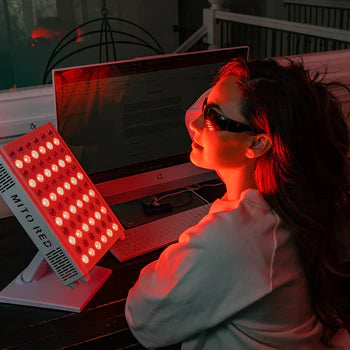
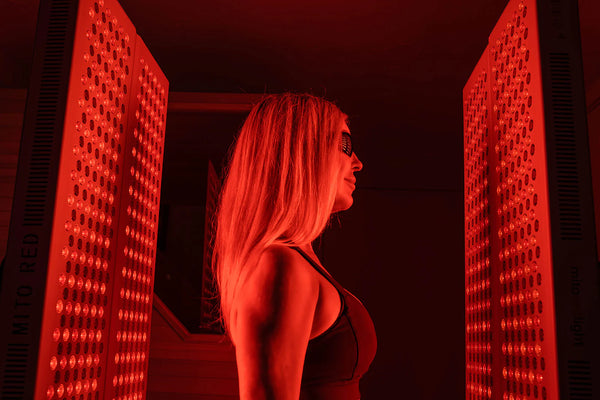
| Panels | Targeted areas at close range, or layered with other modalities | Variable | Most red/NIR panels do not include blue LEDs by default. External goggles required when blue is present. For panel-specific spectral output, see Mito Red's independent ISO/IEC 17025 test data. |
| Handhelds / spot treatments | Localized blemishes, occasional flare-ups | Small | Compact and travel-friendly; not designed for full-face coverage. The MitoBOOST is one example of a portable spot-treatment-style device. (verify product URL before publish) |
| Flexible / body devices | Larger body skin areas | Medium | Less common for blue specifically — most flexible devices in this category are red/NIR only. |
What the Research Says About Blue Light for Skin
Research on visible blue light for skin clarity dates back more than two decades. A foundational 2000 trial by Papageorgiou and colleagues reported that combined 415 nm and 660 nm phototherapy was associated with improvements in inflammatory acne lesions over 12 weeks [1]. A 2019 systematic review and meta-analysis of phototherapy for acne concluded that blue and blue/red light protocols were associated with reductions in inflammatory lesion counts, though effect sizes varied across study designs and device parameters [2]. More recent reviews continue to evaluate dosing, wavelength precision, and treatment duration as the principal determinants of results [3].
Evidence strength is generally considered moderate for inflammatory acne and preliminary for other indications sometimes discussed in marketing (general "skin clarity," texture, sebum control). The most consistent signals appear in studies using devices that deliver clinically relevant irradiance at the treatment site. Consumer-grade devices vary widely on this dimension, which is why device selection matters more than it may appear at face value.
Protocols and Environment
At-home blue light devices are typically designed for sessions of 5 to 20 minutes, used a few times per week. The setup itself is simple — comfort, convenience, and cleanliness matter more than a dedicated treatment space. A few practices help maximize the chance of seeing a result:
- Wash your face before each session. Warm water and a mild cleanser remove makeup, sunscreen, and fragranced products. Light is more likely to interact with surface layers as intended when skin is clean.
- Anchor it to an existing routine. Frequent, consistent use produces the most reliable outcomes. Many users add the session to their morning skincare flow or the evening wind-down — see combining blue light therapy with your skincare routine for a worked example.
- Moisturize and protect. Apply moisturizer after each session and use sunscreen on exposed skin during the day.
- Avoid harsh actives. Limit retinoids, strong exfoliants, and other potentially irritating products on session days, particularly while skin is acclimating.
- Protect your eyes. Use built-in eye coverage (as on the MitoGLOW) or external goggles when the device exposes the eyes to direct blue light.
- Sit still. Stay in a steady position so the target area is held at a consistent distance from the device.
- Track progress. Take a "before" photo and keep brief notes on appearance and texture. Visible changes generally take several weeks to develop, and a baseline reference helps you evaluate honestly.
Cost Considerations
An at-home device is usually a more budget-friendly option than a series of in-clinic phototherapy sessions, which often cost $1,000–$2,000 across multiple appointments. At-home device pricing varies widely, so where the money goes matters.
As blue light skincare has become popular, the market has filled with low-cost devices from a wide range of sellers. Inexpensive units can ship without published specs, without third-party testing, and without meaningful safety review — which is a particular concern for any product placed close to the eyes. Suspiciously low prices on global marketplaces are often a signal that the device was made and shipped from a region that doesn't apply the same safety standards as established device manufacturers.
For best results — and for a device that will hold up to repeated use — stay with established light therapy specialists, check for published specifications and third-party test data, and read genuine customer reviews. Mito Red Light publishes panel-level spectral output and irradiance data through independent third-party testing.
When to Consult a Professional
Devices used by dermatologists in clinical settings are typically more powerful than at-home units. A dermatologist can discuss skin goals, recommend a treatment plan, and advise on session length, intensity, and the use of photosensitizing agents that may influence how light interacts with the skin.
If blue light therapy seems like a good fit but at-home results are not appearing, a professional consultation can help identify whether a stronger device, a different wavelength combination, or a non-light-based approach would be more appropriate. Visible changes typically take several weeks at minimum, and individual response varies considerably. Some users will also be better suited to red light therapy or a combined red/blue approach — the comparison guide on red light vs blue light therapy covers when each makes more sense.
Frequently Asked Questions
Does blue light therapy actually work for acne at home?
Studies suggest blue light around 415 nm may help reduce inflammatory acne lesions when used consistently with a device that delivers adequate irradiance at the treatment site. At-home results vary based on device quality, distance, session length, and how often the device is used. Most users who see changes notice them after several weeks of regular use rather than after a single session.
How often should I use an at-home blue light device?
Most at-home blue light devices are designed for sessions of about 5 to 20 minutes, used three to five times per week. Always follow the specific instructions for your device. Daily use is not necessarily better — consistency and adequate session length tend to matter more than frequency.
How long does it take to see results from blue light therapy?
Most studies on blue light for acne report measurable changes after 4 to 12 weeks of regular sessions. Individual response varies, and very subtle changes may take longer to notice without a baseline photo for comparison.
Is blue light therapy safe for the eyes?
Direct, prolonged blue light exposure to the eyes is not advised. Quality at-home devices either incorporate eye coverage (as built into the MitoGLOW mask) or are designed to be used with external goggles. Always follow the eye protection guidance that ships with your device.
Can I combine blue light and red light therapy?
Yes — combined blue and red protocols have been studied and used clinically. Some at-home devices, including the MitoGLOW mask, include both wavelengths in separate modes so users can alternate or layer them based on goal. Blue is more often used for acne-focused sessions; red for general skin support and recovery.
What wavelength is best for at-home blue light skincare?
The most-studied wavelength for inflammatory acne is around 415 nm, which corresponds to a peak absorption band of bacterial porphyrins. Some devices use slightly longer wavelengths (around 420–470 nm) marketed for similar applications. Wavelength precision and irradiance at the treatment surface tend to matter more than minor shifts within this range.
Can blue light therapy replace a dermatologist?
At-home blue light therapy is a wellness tool, not a replacement for medical care. Persistent or severe acne, painful nodules or cysts, or skin conditions that change suddenly should be evaluated by a dermatologist. At-home blue light may complement a dermatologist's plan but should not be used to delay professional care.
Are at-home blue light devices as effective as in-clinic treatments?
In-clinic devices generally deliver higher irradiance and may use protocols that are not feasible at home. At-home devices trade some peak intensity for the ability to use them consistently over weeks or months, which itself drives results. For mild to moderate inflammatory acne, a quality at-home device used regularly can produce meaningful changes; more severe cases typically benefit from clinical care.
References
- Papageorgiou P, Katsambas A, Chu A. Phototherapy with blue (415 nm) and red (660 nm) light in the treatment of acne vulgaris. Br J Dermatol. 2000;142(5):973-978. PMID: 10809858
- Scott AM, Stehlik P, Clark J, et al. Blue-light therapy for acne vulgaris: a systematic review and meta-analysis. Ann Fam Med. 2019;17(6):545-553. PMID: 31712293
- Pei S, Inamadar AC, Adya KA, Tsoukas MM. Light-based therapies in acne treatment. Indian Dermatol Online J. 2015;6(3):145-157. PMID: 26009707
Mito Red Light products are general wellness devices. They are not medical devices and have not been evaluated, cleared, or approved by the FDA or any regulatory body for the diagnosis, treatment, cure, or prevention of any disease or medical condition. Any references to peer-reviewed research or clinical studies on this page describe findings from independent scientific literature and do not imply that Mito Red Light devices have been studied, tested, or proven effective for any specific condition. Always consult a qualified healthcare provider before beginning any new wellness routine, particularly if you have a medical condition or are taking medication.
Related articles
More from the skin health & anti-aging knowledge cluster