














Panel Series
Last updated: October 2026
Quick answer: Yes, red light therapy masks can gradually improve skin texture and support a more even-looking tone. Red and near-infrared light support collagen and cellular energy, and amber or yellow light (570 to 590 nm) has been studied for tone and brown spots, with the strongest results so far at 570 nm. In recent trials, changes in texture, pores and fine lines appeared after 4 to 16 weeks of sessions 2 to 5 times a week.
How Red Light Therapy Masks Work on Skin Tone and Texture
- Photobiomodulation: red and near-infrared light is absorbed by mitochondria in skin cells, supporting cellular energy and the fibroblasts that make collagen, which shapes how smooth skin looks and feels [2].
- Wavelengths: red (about 630 to 660 nm) works in the upper dermis, near-infrared (about 830 to 850 nm) reaches deeper for firmness, and amber or yellow (about 570 to 590 nm) acts closer to the surface, where it has been studied for tone and brown spots.
- Coverage: each area of the face only benefits where the light reaches it, so even, full-face coverage matters for an even result.
- Routine: results build with repeated sessions over weeks, not from a single use.
What the Latest Research Shows (2025 to 2026)
- Yellow plus red plus near-infrared LED (30 people, 2025): 570 or 590 nm yellow light combined with 620 nm red and 850 nm near-infrared, three times a week for 8 weeks, reduced pores, wrinkles, texture and brown spots in facial photoaging; the 570 nm combination had the stronger effect on wrinkles and brown spots, and the 590 nm arm reached significance for wrinkles but not brown spots. This exploratory study had no sham group (Yi et al., 2025).
- Home-use mask, randomized and sham-controlled (60 adults, 2025): a 630 nm LED and 850 nm near-infrared mask improved crow's feet compared with sham at 8, 12 and 16 weeks in adults with skin types II to V (Park et al., 2025).
- Red LED mask, randomized and sham-controlled (95 women, 2025): a 660 nm mask two or three times a week for four weeks (21-minute sessions) reduced the measured length of frown lines and wrinkles beside one eye compared with sham, although blinded raters saw no difference on a standard wrinkle scale (Bragato et al., 2025).
- 830 nm and pigmentation (pilot, 10 people, 2025): 830 nm LED reduced redness and the melanin index after UV exposure on the thigh skin of healthy volunteers; 590 nm in the same study helped prevent redness but did not reduce existing pigmentation. Early evidence, but relevant to uneven tone after irritation (Dan et al., 2025).
- Skin tone and light (2026 review): a 2026 review notes that melanin affects how light penetrates and that few trials report results by skin tone, so people with darker skin may need protocols tailored to them (Girasol and Bachmann, 2026).
For wrinkle-specific research, see red light masks for wrinkles. To compare masks side by side, see our best red light therapy masks of 2026.
What Affects Skin Tone and Texture
Skin tone and texture are influenced by a combination of structural, environmental, and lifestyle factors. Understanding these variables helps put the role of any single treatment into proper context.
Structural and Biological Factors
Collagen and elastin provide the foundation that helps skin appear firm and smooth. Changes in these proteins are associated with differences in skin texture and resilience over time, including those related to the natural aging process [2]. Cell turnover also plays a role, influencing how evenly new skin cells replace older ones.
External Factors and Diet
Exposure to UV radiation and environmental stressors can contribute to changes in skin tone and texture through oxidative stress [3]. Hydration and barrier function also influence how smooth and reflective the skin appears. Nutritional factors, including carotenoids obtained through diet and antioxidant intake, have been associated with changes in skin coloration and overall appearance [4].
Some research suggests that carotenoid-related pigmentation, which contributes to subtle yellow, orange, and red tones in the skin, is often perceived as healthier and more visually appealing compared to paler or uneven complexions [4].
Common Causes of Uneven Skin Tone
Cumulative sun exposure over time is one of the most common drivers, leading to areas of concentrated pigmentation often referred to as sun spots. Hormonal changes can also contribute to broader patches of discoloration, commonly seen in conditions like melasma. Inflammatory responses from acne or irritation may leave behind darker marks, while gradual changes in melanocyte activity over time can contribute to a more uneven overall tone.
How Red Light Therapy Fits In
Red light therapy is best viewed as a supportive tool within a broader skin routine. It may influence underlying biological processes that contribute to how skin tone and texture appear over time.
Cellular Energy and Collagen Signaling
Red light wavelengths have been shown in photobiomodulation research to interact with mitochondria, supporting cellular energy production [1]. This process is associated with signaling pathways that influence collagen production and fibroblast activity [2]. These mechanisms are commonly referenced when explaining gradual improvements in skin smoothness and overall structure.
Circulation and Skin Appearance
Some evidence suggests red light therapy may support localized microcirculation, which can influence short-term skin appearance [1]. Improved blood flow may contribute to a more refreshed look immediately after use. Over time, changes in skin smoothness and hydration can contribute to a more even and radiant appearance. These effects are typically subtle and depend on consistency rather than a single session. These factors may also relate to how temporary redness appears, though outcomes can vary depending on the underlying cause.
Where Results May Be Noticed
Changes in skin texture, such as a smoother feel, may develop gradually with repeated use. Improvements in tone may reflect a combination of structural changes and surface-level factors like hydration and circulation. Together, these effects can contribute to a more balanced and naturally radiant look.
The timeline for visible changes can vary depending on individual skin condition and routine consistency. Uneven tone, including concerns such as redness and hyperpigmentation, is influenced by multiple factors. Red light therapy may play a supportive role within a broader routine, contributing to overall skin quality and a more even-looking appearance over time.
Practical Steps to Support Skin Tone and Texture
Improving skin tone and texture typically involves a combination of consistent habits and supportive therapies.
-
Support the Skin Barrier and Hydration
A well-functioning skin barrier helps maintain smoothness and an even appearance. Hydration influences how light reflects off the skin, affecting perceived texture. -
Minimize UV and Environmental Stress
UV exposure is a major contributor to uneven tone and texture over time [3]. Reducing exposure and using protection helps limit these effects. -
Maintain Consistent Skin Renewal
Regular but gentle exfoliation supports natural cell turnover. This process can improve surface-level texture when balanced with proper barrier care. -
Support Collagen Through Nutrition and Topicals
Nutrients such as vitamin C and antioxidant compounds play a role in collagen synthesis and protection against oxidative stress [4]. These factors contribute to long-term skin structure. -
Use Red Light Therapy Consistently as an Adjunct
Red light therapy is often studied in repeated sessions over time, with consistency being a key factor in observed outcomes [2]. It works best when combined with other supportive practices rather than used in isolation.
Evidence-Based Skin Tone and Texture Enhancers
| Compound | Role in Skin Appearance | Evidence-Based Function |
|---|---|---|
| Carotenoids | Skin tone coloration | Accumulate in the skin and are associated with healthier, more balanced coloration [4] |
| Astaxanthin | Antioxidant support | May help reduce oxidative stress and support skin elasticity [5] |
| Lycopene | Photoprotection support | Associated with reduced UV-related skin effects in dietary studies [4] |
| Vitamin C | Collagen support | Required for collagen synthesis and antioxidant defense [4] |
| Polyphenols | Skin clarity | Help regulate oxidative stress and support overall skin appearance [5] |
What to Expect Over Time
Short Term
Skin may appear more refreshed or hydrated, often influenced by circulation and surface-level factors.
Mid Term
Gradual improvements in texture, such as smoother-feeling skin, may become more noticeable with consistent routines.
Long Term
Collagen-related changes may contribute to more sustained improvements in tone and texture over time [2].
Next Steps
Skin tone and texture are shaped by a range of interconnected factors, from collagen structure to environmental exposure and daily habits. Red light therapy masks may support some of these processes when used consistently alongside a well-rounded routine.
A useful approach is to focus on consistent daily habits first, then gradually layer in supportive tools like red light therapy over time. Tracking changes and maintaining a balanced routine can help set more realistic expectations and support more noticeable long-term results.
As part of that process, choosing a device with well-defined wavelengths and independently verified output can help ensure more consistent and reliable use.
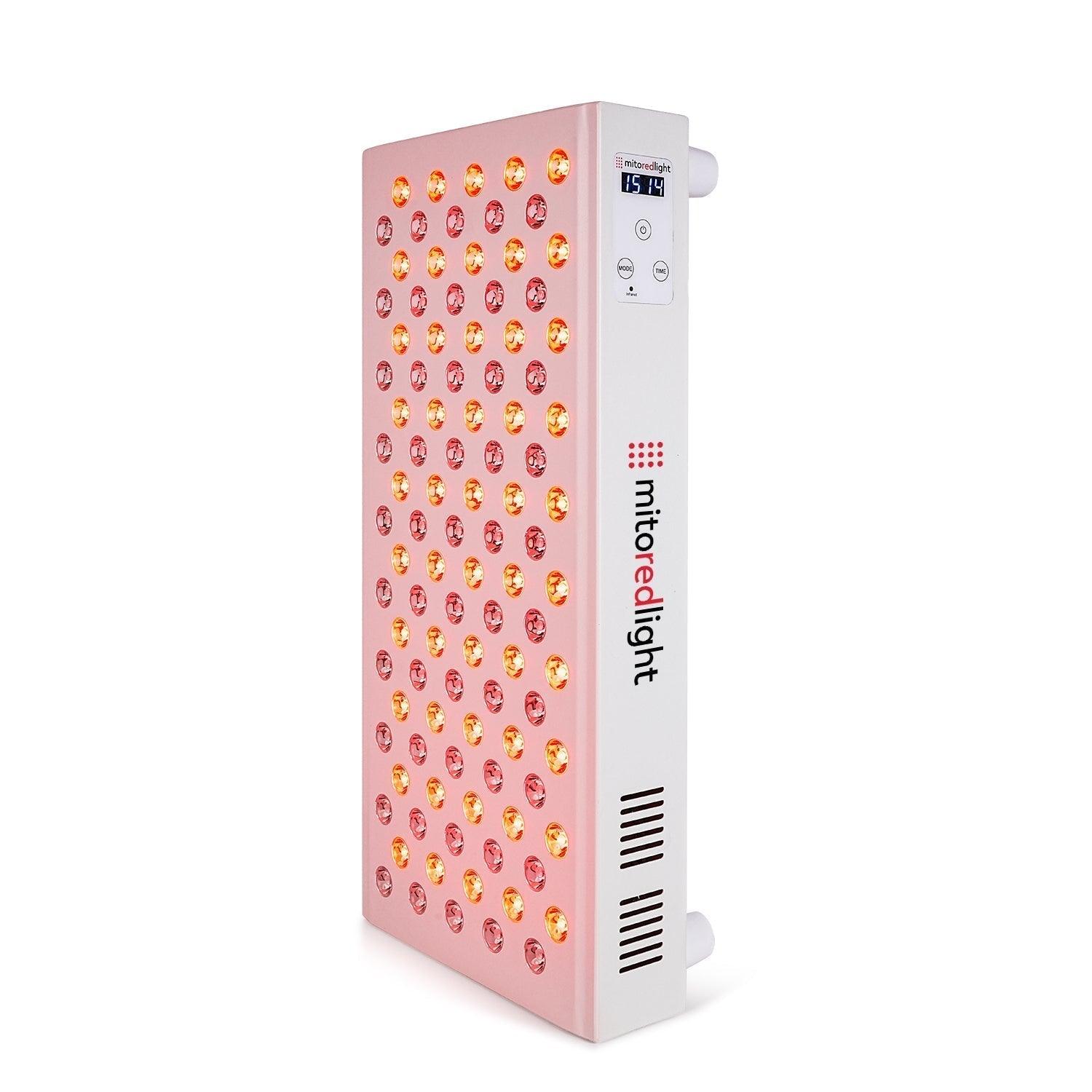
For independent ISO/IEC 17025 lab testing of irradiance and wavelength output across Mito Red Light panels, see our independent third-party testing data.
About the MitoGLOW
Four wavelengths. FDA 510(k) cleared.
The MitoGLOW LED mask delivers 465 nm, 590 nm, 630 nm, and 830 nm. FDA 510(k) cleared for full-face wrinkles. Includes a rotatable chin and neck module.
Frequently Asked Questions
Does red light therapy work on the face?
Yes, for gradual cosmetic improvements. Sham-controlled trials published in 2025 found that home-use red and near-infrared masks reduced fine lines and wrinkles beside the eyes and between the brows over 4 to 16 weeks, and studies combining amber or yellow light with red and near-infrared also reported smoother texture, smaller-looking pores and fewer brown spots.
Which wavelength is best for skin tone?
Amber or yellow light around 570 to 590 nm has been studied for tone and brown spots, often combined with red (about 620 to 660 nm) and near-infrared (about 830 to 850 nm) light for texture and fine lines. MitoGLOW combines 590 nm amber with 630 nm red, 830 nm near-infrared and 465 nm blue.
Do red light therapy masks actually improve skin tone and texture?
Red light therapy has been shown in some studies to support processes like collagen signaling and cellular energy production, which are linked to skin structure [1][2]. While results vary, consistent use may contribute to gradual improvements in skin smoothness and overall appearance.
How long does it take to see results from a red light therapy mask?
Changes in skin appearance are typically gradual rather than immediate. Some users may notice short-term improvements in overall appearance, while more noticeable changes in texture and tone may develop over several weeks of consistent use [2].
Can red light therapy help uneven skin tone?
Red light therapy may support overall skin appearance through mechanisms related to collagen and circulation. However, uneven skin tone is influenced by multiple factors, including UV exposure and pigmentation, so results can vary depending on the underlying cause [3].
Is red light therapy enough on its own for better skin texture?
Red light therapy is generally most effective when used alongside other supportive practices. Factors such as hydration, barrier health, sun protection, and nutrition all play a role in skin texture and should be considered as part of a complete routine.
What else helps improve skin tone and texture besides light therapy?
Skin tone and texture are influenced by a combination of lifestyle and skincare factors, including sun protection, consistent skin renewal, and nutrient intake. Antioxidants such as carotenoids have been associated with healthier skin coloration and overall appearance [4].
References
1. Hamblin MR. Mechanisms and applications of the anti-inflammatory effects of photobiomodulation. AIMS Biophysics. 2017.
2. Avci P et al. Low-level laser (light) therapy (LLLT) in skin: stimulating, healing, restoring. Semin Cutan Med Surg. 2013.
3. Rittié L, Fisher GJ. UV-light-induced signal cascades and skin aging. Ageing Res Rev. 2002.
4. Stephen ID et al. Skin coloration and attractiveness. Perception. 2011.
5. Stahl W, Sies H. Carotenoids and flavonoids contribute to nutritional protection against skin damage. Mol Biotechnol. 2007.
Dive deeper into the research
- Mito Red Research Evidence Hub — 10,000+ indexed PBM studies across 15 clinical categories.
- Wavelength reference — 633, 660, 810, and 830 nm comparison and dosing data.
- Independent third-party testing — spectrometer-verified output across the Mito Red product line.
- Mito Red Scientific Advisory Board — review workflow, evidence grading, primary-literature sourcing.
Mito Red Light products are general wellness devices. They are not medical devices and have not been evaluated, cleared, or approved by the FDA or any regulatory body for the diagnosis, treatment, cure, or prevention of any disease or medical condition. Any references to peer-reviewed research or clinical studies on this page describe findings from independent scientific literature and do not imply that Mito Red Light devices have been studied, tested, or proven effective for any specific condition. Always consult a qualified healthcare provider before beginning any new wellness routine, particularly if you have a medical condition or are taking medication.
Related articles
More from the skin health & anti-aging knowledge cluster