Photobiomodulation (PBM) has one of the strongest clinical evidence profiles for orthopedic conditions affecting joints, tendons, ligaments, and cartilage. Systematic reviews and meta-analyses — many with Cochrane-level methodology — confirm statistically significant benefits for conditions including knee osteoarthritis, shoulder tendinopathy, lateral epicondylitis (tennis elbow), Achilles tendinopathy, and temporomandibular joint (TMJ) disorders. Near-infrared wavelengths (780–860 nm) penetrate to joint capsule depth (2–4 cm), while red wavelengths (630–660 nm) address periarticular inflammation. The World Association for Laser Therapy has published specific dosing guidelines for 16 orthopedic indications based on this evidence base.
The mechanisms underlying PBM's orthopedic benefits are distinct from its effects in other tissues. In articular cartilage, PBM stimulates chondrocyte proliferation, proteoglycan synthesis, and type II collagen production — potentially modifying the underlying pathophysiology of osteoarthritis rather than merely suppressing symptoms. In tendons and ligaments, PBM accelerates fibroblast proliferation and type I collagen synthesis, supporting structural repair and reducing degenerative tendinopathy. In synovial tissue, PBM reduces mast cell degranulation and macrophage infiltration, limiting the chronic low-grade inflammation that drives joint destruction in rheumatoid and degenerative arthritis.
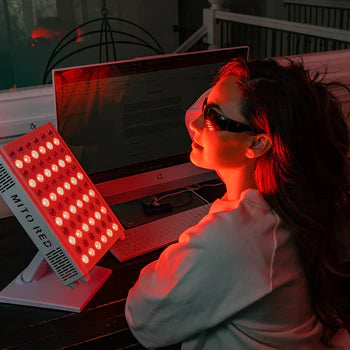
Clinically, the strongest evidence exists for knee osteoarthritis and neck pain, both with Level I evidence (multiple RCTs and positive meta-analyses). Shoulder, elbow, and TMJ disorders have Level II evidence (individual RCTs). An important consideration is that PBM parameters — particularly wavelength, dose, and depth of target tissue — must be precisely calibrated. Under-dosing produces sub-therapeutic effects; adequate dosing reaches the joint space and activates the target chromophores. Panel devices delivering 50–200 mW/cm² at appropriate wavelengths can achieve therapeutic doses to joint tissue within 10–20 minutes.