












Panel Series
Red light therapy masks deliver clinically studied wavelengths of red and near-infrared light directly to the face using contoured arrays of light-emitting diodes worn against the skin. Multiple randomized controlled trials support the use of red (630–660 nm) and near-infrared (830 nm) wavelengths for collagen stimulation, skin rejuvenation, and wrinkle reduction, and blue light (415–470 nm) for mild to moderate acne. They are not all the same — wavelengths, power density, and facial coverage vary significantly between devices, and these differences determine whether a mask can replicate the dosing used in clinical research. The mechanisms, research summaries, and usage guidelines in this article apply broadly to LED face masks that match the studied wavelengths and doses.
These red light therapy face masks are designed for at-home use, so people can build a consistent light therapy routine without clinic visits. Most people looking for a red light therapy mask for wrinkles or an LED face mask for acne are aiming for gradual, visible improvements in skin over 8–12 weeks rather than an overnight transformation.
Updated June 2026 — refreshed with current photobiomodulation research and dermatological evidence.
How Do Red Light Therapy Masks Work?
An LED face mask positions an array of light-emitting diodes against the facial skin, delivering light at specific wavelengths — most commonly red (630–660 nm) and near-infrared (830 nm), with some devices adding blue (415–470 nm) and amber (590 nm). The process driving the skin effects is photobiomodulation (PBM): the absorption of specific non-thermal wavelengths by chromophores inside skin cells, triggering downstream changes in cellular function.
The primary photoacceptor for red and near-infrared wavelengths is cytochrome c oxidase (CCO), the terminal enzyme in the mitochondrial electron transport chain. When CCO absorbs light in the 630–660 nm and 810–850 nm ranges, it supports increased ATP production — the cell's primary energy currency. Energized fibroblasts (the cells responsible for synthesizing structural proteins) increase production of collagen types I and III and elastin. Concurrently, red light has been shown to reduce the activity of matrix metalloproteinases (MMPs) — enzymes that degrade existing collagen — which helps preserve dermal structure alongside stimulating new collagen synthesis.
Near-infrared wavelengths (830 nm) penetrate more deeply into the dermis than red light, reaching fibroblasts in the lower dermal layers and supporting anti-inflammatory pathways that red light alone cannot reliably access at depth. This is why combining red and NIR in a single session addresses the full dermal depth.
Blue light (415–470 nm) works through an entirely different mechanism. It activates endogenous porphyrins inside Cutibacterium acnes bacteria, producing reactive oxygen species that have a direct antimicrobial effect. Blue light does not penetrate significantly beyond the superficial skin layers and is not a structural or anti-aging wavelength — it is specifically relevant for acne protocols.
Masks differ from handheld devices and panels in one important way: they standardize delivery geometry. Because the device is worn rather than held, the distance between LEDs and skin, the angle of light incidence, and the coverage area remain consistent from session to session — the at-home equivalent of controlled clinical dosing. For a deeper look at how photobiomodulation works at the cellular level, see Mito Red Light's guide on how red and near-infrared light trigger cellular response.
Do Red Light Therapy Masks Work? What the Research Shows
In short: Yes — high-quality red light therapy masks that use 630–660 nm red light, 830 nm near-infrared, and — when relevant — 415–470 nm blue light have clinical support for improving wrinkles, skin texture, and mild to moderate acne when used consistently for several weeks. Results are gradual and depend on device specifications and adherence to a consistent protocol.
Red light therapy for skin is one of the better-evidenced applications in the photobiomodulation literature. The research base spans randomized controlled trials, split-face studies, tissue-engineered skin models, and systematic reviews. The most consistent findings fall into three areas: photoaging and wrinkle reduction, collagen and dermal structure, and acne. A 2024 clinical review of photobiomodulation in dermatology published in the Journal of the American Academy of Dermatology — covering evidence across skin rejuvenation, acne, and related applications — concluded that PBM offers patients a noninvasive option with a favorable safety profile, while emphasizing that wavelength, dose, and treatment schedule are critical variables for reproducible results. [Mineroff J et al. PMID: 38307144]
Photoaging and wrinkle reduction
The most cited controlled trial for LED skin rejuvenation is Wunsch and Matuschka (2014), published in Photomedicine and Laser Surgery. This prospective, randomized, controlled study enrolled 136 volunteers across four treatment groups receiving polychromatic LED light in either the 611–650 nm or 570–850 nm range, twice weekly for 30 sessions, compared to an untreated control group. Blinded clinical photography, computerized profilometry, and ultrasonographic collagen density measurements were taken at baseline and after 30 sessions. Treated subjects showed statistically significant improvements in skin complexion, skin roughness, and ultrasonographically measured collagen density compared to controls. The blinded clinical evaluation of photographs confirmed the improvements. [Wunsch A, Matuschka K. PMID: 24286286]
Collagen synthesis and MMP regulation
A complementary study by Barolet et al. (2009), published in the Journal of Investigative Dermatology, investigated the effect of pulsed 660 nm LED treatment on collagen metabolism in both a tissue-engineered human reconstructed skin model and a split-face clinical study in aged and photoaged individuals. LED-treated reconstructed skin showed a mean 31% higher level of type I procollagen and an 18% reduction in MMP-1 (the primary collagenase responsible for collagen breakdown) compared to non-treated controls. In the clinical arm, more than 90% of individuals showed a reduction in wrinkle depth and surface roughness by profilometry, and 87% experienced a reduction in Fitzpatrick wrinkling severity score after 12 LED treatments as assessed by blinded clinical evaluation. The authors concluded that LED at 660 nm reversed collagen downregulation and MMP-1 upregulation in a way consistent with the observed improvements in skin appearance. [Barolet D et al. PMID: 19587693]
This mechanistic picture — more collagen synthesis, less collagen degradation — is consistent across the photobiomodulation literature and helps explain why red light effects on skin structure are cumulative over weeks of treatment rather than immediate. A comprehensive review by Avci et al. (2013) from the Wellman Center for Photomedicine at Massachusetts General Hospital (Harvard Medical School), published in Seminars in Cutaneous Medicine and Surgery, examined LLLT and PBM across multiple skin applications including wrinkles, acne scars, and wound healing, confirming fibroblast activation and collagen synthesis as the primary structural mechanism and noting the near-complete absence of significant adverse effects in the literature. [Avci P et al. PMID: 24049929]
Acne: combined red and blue light
The landmark controlled trial for LED-based acne treatment is Papageorgiou et al. (2000), published in the British Journal of Dermatology. This randomized study enrolled 107 patients with mild to moderate acne vulgaris, allocated to four groups: blue light (peak 415 nm), combined blue and red light (peaks 415 nm and 660 nm), cool white light, and 5% benzoyl peroxide cream. Phototherapy groups used portable light sources for 15-minute daily sessions. After 12 weeks, the combined blue and red light group achieved a mean improvement of 76% in inflammatory lesions (95% CI: 66–87%) — significantly superior to blue light alone, benzoyl peroxide, and white light at most assessment points. Mean improvement in comedones by combined blue-red light was 58% (95% CI: 45–71%). The authors attributed the superior result to the combination of blue light's antimicrobial action and red light's anti-inflammatory effect. [Papageorgiou P et al. PMID: 10809858] For severe, cystic, or scarring acne, red and blue light should be viewed as a supportive tool alongside dermatologist-directed care, not a replacement.
A note on clinical context: most research on LED skin benefits uses professional-grade devices in controlled clinical settings. At-home masks vary in power density and irradiance output, which affects how closely they replicate clinical protocols. Device quality — specifically verified wavelengths and disclosed irradiance — determines whether a consumer mask operates in the dosing range the research supports. For anyone with a diagnosed skin condition, a consultation with a dermatologist is advisable before relying on home LED therapy as a primary approach.
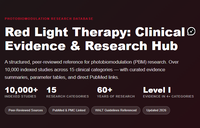
For a comprehensive library of peer-reviewed clinical studies on photobiomodulation, Mito Red Light maintains a clinical research evidence hub organized by health category, and the Evidence Explorer provides searchable access to over 9,500 peer-reviewed PBM studies.
What Can Red Light Therapy Masks Help With?
The applications with the strongest evidence base in LED face mask research cluster around skin aging, acne, and complexion. Each application maps to a distinct mechanism and a distinct wavelength.
Anti-aging and fine lines
The most evidence-backed application for LED face masks is photoaged skin and fine lines. Red (630–660 nm) and near-infrared (830 nm) wavelengths stimulate fibroblast activity via the cytochrome c oxidase pathway, increasing collagen and elastin synthesis while reducing MMP-1-mediated collagen degradation. Results are cumulative — meaningful changes in skin texture, firmness, and fine line depth typically require 8–12 weeks of consistent use at 4–5 sessions per week. For a detailed look at the evidence on masks and wrinkles specifically, see our article on whether red light therapy masks can help with wrinkles.
Skin texture and tone
Red light may support the appearance of improved skin texture and surface uniformity through enhanced cellular turnover and repair signaling. This is not a bleaching or depigmentation mechanism — it works through cellular renewal pathways rather than altering melanin directly. The appropriate framing: red light "may promote the appearance of more even skin tone" over consistent treatment periods. For more on this application, see our article on whether red light therapy masks can help with skin tone and texture.
Acne
For mild to moderate inflammatory acne, the combination of blue (415–470 nm) and red (630–660 nm) light has the strongest clinical support. Blue light targets Cutibacterium acnes through porphyrin activation; red light addresses the inflammatory response and supports barrier repair. As the Papageorgiou trial demonstrated, the combined approach outperforms blue light alone. At-home masks that include both wavelengths may support reduction in mild to moderate inflammatory acne. See our article on whether red light therapy masks can help with hyperpigmentation for the related post-acne dark spot discussion.
Redness and overall skin wellness
Amber light (590 nm), where included, has a secondary role in vascular tone and redness reduction. Red light's anti-inflammatory effects also contribute to calmer-looking skin over time. For users without a specific target condition, the general framing is improved skin radiance and feel — effects that begin to appear within the first few weeks of consistent use and compound over a full treatment period.
What Wavelengths Do LED Face Masks Use?
Wavelength determines mechanism. The specific nanometer values matter — not all "red light" is the same, and the clinical research is tied to narrow wavelength windows. Here is what each wavelength does in a well-designed LED face mask:
| Wavelength | Type | Skin penetration | Primary mechanism | Applications |
|---|---|---|---|---|
| 465 nm | Blue | <1 mm (surface) | Porphyrin activation → antimicrobial | Mild to moderate acne, bacterial reduction |
| 590 nm | Amber | ~1 mm (epidermis) | Vascular tone, anti-inflammatory | Redness reduction, skin tone uniformity |
| 630–660 nm | Red | ~1–2 mm (upper dermis) | CCO activation, fibroblast stimulation, MMP reduction | Anti-aging, surface collagen, fine lines, acne repair |
| 830 nm | Near-infrared | ~3–5 mm (deep dermis) | Deep fibroblast activation, anti-inflammatory signaling | Deep collagen remodeling, structural anti-aging |
The minimum effective combination for anti-aging is 630–660 nm red and 830 nm near-infrared — these are the wavelengths used in the primary clinical studies. Adding blue (465 nm) allows the same device to address acne in the same session. Amber (590 nm) adds a redness and tone benefit on top of the structural work.
A common market red flag: many consumer LED masks list "red light" without specifying nanometer values. Wavelength precision matters because cytochrome c oxidase absorption peaks cluster around specific nm ranges — a device emitting at 700 nm or 750 nm operates in a trough between CCO absorption peaks and has a weaker mechanistic rationale than one emitting at 630–660 nm. Always look for disclosed nm values, not just color descriptions. For a detailed comparison of four-wavelength versus two-wavelength devices, see our analysis of 4-wavelength vs. 2-wavelength LED masks, and for a full breakdown of which wavelength does what across the spectrum, see red vs. blue vs. amber LED light for skin.
What to Look for When Choosing an LED Face Mask
Before choosing an at-home red light therapy mask, it helps to understand which specifications actually predict results. Not all LED face masks can deliver the dosing parameters the clinical research supports. These are the factors that separate devices capable of producing results from those that cannot. For a complete buying decision guide including side-by-side device comparisons, see our article on are red light therapy masks worth it — and what to look for.
| Factor | What to look for | Red flag |
|---|---|---|
| Wavelength disclosure | Specific nm values listed (e.g., 630 nm, 830 nm); third-party spectrometer confirmation | Only "red light" or "multi-spectrum" with no nm values; no third-party data |
| Irradiance (mW/cm²) | Published mW/cm² at stated treatment distance; independently verified | Only LED count or total wattage listed; no per-area power density data |
| FDA clearance | 510(k) cleared with specific indication (acne and/or wrinkles) | "FDA registered" only — registration is not clearance and does not imply reviewed efficacy |
| Facial coverage | Dense, even LED distribution across full face — forehead, cheeks, jaw, chin | Flat panel design with visible coverage gaps; no chin or jaw coverage |
| Contour and fit | Shaped to facial anatomy; maintains consistent skin-to-LED distance during sessions | Flat or poorly contoured; large air gap between LEDs and cheek/nose areas |
| Eye safety | Built-in eye cups or contoured eye protection; clear manufacturer guidance | No eye protection design; instructions to keep eyes open during sessions including blue light |
| Wavelength range | Minimum: 630–660 nm + 830 nm; four wavelengths (adds 465 nm + 590 nm) for full-spectrum coverage | Red only with no NIR, or unlabeled "multi-color" with no nm specificity |
How to Use a Red Light Therapy Face Mask
Timeline: For anti-aging and skin rejuvenation, most users need 8–12 weeks of using an LED face mask 4–5 times per week to see clear changes in fine lines and texture. Acne protocols often show improvements by weeks 4–8. Stopping completely usually lets results fade gradually over time.
Consistent, correctly dosed sessions produce cumulative results. The protocol framework below reflects what clinical studies used and what device manufacturers aligned with the research recommend.
Before your session
- Cleanse and dry your face thoroughly — remove all makeup, SPF, and occlusive products before use
- Avoid applying strong acids (AHAs, BHAs) or prescription retinoids immediately before a session on sensitive skin
- Some light-activating serums are specifically formulated for pre-session use — follow your device manufacturer's guidance on what to apply beforehand
During your session
- Position the mask according to the manufacturer's instructions — it should sit close to or gently against the skin to maintain consistent irradiance
- Keep eyes closed or use the device's built-in eye protection; follow all eye safety instructions, particularly for sessions that include blue light
- Standard session duration for most consumer masks at rated irradiance is 8–10 minutes
- Do not exceed the recommended session time — photobiomodulation operates within an optimal dose window; more is not always better
After your session
- Apply moisturizer, hyaluronic acid, or targeted peptide serums while skin is warm — circulation is transiently enhanced post-session
- Apply SPF before sun exposure
- On sensitive skin, avoid strong active exfoliants immediately post-session
Frequency and expected timeline
| Goal | Wavelength focus | Frequency | Expected onset |
|---|---|---|---|
| Skin rejuvenation / collagen | 630–660 nm + 830 nm | 4–5× per week | 8–12 weeks |
| Acne reduction | 465 nm blue + 630–660 nm red | Daily to 5× per week | 4–8 weeks |
| Redness / tone uniformity | 590 nm amber + 630–660 nm red | 3–5× per week | 6–10 weeks |
| Full anti-aging protocol | All four wavelengths | 4–5× per week | 8–12 weeks |
For a more detailed breakdown of session frequency, dose accumulation, and maintenance phases, see our full guide on how often to use a red light therapy mask and our guide on how long to use red light therapy on the face. For tips on getting the most out of each session, see 8 ways to get the most out of a red light therapy mask.
How Often Should You Use a Red Light Therapy Mask?
Most clinical protocols studied in the photobiomodulation literature use 3–5 sessions per week. Daily use is employed in some acne protocols and is considered safe. A common framework is an initial intensive phase of 4–5 sessions per week for the first 8–12 weeks, followed by a maintenance phase of 2–3 sessions per week once goals are achieved. Results are cumulative and tend to regress gradually if use is stopped entirely. Consistency over weeks matters more than any individual session length. The full frequency breakdown with evidence rationale lives in our dedicated article on how often to use a red light therapy mask.
Are LED Masks as Effective as Red Light Therapy Panels?
Masks and panels work through the same mechanism — photobiomodulation via cytochrome c oxidase activation in skin cell mitochondria — but they are optimized for different use cases.
LED face masks are designed specifically for the face: they contour to facial anatomy, provide hands-free coverage during a fixed session, and allow consistent daily use without requiring the user to position a panel at the correct distance. For skincare-focused applications — collagen, fine lines, acne, tone — a mask with proper facial coverage and verified wavelengths is the more targeted and practical option.
Full-body panels cover a significantly larger body surface area and are used for applications extending beyond the face: muscle recovery, joint support, systemic inflammation, sleep, and other outcomes where covering more of the body in a single session matters. At-home panels typically deliver higher total output across large areas, but this is a function of scale rather than superiority of mechanism for the face specifically.
Neither is categorically better — they serve different primary use cases. For someone whose primary goal is facial skin, a mask optimized for that purpose is the more rational choice. For someone managing recovery, performance, or systemic applications, a panel is the more practical tool. For a detailed comparison, see our article on the best red light therapy device for skin: mask or panel.
For a broader introduction to red light therapy across all applications, see what is red light therapy.
The MitoGLOW LED Face Mask
The MitoGLOW LED mask is designed for full-face photobiomodulation at home, delivering four clinically studied wavelengths — 465 nm blue, 590 nm amber, 630 nm red, and 830 nm near-infrared — in a contoured, hands-free format. The device includes fold-out wings for jaw and neck coverage, extending treatment beyond the central face.
The MitoGLOW is FDA 510(k) cleared (K221775). For models MK66-H and EL00003, clearance covers both mild-to-moderate acne vulgaris and full-face wrinkle reduction. For models MK-78 and MK-04, clearance covers wrinkle reduction. 510(k) clearance means the device has been reviewed by the FDA for its specific intended uses and determined to be substantially equivalent to a legally marketed predicate device — a higher regulatory bar than "FDA registered." Wavelength output and irradiance have been independently verified by ISO/IEC 17025 accredited laboratory testing.
For a detailed review of the MitoGLOW's specifications, testing data, and results, see the MitoGLOW LED mask review, and for a 2026 roundup of where it sits in the current market, see MitoGLOW: best LED face mask 2026.
The MitoGLOW is available directly from Mito Red Light at mitoredlight.com.
MitoGLOW vs. the Competition
If you are comparing the MitoGLOW to other widely marketed LED masks, Mito Red Light has published detailed head-to-head comparisons covering specifications, FDA clearance status, wavelength accuracy, irradiance output, and coverage design:
The detailed analysis — including spec tables and specification-by-specification breakdowns — lives in those articles.
Frequently Asked Questions
Do red light therapy masks actually work?
Yes — when they use the right wavelengths and are used consistently, red light therapy masks have been shown in controlled trials to improve wrinkles, texture, and mild to moderate acne. The Wunsch and Matuschka controlled trial (136 subjects, 30 sessions) found significant improvements in collagen density, skin roughness, and complexion versus untreated controls. For acne, the Papageorgiou RCT (107 patients, 12 weeks) found combined red and blue light achieved 76% improvement in inflammatory lesions. A 2024 clinical review in the Journal of the American Academy of Dermatology confirmed PBM has a favorable safety profile and evidence base across skin rejuvenation and acne, while emphasizing that wavelength, dose, and treatment schedule determine reproducibility of results.
How long does it take to see results from an LED face mask?
For skin rejuvenation and anti-aging goals, expect 8–12 weeks of consistent use (4–5 sessions per week) before seeing clear improvement in texture, firmness, and fine lines. For acne, results in the Papageorgiou trial became apparent from week 4 and were significant at 12 weeks. Some users notice reduced redness and improved skin feel within the first few weeks, but structural collagen changes are biological processes that take time regardless of device quality.
Are red light therapy masks safe?
Red and near-infrared LED face masks have a strong safety record in the published clinical literature. The wavelengths used (465–830 nm) are non-ionizing and non-thermal at therapeutic doses. The Avci et al. review of LLLT in dermatology noted an almost complete absence of significant adverse effects across the literature. Temporary redness or warmth immediately after a session is the most commonly reported effect and typically resolves within minutes. Individuals who are pregnant, have photosensitive conditions, take photosensitizing medications, or have active skin cancer in the treatment area should consult a healthcare provider before use.
Can I use a red light therapy mask every day?
Daily use is safe and is employed in some clinical acne protocols. For anti-aging sessions, daily use at normal session durations (8–10 minutes) is generally within a safe dose range. Photobiomodulation has a biphasic dose-response — there is an optimal dose window, and very high cumulative doses can blunt effects over time. Follow your specific device manufacturer's guidance and err toward the recommended session frequency rather than significantly exceeding it.
What is the best wavelength for a red light therapy face mask?
For anti-aging and skin rejuvenation: 630–660 nm red and 830 nm near-infrared. These are the wavelengths with the strongest absorption by cytochrome c oxidase in fibroblasts and the most consistent findings in the clinical literature. For acne: add 415–470 nm blue light, which targets acne bacteria through a distinct antimicrobial mechanism. A four-wavelength mask covering all of these — plus 590 nm amber for redness and tone — addresses the full range of evidence-backed facial skin applications in one device.
Is a red light therapy mask or panel better for skin?
For facial skin specifically, a mask designed for the face is the more targeted option. Masks contour to facial anatomy, maintain consistent LED-to-skin distance, and are practical for the daily-to-five-times-weekly frequency the research supports. Panels cover more of the body and are better suited for systemic applications — muscle recovery, joint support, full-body protocols. If the primary goal is facial skin, a dedicated mask with verified wavelengths and coverage is the more rational choice.
Who is a good candidate for a red light therapy mask?
The best candidates are people with mild to moderate photoaging (fine lines, texture changes), early signs of wrinkles, or mild to moderate inflammatory acne who are willing to use an LED face mask 3–5 times per week for at least 8–12 weeks. People with severe skin disease, very deep wrinkles, or cystic acne should see a dermatologist to discuss in-office options and whether an at-home mask makes sense alongside those treatments.
Can red light therapy masks help with acne?
Combined red and blue light has the strongest clinical evidence for mild to moderate inflammatory acne. The Papageorgiou et al. RCT (107 patients, 12 weeks) found that combined blue (415 nm) and red (660 nm) light achieved 76% improvement in inflammatory lesions — significantly better than blue light alone or benzoyl peroxide at most assessment points. Red light addresses the inflammatory component; blue light provides the antimicrobial action against Cutibacterium acnes. A device that includes both wavelengths at the clinically studied nm values is required to replicate this protocol.
References:
- Wunsch A, Matuschka K. A controlled trial to determine the efficacy of red and near-infrared light treatment in patient satisfaction, reduction of fine lines, wrinkles, skin roughness, and intradermal collagen density increase. Photomedicine and Laser Surgery. 2014;32(2):93–100. PMID: 24286286
- Barolet D, Roberge CJ, Auger FA, Boucher A, Germain L. Regulation of skin collagen metabolism in vitro using a pulsed 660 nm LED light source: clinical correlation with a single-blinded study. Journal of Investigative Dermatology. 2009;129(12):2751–2759. PMID: 19587693
- Avci P, Gupta A, Sadasivam M, et al. Low-level laser (light) therapy (LLLT) in skin: stimulating, healing, restoring. Seminars in Cutaneous Medicine and Surgery. 2013;32(1):41–52. PMID: 24049929
- Papageorgiou P, Katsambas A, Chu A. Phototherapy with blue (415 nm) and red (660 nm) light in the treatment of acne vulgaris. British Journal of Dermatology. 2000;142(5):973–978. PMID: 10809858
- Mineroff J, Maghfour J, Ozog DM, Lim HW, Kohli I, Jagdeo J. Photobiomodulation CME part II: Clinical applications in dermatology. Journal of the American Academy of Dermatology. 2024;91(5):805–815. PMID: 38307144
Mito Red Light products are general wellness devices. They are not medical devices and have not been evaluated, cleared, or approved by the FDA or any regulatory body for the diagnosis, treatment, cure, or prevention of any disease or medical condition. Any references to peer-reviewed research or clinical studies on this page describe findings from independent scientific literature and do not imply that Mito Red Light devices have been studied, tested, or proven effective for any specific condition. Always consult a qualified healthcare provider before beginning any new wellness routine, particularly if you have a medical condition or are taking medication.
Related articles
More from the red light therapy masks knowledge cluster