















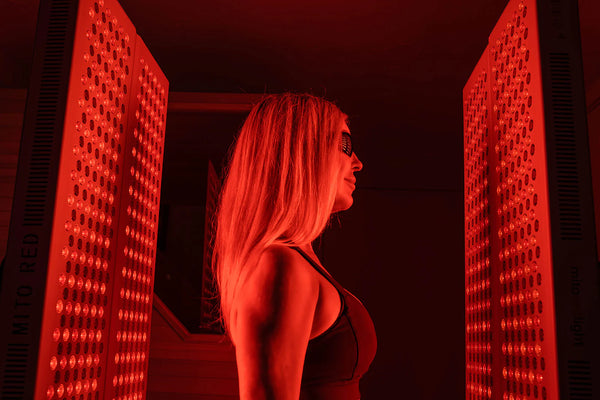
Panel Series
Key Takeaways:
-
2-wavelength LED masks typically focus on core red and near-infrared light combinations.
-
4-wavelength LED masks add more variety, which can create a broader light exposure profile.
-
The best LED mask option for you will generally depend on your goals and the overall device design.
Red light therapy masks have come a long way from the early designs that relied on a single type of light. Now, many newer devices include multiple wavelengths — so, should you choose a 2-wavelength mask or a 4-wavelength mask? See also How Often Should You Use a Red Light Therapy Mask?
It might seem like more wavelengths for RLT mask lights would automatically mean better results. However, in reality, the answer depends a bit on how you plan to use your device, what kind of flexibility you want, and what goals you’re hoping to achieve by using the mask.
Here’s what to know and how the MitoGLOW can support your goals.
What Does “Wavelength” Mean for LED Masks?
In red light therapy , wavelength refers to the specific type of light emitted by the device, measured in nanometers (nm). Different wavelengths interact with the body differently based on how deeply they penetrate and where they’re commonly used in wellness routines.
Most LED masks use a combination of visible red light and near-infrared light. Red light is often associated with surface-level exposure, while near-infrared wavelengths reach deeper into tissue.
That combination is why many red light therapy masks use multiple wavelengths rather than relying on a single light source.
|
2-Wavelength Mask |
4-Wavelength Mask |
|
|
Wavelengths |
660nm (red) + 850nm (NIR) |
630nm + 660nm (red) + 810nm + 850nm (NIR) |
|
Light Types |
Visible red + near-infrared |
Visible red + deep red + 2 near-infrared depths |
|
Penetration Depth |
Surface + moderate depth |
Surface through deep tissue |
|
Collagen & Skin Tone |
Yes |
Yes (630nm + 660nm) |
|
Tissue Repair & Soothing |
Partial (via 660nm) |
Yes (660nm dedicated) |
|
Cellular Energy Support |
Partial (via 850nm) |
Yes (810nm dedicated) |
|
Circulation & Puffiness |
Yes (via 850nm) |
Yes (850nm dedicated) |
|
Spectrum |
Focused / targeted |
Broader / comprehensive |
|
Ease of Use |
Simple — fewer variables |
More features, same hands-free use |
|
Best For |
Consistent, no-frills routine |
Broader skin and cellular coverage in one session |
What Is a 2-Wavelength LED Mask?
A 2-wavelength mask typically combines a red and a near-infrared wavelength. One of the most common combinations is around 660nm for red light and 850nm for near-infrared light.
This red light therapy setup focuses on simplicity and consistency. Instead of spreading the device across several wavelengths, the mask focuses on two widely used options commonly included in red light therapy devices.
For many people, this approach checks all the boxes. It offers a balanced combination of surface-level and deeper light exposure without making the device overly complicated.
Many users also prefer 2-wavelength masks because the sessions feel straightforward. Just put on the mask, follow the recommended red light therapy session time, and keep your routine consistent.
Why Choose a 2-Wavelength Mask?
A focused combination of red and near-infrared light is already widely used in red light therapy routines. For users who want a straightforward experience, adding more wavelengths may not feel necessary.
Some people also prefer knowing the device is concentrating output into fewer wavelengths rather than spreading it across more categories.
There’s also something to be said for ease of use. Simpler devices can make it easier to stay consistent, and consistency tends to matter more than chasing endless features.
What Is a 4-Wavelength LED Mask?
A 4-wavelength LED mask expands on that concept by including additional wavelengths alongside the standard red and near-infrared options. For example, a mask might combine 630nm, 660nm, 830nm, and 850nm. The idea behind this setup is to create a broader spectrum of light exposure during each session.
Different wavelengths of light interact with the body slightly differently, so manufacturers sometimes include multiple ranges to create a more varied experience. Instead of concentrating heavily on two wavelengths, the device spreads output across four.
Why Choose a 4-Wavelength Mask?
One reason people gravitate toward 4-wavelength red light therapy masks is flexibility. A broader wavelength range can appeal to users who want a more comprehensive setup without needing multiple different devices.
Some also like the idea of combining several commonly used wavelengths into a single session rather than choosing between them.
From a design perspective, 4-wavelength masks can also feel more advanced, especially when brands highlight the expanded light spectrum in their marketing.
That said, more wavelengths of red light don’t automatically guarantee better results on their own. Device quality, output consistency, fit, and routine still matter just as much. For a high-quality, 4-wavelength mask, try the MitoGLOW . Our MitoGLOW LED Mask delivers four precise wavelengths of light therapy in one hands-free device, working to support your skin health from the surface to the cellular level. You might also want to read Best Red Light Therapy Masks 2026: MitoGLOW vs Omnilux vs Dr. Dennis Gross vs CurrentBody.
630nm red light helps support collagen production and skin tone, working to smooth the look of fine lines and reduce the appearance of aging. 660nm deep red penetrates further to support tissue repair and soothe the skin. 810nm near-infrared reaches beneath the skin to support mitochondrial energy production, promoting cellular regeneration and recovery. 850nm near-infrared goes deepest, supporting circulation, helping reduce puffiness, and supporting the skin’s overall healing response.
These wavelengths work synergistically to help address a wide range of skin concerns.
The Bottom Line
Choosing between a 2-wavelength and 4-wavelength LED mask comes down to personal preference and how you want to structure your routine.
If you prefer a simple, focused setup built around commonly used red and near-infrared wavelengths, a 2-wavelength mask may feel like the right fit. However, if you like the idea of broader wavelength variety and a more expanded spectrum, a 4-wavelength mask like the MitoGLOW might be more appealing.
DISCLAIMER: Mito Red Light devices are Class II wellness devices aimed at affecting the body through supporting cellular function. The information provided in this article and on this site is for educational purposes only and is not intended to imply effectiveness of Mito Red Light devices for any specific application. The information provided in this article and on this site is not intended to diagnose, treat, cure, or prevent any disease, is not a substitute for consultation with a licensed medical provider and should not be construed as medical advice. Click here to read our article on potential contraindications of red light therapy.
FAQs
Is a 4-wavelength LED mask better than a 2-wavelength mask?
A 4-wavelength mask offers a broader range of light exposure, while a 2-wavelength mask focuses on a simpler setup built around commonly used red and near-infrared combinations. Device quality and consistency still matter more than the number of wavelengths alone.
What wavelengths are commonly used in LED masks?
Many LED masks use red light around 630nm to 660nm and near-infrared light around 830nm to 850nm. Different devices combine these wavelengths in different ways depending on their design.
Do more wavelengths mean faster results?
More wavelengths do not automatically lead to better or faster results. Consistency, session routine, device fit, and overall light delivery all play a major role in your experience.
Are near-infrared wavelengths included in all LED masks?
No. Some masks focus only on visible red light, while others combine red and near-infrared wavelengths for a broader light exposure profile.
Sources:
Red Light Therapy: Benefits, Side Effects & Uses | Cleveland Clinic
Unlocking the Power of Light on the Skin: A Comprehensive Review on Photobiomodulation | PMC
Dive deeper into the research
- Mito Red Research Evidence Hub — 10,000+ indexed PBM studies across 15 clinical categories.
- Topic-specific clinical evidence — evidence summary, mechanism, and dosing ranges.
- Wavelength reference — 633, 660, 810, and 830 nm comparison and dosing data.
- Independent third-party testing — spectrometer-verified output across the Mito Red product line.
- Mito Red Scientific Advisory Board — review workflow, evidence grading, primary-literature sourcing.
Mito Red Light products are general wellness devices. They are not medical devices and have not been evaluated, cleared, or approved by the FDA or any regulatory body for the diagnosis, treatment, cure, or prevention of any disease or medical condition. Any references to peer-reviewed research or clinical studies on this page describe findings from independent scientific literature and do not imply that Mito Red Light devices have been studied, tested, or proven effective for any specific condition. Always consult a qualified healthcare provider before beginning any new wellness routine, particularly if you have a medical condition or are taking medication.