













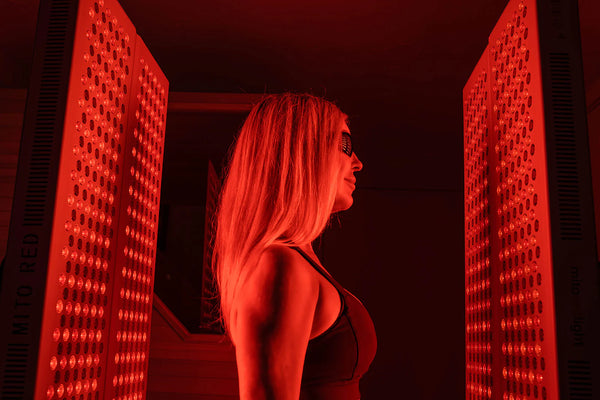
Panel Series
Red light therapy dosing—including the right wavelengths, intensity, distance, and session length—is the difference between “no results” and a noticeable change in how you look and feel. Many people buy a high-quality device, but never quite dial in their routine, which can make this powerful modality seem less effective than it really is.
Because red and near-infrared light work by stimulating the mitochondria and modulating inflammation, your body responds best within a specific dose range. Too little light, and you may not see meaningful change; too much, and the benefits can plateau. That is why it is essential to build a simple, consistent protocol that fits your goals—whether that is better skin, joint comfort, recovery, or sleep.
This guide walks you step by step through how to start using red light therapy, the core principles behind effective dosing, and how to adjust time, distance, and exposure. You will also find key safety considerations and tips for tracking progress, all informed by peer‑reviewed photobiomodulation research and real‑world experience from Mito Red Light customers.
If you are ready to get the most out of your red light therapy panel or other device, use this protocol framework as your evidence‑based roadmap.
Getting maximum benefit from red light therapy requires matching the right wavelengths, irradiance dose, session duration, and timing to your specific goals. This guide draws on peer-reviewed photobiomodulation dosing research to help you build an effective evidence-based protocol.
Table of Contents
- Starting to Use Red Light Therapy
- Principles of Red Light Therapy
- Time
- Distance
- Exposure
- Safety Considerations
- Track Your Progress
Red light therapy is a new, promising form of therapy that has grown in recent popularity. Red light therapy benefits are realized by using specific wavelengths of light in the red and near-infrared (NIR) range to irradiate body tissues. Researchers believe that wavelengths of light within the ranges of red and NIR light stimulate mitochondria, the tiny intracellular organelles responsible for producing energy within the cells and helping to suppress inflammation.

While the benefits of red light therapy have only been more recently understood, beginning with research sponsored by NASA in the 1990s, there are now several major reasons that people around the world use red light therapy on a consistent basis. Some of these reasons include:
- Skin Health – Research suggests that red light therapy improves skin quality and health by creating a more even skin tone and by improving skin elasticity and firmness. Many users integrate Mito Red Light panels into their daily skincare routines.
- Inflammation – Current research shows that red light therapy acts on mitochondria, an important factor for controlling inflammation. Studies show that red light therapy may improve inflammation and the pain that it causes.
- Joint and Muscle Pain – Many people find red light therapy helpful for joint and muscle pain, whether this pain is caused by a medical condition or is exercise‑related. Studies show that red light therapy may reduce muscle fatigue and speed recovery after a workout, especially when using larger devices from the panel series.
- Immune Health – While red light therapy does not stimulate vitamin D production, research suggests that it may increase the efficacy of ultraviolet light in producing vitamin D. Vitamin D plays an important role in immune health, making this function of red light therapy an important one. Although red light therapy does not directly aid in the production of vitamin D, vitamin D lamps could be a good addition to any routine to aid in immunity. You can read more about this in our article: "Red Light Therapy and Vitamin D?"
- Sleep Quality – While the research into red light therapy for sleep is less than a decade old, there are early studies that suggest it may improve the quality of sleep and make sleep more rejuvenating. For a full discussion on RLT and sleep, as well as some helpful tips, read our article: "Red Light Therapy and Quick Tips to Getting Better Sleep."
Research into the benefits of red light therapy is still ongoing, and new discoveries are continually being made as more people adopt at‑home devices like those from Mito Red Light.
Starting to Use Red Light Therapy
If you are new to using red light therapy, it is very important that you understand how to use it. The benefits that red light therapy is used for occur slowly, and it may take a few weeks to realize that you are not seeing the results that you expected. By understanding how to use red light therapy from the beginning, you will be best positioned to see benefits sooner.
Principles of Red Light Therapy
Red light therapy technically uses electromagnetic radiation (the scientific name for light or radio waves) that is applied to the external body tissues. There are many types of electromagnetic radiation or other types of radiation that are used in medical treatments.
Some forms of radiation used for medical purposes can be potentially harmful. The radiation used in X-rays or cancer treatments, for example, can cause cancer when someone is exposed to high amounts of this radiation or exposed to small amounts over time.
Red light therapy, however, is thought to be essentially harmless, even in large amounts. While other forms of light, like ultraviolet light, may cause skin cancer with prolonged exposure, red light has not been found to have these harmful effects, even in high, intense amounts.
There are basic radiation safety principles that are used to protect medical workers and patients from harmful types of radiation. The three main principles of radiation safety with harmful radiation types include:
- Time – With harmful radiation, the longer someone is exposed to it, whether in a single episode or multiple small episodes, the more the effects of the radiation will build up over time.
- Distance – Radiation spreads as it emits from its source. This means that the closer someone is to the source of radiation, the more intensely it will affect them.
- Exposure (or shielding) – Any radiation can be at least partially blocked by matter. Shielding could range from lead shielding to protect healthcare workers from the radiation used in cancer treatments to the sunscreen you use to protect yourself at the beach.
With harmful radiation types, limiting time, distance, and exposure is important. With red light therapy, a safe form of therapy, these factors are important from the opposite perspective. Because the goal of red light therapy is to affect the cells as much as possible within a beneficial range, you will want to optimize all three of these components to have effective exposure to the red light sources that you are using.
Time
By optimizing the time that you spend doing red light therapy, you will be able to get the most out of it. The time component of red light therapy has two aspects. One is the frequency with which you do red light therapy, and the other is how long each therapy session is.
The key to the frequency with which you do red light therapy is consistency. Ideally, you should aim to use red light therapy 3–5 times each week. To ensure that you are consistent with your red light therapy sessions, you may find it beneficial to use your red light panels at a certain time of day.
The time of day that you consistently use your red light will depend in part on why you use it. If you use red light to promote sleep, it would be ideal to use the therapy in the evening. If your goal is to promote workout recovery, therapy should be used after you work out. Other goals, such as improving skin quality, may not be tied to a certain time of day and should be done whenever is most convenient.
The duration of each session is another time-related consideration. The optimal timing for this will be different for everyone, and longer may not necessarily be better. The effect that red light therapy has on the mitochondria may diminish with prolonged exposure, and Mito Red Light generally recommends sessions that are between 5 and 15 minutes, depending on device power and distance.
Distance
The closer you are to the red light source, the more intense its effects will be. There are, however, a couple of considerations that make it unwise to apply the light source directly to your skin. One consideration is that the source of red light typically creates some amount of heat. While this heat is usually almost imperceptible, as you get closer to the source, it may have more of an effect. There may be a risk of discomfort or even burns if your skin is too close to the source.
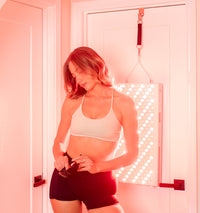
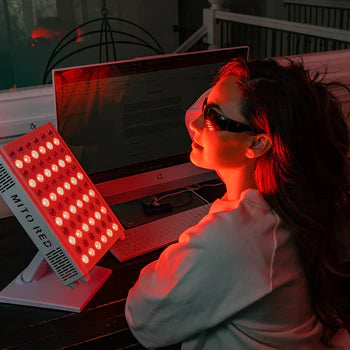
The other reason that you should keep some distance between yourself and the red light source is that as the light travels, it spreads. If your skin is right against the red light source, the therapy will affect a smaller area of your skin or tissues. Positioning yourself even a few inches away from the red light source can improve the coverage of the therapy. Mito Red Light recommends that you position yourself about 6 to 12 inches from our red light panels to achieve the best distance balance possible.
Exposure
To ensure the optimal activity of red light therapy, you should have nothing between your skin and the red light source. While the most obvious potential barrier is clothing, you should also consider that sunscreen, lotion, or makeup can all be potential barriers that could affect how effective red light therapy will be.
In addition to reducing barriers to the red light, exposure also should take into consideration the source of the light. The more intense the light is and the more surface area that the light source creates, the more exposure you will achieve. Larger devices will create more exposure than smaller devices, and more powerful devices will increase the exposure that is experienced. Full‑body systems in the Mito Red Light panel series provide much greater coverage than very small handhelds.
Safety Considerations
Red light therapy is considered to be quite safe, as it is external, associated with almost no potential complications, and uses some of the least damaging wavelengths of light. While red light therapy carries almost no known risks for most healthy adults, there are some safety considerations that are generally recommended.
Some of the key safety considerations for red light therapy include:
- Discuss it with your provider – Ultimately, you should always talk with your doctor about whether red light therapy is safe for you and your situation. No single article can discuss every scenario, and your doctor is best positioned to understand your unique circumstances and whether red light therapy will be appropriate for you.
- Avoid if pregnant or breastfeeding – Red light therapy has not been specifically tested in those who are pregnant or breastfeeding. While there are no widely recognized risks, it has not been proven to be safe, and you should consider avoiding red light therapy if you are pregnant or breastfeeding unless your provider explicitly approves it.
- Do not use if recovering from Lasik surgery – While red light therapy is not thought to be harmful for eye health in general, research in this area is still ongoing. Those recovering from Lasik surgery are particularly susceptible to eye damage, and red light therapy is not recommended while recovering from Lasik surgery.
- Use protective eyewear – The American Academy of Ophthalmology (AAO) reports that "a study in The Journals of Gerontology found that brief exposure to deep red light improved older adults’ [eyesight].” Research into the eye effects of red light therapy is still ongoing, however, and using protective eyewear is still recommended. For a full discussion on RLT and the eyes, read our article: "Red Light Therapy and The Eyes – What does the Science Say?"
Track Your Progress
Red light therapy works slowly over time. Tracking your progress will enable you to see how red light therapy has helped you over weeks and months. The way that you track your progress will vary based on what you are using red light therapy for. Measuring your progress may include taking weekly photographs of your skin, measuring your workout performance over time, or even keeping a sleep or pain diary.
Mito Red Light
Not all red light therapy panels are created equal. For red light therapy to be worth the investment, you need a high-quality, independently tested, professional red light therapy device from a reputable company. With over 5 years in business and over 65,000 ecstatic customers, Mito Red Light is a brand you can trust. Our reviews speak for themselves and you can also click to review some of our customers' red light therapy before and after examples.
We are confident that our devices are the highest quality and best value you’ll be able to find anywhere. We welcome you to review our selection of red light therapy devices or to contact one of our representatives at 1‑866‑861‑6486 to learn more or to help find the right solution for you.
Frequently Asked Questions About Red Light Therapy Protocols
How often should I use red light therapy?
Most people get good results using red light therapy 3–5 times per week, allowing enough total weekly dose while still giving the body time to respond between sessions.
How long should a red light therapy session last?
For most Mito Red Light panels, a typical session is about 5–15 minutes per treatment area, depending on the device’s power output and how close you are standing.
How far should I stand from my red light therapy panel?
Mito Red Light generally recommends positioning yourself about 6–12 inches from the panel. This distance balances intensity, comfort, and coverage for most users.
Do clothes, sunscreen, or makeup block red light therapy?
Yes. Clothing and many topical products can partially block or scatter light. For best results, expose clean, bare skin directly to the LEDs during your sessions.
Are larger red light therapy panels more effective?
Larger panels provide more coverage and allow you to treat bigger areas of the body at once, which can be more efficient and may deliver a higher total dose per session.
This article discusses published scientific research and general educational information about photobiomodulation and red light therapy. It does not constitute medical advice and does not make specific claims about Mito Red Light devices. The research cited reflects independent peer-reviewed studies and does not imply that any Mito Red Light product has been evaluated, approved, or cleared by the FDA or any other regulatory body for the diagnosis, treatment, cure, or prevention of any disease or medical condition. Individual results vary. Consult a qualified healthcare professional before beginning any light therapy protocol, particularly if you have a pre-existing medical condition, are pregnant, or are taking photosensitising medications.
Mito Red Light products are general wellness devices. They are not medical devices and have not been evaluated, cleared, or approved by the FDA or any regulatory body for the diagnosis, treatment, cure, or prevention of any disease or medical condition. Any references to peer-reviewed research or clinical studies on this page describe findings from independent scientific literature and do not imply that Mito Red Light devices have been studied, tested, or proven effective for any specific condition. Always consult a qualified healthcare provider before beginning any new wellness routine, particularly if you have a medical condition or are taking medication.
Related articles
More from the protocols & how to use knowledge cluster