



Does Red Light Therapy Really Work for Skin? Here's What the Science Says

Red light therapy (RLT) uses wavelengths of 630–660 nm (visible red) and 810–850 nm (near-infrared) to penetrate skin tissue and stimulate cellular energy production — a process called photobiomodulation (PBM). When absorbed by mitochondrial chromophores in dermal and epidermal cells, these wavelengths trigger measurable downstream effects: increased ATP synthesis, fibroblast activation, collagen and elastin production, and reduced inflammatory markers.

This isn't speculative. Over 500 peer-reviewed studies — including 2,099+ randomized controlled trials in the photobiomodulation field — have examined red and near-infrared light's effects on skin. The clinical evidence is robust enough that multiple devices have received FDA clearance specifically for wrinkle treatment and hair loss.

→ Browse 500+ peer-reviewed studies on red light therapy for skin & anti-aging

What Red Light Therapy Does for Skin: Proven Benefits

Collagen Production & Wrinkle Reduction

Red light at 660 nm directly stimulates fibroblasts — the cells responsible for producing collagen and elastin in the dermis. A landmark 2014 randomized controlled trial published in Photomedicine and Laser Surgery found statistically significant increases in intradermal collagen density and measurable reduction in fine lines and wrinkles after consistent red light therapy sessions. The effect is dose-dependent: sessions at the correct irradiance (mW/cm²) and wavelength deliver the best results.

Acne Reduction

Red and near-infrared light reduce inflammatory cytokines in skin tissue. Multiple clinical studies show reductions in acne lesion counts following PBM protocols. Red light targets inflammatory pathways, while near-infrared wavelengths reduce sebaceous gland activity deeper in the dermis. Research published in Dermatologic Surgery demonstrated statistically significant lesion count reduction following combined red/blue light therapy protocols.

Skin Tone, Texture & Hyperpigmentation

Regular sessions support more even pigmentation, reduced redness, and smoother overall texture. Near-infrared at 830–850 nm penetrates to the dermis and subdermis — where collagen and elastic fibers are most concentrated — supporting structural skin improvement rather than surface-level effects only.

Wound Healing & Scar Improvement

Near-infrared wavelengths accelerate tissue repair, improving the appearance of post-inflammatory hyperpigmentation and scars. This is among the most extensively studied applications of PBM in dermatology.

Mito Red Light Devices for Skin: Which Is Right for You?

The right device depends on whether you're treating the face only, or targeting the face, neck, chest, and body together. Here's how to choose:

Feature MitoGLOW™ LED Mask MitoPRO+ Panel MitoADAPT 4.0 Panel
Best for Face-focused daily skincare routine Face + neck + chest + body Precision multi-zone skin therapy
Wavelengths 630 nm, 660 nm (red) + NIR 630 nm, 660 nm, 830 nm, 850 nm 8 wavelengths including 630, 660, 830, 850 nm
Irradiance Optimized for facial distance Industry-leading mW/cm² (3rd-party verified) Industry-leading mW/cm² (3rd-party verified)
Coverage area Full face Large multi-zone Large multi-zone, 11 modes
Session time 10–15 min 10–20 min 10–20 min
Portability High — hands-free, rechargeable Low–moderate Low–moderate
FDA registration Yes Yes Yes
3rd-party tested Yes Yes — lab-verified irradiance Yes — lab-verified irradiance

Bottom line on device selection: Choose the MitoGLOW™ Mask if you want a dedicated, hands-free facial treatment device for a daily skincare habit. Choose the MitoPRO+ or MitoADAPT 4.0 if you want higher irradiance, the ability to treat the face, neck, décolletage, and body in one session, or the flexibility of multiple wavelength modes.

How Mito Red Light Compares to Other Red Light Devices for Skin

If you're evaluating options, here's how Mito Red Light stacks up against the most commonly cited competitors on the metrics that actually matter for skin outcomes:

Feature Mito Red Light (MitoADAPT 4.0 / MitoPRO+) Omnilux Contour Face CurrentBody LED Mask Series 2 Solawave Wand
Wavelengths 630, 660, 830, 850 nm (4–8 options) 633 nm + 830 nm 633 nm + 830 nm 660 nm
Coverage area Face + full body (panels); face (mask) Face only Face only Small wand — spot treatment
Irradiance Industry-leading; 3rd-party lab verified Not disclosed Not disclosed Low
Irradiance transparency ✅ Published lab test results ❌ Not published ❌ Not published ❌ Not published
FDA registration ✅ Yes ✅ Yes (face wrinkles) ✅ Yes ✅ Yes
Wavelength flexibility ✅ Multi-wavelength, adjustable modes Fixed 2 wavelengths Fixed 2 wavelengths Single wavelength
Body treatment ✅ Yes (panels) ❌ Face only ❌ Face only ❌ Spot only
Price range From $369 (panels) / Mask launching soon $395 (mask only) $399+ (mask only) $169 (wand only)
Warranty 3 years 2 years 2 years 1 year

The key differentiator: Mito Red Light publishes independently verified irradiance data for every panel. Competitors like Omnilux and CurrentBody do not disclose mW/cm² output. Irradiance is the single most important variable determining whether a device delivers a therapeutic dose — without that number, you cannot compare devices meaningfully.

→ View Mito Red Light's third-party irradiance test results

How to Use Red Light Therapy for Skin: Protocol Guide

Session frequency: 4–6 sessions per week for the first 8–12 weeks, then 2–3 sessions per week for maintenance.

Session duration: 10–20 minutes per treatment area, at the device-specified distance (typically 6–12 inches for panels; mask sits directly on the face).

Before your session: Cleanse skin thoroughly — remove all makeup, SPF, and occlusive products. A light, non-occlusive serum compatible with light therapy can be applied. Avoid photosensitizing retinoids or exfoliating acids immediately before sessions.

After your session: Morning sessions: apply broad-spectrum SPF 30+. Evening sessions: follow with a gentle moisturizer. Allow skin to settle 15–30 minutes before applying active ingredients like retinol or AHAs.

When to expect results: Most users notice improvements in skin texture and tone within 4–6 weeks of consistent use. Collagen-related changes — firmer skin, reduced fine lines — typically become measurable at 8–12 weeks.

Frequently Asked Questions: Red Light Therapy for Skin

Does red light therapy actually work for skin?

Yes. Multiple randomized controlled trials have demonstrated that red light therapy at 630–660 nm significantly increases collagen production, reduces fine lines, and improves skin texture. A 2014 RCT in Photomedicine and Laser Surgery (Wunsch & Matuschka) found statistically significant intradermal collagen density increases and measurable wrinkle reduction. It is one of the most clinically studied non-invasive skin treatments available. See the full evidence base →

What wavelength is best for collagen production?

660 nm (red light) is the most studied wavelength for collagen synthesis and surface skin benefits — it directly stimulates fibroblast activity and collagen production. Near-infrared at 830–850 nm penetrates deeper into the dermis for structural skin support. Devices that combine both wavelength ranges, like the MitoPRO+ and MitoADAPT 4.0, provide the broadest range of skin benefits and allow treatment of both superficial and deep skin layers.

How long does it take for red light therapy to work on skin?

Most people see measurable improvements in skin texture and tone within 4–6 weeks of consistent use at 4–6 sessions per week. Collagen-related improvements — firmer skin, reduced fine lines and wrinkles — typically require 8–12 weeks of regular sessions to become apparent. This timeline is consistent across multiple clinical trials.

Can red light therapy help with acne?

Yes. Red light therapy reduces inflammatory cytokines in skin tissue and has been shown to significantly reduce acne lesion counts in clinical studies. Near-infrared wavelengths can also reduce sebaceous gland overactivity. Red light is most effective for inflammatory acne. For severe or persistent acne, some protocols combine red light with blue light (415 nm), which has additional antibacterial effects against Cutibacterium acnes.

Is red light therapy safe for sensitive skin?

Yes. Red light therapy is non-thermal at standard consumer device intensities and is generally well tolerated by all skin types, including sensitive skin. Start with shorter sessions (5–10 minutes) and increase gradually. The main precaution is avoiding sessions on skin treated with photosensitizing medications (certain antibiotics, retinoids at high concentrations, or St. John's Wort). Consult your dermatologist if you have active inflammatory skin conditions or are on prescription topicals.

What's the difference between a red light mask and a panel for skin?

A mask (like the upcoming MitoGLOW™) provides targeted, hands-free coverage specifically for the face at a consistent, optimized distance. A panel offers higher irradiance, more wavelength options, and the ability to treat the face, neck, chest, décolletage, and full body in one session. Masks are better for convenience and daily adherence; panels are better for results speed, broader coverage, and treating multiple body areas.

How often should I use red light therapy for collagen production?

For collagen-focused skin goals, clinical evidence supports 4–6 sessions per week during the first 8–12 weeks. Once you achieve your goal, 2–3 maintenance sessions per week are typically sufficient to sustain results. Consistency matters more than session length — shorter, frequent sessions outperform infrequent long sessions.

Can I use red light therapy with retinol or vitamin C?

Yes, with timing. Do not apply photosensitizing actives (like prescription retinoids) immediately before a session. Use retinol and vitamin C serums after your evening session — red light actually potentiates the effects of vitamin C by boosting cellular energy production. Non-photosensitizing serums and hyaluronic acid can be used before or after sessions without concern.

Which Mito Red Light device is best for anti-aging?

For face-focused anti-aging, the MitoGLOW™ LED Mask provides convenient, hands-free facial therapy with precisely calibrated wavelengths for skin. For full-face-plus-body anti-aging treatment, the MitoADAPT 4.0 offers 8 wavelengths and 11 programmable modes — effectively replacing 7 standard single-mode devices. Both deliver therapeutic-range irradiance at verified output levels.

The Clinical Evidence Behind Mito Red Light's Skin Claims

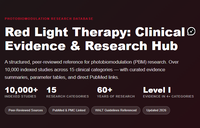
We don't ask you to take our word for it. Every skin benefit claim on this page is supported by peer-reviewed research. Our Evidence Explorer aggregates 10,068 studies — including 503+ specific to skin and anti-aging — organized by condition, study type, wavelength, and year.

  • Wunsch A, Matuschka K. A controlled trial to determine the efficacy of red and near-infrared light treatment in patient satisfaction, reduction of fine lines, wrinkles, skin roughness, and intradermal collagen density increase. Photomedicine and Laser Surgery. 2014;32(2):93–100. View on PubMed →
  • Hernández ML, et al. Unlocking the Power of Light on the Skin: A Comprehensive Review on Photobiomodulation. Int J Mol Sci. 2024;25(8):4483. View on PubMed →
  • Avci P, et al. Low-level laser (light) therapy (LLLT) in skin: stimulating, healing, restoring. Seminars in Cutaneous Medicine and Surgery. 2013;32(1):41–52. View on PubMed →
  • Barolet D, et al. Infrared and skin: Friend or foe. Journal of Photochemistry and Photobiology B. 2016;155:78–85. View on PubMed →

→ See the full Skin & Anti-Aging clinical evidence page (503+ studies)
→ Search all 10,068 studies in the Evidence Explorer
{ "@context": "https://schema.org", "@type": "FAQPage", "mainEntity": [ { "@type": "Question", "name": "Does red light therapy actually work for skin?", "acceptedAnswer": { "@type": "Answer", "text": "Yes. Multiple randomized controlled trials have demonstrated that red light therapy at 630–660 nm significantly increases collagen production, reduces fine lines, and improves skin texture. A 2014 RCT in Photomedicine and Laser Surgery found statistically significant intradermal collagen density increases and measurable wrinkle reduction. It is one of the most clinically studied non-invasive skin treatments available." } }, { "@type": "Question", "name": "What wavelength is best for collagen production?", "acceptedAnswer": { "@type": "Answer", "text": "660 nm red light is the most studied wavelength for collagen synthesis and surface skin benefits — it directly stimulates fibroblast activity and collagen production. Near-infrared at 830–850 nm penetrates deeper into the dermis for structural skin support. Devices that combine both wavelength ranges, like the Mito Red Light MitoPRO+ and MitoADAPT 4.0, provide the broadest range of skin benefits." } }, { "@type": "Question", "name": "How long does it take for red light therapy to work on skin?", "acceptedAnswer": { "@type": "Answer", "text": "Most people see measurable improvements in skin texture and tone within 4–6 weeks of consistent use at 4–6 sessions per week. Collagen-related improvements such as firmer skin and reduced fine lines and wrinkles typically require 8–12 weeks of regular sessions. This timeline is consistent across multiple clinical trials." } }, { "@type": "Question", "name": "Can red light therapy help with acne?", "acceptedAnswer": { "@type": "Answer", "text": "Yes. Red light therapy reduces inflammatory cytokines in skin tissue and has been shown to significantly reduce acne lesion counts in clinical studies. Near-infrared wavelengths can also reduce sebaceous gland overactivity. Red light is most effective for inflammatory acne. For severe cases, some protocols combine red light with blue light (415 nm), which has additional antibacterial effects against Cutibacterium acnes." } }, { "@type": "Question", "name": "Is red light therapy safe for sensitive skin?", "acceptedAnswer": { "@type": "Answer", "text": "Yes. Red light therapy is non-thermal at standard consumer device intensities and is generally well tolerated by all skin types including sensitive skin. Start with shorter sessions of 5–10 minutes and increase gradually. The main precaution is avoiding sessions on skin treated with photosensitizing medications such as certain antibiotics or high-concentration retinoids." } }, { "@type": "Question", "name": "What is the difference between a red light therapy mask and a panel for skin?", "acceptedAnswer": { "@type": "Answer", "text": "A red light therapy mask provides targeted, hands-free coverage specifically for the face at a consistent, optimized distance. A panel offers higher irradiance, more wavelength options, and the ability to treat the face, neck, chest, decolletage, and full body in one session. Masks are better for convenience and daily adherence; panels are better for results speed, broader coverage, and treating multiple body areas." } }, { "@type": "Question", "name": "How often should I use red light therapy for collagen production?", "acceptedAnswer": { "@type": "Answer", "text": "For collagen-focused skin goals, clinical evidence supports 4–6 sessions per week during the first 8–12 weeks. Once you achieve your goal, 2–3 maintenance sessions per week are typically sufficient to sustain results. Consistency matters more than session length — shorter, frequent sessions outperform infrequent long sessions." } }, { "@type": "Question", "name": "Can I use red light therapy with retinol or vitamin C?", "acceptedAnswer": { "@type": "Answer", "text": "Yes, with correct timing. Do not apply photosensitizing actives like prescription retinoids immediately before a session. Use retinol and vitamin C serums after your evening red light session. Non-photosensitizing serums and hyaluronic acid can be used before or after sessions without concern." } }, { "@type": "Question", "name": "Which Mito Red Light device is best for anti-aging?", "acceptedAnswer": { "@type": "Answer", "text": "For face-focused anti-aging, the MitoGLOW LED Mask provides convenient, hands-free facial therapy with precisely calibrated wavelengths for skin. For full-face-plus-body anti-aging treatment, the MitoADAPT 4.0 offers 8 wavelengths and 11 programmable modes. Both deliver therapeutic-range irradiance at independently verified output levels." } } ] } → Return to the Research & Evidence Hub