











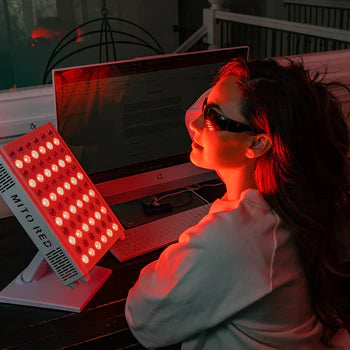



Panel Series
Red light therapy (RLT), also known as photobiomodulation, is a growing wellness modality used in skincare, recovery, and performance routines.
But how does it actually work—and what does the science say?
In this guide, we’ll break down:
- The origins of red light therapy
- How light interacts with the body
- The role of mitochondria and cellular energy
- Commonly discussed benefits (and what to realistically expect)
What Is Red Light Therapy?
Red light therapy uses specific wavelengths of red and near-infrared (NIR) light applied to the body.
- Red light → visible wavelengths (~600–700 nm)
- Near-infrared light → invisible wavelengths (~700–1000+ nm)
These wavelengths are used in a variety of wellness and research settings.
The Origins of Red Light Therapy
Interest in red light therapy grew from early research exploring how different wavelengths of light affect biological systems. See also Best Wavelengths for Red Light Therapy.
Light has long been known to influence the body in various ways:
- Vision (retinal light absorption)
- Vitamin D production (UVB exposure)
- Circadian rhythm regulation (light-dark cycles)
Over time, researchers began studying how red and near-infrared wavelengths interact with cells—leading to the modern field of photobiomodulation.
⚠️ Note: While early research contributed to interest in this field, modern applications are based on a broader and evolving body of scientific literature.
How Light Interacts With the Body
Light affects the body in different ways depending on wavelength.
For example:
- UV light can influence skin pigmentation and vitamin D production
- Visible light supports vision and circadian signaling
- Red/NIR light is studied for its interaction with cellular processes
Red and near-infrared wavelengths are unique because they can penetrate tissue to varying depths, depending on the wavelength and device.
The Science Behind Red Light Therapy
Mitochondria & Cellular Energy
Within cells are structures called mitochondria, which help produce energy in the form of ATP (adenosine triphosphate).
Some research suggests that certain wavelengths of light may interact with components inside mitochondria. This interaction is believed to influence cellular energy processes.
However:
- Mechanisms are still being studied
- Effects may vary based on dose, wavelength, and individual factors
Key Biological Pathways Often Discussed
1. Collagen & Skin Structure
Collagen is a structural protein found in skin, joints, and connective tissue.
Some studies suggest that light exposure at certain wavelengths may:
- Support normal collagen-related processes
- Influence skin appearance over time
⚠️ Results vary and depend on consistency, device quality, and individual biology.
2. Circulation
Circulation plays a role in delivering oxygen and nutrients throughout the body.
Some research has explored whether light exposure may:
- Support normal blood flow dynamics
Influence nitric oxide pathways
These effects are still being actively studied.
3. Inflammation Balance
Inflammation is a natural biological response.
Short-term inflammation is helpful for healing, while chronic inflammation can contribute to discomfort.
Some studies suggest red and near-infrared light may:
- Support the body’s natural inflammatory response
- Play a role in recovery-focused routines
4. Cellular Energy (ATP)
ATP is the primary energy currency of the cell.
Because mitochondria are involved in ATP production, researchers have explored whether light exposure may influence this process. See also What Is Red Light Therapy? Benefits, Uses, & Side Effects.
Potential downstream effects being studied include:
- Recovery processes
- Tissue function
- Energy availability at the cellular level
Potential Benefits of Red Light Therapy
Red light therapy is commonly used for general wellness purposes, including:
Skin Appearance
- Supporting smoother-looking skin
- Complementing skincare routines
Recovery & Performance
- Used post-exercise in fitness routines
- Often paired with mobility and recovery protocols
Sleep & Relaxation
- Red wavelengths are generally considered less disruptive to circadian rhythms than blue light
- Sometimes used in evening routines
What Does the Research Say?
There is a growing body of research on photobiomodulation, but it’s important to understand:
- Results are mixed and context-dependent
- Protocols vary widely (wavelength, duration, intensity)
- Not all devices produce the same output
Some studies have explored:
- Skin-related outcomes
- Exercise recovery markers
- Temporary improvements in comfort and function
⚠️ Red light therapy is not a cure or treatment for medical conditions.
What to Look for in a Red Light Therapy Device
If you’re considering at-home use, key factors include:
- Wavelength selection (red + near-infrared)
- LED density and coverage
- Verified output (irradiance)
- Third-party testing and transparency
Final Thoughts
Red light therapy is an evolving area of research with growing interest in both clinical and consumer settings.
While early findings are promising in certain areas, it’s best approached as:
- A wellness tool, not a medical treatment
- Part of a broader routine (sleep, nutrition, movement)
- A long-term consistency play, not a quick fix
Key Takeaways
- Red light therapy uses specific wavelengths of light to interact with the body
- Research focuses on cellular energy, circulation, and inflammation pathways
- Potential benefits include skin support, recovery, and relaxation
- Results vary based on device quality and consistency
- It should be used as part of a broader health and wellness approach
This article discusses published scientific research and general educational information about photobiomodulation and red light therapy. It does not constitute medical advice and does not make specific claims about Mito Red Light devices. The research cited reflects independent peer-reviewed studies and does not imply that any Mito Red Light product has been evaluated, approved, or cleared by the FDA or any other regulatory body for the diagnosis, treatment, cure, or prevention of any disease or medical condition. Individual results vary. Consult a qualified healthcare professional before beginning any light therapy protocol, particularly if you have a pre-existing medical condition, are pregnant, or are taking photosensitising medications.
Mito Red Light products are general wellness devices. They are not medical devices and have not been evaluated, cleared, or approved by the FDA or any regulatory body for the diagnosis, treatment, cure, or prevention of any disease or medical condition. Any references to peer-reviewed research or clinical studies on this page describe findings from independent scientific literature and do not imply that Mito Red Light devices have been studied, tested, or proven effective for any specific condition. Always consult a qualified healthcare provider before beginning any new wellness routine, particularly if you have a medical condition or are taking medication.
Related articles
More from the red light therapy knowledge cluster