

















Panel Series
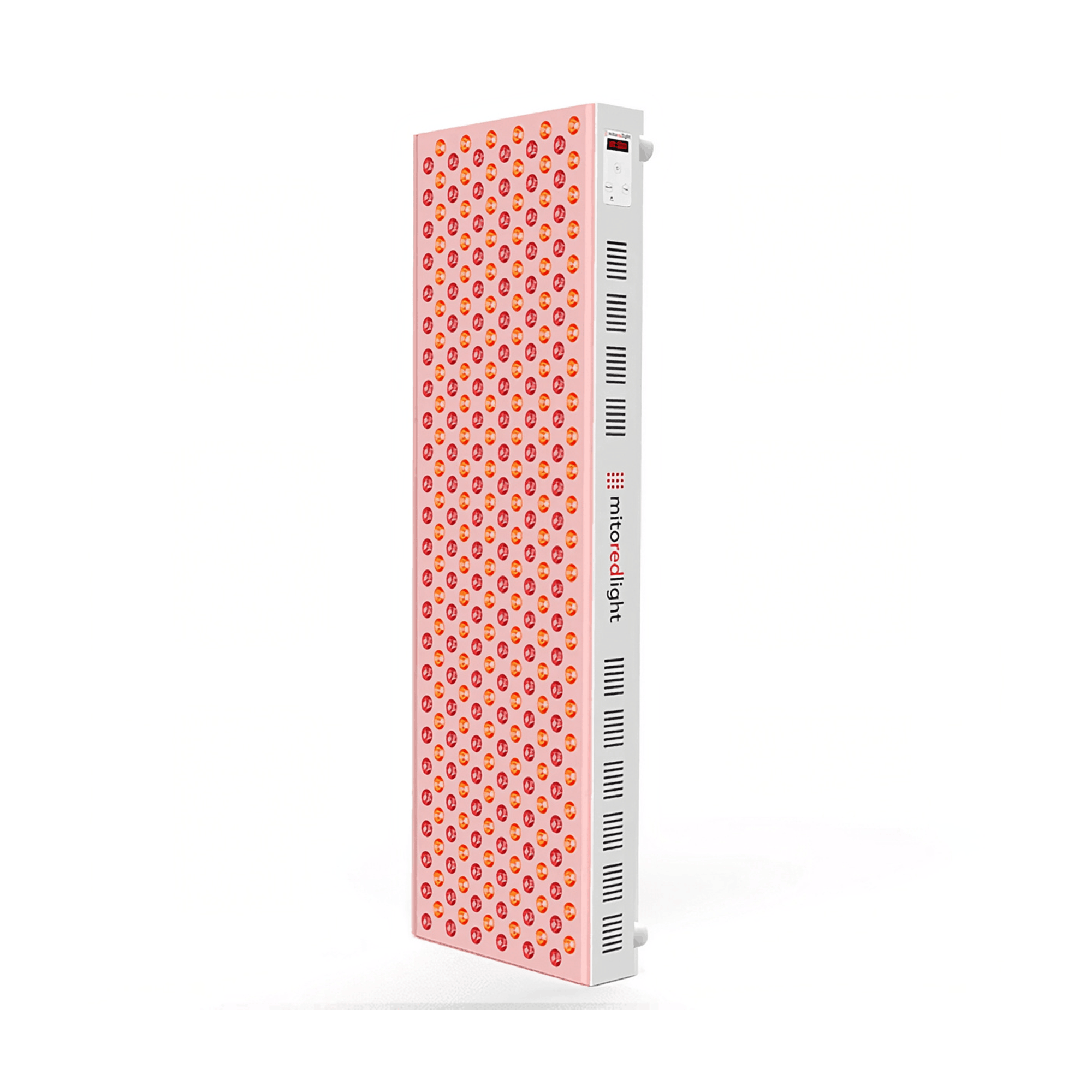
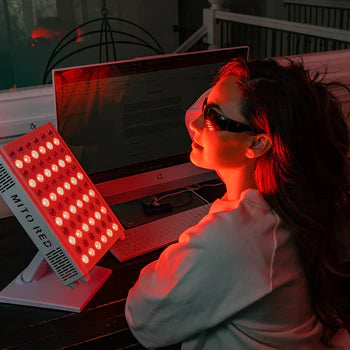
Quick answer: Most facial red light therapy sessions take 3 to 20 minutes. With an LED face mask, sessions usually run 3 to 10 minutes (MitoGLOW: 5 to 10 minutes); with a panel, 10 to 20 minutes at about 6 to 12 inches. Use it 3 to 6 times a week, and follow your device's directions, since a stronger or closer light needs less time.
Updated October 2026 with 2025 and 2026 research.
Understanding the science behind session length, specifically the biphasic dose response, helps you build a routine that delivers consistent, cumulative results rather than one that underperforms or wastes time.
The skin on your face is among the more sensitive tissue on the body, and facial red light therapy sessions deserve the same precision as any other protocol. This guide covers what's actually happening during a session, why timing matters, and how to calibrate your routine to get the most from each use. For the full background, read Red Light Therapy for Skin.
For a broader introduction to how red light therapy works, see what red light therapy is and what the research shows. For the full cellular mechanism, visit how photobiomodulation works at the cellular level.
What's Actually Happening During a Facial Red Light Therapy Session?
Photobiomodulation (PBM), the scientific term for red light therapy, involves delivering specific wavelengths of light into skin tissue, where photons are absorbed by light-sensitive molecules inside cells. Red wavelengths in the 630–680nm range primarily act on surface skin cells, while near-infrared wavelengths in the 810–850nm range penetrate several centimeters deeper into underlying tissue.
The primary intracellular target is cytochrome c oxidase (CCO), the terminal enzyme in the mitochondrial electron transport chain. When CCO absorbs red and near-infrared photons, it may stimulate increased ATP (adenosine triphosphate) production, the cell's primary energy currency. Research suggests this photochemical cascade may also influence nitric oxide (NO) release, reactive oxygen species (ROS) signaling, and downstream gene expression relevant to cellular repair and tissue remodeling.
For facial skin specifically, a 2023 randomized controlled trial published in Photobiomodulation, Photomedicine, and Laser Surgery found that PBM significantly reduced periocular wrinkle volume, with red light producing a mean wrinkle volume reduction of 31.6% compared to baseline [Mota et al., 2023, PMID 37405431]. A home-use LED study using 660nm and 850nm wavelengths reported significant improvements in skin elasticity over an 8-week period [Ng et al., 2020, PMID 32216039].
For the full body of clinical research on red light and skin health, Mito Red Light maintains a comprehensive clinical evidence page on PBM and skin aging, as well as a broader clinical research evidence hub organized by health category.
How Long Should Facial Red Light Therapy Sessions Be?
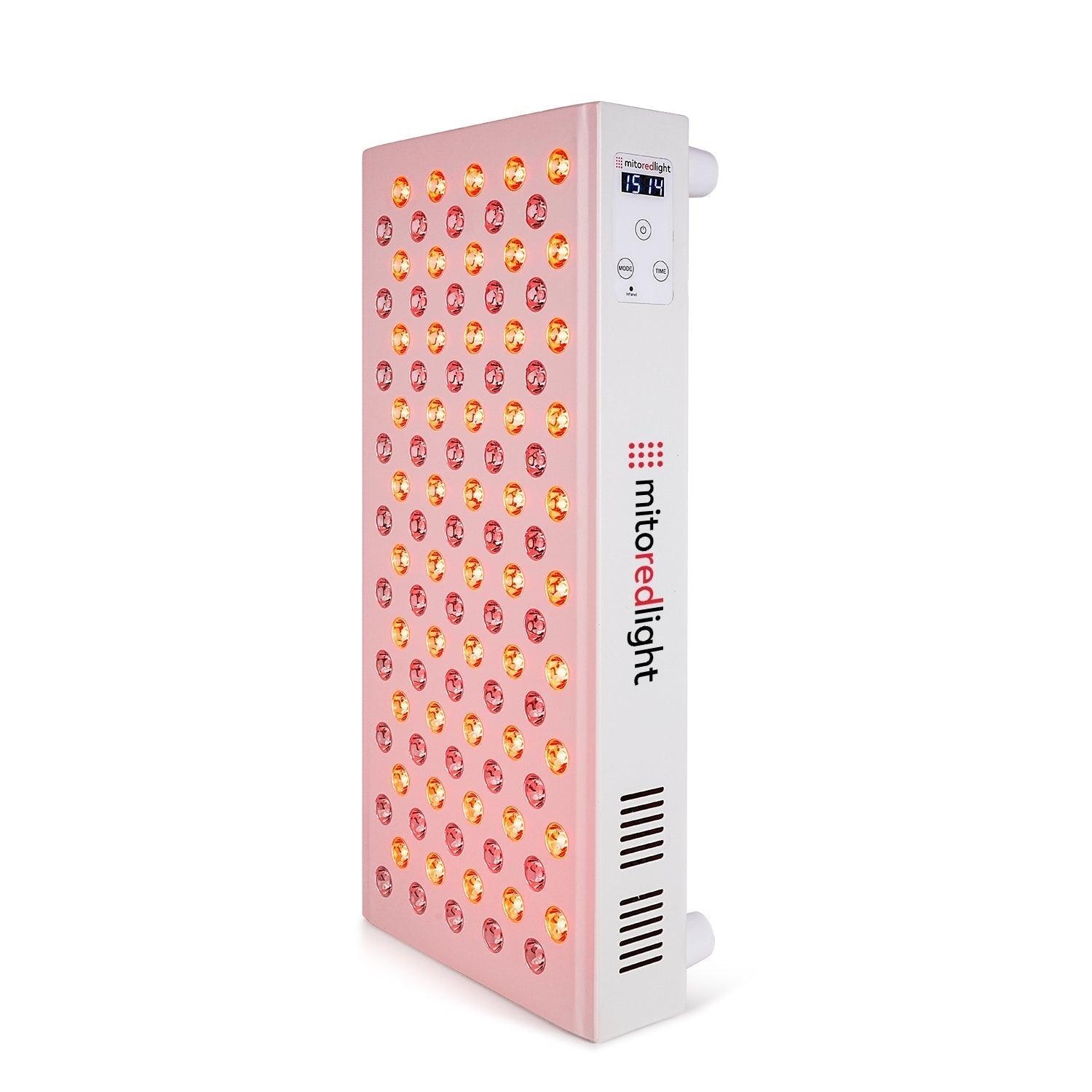
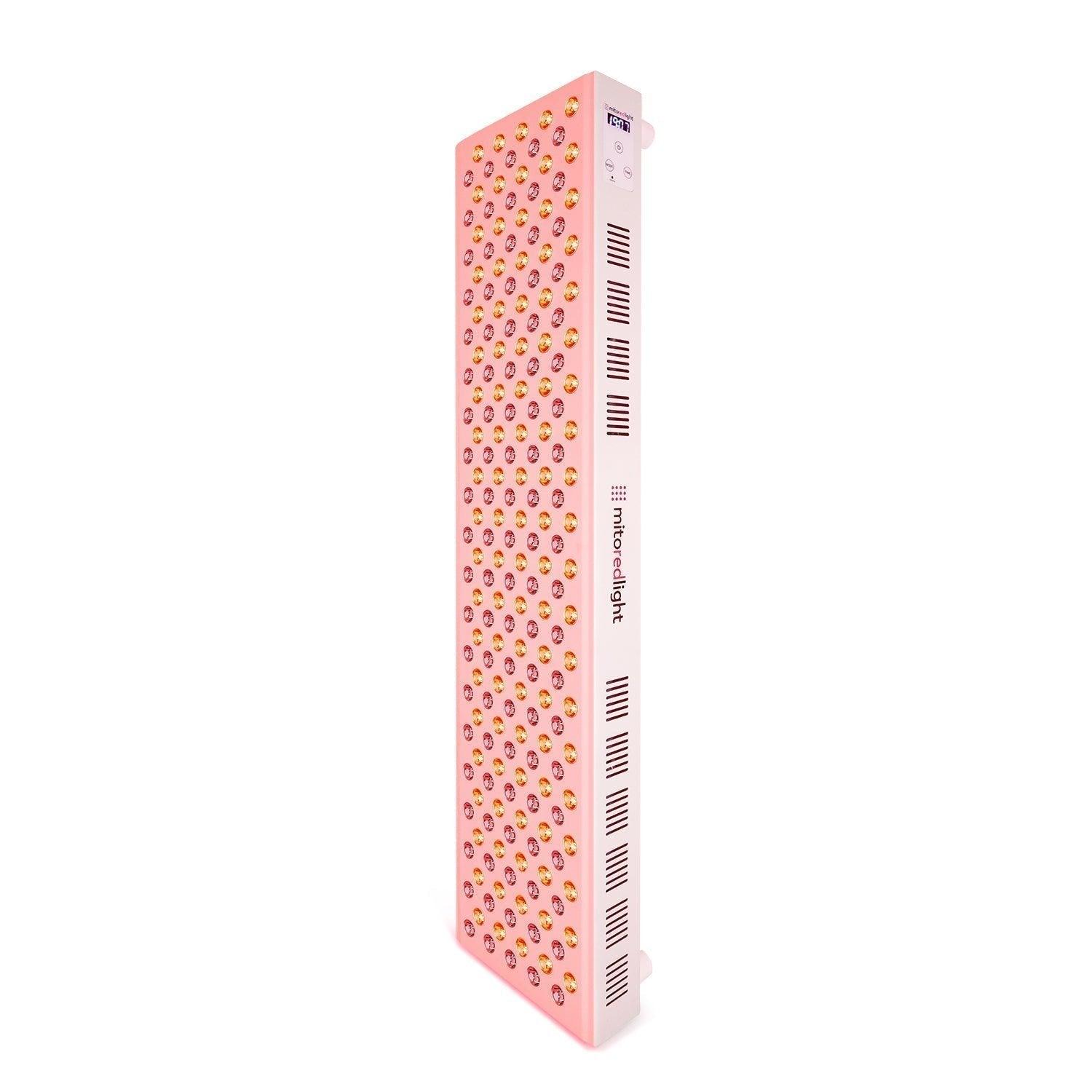
For panels and other non-contact devices, facial sessions in the 10–20 minute range align with the fluence (total energy delivered per unit area, measured in J/cm²) used in human clinical studies. The specific duration that's right for you depends on your device's irradiance output; higher-irradiance devices reach therapeutic fluence faster than lower-output devices.
Doubling your session time does not double your results. The reason is the biphasic dose response.
What Recent Studies Used for Session Length (2025)
- Red LED mask, randomized and sham-controlled (95 women, 2025): a 660 nm mask used two or three times a week for four weeks (21-minute sessions) reduced the measured length of frown lines and wrinkles beside one eye compared with sham. Twice a week worked as well as three times (Bragato et al., 2025).
- Home-use neck device, randomized and sham-controlled (70 people, 2025): 9 minutes a day, 5 days a week, improved investigator-rated neck wrinkles compared with sham at 8, 12 and 16 weeks (Park et al., 2025).
- Home-use mask, randomized and sham-controlled (60 adults, 2025): a mask combining 630 nm red and 850 nm near-infrared light improved crow's feet compared with a sham mask at 8, 12 and 16 weeks (Park et al., 2025).
Why Does Session Length Matter? The Biphasic Dose Response
One of the most well-established principles in PBM research is the biphasic dose response, the observation that cellular responses to light follow an inverted U-shaped curve. Low doses produce little response; moderate doses produce the optimal response; high doses can inhibit the same response. This is sometimes called the Arndt-Schulz law applied to photobiology.
Practically, this means:
- Underdosing: A session too brief may not deliver sufficient fluence to stimulate a meaningful cellular response. Cells need adequate photon absorption to initiate the mitochondrial signaling cascade.
- Optimal dosing: Sessions within the device's recommended range deliver the fluence associated with peak cellular response in clinical protocols.
- Overdosing: Extended sessions beyond the recommended range may produce diminishing returns or, at very high cumulative fluence, inhibit the same pathways you're trying to support.
This is why manufacturer session guidelines matter because they are typically calibrated to the device's irradiance output to land in the therapeutic window established by the clinical literature. Understanding wavelength-specific dosing in more depth is covered in the wavelength dosing and penetration depth guide.
What Factors Affect Your Ideal Session Time?
Session length is one variable in a larger dosing equation. These factors all interact:
- Device irradiance (mW/cm²): Higher-irradiance devices deliver more energy per minute. A device at 100 mW/cm² reaches a given fluence target in half the time of a 50 mW/cm² device. Always refer to your device's measured irradiance at the recommended treatment distance, not peak LED output, which can be misleading.
- Treatment distance: Irradiance follows an inverse square relationship with distance. Moving further from your device significantly reduces the energy your skin receives per minute, which means sessions at greater distances need to be longer to deliver equivalent fluence.
- Session frequency: Daily sessions and every-other-day sessions accumulate fluence at different rates. Your overall protocol, not just single session length, determines cumulative exposure.
- Wavelength: Red (630–680nm) and near-infrared (810–850nm) wavelengths have different tissue targets and may have different optimal fluence ranges. Devices delivering both wavelengths simultaneously are used in the majority of human RCTs. For a full comparison, see red vs. near-infrared light therapy: what's the difference and which should you use.
- Skin sensitivity: If you're new to red light therapy, starting at the shorter end of the recommended window and building up over the first few weeks is a sensible approach.
Does Consistency Matter More Than Session Length?
Skin cell turnover cycles span weeks, and collagen remodeling occurs over months. Research indicates that cumulative, consistent exposure, not individual session length, drives observable skin changes over time. A 2020 split-face pilot study published in Journal of Cosmetic Dermatology found that consistent home LED use over eight weeks produced significant improvements in skin elasticity compared to control [Ng et al., 2020, PMID 32216039].
Three to five shorter sessions per week, each within the device's recommended parameters, will typically outperform sporadic longer sessions. The protocol is the point.
How Can You Get the Most From Each Facial Session?
- Start with a clean face: Makeup, sunscreen, and heavy moisturizers can act as physical barriers or light absorbers. Clear skin allows maximum photon penetration into the tissue.
- Use your device at the recommended distance: Irradiance drops significantly with distance. Staying within the manufacturer's specified range ensures you're receiving the fluence the device was calibrated to deliver.
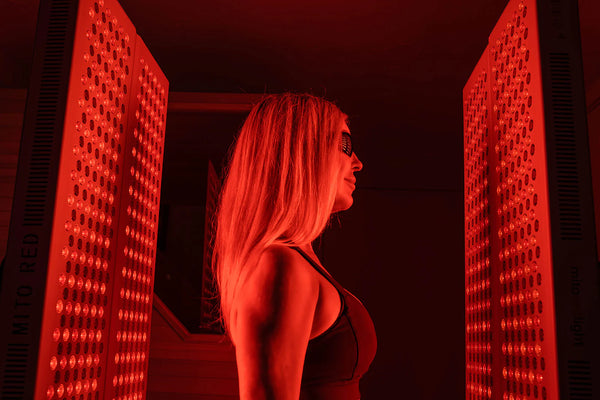
- Protect your eyes: Always use appropriate eye protection during facial sessions. Near-infrared light is invisible, and prolonged direct eye exposure is not recommended.
- Integrate it into an existing routine: Pairing your session with morning or evening skincare makes adherence easier. Consistent timing also simplifies tracking.
- Log your sessions: Tracking session dates, duration, and distance helps you identify patterns and troubleshoot if results plateau.
For guidance on device selection, including how to evaluate irradiance claims and certifications, see the red light therapy buyer's guide. Mito Red Light's Evidence Explorer also provides searchable access to more than 9,500 peer-reviewed PBM studies for those who want to review the primary literature.
The MitoGLOW LED Mask is FDA 510(k) cleared (K221775) as a light-based OTC wrinkle reduction device and delivers both red and near-infrared wavelengths designed for facial use at home.
Frequently Asked Questions
How long should a red light therapy session be for the face?
Most facial sessions take 3 to 20 minutes: about 3 to 10 minutes with an LED face mask (MitoGLOW: 5 to 10 minutes) and 10 to 20 minutes with a panel at about 6 to 12 inches. Follow your device's directions, since a stronger or closer light needs less time.
Can I use red light therapy on my face every day?
Many users build daily facial sessions into their routines. Research supports consistent, frequent exposure as the driver of cumulative skin benefits. Refer to your device's frequency recommendations, as protocols vary by device design and irradiance level.
Does sitting closer to the device mean I need less time?
Yes. Irradiance increases significantly as you move closer to the device, meaning your skin receives more energy per minute at shorter distances. This can reduce the session time needed to reach your target fluence. Follow your manufacturer's recommended distance rather than adjusting distance and time independently without guidance.
What happens if a red light therapy session is too short?
A session that's too brief may not deliver sufficient fluence for a meaningful cellular response. The biphasic dose response in PBM research suggests there is a minimum effective dose below which little cellular activity is stimulated. This is why staying within recommended session parameters matters.
Does the biphasic dose response mean more red light therapy is harmful?
At very high cumulative doses, photobiomodulation research suggests the beneficial cellular response can plateau or inhibit. Within standard home-device protocols and manufacturer-recommended session lengths, this is unlikely to be a practical concern. The main risk at typical consumer device outputs is underdosing, not overdosing.
DISCLAIMER: Mito Red Light devices are general wellness devices. The information provided in this article is for educational purposes only and is not intended to diagnose, treat, cure, or prevent any disease or medical condition. It is not a substitute for consultation with a licensed healthcare provider and should not be construed as medical advice. If you have a medical condition or take medications, consult your healthcare provider before starting any new wellness practice. See our article on potential contraindications for red light therapy.
This article was reviewed for scientific accuracy by Dr. Alexis Cowan, PhD in Molecular Biology (Princeton University), who specializes in mitochondrial function and photobiomodulation research.
References
- Mota LR et al. (2023). Photobiomodulation Reduces Periocular Wrinkle Volume by 30%: A Randomized Controlled Trial. Photobiomodul Photomed Laser Surg. PMID 37405431. https://pubmed.ncbi.nlm.nih.gov/37405431/
- Ng JN et al. (2020). Efficacy of Home-Use Light-Emitting Diode Device at 637 and 854-nm for Facial Rejuvenation: A Split-Face Pilot Study. J Cosmet Dermatol. PMID 32216039. https://pubmed.ncbi.nlm.nih.gov/32216039/
- Huang YY et al. (2009). Biphasic dose response in low level light therapy. Dose Response. PMID 20011653. https://pubmed.ncbi.nlm.nih.gov/20011653/
- Jourdan MM et al. (2019). The Prevalence of Sensitive Skin. Front Med. PMC6533878. https://pmc.ncbi.nlm.nih.gov/articles/PMC6533878/
Dive deeper into the research
- Mito Red Research Evidence Hub — 10,000+ indexed PBM studies across 15 clinical categories.
- Topic-specific clinical evidence — evidence summary, mechanism, and dosing ranges.
- Wavelength reference — 633, 660, 810, and 830 nm comparison and dosing data.
- Independent third-party testing — spectrometer-verified output across the Mito Red product line.
- Mito Red Scientific Advisory Board — review workflow, evidence grading, primary-literature sourcing.
Mito Red Light products are general wellness devices. They are not medical devices and have not been evaluated, cleared, or approved by the FDA or any regulatory body for the diagnosis, treatment, cure, or prevention of any disease or medical condition. Any references to peer-reviewed research or clinical studies on this page describe findings from independent scientific literature and do not imply that Mito Red Light devices have been studied, tested, or proven effective for any specific condition. Always consult a qualified healthcare provider before beginning any new wellness routine, particularly if you have a medical condition or are taking medication.