











MitoCLEAR® Red Light Therapy Mask | With Blue Light Therapy for Acne Rated 4.6 out of 5 stars29 ReviewsClick to scroll to reviews
Blue light therapy at 415–450nm targets specific chromophores in skin tissue, with the strongest evidence in acne vulgaris treatment through photoactivation of endogenous porphyrins. The MitoGLOW LED mask includes blue light alongside red and near-infrared for comprehensive facial treatment.
Is Blue Light Therapy Safe? Understanding the Risk Profile
Blue light therapy has a strong safety record across decades of clinical use — but like any medical or wellness intervention, understanding its risk profile helps you use it correctly and identify the small subset of people who need to take precautions. This article covers what the evidence says about blue light therapy safety, who should exercise caution, and how to use it responsibly at home.
The Short Answer: Blue Light Therapy Is Safe for Most People
Therapeutic blue light at 415–450nm has been studied in randomised controlled trials, used in dermatology clinics for decades, and cleared by the FDA for home use acne devices. Across this body of research and clinical experience, the safety profile is consistently favourable — no systemic adverse effects, no evidence of DNA damage or carcinogenicity at therapeutic doses, and only mild, transient local effects reported in a small minority of users.
This is importantly different from UV light, which does carry documented risks of DNA damage and skin cancer. Blue light (415–450nm) sits in the visible spectrum, above the UV range (below 400nm). At therapeutic doses, it does not cause the photochemical DNA damage associated with UV radiation.
What the Clinical Evidence Shows on Safety
Multiple systematic reviews and meta-analyses of blue light therapy for acne have examined adverse effects. The consistent findings:
- Mild temporary erythema (redness): Reported in a minority of users, resolving within hours. More common at higher irradiance or longer sessions.
- Mild dryness or tightness: Occasionally reported, particularly in those with already dry or sensitive skin types. Manageable with moisturiser post-treatment.
- Temporary hyperpigmentation: Rare, reported primarily in Fitzpatrick skin types IV–VI (darker skin tones) at high doses. This is transient and fades over weeks.
- No systemic effects: No haematological, hepatic, renal, or other systemic effects have been reported across clinical trial populations.
- No carcinogenicity: No evidence of increased skin cancer risk at therapeutic blue light doses in any clinical literature.
Eye Safety: The Most Important Precaution
The retina contains photoreceptors sensitive to blue light, and high-intensity blue light exposure without eye protection carries a risk of phototoxic retinal damage. This is the one area where blue light therapy requires a firm precaution.
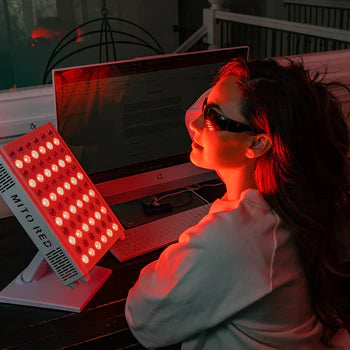
Always use appropriate eye protection during blue light therapy sessions. This applies whether you're using a clinic device or a home LED mask. Most home devices either include built-in eye shields or come with protective goggles — use them consistently. The risk is specifically from direct, prolonged high-intensity blue light to the unprotected retina, not from ambient scattered light.
LED masks designed for facial treatment, like the MitoGLOW, include opaque eye covers for this reason. Do not modify or remove them.
Photosensitising Medications
A significant group of commonly prescribed medications increase photosensitivity — the skin's susceptibility to light-induced reactions. If you are taking any of the following categories of medication, consult with your prescribing physician before starting blue light therapy:
- Tetracycline antibiotics (doxycycline, minocycline) — frequently prescribed for acne, so particularly relevant for blue light users
- Fluoroquinolone antibiotics (ciprofloxacin, levofloxacin)
- Thiazide diuretics (hydrochlorothiazide)
- NSAIDs (particularly naproxen and piroxicam)
- Phenothiazines (some antipsychotics)
- Amiodarone (heart rhythm medication)
- Some herbal supplements: St John's Wort is a well-documented photosensitiser
Photosensitising medications can increase the risk of exaggerated reactions — unusual redness, burning, or blistering — at doses that would otherwise be well tolerated. This doesn't necessarily mean you cannot use blue light therapy while on these medications, but it does mean you need medical guidance on timing, dose, and monitoring.
Skin Type Considerations
Fitzpatrick skin phototype affects the risk of temporary post-inflammatory hyperpigmentation (PIH) following blue light treatment:
- Types I–III (fair to medium skin): Very low risk of PIH. Standard protocols are appropriate.
- Types IV–V (olive to brown skin): Low-moderate risk of transient PIH at standard doses. Starting with shorter sessions and lower frequency is prudent.
- Type VI (very dark skin): Higher relative risk of transient PIH. A conservative approach — lower doses, longer intervals between sessions, monitoring for early signs of hyperpigmentation — is recommended. Consult a dermatologist before starting if you have concerns.
It's important to note that PIH from blue light therapy, when it occurs, is typically mild and transient — not permanent damage. However, in darker skin tones it warrants more careful management.
Pregnancy
There is no direct evidence of harm from topical blue light therapy during pregnancy at the therapeutic doses used for acne treatment. However, formal safety studies in pregnant populations have not been conducted — which is standard for most cosmetic and device-based treatments.
The general guidance is to consult your obstetrician before beginning any new therapeutic intervention during pregnancy. Many healthcare providers take a conservative approach and suggest deferring elective cosmetic treatments until after delivery, in the absence of specific evidence of safety.
Active Skin Infections and Open Wounds
Blue light therapy should not be applied to areas of active skin infection other than C. acnes-driven acne, open wounds, or severely compromised skin barrier. This is not because blue light is harmful in these contexts — it's because the device can potentially transfer bacteria, and treatment of active infections requires medical management rather than home device use.
History of Photosensitivity Conditions
People with a diagnosed photosensitivity condition — such as lupus erythematosus, porphyria, or xeroderma pigmentosum — should not use blue light therapy without specific clearance from their treating physician. These conditions involve abnormal light-triggered immune or metabolic responses, and even visible-spectrum light can provoke reactions.
How to Use Blue Light Therapy Safely at Home
Following these guidelines covers the vast majority of safety considerations for home users:
- Always wear appropriate eye protection — built-in shields or supplied goggles, every session
- Start conservatively — begin with shorter sessions (5–10 minutes) to assess your skin's response before progressing to full protocol duration
- Check your medications — review the photosensitiser list above and consult your doctor if relevant
- Don't treat compromised skin — avoid active infections (other than acne), open wounds, or severely irritated skin
- Monitor your skin — if you experience unusual burning, blistering, or hyperpigmentation, discontinue and consult a dermatologist
- Review our full contraindications — our contraindications page covers all safety considerations for both red and blue light therapy devices
The Bottom Line
Blue light therapy at therapeutic doses is one of the better-characterised and safer light-based interventions available for home use. The key precautions — eye protection, awareness of photosensitising medications, and conservative starting protocols for darker skin types — are straightforward and manageable. For the vast majority of healthy adults without photosensitivity conditions or relevant medications, home blue light therapy presents a low risk profile backed by decades of clinical experience.
This article is for informational purposes only and does not constitute medical advice. Consult a qualified healthcare provider if you have questions about whether blue light therapy is appropriate for your specific situation.
References
- Gold MH et al. (2011). Clinical efficacy of home-use blue-light therapy for mild-to-moderate acne. Journal of Cosmetic and Laser Therapy, 13(6), 308–314.
- Dai T et al. (2012). Blue light for infectious diseases: Propionibacterium acnes, Helicobacter pylori, and beyond. Drug Resistance Updates, 15(4), 223–236.
- Opländer C et al. (2011). Incoherent visible light irradiation of human skin fibroblasts. Photochemistry and Photobiology, 87(4), 942–949.
- Charakida A & Chu AC. (2005). Photoprevention of acne vulgaris. Dermatology, 210(Suppl 1), 43–50.
- Morton CA et al. (2013). Guidelines for topical photodynamic therapy: update. British Journal of Dermatology, 168(6), 1210–1218.
Frequently Asked Questions
Is blue light therapy safe for daily use?
Yes, for most people. Clinical trials have used daily protocols without adverse effects. For home use, 4–5 sessions per week is a sustainable long-term protocol. Start with shorter sessions (5–10 minutes) to assess your skin's response before progressing to full duration.
Does blue light therapy damage eyes?
High-intensity blue light at close range can cause phototoxic retinal damage. Always use the eye protection provided with your device — every session, without exception. The MitoGLOW includes built-in opaque eye covers specifically for this reason. Do not modify or remove them.
Can I use blue light therapy if I take antibiotics?
Some antibiotics — particularly tetracyclines (doxycycline, minocycline) and fluoroquinolones — are photosensitisers that can increase your skin's sensitivity to light. If you're taking these medications, consult your prescribing doctor before starting blue light therapy. You may need to reduce session length or pause treatment during the course.
Is blue light therapy safe for dark skin tones?
Yes, but with extra caution. Fitzpatrick skin types V–VI have a higher relative risk of transient post-inflammatory hyperpigmentation at standard doses. Start with shorter sessions, longer intervals between treatments, and monitor closely. Any hyperpigmentation that develops is typically mild and fades over weeks. Consult a dermatologist if you have concerns.
Can blue light therapy be used during pregnancy?
No formal safety studies have been conducted in pregnant populations — standard practice for most cosmetic device treatments. Many healthcare providers recommend deferring elective cosmetic treatments until after delivery as a precautionary measure. Consult your obstetrician before beginning any new therapeutic intervention during pregnancy.
This article discusses published scientific research and general educational information about photobiomodulation and red light therapy. It does not constitute medical advice and does not make specific claims about Mito Red Light devices. The research cited reflects independent peer-reviewed studies and does not imply that any Mito Red Light product has been evaluated, approved, or cleared by the FDA or any other regulatory body for the diagnosis, treatment, cure, or prevention of any disease or medical condition. Individual results vary. Consult a qualified healthcare professional before beginning any light therapy protocol, particularly if you have a pre-existing medical condition, are pregnant, or are taking photosensitising medications.
Mito Red Light products are general wellness devices. They are not medical devices and have not been evaluated, cleared, or approved by the FDA or any regulatory body for the diagnosis, treatment, cure, or prevention of any disease or medical condition. Any references to peer-reviewed research or clinical studies on this page describe findings from independent scientific literature and do not imply that Mito Red Light devices have been studied, tested, or proven effective for any specific condition. Always consult a qualified healthcare provider before beginning any new wellness routine, particularly if you have a medical condition or are taking medication.
Related articles
More from the blue light therapy knowledge cluster