
















Panel Series
Red light therapy accelerates muscle recovery by increasing mitochondrial energy production and reducing exercise-induced oxidative stress. Clinical studies using 808–850nm near-infrared wavelengths consistently show reduced DOMS, lower creatine kinase levels, and faster return-to-performance in athletes.
Summary: Red light therapy supports skin health by enhancing cellular energy production, collagen signaling, and inflammation balance, with research examining its potential role in improving skin texture, reducing the appearance of wrinkles, and supporting clearer, more resilient skin.
How Red Light Therapy Interacts With the Skin
Red light therapy and adjacent wavelengths influence skin biology by delivering light energy that interacts with different skin layers and cell types. Rather than acting uniformly, each wavelength range engages tissue differently, which helps explain why multi-wavelength systems are often used in skin-focused light therapy.
Wavelength Interaction With Skin Layers and Target Tissues
Different wavelengths of light interact with skin tissue based on how they are absorbed and scattered within the skin. Optical absorbers such as melanin, hemoglobin, and water influence how light is distributed across skin layers and how much reaches deeper cellular targets. Because absorption and biological response vary by wavelength, multi-wavelength light therapy systems are often used to engage different skin layers and cell types rather than relying on a single narrow wavelength range.
Mitochondrial Stimulation and Cellular Energy Production
Red and near-infrared light therapy is studied for its interaction with mitochondrial photoacceptors involved in cellular respiration, particularly cytochrome c oxidase [1]. Absorption of light at these wavelengths has been associated with changes in mitochondrial activity that support adenosine triphosphate production, which plays a role in cellular repair, signaling, and recovery from environmental stressors. Rather than forcing rapid surface-level changes, red light therapy is investigated as a way to support normal skin function and resilience over time.
Key takeaways
-
Light absorption and scattering influence how different wavelengths interact with skin tissue
-
Optical absorbers shape light distribution, while mitochondrial photoacceptors drive signaling responses
-
Red and near-infrared light are studied for their effects on cellular energy production
-
Cellular energy availability supports skin repair, signaling, and long-term skin resilience
Red Light Therapy and Collagen Signaling
Collagen provides much of the skin’s structural framework, contributing to firmness, elasticity, and overall texture. With age and cumulative environmental stress, collagen synthesis slows while breakdown accelerates. Red light therapy has been studied for its potential to support collagen-related processes by influencing the cells responsible for maintaining the skin’s extracellular matrix.
Fibroblast Activity and Collagen Pathways
Fibroblasts are the primary cells responsible for producing collagen and other structural proteins in the dermis. Research suggests that red light exposure may support fibroblast-related signaling by improving cellular energy availability and metabolic conditions involved in tissue maintenance and repair [2]. Much of what is known about fibroblast responses comes from cell and skin-model research, offering valuable insight into the biological processes that support collagen maintenance.
Rather than directly creating collagen, red light therapy is studied for its ability to support the biological environment that allows normal collagen maintenance and organization over time.
Skin Firmness, Elasticity, and Structural Support
Collagen and elastin contribute to skin firmness, elasticity, and overall texture. When these structures decline with age or environmental stress, skin may appear thinner and less resilient. By supporting collagen-related signaling pathways, red light therapy has been associated in studies with gradual improvements in skin texture and structural appearance [2].
These changes tend to be subtle and cumulative, reflecting underlying skin support rather than immediate surface tightening.
Key takeaways
-
Fibroblasts play a central role in collagen and elastin production
-
Red light therapy is studied for its ability to support fibroblast activity and collagen-related signaling
-
Collagen support is indirect and linked to improved cellular conditions rather than forced production
-
Structural proteins contribute to skin firmness, elasticity, and texture
-
Changes in skin structure tend to occur gradually with consistent use

Red Light Therapy for Wrinkles and Visible Skin Aging
Visible skin aging is influenced by a combination of intrinsic factors, such as slower cellular turnover, and extrinsic stressors, including ultraviolet exposure and oxidative stress. Over time, these factors contribute to changes in skin structure, elasticity, and texture. Red light therapy has been studied for its potential role in supporting skin repair processes that may help counter some of these age-related changes.
Supporting Skin Repair and Renewal
Red light therapy is studied for its ability to support cellular processes involved in skin maintenance and recovery. By influencing cellular energy availability and repair-related signaling, red light exposure has been associated in studies with gradual improvements in skin texture and the appearance of fine lines [3].
These changes tend to develop over time and reflect underlying improvements in skin function rather than immediate or surface-level tightening.
Light Preconditioning Before UV Exposure
Some research has explored whether exposure to red and near-infrared light before ultraviolet exposure may support the skin’s response to UV-related stress [4]. In these studies, near-infrared wavelengths were associated with greater support of cellular recovery pathways than visible red light, suggesting wavelength-specific differences rather than any direct UV-blocking effect.
This research does not indicate that light therapy prevents the full scope of UV damage or replaces sunscreen. Standard sun protection practices remain essential, with red and near-infrared light best viewed as a complementary approach for supporting skin resilience.
Key takeaways
-
Visible skin aging is influenced by cellular slowdown and environmental stressors
-
Red light therapy is studied for its role in supporting skin repair and renewal
-
Improvements in wrinkles and texture tend to be gradual and cumulative
-
Some studies suggest red and near-infrared light may support skin responses to UV stress
-
Red light therapy does not replace sunscreen or other sun protection measures

Red Light Therapy and Acne-Prone Skin
Acne-prone skin is influenced by multiple factors, including inflammation, bacterial activity, and impaired skin recovery. Light-based approaches in dermatology often combine different wavelengths to address these contributors through complementary mechanisms rather than relying on a single pathway.
Inflammation Balance in Acne-Prone Skin
Red and near-infrared light are studied for their ability to support inflammation balance and skin recovery, which are relevant considerations for acne-prone skin. By influencing cellular energy availability and signaling pathways associated with repair, red light exposure may help support the skin’s ability to recover from inflammatory stress related to active breakouts.
Rather than directly targeting acne-causing bacteria, red and near-infrared wavelengths are generally discussed in the context of calming visible redness, supporting barrier function, and aiding post-blemish recovery, which may contribute to a clearer overall skin appearance over time.
Blue Light and Acne-Causing Bacteria
Blue light, typically discussed in the range of approximately 405–470 nm, has been used in dermatology for its interaction with acne-associated bacteria, particularly Cutibacterium acnes (formerly Propionibacterium acnes). This wavelength range is thought to work by exciting naturally occurring porphyrins within the bacteria, leading to antimicrobial effects that may help reduce bacterial activity on the skin [5].
Clinical studies using blue light, often in combination with red light, have reported reductions in acne lesions. In multi-wavelength devices such as the MitoGLOW Red Light Therapy Mask, blue light is included alongside amber (590 nm), red (630 nm), and near-infrared (830 nm) wavelengths to address bacterial factors while supporting overall skin recovery and appearance.
Key takeaways
-
Acne-prone skin involves bacterial activity, inflammation, and impaired recovery
-
Blue light (approximately 405–470 nm) is used to target acne-associated bacteria through porphyrin-related oxidative stress
-
Red (630 nm) and near-infrared (830 nm) light are studied for supporting inflammation balance and skin recovery
-
Amber light (around 590 nm) is included for superficial skin interaction and overall skin appearance
 MitoPRO™ 300X | Red Light Therapy Panel Series - Mito Red Light">
Wavelength Selection, Intensity, and Consistency
Effective use of light therapy for skin health depends not only on wavelength selection, but also on how consistently and appropriately light is applied over time. Research in photobiomodulation emphasizes that skin-related outcomes tend to reflect cumulative exposure and regular use rather than isolated or overly intense sessions.
Commonly Studied Wavelength Ranges for Skin Health
Different wavelength ranges are studied for skin health based on how they interact with skin tissue and underlying biological targets. Blue light, typically discussed in the range of approximately 405–470 nm, is associated with targeting acne-related bacteria at the skin surface. Amber or yellow light around 590 nm is generally linked to more superficial skin interaction and overall skin appearance [6].
Red light, commonly studied in the range of approximately 620–670 nm, and near-infrared light, often discussed across a broader range of approximately 810–1100 nm, are studied for their interaction with deeper cellular signaling processes related to skin recovery and inflammation balance. These effects are relevant to skin texture, visible aging, and supporting a more even-looking skin tone over time, particularly in the context of post-inflammatory hyperpigmentation [7].
Treatment Frequency, Duration, and Cumulative Exposure
Skin-related responses to light therapy are generally associated with cumulative exposure over time rather than immediate changes from single sessions. Research in photobiomodulation emphasizes regular, repeat use to support ongoing skin processes such as repair, structural maintenance, and inflammation balance.
For many individuals, starting with five sessions per week is often considered reasonable, with adjustments made based on individual skin response, comfort, and consistency. Rather than increasing intensity or session length, treatment approaches typically prioritize regular exposure that can be comfortably maintained over weeks to months [8].
Pairing Light Therapy With Skin-Supporting Topicals
Light therapy supports cellular signaling processes within the skin, while topical formulations influence the skin’s surface environment. Unlike conventional moisturizers that focus primarily on hydration and barrier support, biophotonic topicals are formulated to be compatible with light exposure and cellular metabolism. Used together, they are intended to complement light therapy by supporting skin quality and appearance without interfering with how light interacts with the tissue.
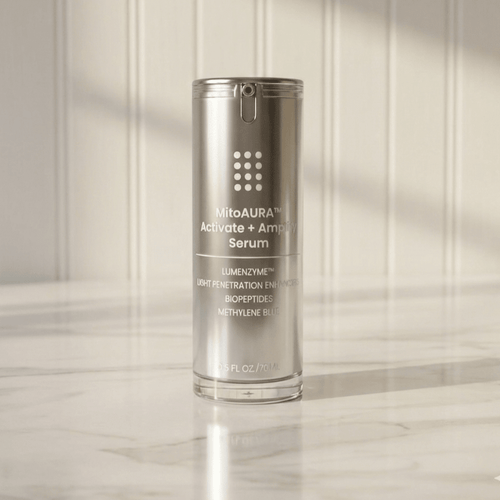
Mito Red Light’s BioPhotonic Skincare, including the MitoAURA Red Light Therapy Enhancing Body Spray and MitoAURA Activate + Amplify Serum, is designed to be used alongside red light therapy as part of a skin-focused routine that supports both internal and external aspects of skin health [9].
Key takeaways
-
Skin responses to light therapy tend to reflect cumulative exposure over time
-
Regular, repeat use supports ongoing skin repair and maintenance processes
-
Starting with five sessions per week is often considered reasonable
-
Treatment schedules can be adjusted based on individual response and comfort
-
Consistency over weeks to months is generally more important than higher intensity
Frequently Asked Questions
How does red light therapy interact with the skin?
Red light therapy delivers light energy that interacts with different skin layers and cell types. Its effects vary by wavelength, which is why multi-wavelength systems are often used for skin focused applications.
Why are different wavelengths used in skin focused light therapy?
Different wavelengths are absorbed and scattered differently within the skin. This allows them to interact with different skin layers and biological targets rather than acting in the same way.
What role do mitochondria play in red light therapy?
Red and near infrared light are studied for their interaction with mitochondrial photoacceptors involved in cellular respiration. This may support cellular energy production that helps with skin repair, signaling, and resilience.
How does red light therapy relate to collagen support?
Red light therapy is studied for its ability to support fibroblast activity and collagen related signaling. It does not force collagen production directly, but may help support the biological conditions involved in collagen maintenance over time.
Can red light therapy help with skin firmness and texture?
It may support gradual improvements in firmness, elasticity, and texture over time. These changes are typically subtle and reflect underlying structural support rather than immediate tightening.
How does red light therapy relate to wrinkles and visible skin aging?
Red light therapy is studied for its role in supporting skin repair and renewal processes linked to visible aging. Improvements in fine lines and texture tend to be gradual and cumulative with consistent use.
Can red light therapy replace sunscreen?
No, red light therapy does not replace sunscreen or other sun protection measures. It is best viewed as a complementary approach for supporting skin resilience.
How does red light therapy help acne prone skin?
Red and near infrared light are generally discussed in relation to supporting inflammation balance, skin recovery, and visible redness. Blue light is used more specifically for its interaction with acne associated bacteria.
What wavelengths are commonly studied for skin health?
Blue light is commonly discussed for acne related concerns, amber light for superficial skin interaction and overall appearance, red light for skin texture and visible aging, and near infrared light for deeper cellular signaling related to skin recovery.
Why does consistency matter more than occasional intense sessions?
Skin related responses to light therapy tend to reflect cumulative exposure over time. Regular use over weeks to months is generally more important than isolated high intensity sessions.
References:
1. Hamblin MR. Mechanisms and applications of the anti-inflammatory effects of photobiomodulation. AIMS Biophysics. 2017;4(3):337–361. doi:10.3934/biophy.2017.3.337. https://pubmed.ncbi.nlm.nih.gov/28748217/
2. Chellini F, Sassoli C, Mazzanti B, et al. In vitro evidences of different fibroblast morpho-functional responses induced by red and near-infrared photobiomodulation. Applied Sciences. 2020;10(21):7878. https://www.mdpi.com/2076-3417/10/21/7878
3. Lee SY, Park KH, Choi JW, et al. A prospective, randomized, placebo-controlled, double-blinded, split-face clinical study on LEDs: Red-light phototherapy for skin rejuvenation. Journal of Dermatological Science. 2007.
https://pubmed.ncbi.nlm.nih.gov/17566756/
4. Barolet D, Christiaens F, Hamblin MR. Infrared and skin: Friend or foe. Journal of Photochemistry and Photobiology B: Biology. 2016;155:78–85. doi:10.1016/j.jphotobiol.2015.12.014. https://pmc.ncbi.nlm.nih.gov/articles/PMC4745411/
5. Bita, N., Nouri, K., & Alam, M. (2016). Efficacy and tolerability of a combined 445 nm and 630 nm LED light therapy device in the treatment of mild-to-moderate acne vulgaris. Journal of Clinical and Aesthetic Dermatology. (reported that a LED device emitting 445 nm blue and 630 nm red light showed effectiveness in reducing acne lesions). https://pmc.ncbi.nlm.nih.gov/articles/PMC4896818/
6. Yi, S., Ding, J., Li, X., Guo, X., Wu, H., Cao, X., Wang, D., & Zhang, Z. (2025). Efficacy and safety of 570/590 nm yellow light combined with red and infrared LED in treating facial skin photoaging: A single-center, randomized controlled exploratory study. Lasers in Medical Science, 40, Article 435. https://link.springer.com/article/10.1007/s10103-025-04659-6
7. Herrera, M. A., Ribas, A. P., da Costa, P. E., & Baptista, M. S. (2024). Red‑light photons on skin cells and the mechanism of photobiomodulation. Frontiers in Photonics. https://doi.org/10.3389/fphot.2024.1460722
8. Huang, Y. Y., Chen, A. C., Carroll, J. D., & Hamblin, M. R. (2009). Biphasic dose response in low-level light therapy. Dose-Response, 7(4), 358–383. https://doi.org/10.2203/dose-response.09-027.Hamblin
9. Ragusa, I., Nardone, G. N., Zanatta, S., Bertin, W., & Amadio, E. (2021). Spirulina for skin care: A bright blue future. Cosmetics, 8(1), 7. https://doi.org/10.3390/cosmetics8010007
This article discusses published scientific research and general educational information about photobiomodulation and red light therapy. It does not constitute medical advice and does not make specific claims about Mito Red Light devices. The research cited reflects independent peer-reviewed studies and does not imply that any Mito Red Light product has been evaluated, approved, or cleared by the FDA or any other regulatory body for the diagnosis, treatment, cure, or prevention of any disease or medical condition. Individual results vary. Consult a qualified healthcare professional before beginning any light therapy protocol, particularly if you have a pre-existing medical condition, are pregnant, or are taking photosensitising medications.
Mito Red Light products are general wellness devices. They are not medical devices and have not been evaluated, cleared, or approved by the FDA or any regulatory body for the diagnosis, treatment, cure, or prevention of any disease or medical condition. Any references to peer-reviewed research or clinical studies on this page describe findings from independent scientific literature and do not imply that Mito Red Light devices have been studied, tested, or proven effective for any specific condition. Always consult a qualified healthcare provider before beginning any new wellness routine, particularly if you have a medical condition or are taking medication.
Related articles
More from the muscle recovery & performance knowledge cluster