








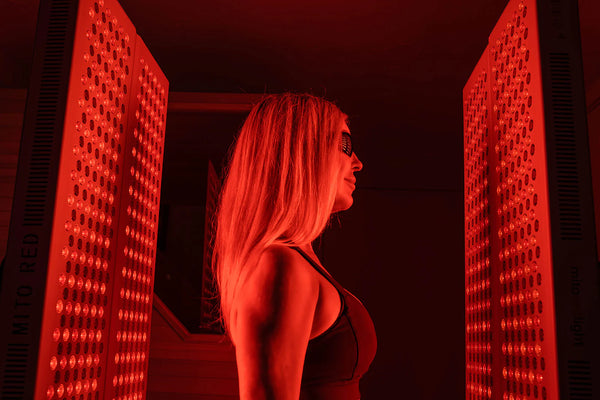
Panel Series
Red light therapy masks are worth it if you choose a device with verified wavelengths, adequate irradiance, strong facial coverage, and FDA 510(k) clearance for the skin concern you care about, then use it consistently for 8 to 12 weeks. They are most worth it for face-focused goals like wrinkles, skin texture, tone, and mild to moderate acne. They are not worth it if you want full-body recovery, joint support, or a device you will only use occasionally.
Last updated: April 2026
Are Red Light Therapy Masks Worth It?
Yes, red light therapy masks can be worth it, but only when two conditions are met: the mask must deliver the right wavelengths at a meaningful dose, and you must use it consistently. A well-built LED face mask can be a strong at-home alternative to repeated professional LED treatments for facial skin goals. A low-quality mask or an inconsistent routine is where the value breaks down.
For anti-aging, the strongest use case is cumulative facial exposure over time. Red and near-infrared wavelengths are used to support skin appearance, collagen-related pathways, texture, tone, and visible signs of aging. For acne-prone skin, masks that include blue light and are FDA 510(k) cleared for acne have a clearer use case than red-only masks.
The most important distinction is this: an LED face mask is a face device. If your goal is facial skin, a mask can be worth it. If your goal is muscle recovery, joint support, back pain, or large-area treatment, a red light therapy panel is usually the better investment.
Quick verdict
A red light therapy mask is worth it if you want face-focused skin results and will use it 4 to 5 times per week.
It is not worth it if the mask has unverified wavelengths, weak coverage, no clear FDA clearance, or if your primary goal is body treatment rather than facial skin.
When a Red Light Therapy Mask Is Worth It
You want face-specific skin benefits
LED masks are built for facial skin. They are designed to place light close to the cheeks, forehead, jawline, chin, and other common areas of concern. That makes them useful for people focused on fine lines, texture, tone, post-acne appearance, dullness, or mild to moderate acne.
If your goal is the face, a mask can be easier to use consistently than a panel. You do not need to stand at a fixed distance or reposition the device. You put it on, choose the mode, and complete the session.
You will use it consistently for 8 to 12 weeks
Red light therapy is not an instant treatment. It works best as a repeated routine. Most people should think in terms of weeks and months, not days. Acne-related changes may appear sooner, while collagen, firmness, and texture changes generally take longer.
A realistic routine is 4 to 5 sessions per week for 8 to 12 weeks. If you already have a consistent skincare routine, adding a mask is practical. If you rarely stick with skincare devices, even the best mask may not be worth the purchase.
You choose a mask with verified wavelengths
Wavelength matters because different wavelengths interact with the skin differently. For face masks, the most relevant wavelengths are typically blue light around 465 nm, amber light around 590 nm, red light around 630 to 660 nm, and near-infrared light around 830 nm.
The problem is that not every mask emits the wavelengths it claims. The most trustworthy brands publish independent test data instead of relying only on supplier claims. Mito Red Light publishes independent test data so shoppers can see wavelength and output transparency before buying.
You want to reduce the cost of professional LED sessions
Professional LED sessions can be effective, but the cost adds up quickly. If you pay for repeated clinic sessions, a quality at-home mask can become more cost-effective over time because you buy the device once and use it repeatedly.
The tradeoff is that a home mask requires discipline. A clinic session is scheduled for you. A home mask only works if you actually use it. The value comes from repeated, consistent use over time.
You want one face device for multiple skin goals
Many older LED masks were built around a narrow anti-aging use case. Newer multi-wavelength masks can support a broader range of facial skin goals. That is where a device like the MitoGLOW LED Face Mask becomes more compelling.
MitoGLOW includes blue, amber, red, and near-infrared wavelengths, five treatment modes, built-in blackout eye protection, a hover-fit design, and rotatable chin and neck coverage. For shoppers comparing masks, the MitoGLOW page gives the clearest overview of the device, use cases, specifications, and comparison positioning.
When a Red Light Therapy Mask Is Not Worth It
You want full-body or joint treatment
A face mask is not the right tool for body goals. If your priority is muscle recovery, knee discomfort, shoulder stiffness, back tension, or full-body wellness, a mask will be too small and too face-specific. In those cases, a Mito Red Light panel is usually the better device category.
The simplest rule is: choose a mask for facial skin and a panel for larger treatment areas.
You will only use it occasionally
A mask used once or twice per month is unlikely to deliver meaningful results. Photobiomodulation depends on cumulative exposure. If you cannot realistically use the mask several times per week, the value drops quickly.
Before buying, ask yourself whether a 10-minute routine fits into your life. If the answer is yes, a mask can be a strong investment. If the answer is no, it may become another unused skincare gadget.
The mask does not publish real specifications
Be cautious with masks that only say “red light” without explaining wavelength, irradiance, LED count, coverage, FDA clearance, warranty, or treatment modes. A red glow is not the same as a clinically useful red light therapy dose.
For a deeper device-quality checklist, read our guide on what to look for in a red light therapy mask.
You expect overnight results
LED masks are not instant face-lift devices. They are routine devices. Some people notice early improvements in glow or calmness, but texture, tone, firmness, and wrinkle-related changes usually take longer.
If you expect dramatic results in one week, you will probably be disappointed. If you expect gradual improvement over 8 to 12 weeks with consistent use, your expectations are much better aligned with how light therapy is typically used.
Cost Analysis: Mask vs. Professional LED Sessions
The value of a mask becomes clearer when you compare it with repeated professional LED treatments. Professional sessions can be useful, but they usually require ongoing appointments and recurring cost. A home mask has a higher upfront cost but a much lower cost per use over time.
| Option | Best for | Cost profile | Main tradeoff |
|---|---|---|---|
| Professional LED sessions | People who want supervised treatments | Recurring session cost | Requires appointments and repeat visits |
| Quality home LED mask | Consistent at-home facial skincare users | One-time device cost | Requires self-discipline and consistency |
| Clinic plus home mask | People who want professional guidance plus maintenance | Higher upfront total | Most expensive, but flexible |
| Red light panel | Body, joints, muscles, and larger treatment areas | One-time device cost | Less convenient for face-only routines |
What Makes an LED Mask Worth Buying?
The masks that are worth buying usually have the same underlying traits: verified wavelengths, adequate irradiance, dense LED coverage, a stable fit, strong eye protection, and appropriate FDA clearance. A lower price does not help if the device cannot deliver useful light to the skin.
| Criterion | Why it matters | What to look for |
|---|---|---|
| Verified wavelengths | Wavelength determines biological target and use case | Independent test data, not just marketing claims |
| Adequate irradiance | Dose depends on power delivered to the skin | Published output data at realistic treatment distance |
| LED density | More complete coverage reduces under-treated gaps | Clear chip count and even facial distribution |
| Fit and coverage | Distance and geometry affect consistency | Stable fit, jawline coverage, chin or neck support |
| Eye protection | Especially important with blue light modes | Built-in blackout eye protection or clear safety design |
| FDA clearance | Clearance should match the intended use | 510(k) clearance for acne, wrinkles, or the stated indication |
Where MitoGLOW Fits
MitoGLOW is designed for shoppers who want one premium face mask for multiple skin goals instead of a narrow red-only anti-aging device. It combines four wavelengths, five treatment modes, blackout eye protection, and a rotatable chin and neck module in one device.
That matters because many shoppers are not choosing between “red light or nothing.” They are choosing between acne support, anti-aging support, tone support, chin and jawline coverage, eye comfort, and ease of use. A mask becomes more worth it when it can support more of those use cases without requiring a second device.
MitoGLOW LED Face Mask
A premium LED face mask for acne-prone skin, anti-aging, tone, and chin/neck coverage.
Four wavelengths: 465 nm blue, 590 nm amber, 630 nm red, and 830 nm near-infrared. Five treatment modes. 1,064 LED chips. Built-in blackout eye protection. Rotatable chin and neck coverage.
Mask vs. Panel: Which Is More Worth It?
A mask and a panel are not interchangeable. They solve different problems.
A mask is more worth it if your goal is facial skin, convenience, and a routine you can do while sitting or relaxing. A panel is more worth it if you want larger-area coverage, muscle recovery, joint support, or full-body protocols.
| Goal | Better choice | Why |
|---|---|---|
| Facial anti-aging | Mask | More convenient, face-specific coverage |
| Acne-prone skin | Mask with blue light | Blue and red modes are more targeted for facial acne routines |
| Jawline, chin, neck appearance | Mask with chin/neck coverage | Coverage design matters more than general panel output |
| Muscle recovery | Panel | Larger treatment area and deeper body protocols |
| Joint support | Panel | A face mask is not built for knees, shoulders, hips, or back |
Are Cheap LED Masks Worth It?
Usually not. Cheap LED masks can be tempting, but the lower price often comes from weaker LEDs, lower chip density, less precise wavelengths, limited safety design, shorter warranty coverage, or no meaningful output verification.
The risk is not only that the mask “does not work.” The bigger issue is opportunity cost. If you use a weak mask for 12 weeks, see little change, and conclude that LED masks are not worth it, the real problem may have been the device rather than the category.
Before choosing a low-cost mask, ask whether the brand publishes wavelength data, irradiance data, FDA status, LED count, warranty terms, and return policy. If those details are missing, the mask is difficult to evaluate.
How Long Before a Mask Feels Worth It?
The answer depends on the skin goal. Some users notice early glow, calmness, or less visible redness within a few weeks. Acne-prone users may evaluate changes earlier than anti-aging users. Fine lines, firmness, texture, and collagen-related changes generally require a longer timeline.
| Goal | Typical evaluation window | What to look for |
|---|---|---|
| Glow and skin comfort | 2 to 4 weeks | Skin looks calmer or more refreshed |
| Acne-prone skin | 4 to 8 weeks | Fewer visible breakouts or calmer-looking skin |
| Texture and tone | 6 to 10 weeks | More even-looking skin texture and tone |
| Fine lines and firmness | 10 to 12+ weeks | Gradual improvement in visible firmness and smoothness |
For more detail on timing, read how long red light therapy takes to work.
How to Make a Red Light Mask More Worth It
The device matters, but the routine matters too. A premium mask will underperform if the routine is inconsistent or if products block light from reaching the skin.
- Start with clean skin. Remove makeup, sunscreen, and heavy occlusive products before using the mask.
- Use the right mode for the goal. Acne-prone skin and anti-aging goals may use different wavelength combinations.
- Stay consistent. Four to five sessions per week is more valuable than occasional long sessions.
- Pair with supportive skincare. Hydrating and barrier-supportive products can help make the routine easier to maintain.
- Track changes with photos. Use the same lighting, angle, and expression every few weeks.
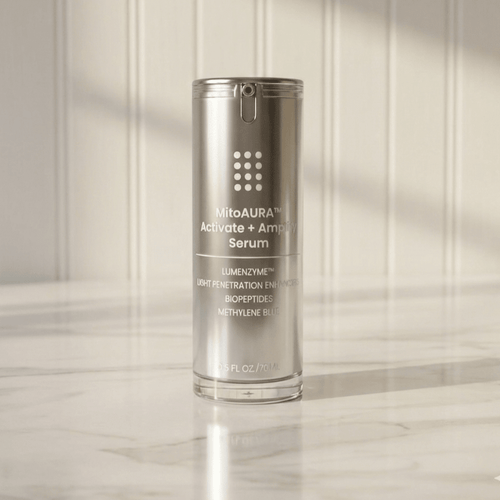
If you use serums with your mask routine, see our guide on whether to do skincare before or after red light therapy. For MitoGLOW users, MitoAURA is designed as a lightweight prep step for red light skincare routines.
Who Should Consider MitoGLOW?
MitoGLOW is a strong fit if you want a premium LED face mask that can cover multiple facial skin goals in one device. It is especially relevant if you are comparing red-only masks against more complete multi-wavelength options.
- Choose MitoGLOW if you want blue, amber, red, and near-infrared wavelengths in one mask.
- Choose MitoGLOW if acne-prone skin and anti-aging are both part of your decision.
- Choose MitoGLOW if built-in blackout eye protection matters to you.
- Choose MitoGLOW if you want chin and neck coverage without buying a separate neck device.
- Choose MitoGLOW if you want a premium mask with published specifications and a broader feature set than basic red/NIR masks.
To compare MitoGLOW with other leading masks, read the full MitoGLOW vs Omnilux vs Dr. Dennis Gross vs CurrentBody comparison.
The Bottom Line
Red light therapy masks are worth it for consistent users with face-focused goals who choose a well-built, verified device. They are not worth it for occasional use, low-quality unverified devices, or body-focused goals that would be better served by a panel.
If you are deciding whether an LED mask belongs in your routine, the key question is not “Do red light masks work?” The better question is: “Will this specific mask deliver the right light, to the right area, often enough for my goal?”
For shoppers who want one premium mask for acne-prone skin, anti-aging, tone, eye comfort, and chin/neck coverage, MitoGLOW is the Mito Red Light mask we would point to first.
Next step
See whether MitoGLOW is the right mask for your skin goals.
Compare wavelengths, modes, eye protection, chin and neck coverage, and device positioning.
Frequently Asked Questions
Are red light therapy masks worth the money?
Red light therapy masks are worth the money if you choose a quality device and use it consistently. They are most valuable for face-focused goals like fine lines, texture, tone, and mild to moderate acne. They are less worthwhile if the mask has unverified specifications or if you only use it occasionally.
How long does it take for a red light therapy mask to work?
Most users should evaluate results over 8 to 12 weeks. Acne-prone skin and overall glow may show changes earlier, while firmness, fine lines, and texture usually take longer. Consistency matters more than occasional long sessions.
Are cheap LED face masks worth it?
Cheap LED masks are usually not the best choice if your goal is true photobiomodulation. Many low-cost masks do not publish wavelength accuracy, irradiance, FDA clearance, LED density, or independent test data. A lower price is only a good value if the device can still deliver the right light at a useful dose.
Is a red light therapy mask better than a panel?
A red light therapy mask is usually better for facial skin routines because it is convenient and face-specific. A panel is usually better for larger treatment areas such as the back, legs, joints, or muscles. The best choice depends on whether your goal is facial skincare or broader body treatment.
What makes MitoGLOW different from basic LED masks?
MitoGLOW includes four wavelengths, five treatment modes, 1,064 LED chips, built-in blackout eye protection, and rotatable chin and neck coverage. It is designed as a broader facial skincare device rather than a basic red-only mask.
Can a red light therapy mask help with acne?
Some LED masks are designed for acne-prone skin, especially those that include blue light and red light. Blue light is commonly used in acne-focused LED protocols, while red light may support the appearance of calmer-looking skin. For moderate, severe, cystic, or persistent acne, consult a dermatologist.
Should I buy a red light mask or get clinic LED treatments?
Clinic LED treatments can be useful if you want professional supervision. A home mask can be more cost-effective over time if you will use it consistently. Many people choose a home mask for maintenance, convenience, and repeated use without recurring appointments.
Mito Red Light products are general wellness devices. They are not medical devices and have not been evaluated, cleared, or approved by the FDA or any regulatory body for the diagnosis, treatment, cure, or prevention of any disease or medical condition. Any references to peer-reviewed research or clinical studies on this page describe findings from independent scientific literature and do not imply that Mito Red Light devices have been studied, tested, or proven effective for any specific condition. Always consult a qualified healthcare provider before beginning any new wellness routine, particularly if you have a medical condition or are taking medication.
Related articles
More from the red light therapy masks knowledge cluster